Create delightful, professional-quality confections at home with a simple, classic recipe that balances rich dark chocolate and smooth double cream.
These bite-sized treats are perfect for special occasions or a cosy evening with guests. The method is straightforward and needs only basic tools and patience for chilling.
Using premium ingredients matters: choose high-grade cocoa for dusting and quality cream for a silky ganache. This approach follows a foolproof dinners mindset to ensure consistent results.
Whether you follow the Mary Berry guidance or adapt the steps, this recipe teaches how to marry intense cocoa notes with creamy texture. Expect elegant, bite-sized desserts that look and taste professional.
Key Takeaways
- Simple technique yields professional results with minimal equipment.
- Quality ingredients, especially cocoa and cream, make a big difference.
- Chilling time is essential for clean shaping and a smooth finish.
- The recipe suits special occasions and intimate gatherings.
- Following the foolproof dinners approach reduces errors and boosts confidence.
The Allure of Mary Berry Chocolate Truffles
What draws bakers to this classic is the contrast between intense flavour and effortless technique. The result is a rich, melt-in-the-mouth centre that lifts any dessert moment.
Home cooks often turn to mary berry for guidance when they want a reliable showstopper. Her approach to foolproof dinners makes even impressive sweets feel achievable.
The mary berry chocolate recipe below aims for a refined flavour profile that rivals shop-bought confectionery. Careful selection of ingredients delivers a silky ganache and a polished finish.
Although her name is linked with the occasional tart, these small bites showcase elegant British baking at its best. Exploring such recipes builds confidence and broadens your baking repertoire.
Tip: balance high-quality chocolate with steady technique for consistent results and a professional finish.
- Easy to make, impressive to serve.
- Perfect for holidays and intimate gatherings.
- Designed to be reliable and delicious.
Essential Ingredients for Your Ganache Base
Start with excellent ingredients: they make a simple ganache sing.
Quality matters. For a rich base use 200g of dark chocolate with around 70% cocoa. Finely chop the pieces so they melt evenly when the hot cream is added.
Selecting Quality Chocolate
Choose a bar you enjoy plain. High cocoa content gives depth, but balance bitterness with a small spoon of golden syrup or a tbsp of sugar if needed.
Choosing the Right Cream
Use 150ml fresh double cream. Warm it gently in a small saucepan until it is hot but not boiling. Pour over the chopped chocolate in a heatproof bowl to make a smooth, emulsified mixture.
- 200g dark chocolate (70% cocoa) — rich ganache base
- 150ml double cream — silky texture
- 25g unsalted butter — glossy sheen
- Optional: 1 tbsp golden syrup or sugar — balances bitterness
| Ingredient | Amount | Purpose |
|---|---|---|
| Dark chocolate (70% cocoa) | 200g | Main flavour and structure for the ganache base |
| Double cream | 150ml | Creates silky texture and mouthfeel |
| Unsalted butter | 25g | Adds gloss and richness to the mixture |
| Golden syrup / sugar | 1 tbsp (optional) | Balances bitterness and rounds flavour |
Tip: bring all ingredients to room temperature before you start. A heatproof bowl and patience with gentle heating are part of the foolproof dinners approach to secure consistently excellent results.
Preparing Your Workspace and Equipment
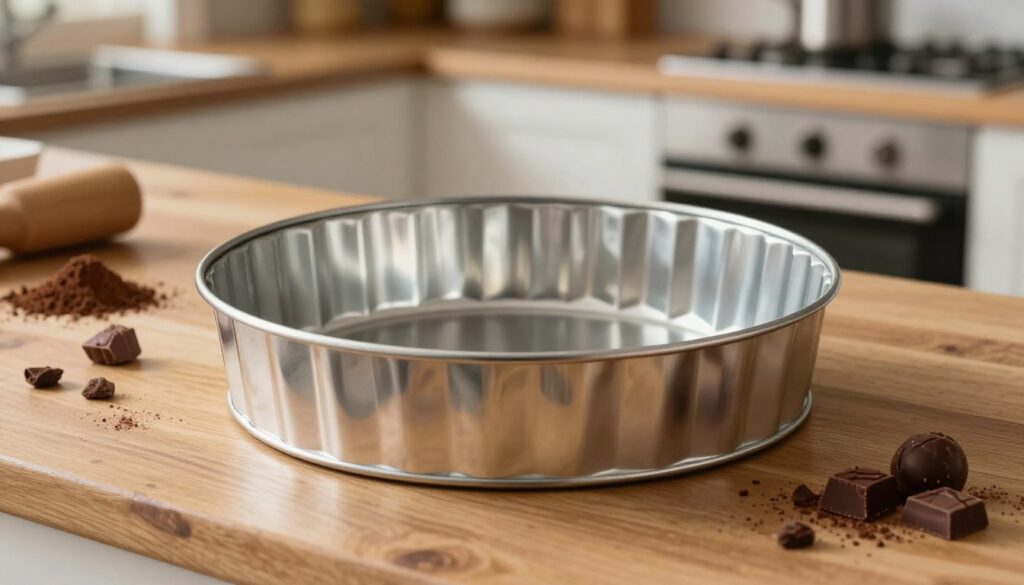
A calm, prepared workspace is the unsung hero of every successful tart. Clear a bench, gather a mixing bowl, a sturdy spoon, parchment paper and an 8-inch springform tin.
Line the tin with baking paper and grease the sides so the base releases cleanly. Press crushed biscuits and melted butter firmly with the spoon to form a compact foundation.
Keep ingredients at hand: sugar, syrup, more butter and your chopped chocolate. A tidy area helps you watch temperature and avoid any seizing of the mixture.
- Prepare the 8-inch springform tin: line, grease and check the latch.
- Have a chilled tray ready to firm the biscuit base before filling.
- Set out a mixing bowl and parchment paper for quick, clean work.
Tip: an organised counter follows the lesson many home cooks trust from mary berry — it speeds the process and improves results. For a related recipe try the mary berry all-in-one chocolate cake.
Step by Step Guide to Making Mary Berry Chocolate Truffles
Follow these clear steps to turn simple ingredients into a glossy ganache ready for rolling.
Melting the chocolate
Finely chop the chocolate into even pieces and place them in a heatproof bowl. Set the bowl over simmering water or use a low oven so the melted chocolate heats gently.
Combining with cream
Warm 150ml double cream in a saucepan until just below boiling. Pour it over the chopped chocolate and let sit for a minute.
Whisk gently until smooth, then stir in 25g butter and a tbsp of syrup or sugar if needed for balance. Use a metal spoon to fold for an even, glossy mixture.
Chilling the mixture
Transfer the mixture to a bowl and chill in the fridge for 1–2 hours. The ganache should become firm enough to scoop with a teaspoon.
If you need larger quantities, a food processor speeds things up. For mousse filling in a tart, whisk cream to soft peaks before folding in the cooled mixture.
- Total prep time: about 30 minutes (plus chilling).
- Use even scoops for uniform truffle balls.
- Keep tools and paper ready for tidy rolling and coating.
Achieving the Perfect Ganache Consistency
Getting the ganache right is about balance: correct ratios, gentle heat and a steady hand. A reliable ganache forms the flavourful base for each truffle and gives a glossy finish when cooled.
Start with measured chocolate and cream. Warm the 150ml in a saucepan until hot but not boiling, then add to chopped pieces of chocolate. Let the melted chocolate sit briefly so the heat evens out before stirring.
Troubleshooting Soft Ganache
If the mixture stays too soft, return the bowl to the fridge for 30 minutes to firm the butter and chocolate. For a split ganache, whisk in a tiny spoonful of cold cream to bring it back together.
- Scrape down the sides of your bowl so every bit of chocolate joins the mixture.
- Use a dash of syrup or a little sugar to stabilise texture without making it brittle.
- For a chocolate mousse, aim for lightness yet enough body to hold in a tin or tart.
Keep calm and learn from fixes. Small adjustments teach technique and improve results with each batch.
Creative Coating and Decoration Ideas
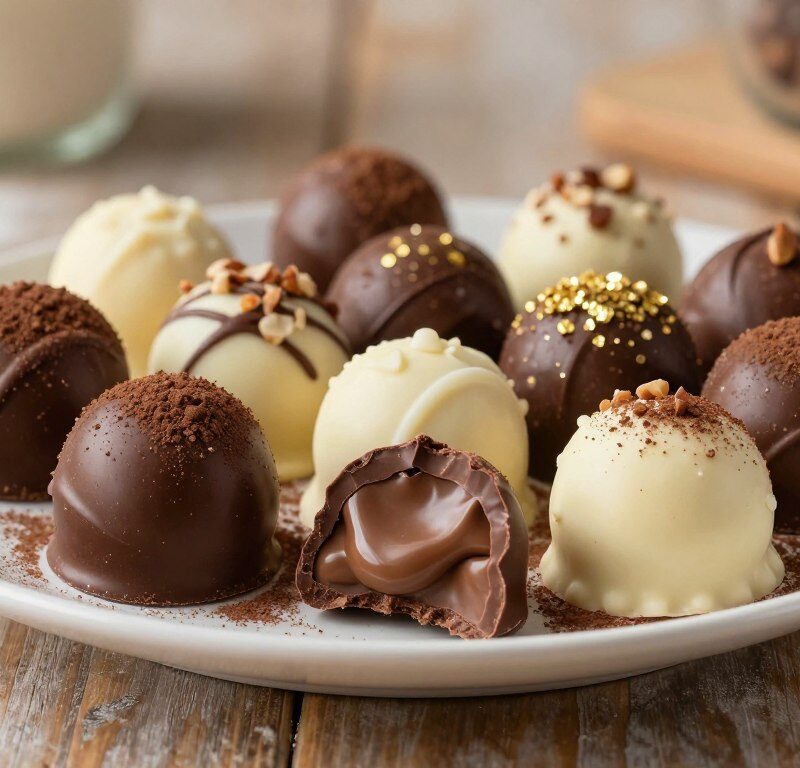
A simple coating can transform a small ganache ball into an elegant dessert for any table. Roll the set ganache base in 2 tbsp of high-quality cocoa for a classic, slightly bitter finish that contrasts with the creamy centre.
For texture, try finely chopped toasted nuts or a light dusting of icing sugar. These add crunch or a soft sweetness and make each truffle feel hand-finished.
Use a sheet of parchment paper on your tray to keep the process tidy. Ensure the ganache is fully set before coating so each truffle keeps a neat round shape.
Consider presentation: place a few on a small springform tin or alongside a tart for a coordinated plate. A drizzle of warm syrup or a tiny piped icing line adds flair for special occasions.
Personal touches matter. Mix coatings to vary mouthfeel — smooth cream centres, powdery cocoa, and crisp nuts give guests a memorable sensory contrast.
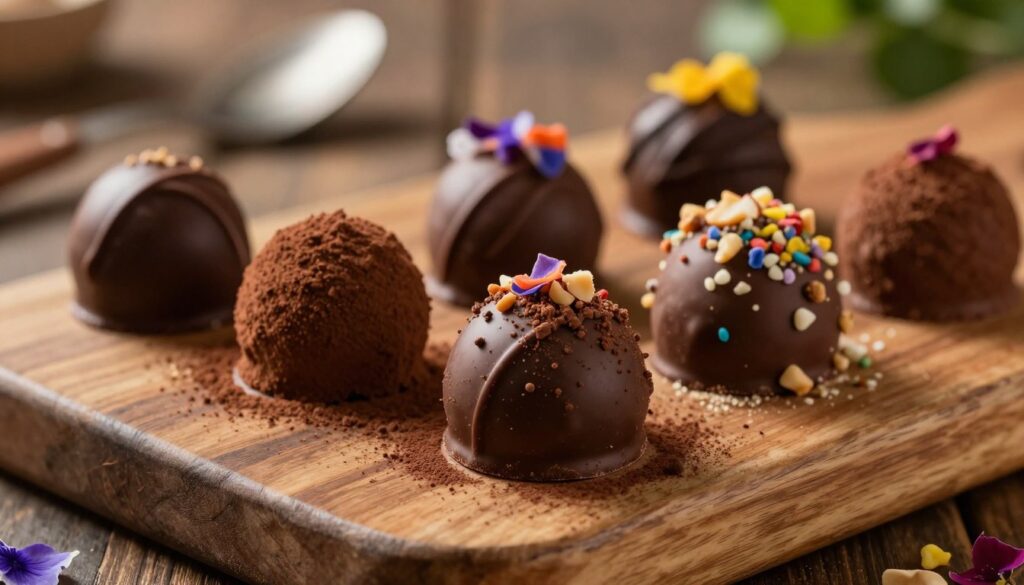
- Classic finish: 2 tbsp cocoa powder.
- Textured option: chopped nuts or icing sugar.
- Keep parchment paper ready for clean handling.
Expert Tips for Professional Results
Temperature and speed matter more than showy technique. Keep the kitchen cool and plan each action so the ganache does not soften before shaping. Measured preparation follows the foolproof dinners approach and saves time.
Temperature Control
Use a heatproof bowl over simmering water to melt pieces gently. This prevents burning and preserves the glossy finish.
Chill the set base until firm before rolling. If it softens, return the tray to the fridge for short spells rather than handling more.
Working with Speed
Have all ingredients measured and ready in the bowl before you start. A food processor will make fine chops so the hot cream melts the pieces evenly.
- Whisk cream to the right stage for stability.
- Add one tbsp of syrup to keep the mixture smooth and stop sugar seizing.
- Use a cool tin and avoid long handling to keep shapes neat.
Follow these tips and you will make chocolate truffle work that looks as though it came from a patisserie. Small habits lead to professional results across your baking recipes.
Storing and Serving Your Homemade Treats
Store your confections with care so they keep their glossy finish and full flavour. Place finished chocolate truffles in an airtight container and keep them in the fridge. They will remain fresh for up to 1 week.
Before serving, remove the container and let the truffles sit at room temperature for 10–15 minutes. This short rest brings out the cream notes and softens the base for a better mouthfeel.
If you used a springform tin for a tart, peel the paper away carefully before slicing to keep the sides neat. Keep any chocolate mousse or mousse filling chilled until the last moment to preserve its structure.
For presentation, give each piece a light dusting of cocoa powder or a sprinkle of icing sugar. If you plan to store longer, freeze well-wrapped truffles to avoid odours, and thaw slowly in the fridge.
“A tablespoon of liqueur in the mixture can lift the flavour for an adult gathering.”
Conclusion
A final polish turns simple ganache into an elegant treat worth sharing.
You’ve learned the essentials from this mary berry chocolate recipe and the techniques that make a smooth, glossy dessert. Follow the chill-and-roll steps and use quality ingredients for the best results.
These chocolate truffles embody the foolproof dinners approach: straightforward methods that deliver professional flavour. Practice will refine your speed, shaping and presentation.
Enjoy serving these treats from a cool tin, and let friends and family taste the rewards of careful baking. Keep experimenting — each batch improves your skills and confidence in the kitchen.
FAQ
What ingredients do I need to make these truffles?
How do I choose the best chocolate for the ganache base?
What cream should I use and how much?
How do I melt the chocolate without burning it?
How do I combine the cream and chocolate to make ganache?
How long should the ganache chill before rolling?
My ganache is too soft — how can I fix it?
What are some coating and decoration ideas?
How can I get professional-looking results at home?
What’s the best way to store these homemade treats?
Can I use a food processor to make the mixture or create coatings?
Are there flavour variations I can try with the basic recipe?
Mary Berry Chocolate Truffles
Create delightful, professional-quality confections at home with a simple, classic recipe that balances rich dark chocolate and smooth double cream. These bite-sized treats are perfect for special occasions or a cosy evening with guests.
Ingredients
- 200g dark chocolate (70% cocoa)
- 150ml double cream
- 25g unsalted butter
- 1 tbsp golden syrup or sugar (optional)
- 2 tbsp cocoa powder (for coating)
Method
- Finely chop the dark chocolate and place it in a heatproof bowl.
- Warm the double cream in a saucepan until just below boiling, then pour it over the chopped chocolate and let sit for a minute.
- Whisk gently until smooth, then stir in the unsalted butter and golden syrup or sugar if using.
- Transfer the mixture to a bowl and chill in the fridge for 1–2 hours until firm enough to scoop.
- Use a teaspoon to scoop out the ganache and roll into balls.
- Roll the truffles in cocoa powder to coat them evenly.
- Place the finished truffles on a tray lined with parchment paper and refrigerate until ready to serve.