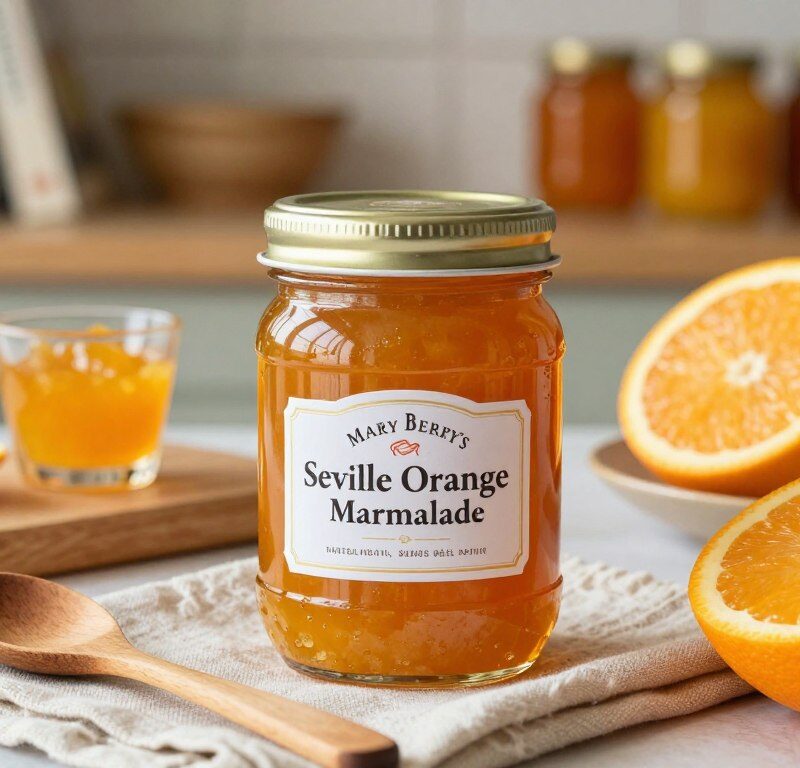
This classic British preserve brings bright, citrus notes to your breakfast plate. It is made from fresh oranges and lemons, gently simmered with sugar until glossy and set. The method is simple but it rewards patience.
Serve it on warm toast, spread it over scones, or fold a spoonful into baking for added sparkle. Homemade marmalade gives a depth of flavour that supermarket jars rarely match.
The traditional recipe uses thin strips of peel for texture and a smooth, jam-like finish. With good fruit and a careful simmer, you can achieve a balanced, zesty spread perfect for gifts or everyday use.
Key Takeaways
- Simple ingredients produce a vibrant, citrus preserve.
- Patience in simmering ensures a glossy, well-set result.
- Use fresh, high-quality oranges and lemons for best flavour.
- Great on toast, in baking, or as a homemade gift.
- Traditional technique yields peel strips for texture.
The Appeal of Homemade Marmalade
Homemade marmalade fills the kitchen with a bright, citrus scent that shop-bought jars rarely match.
You gain full control over peel thickness and sweetness. That means you can make a spread that suits your taste exactly.
The process itself is rewarding. Turning fresh fruit into a glossy preserve is satisfying and often calming. Many cooks describe it as a nostalgic, hands-on ritual.
The final jar is versatile. It is perfect on toast, useful in baking, and adds a zesty note to savoury dishes when used as a glaze.
- Richer aroma and depth of flavour than mass-produced versions.
- Customisable texture and sweetness to match personal preference.
- Natural ingredients only — no artificial flavours.
| Benefit | Homemade | Shop-bought |
|---|---|---|
| Flavour | Fresh, layered | Uniform, milder |
| Texture control | Adjustable peel size | Fixed consistency |
| Ingredients | Simple and natural | Often contains additives |
Essential Ingredients for Mary Berry Seville Orange Marmalade
Gathering the right fruit and pantry staples makes all the difference to a successful preserve. Choose the freshest citrus you can find and have your tools ready before you begin.
Selecting Quality Oranges
Use 1 kg of seville oranges as the gold standard for flavour and pectin. If they’re out of season, regular oranges can work, but the tang will be milder.
Add 2 lemons for acidity; together the oranges lemons mix gives balance and brightness.
Choosing the Right Sugar
This recipe needs 2 kg of granulated sugar to reach the proper set and shelf life. Measure carefully — too little sugar can prevent setting.
- Prepare 2 litres water to simmer the fruit and release pectin.
- Use a large pan with a heavy base to avoid scorching during long simmering.
- Place pips and pith in a muslin bag to extract natural pectin.
- Sterilise your jars and lids in advance so the finished marmalade seals safely.
Good ingredients and a calm approach give the best results. Once you have these items ready, you’re set to follow the recipe with confidence.
Preparing Your Citrus Fruits
Start by washing 1 kg of seville oranges and 2 lemons. Halve them and use an electric squeezer to squeeze juice directly into a large pan.
Keep the pips and pith. These parts are rich in natural pectin and help the set later. Collect any pith that clings to the squeezer instead of discarding it.
Slice the peel to your preferred size — thin or thick strips — and add them to 2 litres water in the pan. The peel gives texture and flavour, so choose according to how chunky you like the finished spread.
Simmer patiently. Cook the peel and water for 1½ to 2 hours until the peel is soft and tender. This step is the most labour-intensive, but it is essential for the right consistency and bright flavour.
- Wash fruit well before cutting.
- Reserve pips and pith for pectin.
- Simmer peel in 2 litres water until soft.
The Importance of the Muslin Bag
A well-prepared muslin bag ensures you extract natural thickening agents with ease.
Place all the pips and excess membrane into a square of muslin, tie it securely and suspend the bundle in the pan as the fruit simmers.
Extracting Natural Pectin
These pips and membranes are packed with natural pectin. As the mixture simmers, the muslin releases pectin into the liquid, helping the preserve to thicken without added setting agents.
When the peel is soft, lift out the muslin bag and use a spoon to squeeze juice and pectin-rich liquid back into the pot.
If you prefer, press the bundle between two saucers or use your hands to coax every sticky drop of juice out. This step ensures maximum yield and a reliable set.
- Keep the muslin bag tied securely to avoid stray fibres in the pan.
- Squeeze firmly but carefully to extract pectin without tearing the cloth.
- Good handling means no need for artificial setting agents.
Simmering for Perfect Peel Texture
Keep the heat low and patient: simmer gently for 1½ to 2 hours so the peel becomes very soft. Test a piece by pressing it between your fingers; it should squash easily.
Tie the muslin bag to the handle of the pan so the bag stays suspended in the 2 litres of water. This lets the pips and pith release pectin into the liquid while the peel softens.
Do not rush this stage. The peel will not soften further once sugar is added. If a piece is still firm after two hours, continue to simmer gently until you can squeeze it in half.
Maintain a steady, gentle heat to prevent boiling over. A calm simmer ensures the peel stays tender rather than turning tough and chewy.
| Step | What to watch for | Action |
|---|---|---|
| Hour 1 | Peel beginning to soften | Keep low heat; stir occasionally |
| 1½–2 hours | Peel should be very soft | Test by pressing; lift muslin bag and squeeze juice back in |
| If still firm | Peel resists pressure | Simmer gently until tender; avoid higher heat |
Result: a clear, flavoured liquid that will set reliably when sugar is added and yield a well-textured marmalade with soft ribbons of peel.
Dissolving Sugar for a Clear Finish
Pour the 2 kg of granulated sugar into the pan only after you have removed the muslin bag. This keeps the liquid clear and free from stray fibres or pips.
Stir continuously over low heat. Lift your wooden spoon from time to time and check the back for any undissolved granules. If you spot crystals, keep stirring until none remain.
Dissolving the sugar slowly is the secret to a glossy, non-crystallised finish. Rushing this step can make the mixture cloudy and grainy.
When the sugar is fully incorporated, allow the mixture to rest briefly. This pause helps the ingredients marry and reduces foaming when you increase the heat.
| Action | Why it matters | Tip |
|---|---|---|
| Add granulated sugar | Prevents cloudiness | Do this only after removing the muslin bag |
| Stir over low heat | Dissolves crystals evenly | Check spoon for granules |
| Brief rest | Stabilises the mixture | Then raise to a rolling boil for the set |
Reaching the Setting Point
Raise the heat to the highest setting and bring the pan to a full, rolling boil. Keep a close eye: high sugar content can burn quickly during these crucial minutes.
Boil vigorously for 10–15 minutes. Stir occasionally to prevent scorching, but avoid too much stirring once the boil begins to stop air bubbles and foaming.
Use a jam thermometer to check that the mixture reaches 105°C — the ideal setting point for a reliable set. If you lack a thermometer, try the cold-plate test instead.
“You will know the setting point has been reached when the mix thickens and coats the back of a spoon in a glossy layer.”
- Watch the pan continuously during these minutes.
- If the peel looks translucent and the mixture coats the spoon, the reached setting point is near.
- After boiling, remove from heat and allow a brief rest so the set can stabilise.
Testing for the Perfect Set
A simple cold-plate test gives you clear proof that the preserve is ready. Chill three side plates in the fridge or freezer before you start so they are cold and ready when the time comes.
The Cold Plate Test
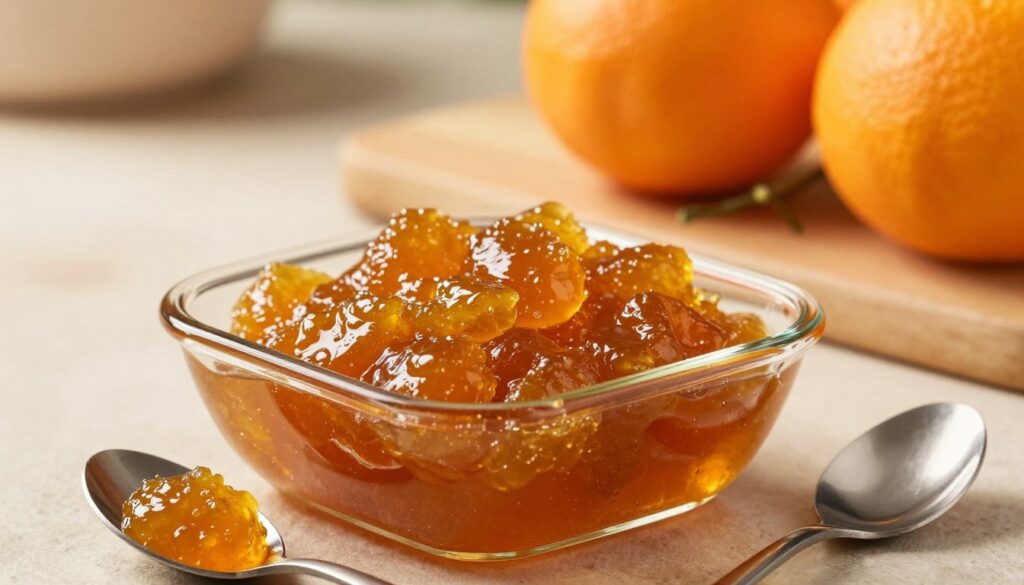
Spoon a small amount of the hot mixture onto a cold plate and leave it to cool for a few minutes. Wait two or three minutes, then push the surface gently with your finger.
If the surface wrinkles or forms a crinkly skin when pressed, you have reached setting point. If it stays runny, return the pan to the heat and boil for another 5 minutes before testing again.
Identifying the Crinkly Skin
The crinkly skin shows the sugar and pectin have gelled. Be careful not to overdo it: too long at a high boil will make the set stiff or rubbery.
Check that the strips of peel sit evenly in the cooled sample. Even distribution creates a jewel-like appearance in the jars and a pleasant texture when spread.
| Test | What to look for | Action |
|---|---|---|
| Cold-plate trial | Surface wrinkles when pushed | Remove from heat; prepare to jar |
| Not set | Mixture runs or spreads thin | Boil for another 5 minutes; test again |
| Overcooked | Very stiff or rubbery texture | Avoid further boiling; enjoy in small amounts |
For savoury ideas using your finished preserve, try it as a glaze on a savory tray bake.
Cooling and Jarring Techniques
Allow the pot to sit for 10 minutes after removing it from the heat. This gentle pause helps the peel settle and stops strips from floating to the top.
Sterilise your jars by washing in hot, soapy water and heating them in a medium oven for five minutes before filling. Warm jars reduce the risk of breakage and help the seal form.
Ladle the warm preserve into the prepared jars, filling right up to the neck to minimise trapped air. Cover the surface with waxed discs, wax side down, and seal the lids tightly while the contents are still hot.
Once the jars have cooled completely, label them with the date and store in a cool, dark place for up to 12 months. If you open a jar, keep it in the fridge and use within a week or two to enjoy peak flavour.
Troubleshooting Common Marmalade Issues
If your marmalade does not set, add the juice of one extra lemon and boil for a further 3–5 minutes. The extra acidity and pectin can help the mixture reach setting point.
Tough peel is usually caused by under-simmering the peel in the 2 litres of water. Return the peel to a low heat and simmer gently until the strips are soft before you add sugar.
To prevent a cloudy result, ensure all sugar dissolves over low heat before you raise to a full, rolling boil. Undissolved crystals can make the jelly look dull.
If the peel floats, let the pan rest for 10 minutes before filling jars; this pause helps the peel suspend evenly in the jelly.
If the flavour is too bitter, use less pith next time or choose sweeter fruit. And if a jar is too stiff, warm it gently in a bowl of hot water for a few minutes before serving during the week.
- No set: extra lemon juice + more boiling.
- Tough peel: longer simmer in water.
- Cloudy mix: dissolve sugar over low heat.
Creative Variations and Flavour Twists
A few simple tweaks make your jar sing with new depth and aroma. These ideas keep the core technique but let you experiment with spice, spirit and citrus for novel results.
Adding Warm Spices
Add fresh or crystallised ginger during the simmer for a warm, peppery lift. A stick of cinnamon or a split vanilla pod creates a cosy, winter-style preserve.
Incorporating Spirits
Finish with a splash of whisky or brandy off the heat to deepen the flavour. The alcohol evaporates, leaving a rounded, complex note that pairs well with toast and baking.
Using Alternative Citrus
Swap seville oranges for pink grapefruit or lime to make a sharper, more acidic conserve. You can also blend different oranges lemons for a layered citrus profile.
- Tip: If you struggle to reach set, replace some granulated sugar with jam sugar for extra pectin.
- Use vanilla for a sweeter, bakery-style filling for cakes and scones.
“Small changes yield big flavour—experiment to find your favourite twist.”
Serving Suggestions for Your Preserve
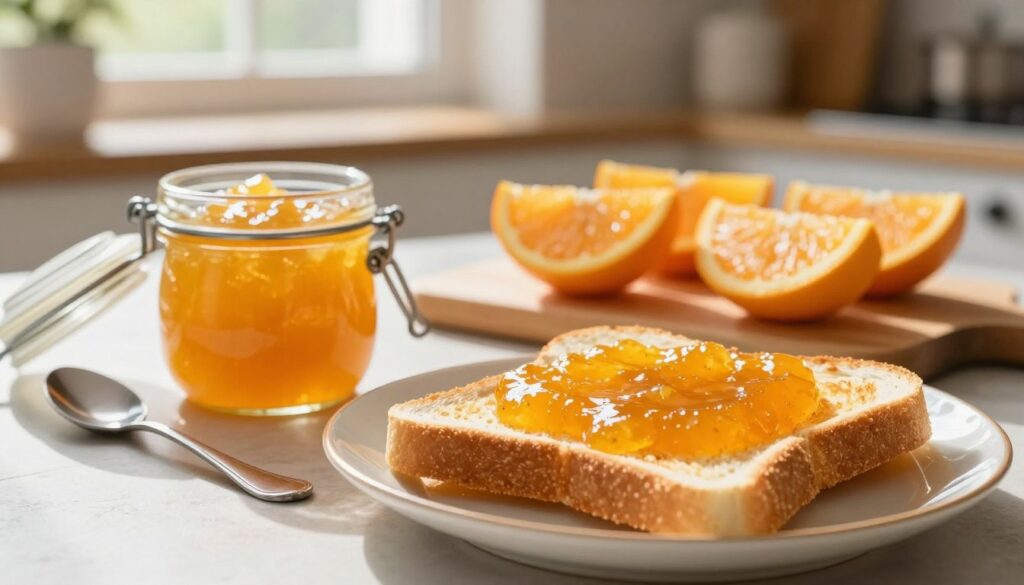
Serve a spoonful on warm, buttered toast for a classic breakfast that always delights. The bright, citrus flavour lifts plain bread and makes morning simple yet special.
Try the preserve on fresh scones or as a glossy topping for buttered crumpets. It adds a clean, zesty note that complements rich, baked goods.
Use a thin layer as a filling for a Victoria sponge to introduce a refined citrus twist to afternoon tea. The balance of fruit and cake is both traditional and modern.
Add a spoonful to Greek yoghurt for a quick, healthy bowl. The tang from the oranges blends well with creamy yoghurt and makes breakfast more interesting.
For savoury cooking, brush the preserve over roast ham, gammon, lamb or chicken in the last ten minutes of roasting. The sugar in the glaze caramelises to create a sticky, bittersweet finish.
Store filled jars in a cool, dark place and enjoy them across the year. Proper storage preserves the texture and bright citrus notes so each jar tastes of careful, homemade craft.
| Use | Best with | Tip |
|---|---|---|
| Breakfast | Toast, yoghurt | Spread warm on buttered toast for best flavour |
| Tea-time | Scones, sponge | Use as a thin filling to avoid soggy cake |
| Savoury glaze | Ham, chicken, lamb | Brush on in final 10 minutes to caramelise sugar |
Conclusion
This recipe turns fresh citrus into a glossy, flavour-packed preserve you can be proud of.
Patience matters. Simmer the peel gently, dissolve the sugar slowly and boil only until the mixture reaches the right setting.
Test for a reliable set and let jars cool before labelling. Use the spread on toast, in baking or as a glaze to enjoy its vivid flavour.
With care and time, you can produce bright, homemade jars that taste of true craft and make excellent gifts.
FAQ
What is the best time to use seville oranges for marmalade?
How do I prepare the fruit before cooking?
Why use a muslin bag and how do I make one safe?
How much water should I add when simmering the fruit?
When should I add the sugar?
How do I know when the marmalade has reached setting point?
What is the cold plate test and how do I do it properly?
My marmalade is still runny after cooling. What can I do?
How do I get clear marmalade rather than cloudy?
How long should I simmer the peel to reach a tender texture?
What are safe jarring and cooling techniques?
Can I add spices or spirits for variation?
Which alternative citrus work well if I can’t find seville fruit?
How do I avoid too much bitterness from the pith?
What is the role of the pips in setting marmalade?
Mary Berry Seville Orange Marmalade
This classic British preserve brings bright, citrus notes to your breakfast plate. It is made from fresh oranges and lemons, gently simmered with sugar until glossy and set.
Ingredients
- 1 kg Seville oranges
- 2 lemons
- 2 kg granulated sugar
- 2 litres water
Method
- Wash the Seville oranges and lemons, then halve them and squeeze the juice into a large pan.
- Keep the pips and pith, and slice the peel into thin or thick strips as preferred.
- Add the sliced peel to the pan with 2 litres of water and simmer for 1½ to 2 hours until the peel is soft.
- Place the pips and excess membrane into a muslin bag, tie it securely, and suspend it in the pan while the fruit simmers.
- Once the peel is soft, remove the muslin bag and squeeze the juice and pectin-rich liquid back into the pot.
- Add 2 kg of granulated sugar to the pan and stir continuously over low heat until fully dissolved.
- Raise the heat to bring the mixture to a full rolling boil and boil vigorously for 10–15 minutes until it reaches 105°C or passes the cold-plate test.
- Allow the mixture to cool for 10 minutes before ladling it into sterilised jars, filling them to the neck.
- Cover the surface with waxed discs and seal the lids tightly while the contents are still hot.
- Label the jars with the date and store in a cool, dark place for up to 12 months.