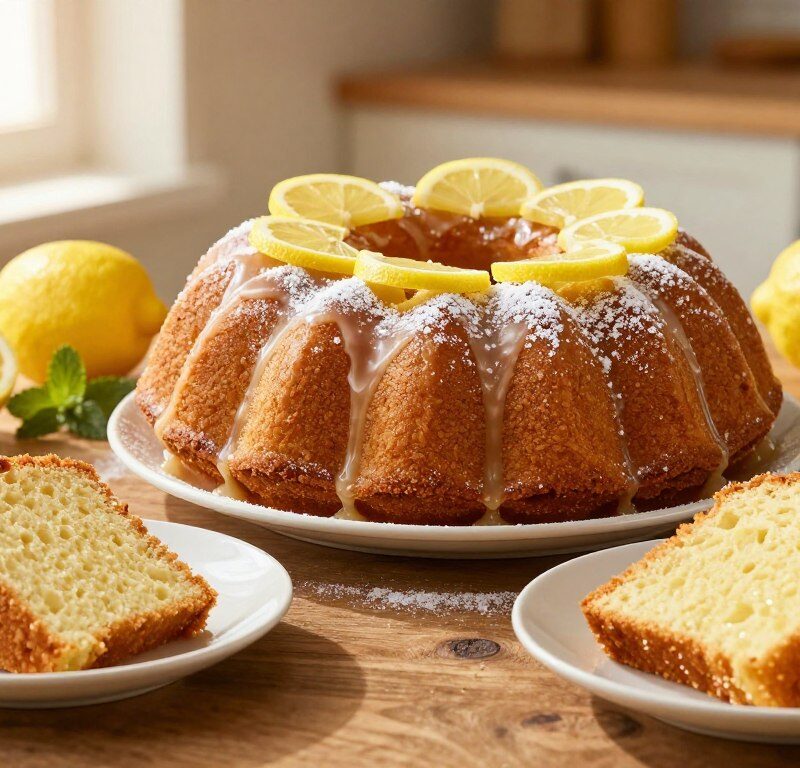
This classic sponge brings bright citrus and a soft, buttery crumb to your tea table. The distinctive ring tin gives the bake an elegant ridged finish and helps it cook evenly. It is an ideal treat for gatherings or a quiet afternoon at home.
With simple storecupboard ingredients and reliable technique, even novice bakers can achieve a show-stopping shape. A careful drizzle finish seals in moisture and adds a tangy shine that lifts each slice.
The recipe blends ease with a polished presentation. Expect a moist, fragrant sponge that keeps well for days. Follow clear steps and you will master the drizzle and the signature ring design with confidence.
Key Takeaways
- The ring tin ensures even baking and an attractive, ridged presentation.
- Simple ingredients produce a moist, buttery crumb suitable for all skill levels.
- A light drizzle finish adds lasting moisture and a bright citrus note.
- Suitable for celebrations and everyday teatime alike.
- Clear technique helps bakers of any experience achieve consistent results.
Why You Will Love This Mary Berry Lemon Bundt Cake
This ring-shaped sponge combines vivid citrus notes with a tender, buttery crumb.
Bright zest and a touch of juice are folded into the batter, and a light syrup sometimes soaks the sponge to keep each slice moist and flavourful.
The cast ring tin helps the bake cook evenly, forming a golden crust while the centre remains soft and delicate.
It’s a fuss-free showstopper: the patterned mould does much of the decorating, so you need little extra to impress guests.
- Perfect balance of citrus and a buttery crumb for a classic teatime treat.
- Consistent results mean this drizzle cake is a go-to among home bakers.
- Feeds a crowd and stores well, making it ideal for gatherings.
Simple ingredients, reliable technique make this one of the most loved cake recipes in many households.
Essential Ingredients for Your Lemon Sponge
Choose fresh, fragrant citrus and measured dry goods to guarantee a consistent bake.
Start with reliable staples: 225g softened unsalted butter and 225g caster sugar form the base. Use 225g self-raising flour and add 1 tsp baking powder for steady lift.
Eggs matter: Beat in 4 large eggs one at a time to keep the batter smooth and airy. Add 2 tbsp milk if the mixture looks too stiff.
The zest of 2 fruits gives bright aroma, while the juice of 1 fruit (fresh lemon juice) adds balance. Fresh juice beats bottled for natural acidity and flavour.
Choosing Quality Lemons
Pick firm, glossy-skinned fruits. Heavier items hold more juice and fragrant oils in the zest.
Selecting the Right Flour
Self-raising flour plus 1 tsp baking powder ensures a tender crumb without overworking the batter.
| Ingredient | Amount | Purpose |
|---|---|---|
| Unsalted butter | 225g | Richness and structure |
| Caster sugar | 225g | Sweetness and lift |
| Eggs | 4 large | Emulsify and aerate |
| Self-raising flour + baking powder | 225g + 1 tsp | Tender rise |
| Zest & juice | Zest of 2, juice of 1 | Citrus flavour for lemon drizzle cake |
Tip: Bring butter and eggs to room temperature for a smoother batter. This small step improves texture and helps the drizzle set evenly.
Preparing Your Bundt Tin for Success
Proper tin prep sets the scene for an even rise and clean release. Good preparation makes baking less stressful and helps your lemon bundt come away in one piece.
Grease thoroughly: use softened butter or a commercial cake release spray. Work into every groove and ridge so the batter cannot cling.
Dust with flour: sprinkle a little flour over the greased surface and tap out the excess. This creates a reliable non-stick barrier without altering texture.
- Use a 10-cup capacity tin to allow the sponge to rise evenly and hold its shape.
- Grease the mould just before adding the batter to prevent the coating from sliding.
- High-quality tins such as Nordic Ware often give the best release and longest life.
| Item | Recommendation | Why it matters |
|---|---|---|
| Grease type | Butter or cake release spray | Prevents sticking in grooves |
| Flour dusting | Light dust, tap out excess | Creates non-stick barrier |
| Tin capacity | 10-cup | Allows even rise and set |
| Tin quality | Sturdy cast aluminium (e.g. Nordic Ware) | Better release, durable finish |
Take your time with these steps. Meticulous coating of the nooks and crannies saves you from frustration when turning out the bundt cake.
Mixing the Perfect Lemon Batter
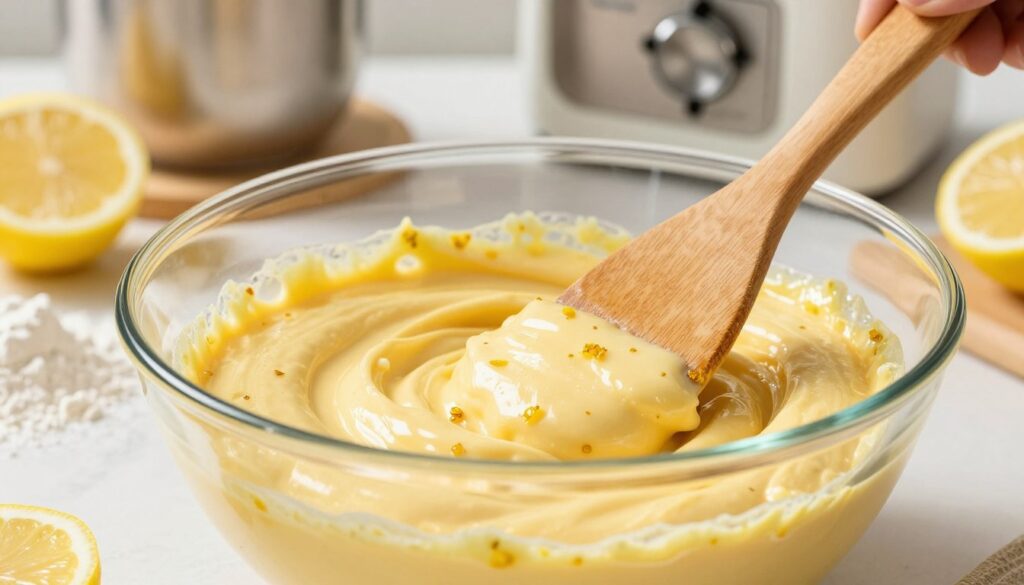
A pale, fluffy butter-and-sugar mix gives this sponge the lift and tenderness it needs. Start by beating 225g of softened butter with 225g of caster sugar in a large bowl until the mixture is light and airy.
Achieving the Ideal Consistency
Use a stand mixer or electric hand mixer to add 4 large eggs one at a time. Ensure each egg is fully incorporated before adding the next to keep the batter smooth and stable.
Fold gently the dry ingredients next: 225g self-raising flour, 1 tsp baking powder and a pinch of salt. Do this in two additions to avoid overworking the batter.
- Stir in the zest of 2 lemons and 2 tbsp milk for moisture and citrus depth.
- Finish with the juice of 1 lemon to brighten flavour, taking care not to overmix.
- Use a spatula to scrape the bottom and sides of the bowl so all ingredients combine into a consistent batter.
One-bowl simplicity is a hallmark of the mary berry lemon recipe, making it easy for helpers to measure and mix. Once smooth, spoon the batter into your prepared bundt tin and level the top for an even bake.
Baking and Cooling Your Cake
A calm oven and measured minutes produce an even crumb and a neat release.
Preheat to 170°C (340°F). Pour the batter into your prepared tin and place it in the centre of the oven.
Bake for 40–45 minutes until the top is golden and springy. Insert a skewer into the middle; it should come out clean when the baking is done.
Tap the tin before you bake to release large air bubbles. Avoid opening the oven door in the first 30 minutes to stop the sponge sinking.
When the time is up, remove from the oven and leave in the pan for five minutes to set the structure.
Carefully invert the mould onto a wire rack to finish cooling. Cooling on the rack prevents trapped steam from making the base soggy.
| Step | Temperature | Timing |
|---|---|---|
| Oven preheat | 170°C / 340°F | – |
| Bake in tin | 170°C / 340°F | 40–45 minutes |
| Rest in pan | Room temp | 5 minutes |
| Finish cooling | Room temp | On wire rack until cool |
Creating the Signature Lemon Drizzle Glaze
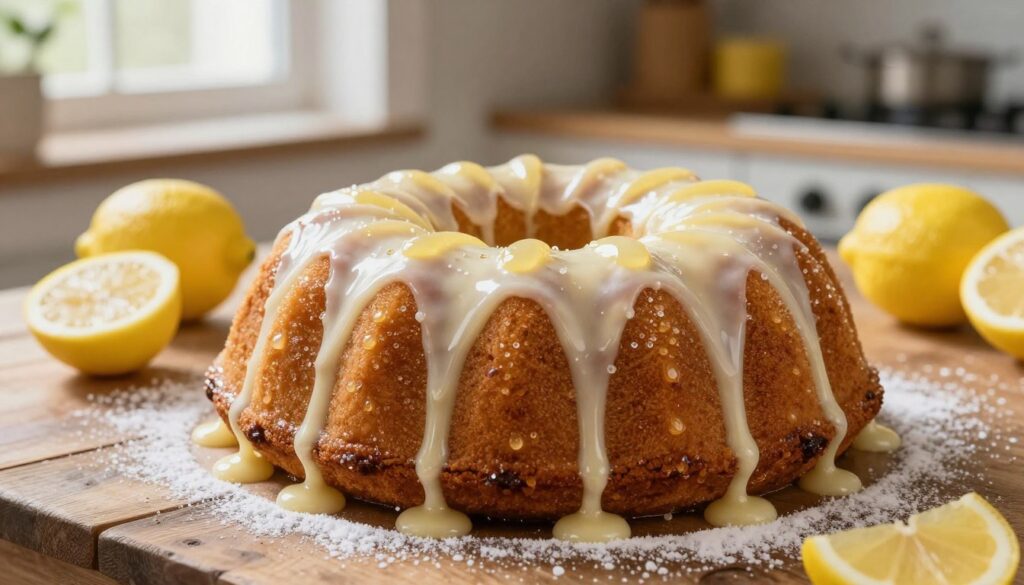
A fragrant lemon syrup applied while the sponge is warm seals in moisture and boosts flavour. This is the moment the drizzle cake earns its shine and zing.
Balancing Sweetness and Tang
Make a simple syrup by gently heating 3 tbsp of lemon juice with 3 tbsp of caster sugar until the sugar dissolves. This creates a fragrant lemon drizzle that soaks in easily.
Ensure the sugar is fully dissolved before use. That balance of sweet and tart keeps each slice bright without becoming cloying.
Applying the Syrup
While the cake is still warm, brush the syrup all over. Use a fine skewer to poke small holes so the lemon juice can penetrate deep into the sponge.
- For extra crunch, spoon 175g granulated sugar mixed with the juice of 2 lemons over the warm surface.
- For a smoother finish, mix 100g icing sugar with 1–2 tbsp lemon juice and drizzle when the sponge is fully cooled.
- Take your time applying the drizzle to saturate the whole sponge and keep it moist for days.
The signature lemon drizzle is what gives this drizzle cake its zingy kick and glossy look. Done carefully, it lifts texture and taste without overwhelming the sponge.
Expert Tips for Moist and Fluffy Results
Simple timing and careful mixing are the secrets to a feather-light, moist sponge. Follow these focused tips to keep texture bright and stable.
Avoiding Overmixing
Stop as soon as the flour is folded in. Overworking the batter develops gluten, which makes the crumb heavy rather than tender.
Use a spatula for the final folds and scrape the bowl rather than beating. This keeps the batter light and the rise even.
Managing Oven Temperatures
Check that your oven runs true with a thermometer; some ovens run hot and can dry or sink baked goods.
Place the tin in the centre of the oven and avoid opening the door in the first 30 minutes. Gentle heat over the full bake time gives a steady rise and an even crust.
Storing for Freshness
Store in an airtight container at room temperature for 3–4 days to retain moisture and flavour.
If you need to keep slices longer, freeze them individually for up to 2 months and defrost at room temperature. For a just-baked feel, warm slices at 150°C (300°F) for 5 minutes before serving.
| Issue | Cause | Fix |
|---|---|---|
| Dense crumb | Overmixing after adding flour | Fold gently; stop once dry streaks disappear |
| Sank centre | Oven too cool or too much raising agent | Check oven temp; measure baking powder accurately |
| Dry slices | Overbaked or oven too hot | Bake fewer minutes; use thermometer to confirm temp |
| Loss of flavour | Using bottled juice or long storage | Use fresh juice and store airtight at room temp |
Conclusion
A few careful steps transform pantry staples into a zesty, tender sponge that pleases a crowd.
This recipe balances sweetness with bright citrus and gives you an elegant ring with minimal fuss. Follow the tin preparation, correct temperatures and the drizzle method to lock in moisture and flavour.
Whether you are a novice or practiced baker, these clear recipes and tips make success likely. Use them to master the lemon drizzle cake and add a reliable entry to your collection of cake recipes.
Enjoy your homemade bundt and feel free to tweak the drizzle to suit your taste. Happy baking and savour every slice.
FAQ
What is the best way to prepare the tin so the sponge releases cleanly?
How do I choose quality lemons for zest and juice?
Can I substitute a different flour for plain flour?
How do I achieve the right batter consistency?
What oven temperature and baking time give the best results?
How and when should I apply the lemon drizzle or syrup?
What tips help prevent the sponge from drying out?
How can I avoid overmixing the batter?
Are there variations I can try with the glaze or filling?
What’s the best way to store leftover slices to keep them fresh?
Mary Berry Lemon Bundt Cake
This classic sponge brings bright citrus and a soft, buttery crumb to your tea table. The distinctive ring tin gives the bake an elegant ridged finish and helps it cook evenly. It is an ideal treat for gatherings or a quiet afternoon at home.
Ingredients
- 225g unsalted butter, softened
- 225g caster sugar
- 4 large eggs
- 225g self-raising flour
- 1 tsp baking powder
- Zest of 2 lemons
- Juice of 1 lemon
- 2 tbsp milk
Method
- Preheat the oven to 170°C (340°F).
- Grease a 10-cup capacity bundt tin thoroughly with softened butter or cake release spray, then dust with flour.
- In a large bowl, beat the softened butter and caster sugar together until light and airy.
- Add the eggs one at a time, ensuring each is fully incorporated before adding the next.
- Fold in the self-raising flour, baking powder, and a pinch of salt in two additions to avoid overworking the batter.
- Stir in the zest of 2 lemons and 2 tbsp of milk for moisture.
- Finish with the juice of 1 lemon, taking care not to overmix.
- Spoon the batter into the prepared bundt tin and level the top.
- Bake in the preheated oven for 40-45 minutes until golden and springy.
- Remove from the oven and let it rest in the pan for 5 minutes before inverting onto a wire rack to cool completely.
- To make the lemon drizzle, gently heat 3 tbsp of lemon juice with 3 tbsp of caster sugar until the sugar dissolves.
- While the cake is still warm, brush the syrup all over and poke small holes with a skewer to allow the syrup to soak in.