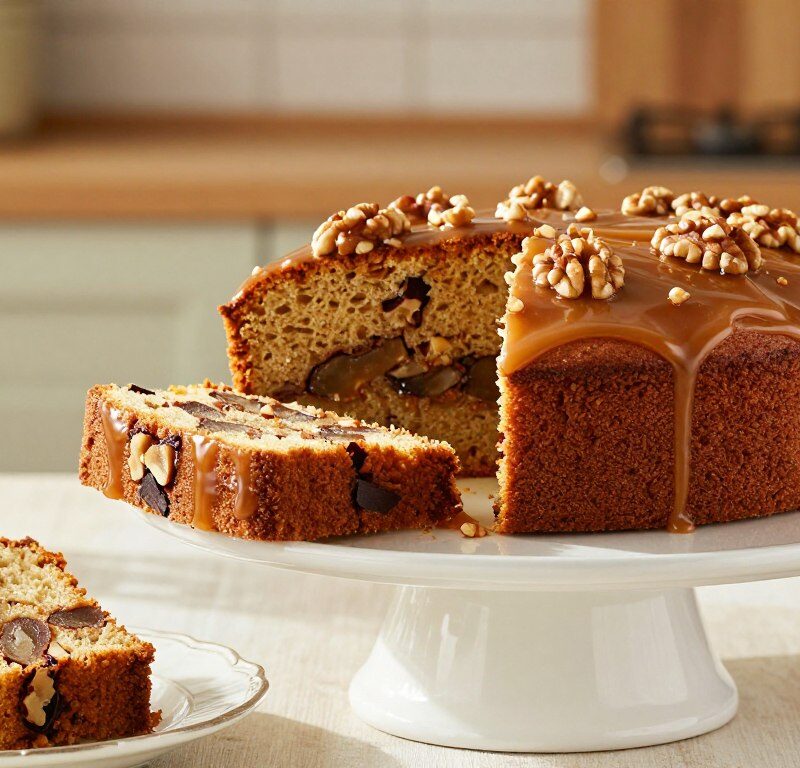
This classic British loaf pairs chopped dates with crunchy nuts in a light sponge. It has long been a tea-time favourite and shows how simple ingredients can make something special.
The recipe focuses on natural sweetness and texture. The result is a moist, nutty loaf that suits afternoon tea or a modest dessert.
Many home bakers praise the straightforward method. With a reliable technique you will make this signature bake with confidence and a satisfying result.
Key Takeaways
- Simple ingredients produce a rich, comforting loaf.
- The natural sweetness of dates balances the nutty crunch.
- Reliable steps make this an approachable bake for beginners.
- Perfect for afternoon tea and light desserts.
- Follow the method to achieve a moist, flavourful result.
The Timeless Appeal of Mary Berry Date And Walnut Cake
The blend of sticky fruit and crunchy nuts creates a timeless teatime favourite.
This traditional British loaf combines chopped dates with toasted walnuts folded into a light sponge. The result is a soft, tender base that lets the caramel-like sweetness of the fruit shine through.
Why it endures:
- Simple ingredients that deliver rich flavour and texture.
- Reliable method so home bakers get a consistent loaf every time.
- Stays moist for days, making it a practical bake for busy households.
The berry date walnut profile suits a cup of tea or coffee and rewards slow sipping. Enthusiasts often praise how the sponge remains forgiving while the fruit adds sticky, sweet pockets in each slice.
Essential Ingredients for Your Bake
Small choices in ingredients make a big difference to the final loaf.
Selecting quality fruit and nuts gives the sponge a true depth of flavour. Use 150g of stoned dates — Medjool dates are best for a rich, sticky sweetness that regular dried dates cannot match. Chop them so they spread evenly through the mixture.
Key dry and wet components:
- 175g self-raising flour and 1 tsp baking powder for lift.
- 150g butter and 125g light brown or muscovado sugar for moisture and caramel notes.
- 2 tbsp milk and 0.5 tsp mixed spice to round the flavour.
Selecting Quality Dates
Choose plump Medjool dates when possible. Their stickiness improves crumb texture and keeps slices moist for longer.
The Importance of Toasting Walnuts
Toast 100g walnuts at 160°C for five minutes to release oils and deepen the nutty flavour. Allow them to cool, then roughly chop before folding into the mixture.
“Toasting nuts briefly enhances crunch and brings forward natural oils for a richer taste.”
| Ingredient | Amount | Notes |
|---|---|---|
| Self-raising flour | 175g | Contains baking powder; sift for lightness |
| Stoned dates | 150g | Medjool preferred; chop finely |
| Walnuts | 100g | Toast 5 mins at 160°C, then chop |
| Butter | 150g | Room temperature for creaming |
| Muscovado / light brown sugar | 125g | Adds deep, treacly richness |
| Baking powder | 1 tsp | Essential for proper lift |
| Milk | 2 tbsp | Helps loosen the batter |
| Mixed spice | 0.5 tsp | Subtle warmth in the sponge |
Preparing Your Tin and Oven
Get the tin ready and the oven hot — this step sets the tone for an even, well-risen loaf.
Preheat your oven to 180°C (160°C fan) and allow it to reach temperature before the tin goes in. This helps the cake rise steadily and develop a golden crust.
Line a 2lb loaf tin with good-quality tin baking paper. Lining the tin prevents sticking and makes removal much easier once the loaf has cooled.
Use a metal tin where possible. Metal conducts heat better than silicone and usually gives a more even bake over the 50–60 minutes suggested for this loaf.
Proper tin preparation is a small step but a crucial one. Mary Berry often stresses that a well-lined tin helps the loaf keep its shape while it bakes.
- Check the oven thermometer if you have one to confirm the correct heat.
- Fold the tin baking paper to fit snugly and avoid large creases that affect the rise.
- Place the tin on the middle shelf for the best circulation and even tin baking.
Mixing the Perfect Sponge
Kick off the mixing by working butter and muscovado sugar together until the colour lightens and the texture feels airy. Use 150g softened butter and 125g light brown or muscovado sugar. Beat until pale and fluffy — this traps air and helps the sponge rise.
Prepare the fruit. Soak 150g chopped dates in boiling water with a pinch of bicarbonate of soda for 5 minutes. Drain lightly so the pieces keep moisture but do not make the batter too wet.
Creaming butter and sugar
Beat in 2 large eggs, one at a time. If the mixture starts to curdle, add a spoonful of flour to bring it back together. Keep the motion steady and avoid overbeating.
Incorporating the date mixture
Once smooth, fold the softened dates and their soaking liquid into the batter. The warm fruit will meld with the mix and deepen the flavour.
Folding in dry ingredients
Sift together 175g self-raising flour, 1 tsp baking powder and ½ tsp mixed spice. Gently fold these into the batter to keep the air trapped in the sponge.
Finally, stir in the toasted walnuts and check the texture. Transfer the batter to your prepared tin and level the top before baking.
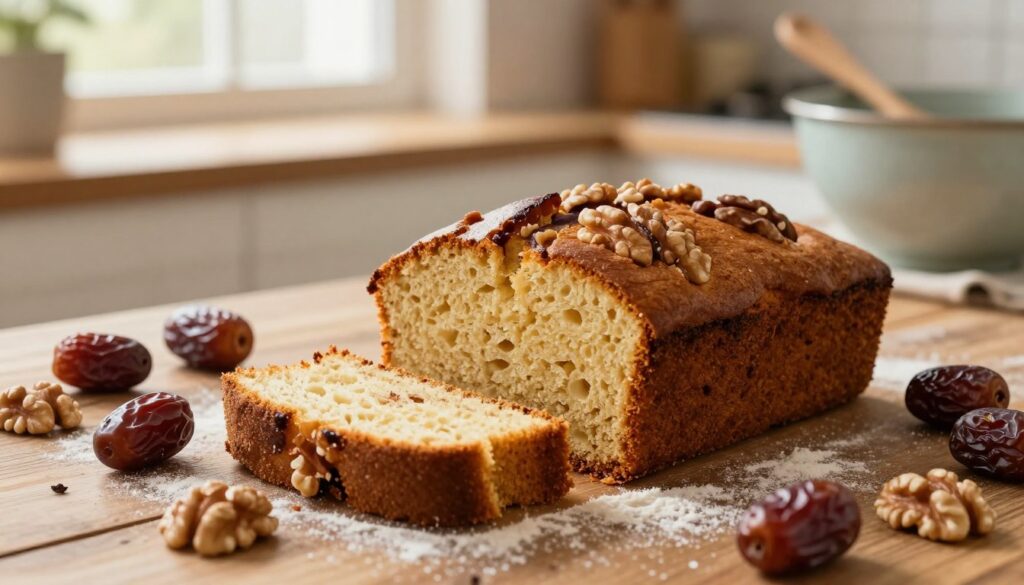
Baking to Golden Perfection
A patient bake at moderate heat brings out the best in a sponge studded with chopped dates and toasted walnuts.
Bake the loaf for 55–60 minutes. In my test it was perfect at 58 minutes when checked with a wooden skewer in the centre.
If the top browns too fast, loosely cover it with foil or a sheet of tin baking paper to protect the surface. This keeps the crust from over-darkening while the middle finishes.
The sponge is ready when a skewer inserted into the centre comes out clean. Two words to watch for: it “comes clean”. If crumbs cling, give it a few more minutes and test again.
Cool the loaf in the tin for 10 minutes. Then turn it out onto a wire rack to cool completely. Proper cooling helps the mixture firm up so the slices do not crumble.
“Let the loaf rest after baking; it improves texture and makes slicing neater.”
| Step | Action | Timing |
|---|---|---|
| Start | Place tin on middle shelf | 0 minutes |
| Mid bake | Check colour; cover if too dark | 30–40 minutes |
| Finish | Skewer test — comes clean | 55–60 minutes |
| Cooling | Cool 10 minutes in tin, then rack | 10 minutes + cooling |
Common Mistakes and How to Avoid Them
A few simple errors in technique can turn a promising loaf into a sunken or dry disappointment. Read these quick checks before you start the bake to keep the sponge even and moist.
Prevent overmixing. Work the butter and sugar until pale, then fold in flour gently. Overworking the batter develops gluten and can cause the cake to sink.
Watch the time. Start checking at 50 minutes. Overbaking by a few minutes dries the crumb. A quick skewer test will tell you when it comes clean.
Keep fruit even. Chop dates small and fold them through the batter so they do not sink to the bottom of the tin. This gives a balanced texture in every slice.
Mind the oven door. Do not open it in the first 30–40 minutes. A sudden drop in temperature often leads to a sunken centre.
Toast walnuts. Briefly toasting nuts prevents them from going soggy and keeps a pleasant crunch within the soft sponge.
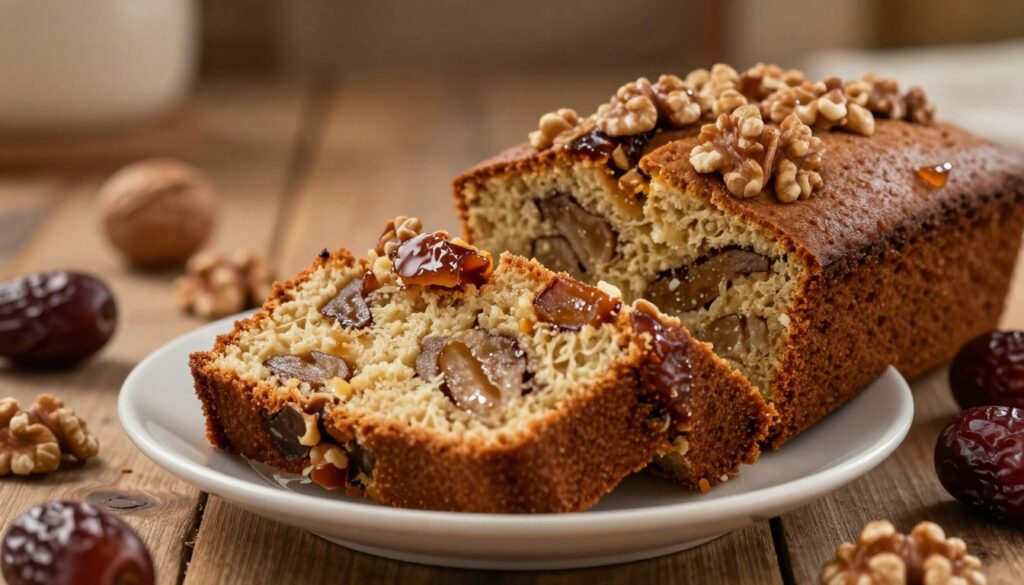
Storage and Serving Suggestions
A little patience after baking pays off when you slice the loaf the next day. For the best texture and flavour, leave the cooled loaf overnight in an airtight tin. This helps the sponge settle and become more squidgy.
If your kitchen is warm, chill the loaf in the fridge. Stored in a sealed tin it will keep nicely for up to five days. To freeze, wrap the whole loaf or individual slices tightly in foil or plastic; frozen pieces keep for up to three months.
Serving ideas:
- Serve a slice with a dollop of clotted cream and a cup of tea for a classic finish.
- Warm a slice in the microwave for 15–20 minutes and add vanilla ice cream for a warm pudding.
- Store slices in the loaf tin between layers of baking paper to avoid sticking.
“Storing the loaf overnight improves moisture and makes slicing neater.”
| Storage | Method | Duration |
|---|---|---|
| Room temperature | Airtight tin | Up to 5 days |
| Fridge | Sealed tin (warm kitchens) | Up to 5 days |
| Freezer | Wrapped foil/plastic | Up to 3 months |
Conclusion
Consistent method and proper ingredients turn a humble loaf into a memorable teatime treat.
Follow the steps for soaking the fruit and creaming butter to get a moist, even crumb. Use good-quality Medjool dates and lightly toasted nuts for the best flavour when you bake the mary berry cake.
Once cooled, this loaf adapts to many uses. Slice it for lunchboxes, serve warm with custard or clotted cream, or offer a simple slice at afternoon tea. The recipe stores well and often tastes better the next day.
Enjoy baking this traditional berry cake and sharing it with friends and family. With care and the right ingredients, it will become a dependable favourite in your kitchen.
FAQ
What size of loaf tin should I use and should it be lined with baking paper?
What oven temperature and setting are best — 160°C fan or a different method?
How long should the loaf bake and how do I test for doneness?
How do I prepare the dates so they add moisture without making the mixture too wet?
Should I toast the walnuts and why does it matter?
Can I substitute muscovado or brown sugar for caster sugar?
What is the best method for creaming butter and sugar for a light sponge?
How and when should I fold in flour and baking powder without knocking out the air?
Is mixed spice necessary and can I omit it?
How do I prevent the loaf from sinking in the middle?
Can I add extra walnuts on top and how should I prepare them?
How should I store the loaf and how long will it keep?
Can I make this recipe in advance and does it improve with time?
Are there any tips for avoiding a dry texture?
What adjustments are needed when using a fan oven versus conventional heat?
Mary Berry Date And Walnut Cake
This classic British loaf pairs chopped dates with crunchy nuts in a light sponge, creating a moist, nutty loaf that is perfect for afternoon tea or a modest dessert.
Ingredients
- 175g self-raising flour
- 150g stoned Medjool dates, chopped
- 100g walnuts, toasted and chopped
- 150g butter, room temperature
- 125g light brown or muscovado sugar
- 1 tsp baking powder
- 2 tbsp milk
- 0.5 tsp mixed spice
Method
- Preheat your oven to 180°C (160°C fan) and line a 2lb loaf tin with baking paper.
- Cream together the butter and muscovado sugar until pale and fluffy.
- Soak the chopped dates in boiling water with a pinch of bicarbonate of soda for 5 minutes, then drain.
- Beat in the eggs one at a time, adding a spoonful of flour if the mixture curdles.
- Fold in the soaked dates and their liquid into the batter.
- Sift together the self-raising flour, baking powder, and mixed spice, then gently fold into the batter.
- Stir in the toasted walnuts and transfer the batter to the prepared tin, leveling the top.
- Bake for 55–60 minutes, checking with a skewer to ensure it comes out clean.
- Cool the loaf in the tin for 10 minutes, then turn it out onto a wire rack to cool completely.