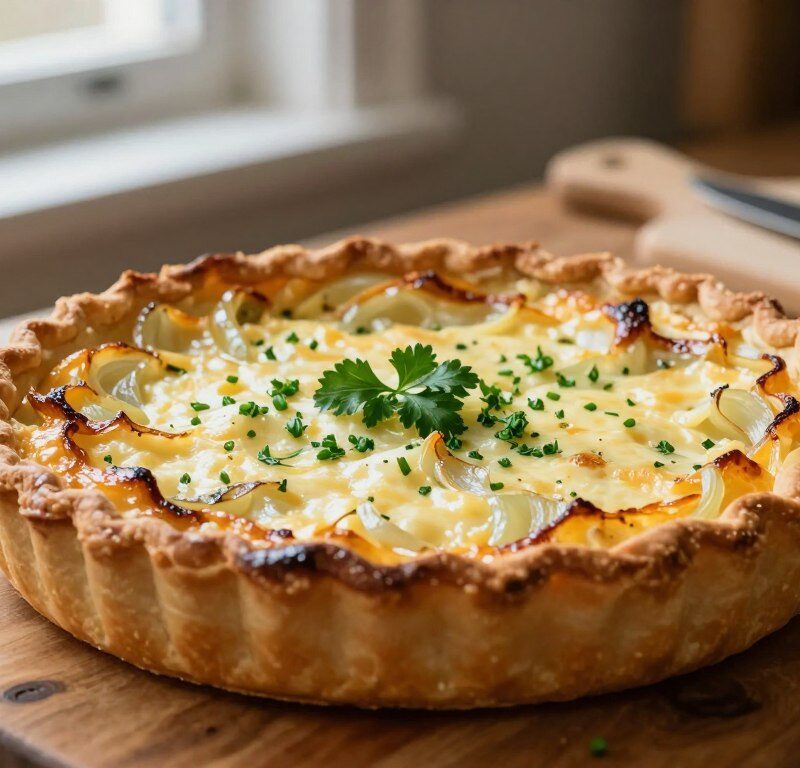
This classic British bake brings together a crisp pastry base with a rich, savoury filling that feels both comforting and elegant.
It takes roughly one hour from start to finish, making it ideal for a relaxed lunch or a light evening meal. The charm lies in the use of simple ingredients and straightforward steps, so home cooks of all levels can succeed.
The method balances texture and flavour, producing a reliably set tart that many compare to a perfect quiche lorraine style. Follow clear guidance and a few practical tips to achieve a professional finish without fuss.
Whether served at a picnic or on a family table, this recipe rewards with slices that are satisfying and full of homely flavour. Expect steady results when you focus on quality ingredients and careful baking.
Key Takeaways
- The recipe is simple and suitable for cooks of all abilities.
- Ready in about an hour, it fits well into lunch and light-dinner plans.
- A crisp pastry and creamy filling create classic, comforting flavours.
- Uses straightforward, readily available ingredients for easy prep.
- Tips and correct baking ensure a well-set, elegant tart every time.
Why You Will Love This Mary Berry Cheese And Onion Quiche
This tart stands out for its silk-like custard and the way it holds its shape after baking. The filling sets neatly without becoming rubbery, giving each slice a smooth, creamy mouthfeel that feels indulgent but light.
The balance of savoury and subtle flavours is a main reason this recipe is so reliable. Fresh eggs and top-quality cream keep the custard soft and easy to slice.
It is highly versatile. Serve it for lunch, brunch or supper, or bring it to a picnic. Leftovers are just as pleasing the next day, which makes it a practical make-ahead dish.
“A well-made tart should be elegant, not heavy.”
Unlike a heavy quiche lorraine, this version stays refined. Pairing it with a crisp green salad adds a bright contrast and completes the meal with ease.
Essential Ingredients For Your Savoury Tart
A flaky, buttery crust depends on a few precise ingredients and a gentle touch. Gather everything before you start to keep the process smooth.
Selecting Quality Cheese
Choose a mature cheddar for depth and a clean savoury finish. Use about 150g to give the filling a rich flavour without overpowering the other components.
Choosing The Right Flour
For the pastry, measure 200g of plain flour into a large bowl. Add 100g of cold unsalted butter in cubes and rub or pulse until the mixture looks like breadcrumbs.
- Start in a large bowl with the plain flour to form the base for the pastry case.
- Keep the butter cold—this creates layers and a light, flaky texture.
- Add 2–3 tablespoons of cold water to bind the butter flour mix into a soft dough.
- Season the filling with a pinch of salt and pepper to enhance the cheese onion profile.
- Careful measurement and quality ingredients make the most difference to the end result.
For more guidance on this classic recipe and variations, see this vegetarian version that follows similar principles.
Preparing The Perfect Shortcrust Pastry
The secret to a neat tart shell is short handling and plenty of chill time. Keep ingredients cold and work fast to avoid warming the butter.
Chilling The Dough
Make pastry by rubbing cold unsalted butter into plain flour in a large bowl until the mix looks like breadcrumbs. Use your fingertips for best texture, or a food processor to speed things up.
- Gradually add cold water and bring the butter flour mix together without overworking the dough.
- Shape the dough into a flat disc and chill for 20–30 minutes. Proper chilling prevents shrinkage during baking.
- Roll out on a lightly floured surface until large enough to line a 23cm loose-bottom tin. Trim the excess for a neat edge.
- Prick the base with a fork before you blind bake to stop the crust puffing up in the oven.
| Step | Time | Tip |
|---|---|---|
| Rub butter into flour | 5 minutes | Use fingertips for flaky texture |
| Bring dough together | 2–3 minutes | Add cold water slowly |
| Chill dough | 20–30 minutes | Ensures crisp base for quiche lorraine style fillings |
Careful prep gives a thin, crisp pastry that will hold the rich filling and survive the fill baking stage with a tidy finish.
The Art Of The Blind Bake
Give the pastry a short, hot spell in the oven so it sets and stays dry under the filling.
Blind baking prevents the soggy base that spoils many a homemade quiche. Line the tin with baking paper and fill with baking beans or rice to weight the case. This keeps the pastry flat as it cooks.
Preheat the oven to 190°C (170°C fan). Bake for 15 minutes with the paper and beans in place. Then carefully remove the paper and beans and bake for a further 5 minutes until the base is lightly golden.
- Use good-quality baking beans or rice to hold the shape while the pastry sets.
- Follow the exact timings: 15 minutes then 5 minutes — these minutes make all the difference.
- This blind bake is a hallmark of a mary berry quiche lorraine and ensures the base is cooked through before you add the custard.
| Action | Temperature | Time |
|---|---|---|
| Blind bake with paper & beans | 190°C / 170°C fan | 15 minutes |
| Remove paper and beans, continue baking | 190°C / 170°C fan | 5 minutes |
| Ready to fill and finish baking | As recipe directs | Proceed to fill baking |
“A dry, lightly golden base is the best defence against a soggy bottom.”
Softening Onions For Maximum Flavour
Take time with the sliced onion; gentle heat brings out its natural sweetness and makes a big difference to the final quiche.
Place the slices in a frying pan over low heat with a small knob of butter or a little oil. Cook slowly for 8–10 minutes, stirring now and then until the pieces are translucent and soft but not browned.
Slow cooking releases sugars and removes that sharp, raw bite. The result is a sweeter, more rounded flavour that blends effortlessly into the filling.
- Gently soften in a pan with butter or oil for 8–10 minutes.
- Keep the heat low and stir occasionally to avoid burning.
- This method gives a subtle caramelisation that lifts a classic cheese onion profile.
“Soft, sweet slices are the secret to a balanced, aromatic filling.”
Creating The Creamy Custard Filling
A smooth custard is the heart of any great tart, and it starts with the right egg-to-cream ratio. Measure carefully and work in a clean bowl to avoid lumps.
Balancing Eggs And Cream
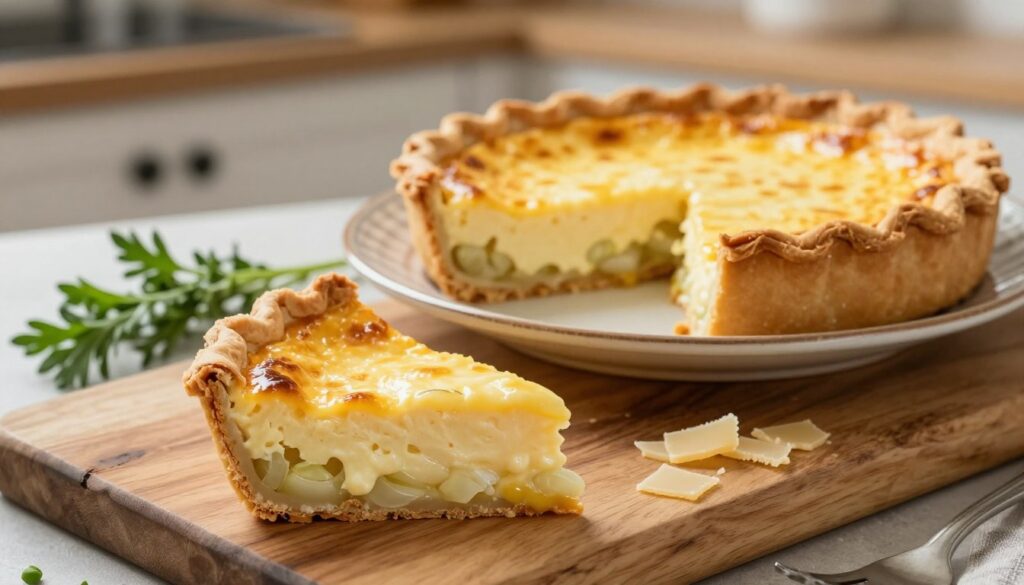
Whisk together 3 large eggs, 200ml double cream and 100ml milk until the mixture is silky and even. This ratio gives a soft-set texture typical of a classic quiche lorraine style filling.
Seasoning The Mixture
Season with a pinch of salt and a good grind of pepper. Taste a spoonful before you pour egg mixture into the pastry case — this is your last chance to adjust.
- Whisk in a large bowl until no streaks remain.
- Fold in the cooked onion and grated cheese onion blend so flavours distribute evenly.
- When you pour egg mixture over the filling, do so slowly and evenly for a consistent set.
| Item | Amount | Purpose |
|---|---|---|
| Eggs | 3 large | Structure and set |
| Double cream | 200ml | Richness and silkiness |
| Milk | 100ml | Lightens texture |
| Salt & Pepper | To taste | Enhances flavour |
“The balance of eggs and cream gives this recipe its characteristic creamy consistency.”
Tip: Using full cream ensures a luxurious mouthfeel, but you can replace some with milk for a lighter finish. Check seasoning, then pour egg mixture and bake until set but still slightly wobbly in the centre.
Assembling And Baking Your Quiche
Assemble the components carefully so the filling cooks evenly and the pastry stays crisp.
Spread the softened onion slices across the blind-baked pastry base. Sprinkle 150g of grated mature cheese evenly over the layers.
Place the tin on a baking tray before you pour egg custard mixture into the case to catch any spills in the oven.
Bake for 30–35 minutes at 190°C (170°C fan) until the centre is just set with a slight wobble. Keep an eye on the surface so the top turns a light gold without overcooking.
- Assemble by layering softened onion and grated cheese inside the blind-baked pastry tin.
- Use the fork-pricked base to ensure the pastry remains flat and crisp under the filling.
- Rest the tart for 10–15 minutes after baking so the mixture firms and it is easier to serve warm.
“The final baking stage melts flavours together and gives a perfect contrast between crisp pastry and creamy filling.”
Pro Tips For A Flawless Finish
A few careful checks after baking will guarantee a neat, even set and a crisp base. These small steps help avoid common faults and keep the slice looking as good as it tastes.
Avoiding A Soggy Bottom
Blind bake the case until the base is dry and lightly golden. This stops the liquid filling from seeping into the pastry and making it soft.
Ensure the oven is at the right temperature and follow the recommended bake minutes. A fully blind-baked shell is the best defence against a damp base.
Achieving The Perfect Wobble
Remove the tart when the centre still has a slight wobble; it will finish setting as it rests. Overbaking for extra minutes can make the filling dry or spongey.
Resting for 10–15 minutes helps the filling firm so you can slice neat wedges without the custard collapsing.
Fixing Pastry Cracks
If the pastry cracks during blind bake, mix a little flour and water into a paste and patch the hole. Press the patch gently and return to the oven for a couple more minutes.
When you make pastry, use your fingertips to rub the butter into the flour and keep ingredients cold, especially the cold water. This yields flaky layers and fewer breaks.
- Use your fingertips to rub butter into flour for the best texture.
- Blind bake thoroughly to prevent a soggy bottom in this quiche lorraine style recipe.
- Watch the final 5–10 minutes of baking so the filling sets without overcooking.
“Attention to these small details gives you a tidy, delicious tart every time.”
Serving Suggestions For Every Occasion
Serving makes all the difference: allow the tart to rest for 10–15 minutes after baking so the filling firms for clean slices. This short pause helps texture and keeps slices neat when you serve warm or at room temperature.
Pairing With Fresh Salad
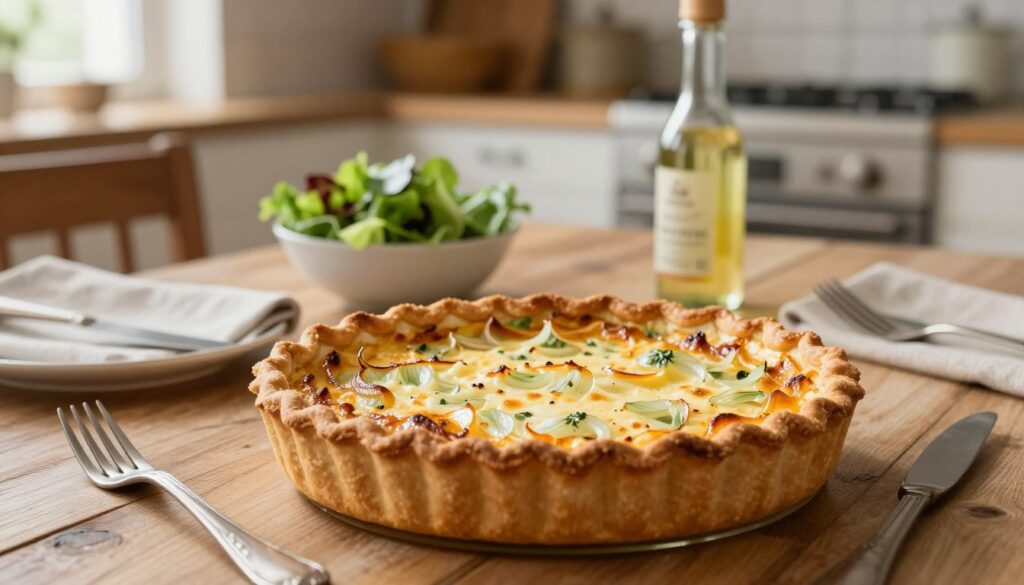
A crisp green salad lifts the richness. The crunch of leaves and a light vinaigrette balance the cream and melted cheese in each mouthful.
- Light lunch: serve a slice with a vibrant salad for a bright, easy meal.
- Picnics & potlucks: the tart travels well and can be enjoyed cold or after a short wait of a few minutes.
- Heartier option: add roasted vegetables or new potatoes to make it a fuller dinner.
- Pastry care: slice after resting so the pastry edge stays crisp and the filling keeps its shape.
- Versatile recipe: whether for casual lunch or guests, simple pairings make it shine.
“A brief rest and a fresh salad transform a rich slice into a balanced plate.”
Conclusion
Finish with confidence: this classic tart rewards simple care and steady timing.
Follow the blind bake, use cold water when making the pastry and mind the bake minutes in the oven. Simple ingredients — plain flour, unsalted butter, eggs, cream and a good mature cheese — give a reliable filling and excellent flavour.
Take a few minutes to rest the tin after baking. Slice and serve with a fresh salad, or pack it cold for a picnic. With these clear steps and a little patience, this recipe will join your regular rotation of favourite quiches and savoury bakes.
FAQ
How long does the pastry need to chill before rolling?
Should I blind bake the case and for how long?
What’s the best way to soften onions without colouring them?
How do I balance eggs and cream for a silky custard?
Can I use low-fat cream or milk instead of double cream?
How much cheese should I add and when?
How can I avoid a cracked pastry edge after baking?
What’s the ideal oven temperature for baking the assembled tart?
How do I tell when the quiche is fully cooked?
Can I prepare the tart ahead of time?
What sides work well with a savoury tart for lunch?
Is it possible to freeze the baked tart?
How can I prevent the filling from becoming watery?
Which flour is best for shortcrust pastry?
Can I add extra flavours like mustard or herbs?
Mary Berry Cheese And Onion Quiche
This classic British bake brings together a crisp pastry base with a rich, savoury filling that feels both comforting and elegant. Ideal for a relaxed lunch or a light evening meal.
Ingredients
- 200g plain flour
- 100g cold unsalted butter, cubed
- 2-3 tablespoons cold water
- 3 large eggs
- 200ml double cream
- 100ml milk
- 150g mature cheddar cheese, grated
- 1 onion, sliced
- Salt and pepper to taste
Method
- Preheat the oven to 190°C (170°C fan).
- Rub the cold unsalted butter into the plain flour until the mixture resembles breadcrumbs.
- Gradually add cold water to form a soft dough, then chill for 20-30 minutes.
- Roll out the chilled dough and line a 23cm loose-bottom tin, trimming the excess.
- Prick the base with a fork and blind bake with baking paper and beans for 15 minutes, then remove the paper and beans and bake for an additional 5 minutes until lightly golden.
- In a frying pan, soften the sliced onion over low heat with a small knob of butter for 8-10 minutes until translucent.
- In a bowl, whisk together the eggs, double cream, milk, salt, and pepper until smooth.
- Fold in the softened onions and grated cheese.
- Spread the onion mixture evenly over the blind-baked pastry base, then pour the egg mixture over the top.
- Bake for 30-35 minutes until the center is just set with a slight wobble.
- Allow to rest for 10-15 minutes before slicing and serving.