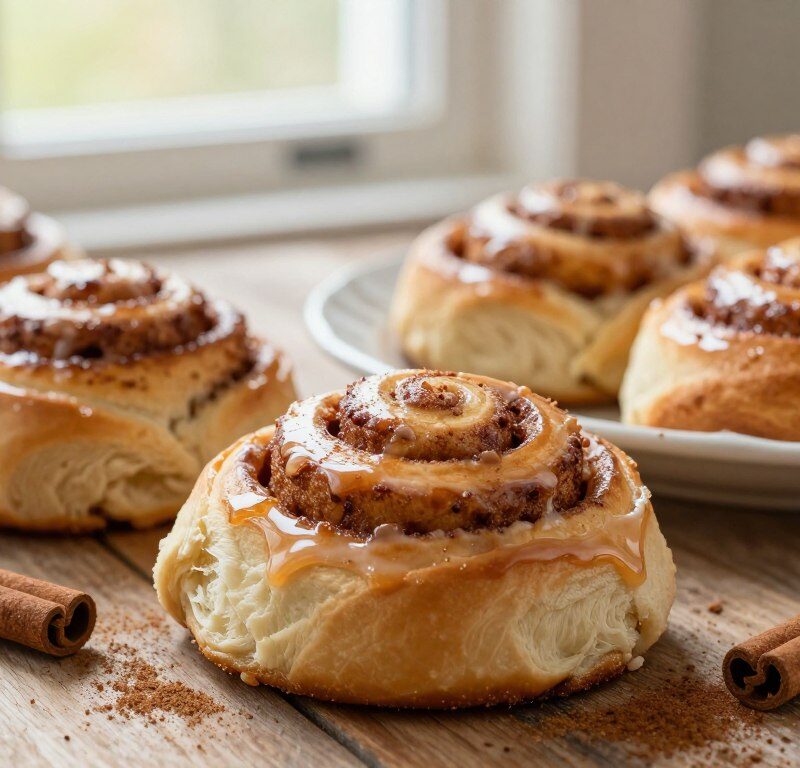
These cinnamon rolls are a classic British bake that fills the kitchen with warm spice and sweet scent. The recipe uses a soft enriched dough made with flour, yeast, milk and melted butter to keep the buns light and fluffy. The whole process, including proving time, takes about 2½ hours from start to finish.
Mix your ingredients in a large bowl: one egg, a teaspoon of salt, a tablespoon of vanilla and the rest of the dry and wet ingredients. The filling of cinnamon sugar and butter is spread across the rolled dough to create those signature swirls.
Knead the dough on a floured surface until smooth, then cover with a clean tea towel and leave to double in size. Arrange the rolls in a tin, bake in a hot oven and enjoy with a cup of English breakfast tea for a perfect brunch treat.
Key Takeaways
- The recipe yields bakery-style cinnamon sugar swirls that are ideal for sharing.
- An enriched dough with milk and melted butter keeps the buns light.
- Allow proving time—about 2½ hours total ensures proper rise.
- Knead on a floured surface and cover with a clean tea towel for best texture.
Why Everyone Loves Mary Berry Cinnamon Rolls
Few bakes combine comfort and simplicity like these tender, fragrant swirls. The gentle sweetness never overwhelms the soft dough, so each bite stays light and pillowy.
This reliable recipe is a crowd-pleaser for family breakfasts or a relaxed weekend brunch with hot tea. The method is clear enough for beginners yet delivers results that feel professional.
The signature cinnamon aroma fills the home, drawing everyone to the kitchen. Home bakers praise how the rolls remain airy, avoiding the heavy, dense texture of many shop-bought alternatives.
| Feature | Why it matters | At a glance |
|---|---|---|
| Balanced sweetness | Enhances flavour without cloying the dough | Perfect for sharing |
| Easy method | Great for novice bakers | Low stress, high reward |
| Light texture | Keeps buns soft and fluffy | Feels bakery-made |
| Warm aroma | Creates a welcoming atmosphere | Invites family together |
“A simple, dependable recipe that fills the home with a cosy spice and brings people together.”
Essential Ingredients for Your Baking Project
Start with a shortlist of pantry essentials to make sure your bake goes smoothly. Use good quality basics and measure accurately for reliable results.
Pantry Staples
Flour: 500g of strong white bread flour gives the dough structure and the right chew.
Milk: 250ml of warm milk enriches the dough and helps the yeast activate.
Butter: 75g unsalted butter adds tenderness and flavour.
Quality Matters
Use 50g caster sugar and a single teaspoon of salt to balance sweetness and enhance taste. Fresh eggs at room temperature help the yeast work properly.
Fresh, good‑quality cinnamon is crucial for the warm spiced aroma that defines these soft, buttery rolls.
“High‑quality ingredients are the foundation of any successful bake.”
- Strong flour for structure
- Warm milk and room‑temp eggs for better rise
- Unsalted butter and caster sugar for even flavour
Preparing the Perfect Enriched Dough
Make a soft, elastic dough by working methodically and keeping ingredients at room temperature. This helps the yeast activate and gives a tender crumb to the rolls.
Kneading for Elasticity
Begin by combining flour, yeast, sugar and salt in a large bowl. Stir in the warm milk, melted butter and the beaten egg, then bring the mix together until it forms a shaggy dough.
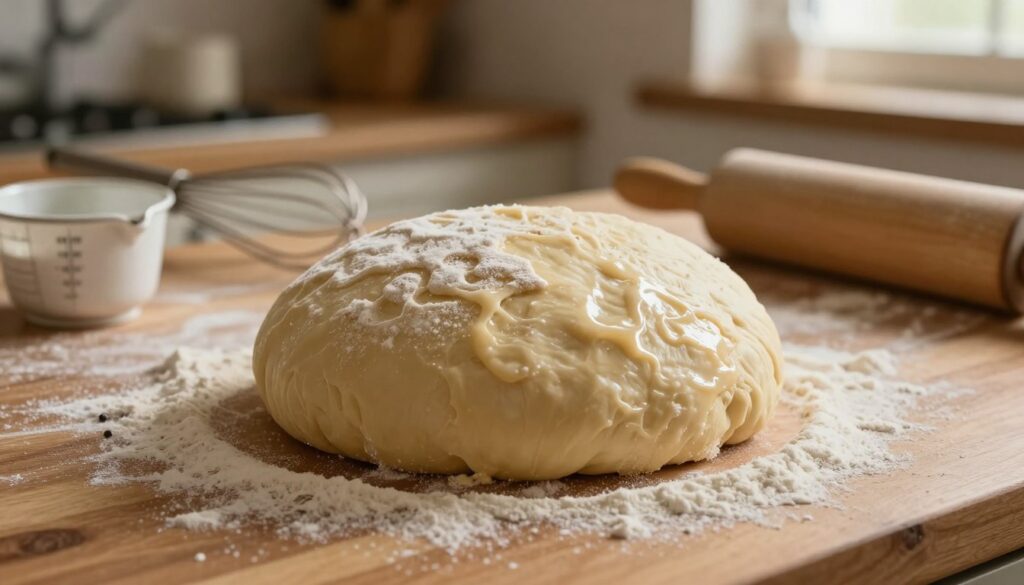
Turn the dough onto a floured surface and surface knead for 8–10 minutes. Work until the dough is smooth, elastic and slightly springy to the touch. This develops the gluten so the rolls keep their shape.
Place the dough in a greased bowl, cover with a clean tea towel and leave in a warm place for one hour. You will know it is ready when it has doubled in size and feels light to the touch.
- Tip: If your kitchen is cool, set the bowl in a warm room or near a gently warm oven (switched off).
- Kneading properly ensures consistent texture and even rise during baking.
“Well-kneaded dough makes the difference between a dense bun and a pillowy, bakery-style result.”
Mastering the Cinnamon Filling and Shaping
Start by whipping together a spiced butter filling until it holds a soft, spreadable texture.
In a small bowl, beat 75g softened butter with 50–75g soft brown sugar and one teaspoon ground cinnamon until smooth. This mixture should be easy to spread but not runny.
Roll the proved dough into a large rectangle on a lightly floured surface. Spread the cinnamon butter right to the edges so every bite has flavour. Even coverage is key — thin patches give bland spirals.
From the long edge, roll the dough up tightly to make a neat log. A firm, even roll keeps the filling inside and creates clear spirals when sliced.
- Use a sharp knife or dental floss to slice the log into even portions.
- Cutting with floss gives cleaner edges and preserves the swirl.
- Place each piece cut-side up and leave space for a second prove.
Tip: Spread the filling to the very edges — that secret step makes every roll taste rich and balanced.
The Importance of the Second Prove
Let the formed pieces relax in a warm spot so the yeast can finish its work. This second rest is not optional — it gives the dough time to become light and tender.
After slicing, arrange rolls in a lined baking tin with enough space between each piece. Proper spacing lets the final rise happen evenly and avoids crowded, misshapen buns.
Cover the tin with a clean tea towel and leave it in a warm place for 30–40 minutes. By the end of this time the pieces should have puffed up noticeably and be close to doubled size.
This stage is crucial. The yeast needs that quiet period to produce gas and create the airy crumb that makes these cinnamon rolls so soft. Don’t rush — under-proved dough bakes dense, not springy.
- Give the rolls 30–40 minutes in a warm place.
- Use a tea towel to keep drafts away and maintain gentle humidity.
- Only bake when the dough is well puffed and the size looks right.
“A calm second prove ensures light, bakery-style buns every time.”
Baking Your Mary Berry Cinnamon Rolls to Perfection
The final bake is where texture, colour and scent all come together perfectly.
Oven Temperature Control
Preheat your oven to 180°C (160°C fan) so the dough bakes evenly.
Keep an eye on the temperature for the full 25–30 minutes.
Bake until the tops are lightly golden and the centre feels springy.
This prevents the sugar in the filling from browning too much and keeps the crumb soft.
Achieving the Golden Finish
After baking, let the tray rest for a few moments so steam evens out in the dough.
A quick peek confirms the butter and milk in the filling have set and the surface smells fragrant.
“A steady oven and a careful eye give you golden, pillowy results every time.”
Glazing While Warm
Make a simple glaze by mixing icing sugar, a splash of milk and a drop of vanilla in a small bowl.
Use a tablespoon to drizzle over the still-warm spirals.
The heat helps the glaze sink into the swirls and lock in moisture for glossy, irresistible buns.
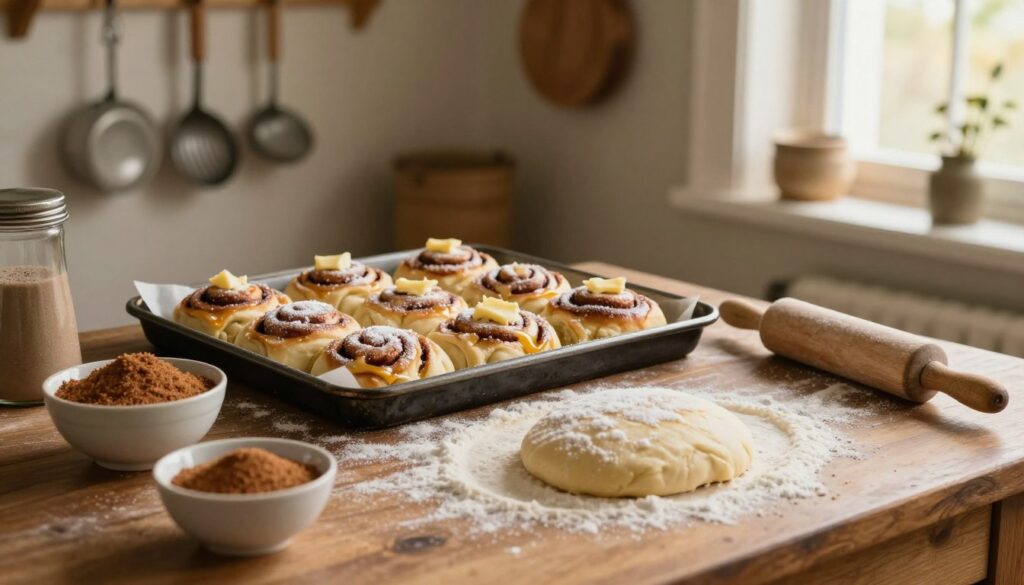
- Preheat to 180°C (160°C fan).
- Bake for 25–30 minutes; watch for sugar caramelising.
- Glaze while warm with icing sugar, milk and vanilla using a tablespoon.
Creative Variations and Flavour Twists
Give the classic recipe a twist by folding chopped pecans or walnuts into the filling before you roll the dough. The nuts add texture and a toasty note that pairs well with the spiced sugar.
For a brighter finish, zest an orange into the cinnamon sugar mix. The citrus lifts the sweet filling and works especially well when you serve the buns with fresh berries or a pot of tea at brunch.
Try different flours for a rustic change. Substitute part of the white flour with whole wheat, but reduce the milk a little to keep the roll dough at the right consistency.
- Swap raisins for dried cranberries or chopped dates for a fruitier bite.
- Add a splash of vanilla to the glaze or a beaten egg wash before baking for extra colour.
“Small swaps make this recipe endlessly adaptable and perfect for any occasion.”
Storage and Reheating Advice
To keep your bake tasting fresh, store and reheat with a little care. The right steps preserve texture and bring back that just-baked smell when you want a quick treat.
Keeping Buns Soft
Short-term: Place cooled rolls in an airtight container at room temperature for up to two days. Use a tea towel lightly over the lid for added softness if the lids seal tightly.
Long-term: Wrap each bun well and freeze for up to two months. Defrost overnight at room temperature before reheating.
- Reheat single portions in the microwave for 15–20 seconds or in a low oven until just warm.
- Brush a little milk over the surface before warming to restore moisture.
- Store without the glaze; add icing and a touch of vanilla after reheating for best flavour.
“Proper storage and a gentle reheat will make your rolls taste as if they were baked that morning.”
For a complementary bake idea, try the seed cake recipe alongside your morning tea.
Conclusion
Follow clear steps and a little patience to turn common ingredients into bakery-style brunch buns. The simple mix of flour, milk, yeast and butter becomes light dough with a soft, fragrant filling.
The balance of cinnamon and sugar, a neat roll and the right proving time gives glossy, tender results. A quick glaze of icing with a touch of vanilla finishes the bake beautifully.
Whether you are new to baking or confident at the oven, this recipe is reliable and forgiving. Serve the warm buns with a pot of tea and enjoy sharing a cosy, homemade treat.
FAQ
How long does the enriched dough need to rise?
Can I use instant yeast instead of active dry yeast?
What milk should I use and can I substitute?
How do I achieve a light, elastic dough when kneading?
What is the best cinnamon and sugar ratio for the filling?
How thick should I roll the dough before cutting the rolls?
Is a second prove really necessary?
What oven temperature works best for an even bake?
How do I get a golden finish without burning the edges?
When should I glaze the rolls?
Can I add extras like nuts or fruit to the filling?
How should I store leftovers to keep the buns soft?
Can I prepare the dough the day before?
Mary Berry Cinnamon Rolls
These cinnamon rolls are a classic British bake that fills the kitchen with warm spice and sweet scent. The recipe uses a soft enriched dough made with flour, yeast, milk and melted butter to keep the buns light and fluffy.
Ingredients
- 500g strong white bread flour
- 250ml warm milk
- 75g unsalted butter, melted
- 50g caster sugar
- 1 teaspoon salt
- 1 egg
- 7g dried yeast
- 50-75g soft brown sugar
- 1 teaspoon ground cinnamon
- Icing sugar for glazing
- Splash of milk for glazing
- Drop of vanilla for glazing
Method
- In a large bowl, combine flour, yeast, sugar, and salt.
- Stir in warm milk, melted butter, and beaten egg until a shaggy dough forms.
- Knead the dough on a floured surface for 8-10 minutes until smooth and elastic.
- Place the dough in a greased bowl, cover with a clean tea towel, and let it rise in a warm place for about 1 hour, or until doubled in size.
- In a small bowl, beat together softened butter, soft brown sugar, and ground cinnamon until smooth.
- Roll the proved dough into a large rectangle on a lightly floured surface.
- Spread the cinnamon butter evenly over the dough, right to the edges.
- From the long edge, roll the dough tightly into a log.
- Slice the log into even portions using a sharp knife or dental floss.
- Arrange the rolls cut-side up in a lined baking tin, leaving space between each piece.
- Cover the tin with a clean tea towel and let the rolls prove for another 30-40 minutes.
- Preheat the oven to 180°C (160°C fan).
- Bake the rolls for 25-30 minutes until lightly golden and springy to the touch.
- Let the tray rest for a few moments after baking.
- Mix icing sugar, a splash of milk, and a drop of vanilla to make a glaze.
- Drizzle the glaze over the still-warm rolls.