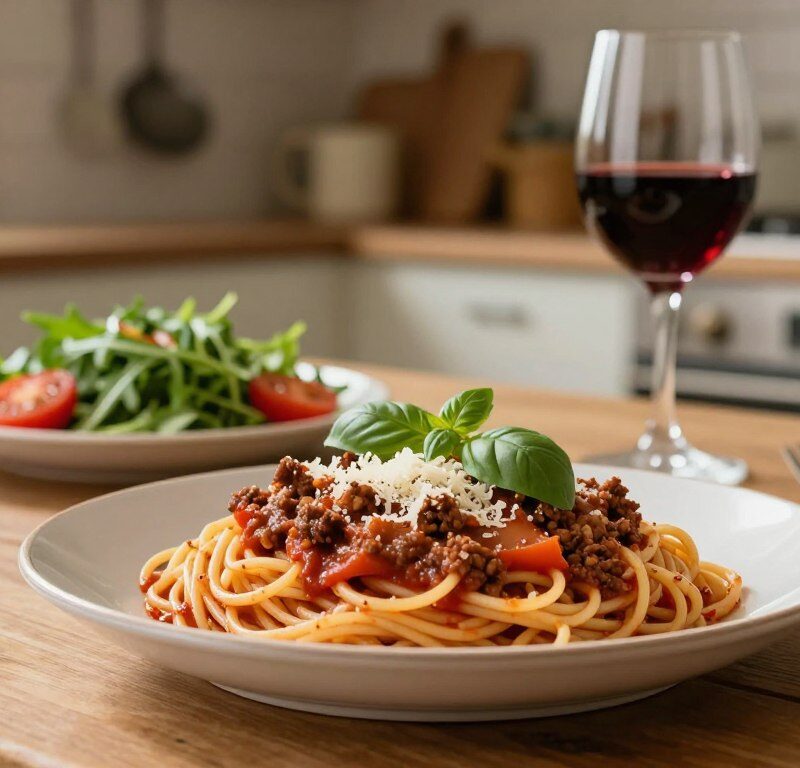
This classic British dish brings comfort and a touch of kitchen finesse to weeknight meals. The Mary Berry Spaghetti Bolognese is a simple yet elegant take on a family favourite that many cooks return to time and again.
As a well-known television cook, mary berry reshaped how home cooks approach this timeless plate. Her method focuses on quality ingredients and clear technique, so you get depth of flavour with minimal fuss.
This spaghetti bolognese recipe shows how small steps—slow cooking, the right herbs, and balanced seasoning—turn a basic supper into something you would expect at a good local restaurant.
Key Takeaways
- Simple techniques lift a humble dish to restaurant quality.
- Quality ingredients make the biggest difference in flavour.
- Slow simmering deepens the sauce and enriches the texture.
- This version is ideal for family dinners and casual entertaining.
- Follow clear steps to achieve consistent results every time.
Why Mary Berry Spaghetti Bolognese is a Family Favourite
A reliable, creamy twist on a classic has made this recipe beloved around the UK. Families find the dish comforting and simple to prepare for busy evenings.
The addition of double cream gives the sauce a silky finish that appeals to both children and adults. That touch of cream turns a straightforward bolognese into something a little special.
Recent food news has praised this version, noting how well it travels from television kitchens to real family tables. Stars have mentioned the ease of the method, and many home cooks now include it in their go-to recipes.
| Feature | Benefit | When to Use |
|---|---|---|
| Double cream | Richer texture, smoother sauce | Family dinners, special occasions |
| Simple steps | Reliable results, quick prep | Weeknight meals |
| Trusted recipe | Consistent flavour | Batch cooking, leftovers |
- Spaghetti pairs well with the creamy sauce.
- The recipe fits busy schedules without sacrificing flavour.
Essential Ingredients for the Perfect Sauce
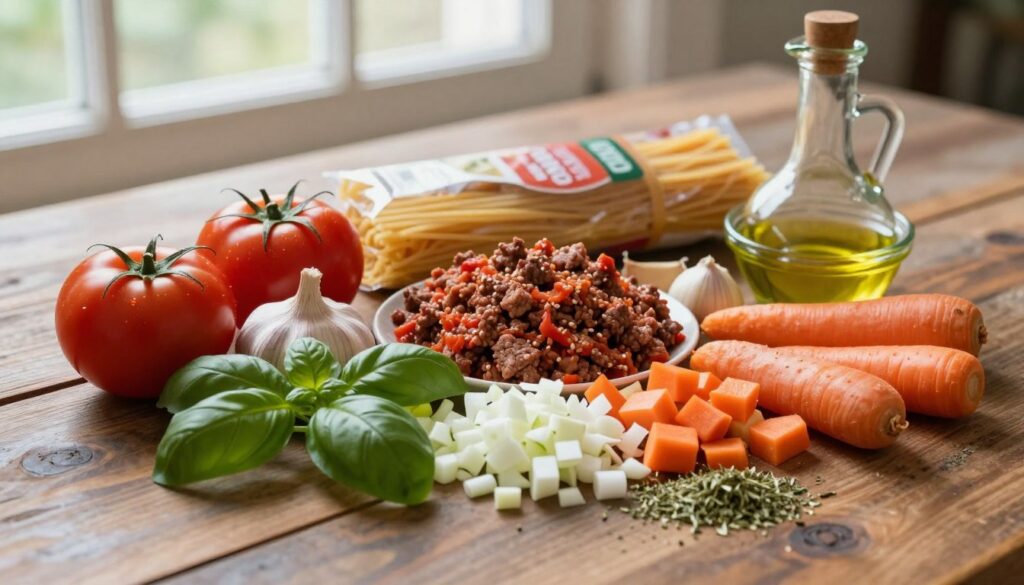
Quality ingredients form the backbone of a rich and balanced sauce. Choose fresh vegetables and top-grade meats so the flavours develop as the dish simmers.
The Meat Blend
Combine 500g pork mince and 500g beef mince to get a rounded, savoury base. The mixture gives body and a deeper flavour than a single meat would.
- Fry the mince in olive oil until browned, then set aside.
- Use 4 tbsp tomato paste to thicken the mixture and keep the sauce glossy.
- Add 200ml beef stock and 150ml wine to enrich the depth of flavour.
Fresh Aromatics
Softening the vegetables correctly is key. Fry onions, carrots and celery over high heat for 5–6 minutes until softened.
- Stir in three crushed garlic cloves for 30 seconds to release aroma.
- Fold in 500g passata and 400g chopped tomatoes for a vibrant tomato base.
- Season with salt and pepper, add 2oz (approx) thyme and simmer with a heavy lid for the best texture.
Final tip: Prepare 450g pasta separately and adjust seasoning before serving. This recipe rewards patience and quality ingredients.
Mastering the Slow Cooking Method
Controlled, low heat helps the meat and tomatoes fuse into a cohesive, savoury base. Start on the hob to brown the pork and beef mince in a little olive oil. Use high heat so the meat colours quickly and stays juicy.
Stir in chopped tomatoes, passata and a splash of wine. Add 200ml beef stock to form a balanced liquid base. Season with salt and pepper and tuck in 2oz of fresh thyme and other herbs.
Oven Versus Hob Cooking
Mary Berry recommends the oven at 160C for a total two-hour simmer. Put a heavy lid on for the first hour to trap moisture. This keeps the meat tender and builds depth of flavour.
After the first hour, remove the lid and return to the oven for the remaining hour. The sauce will thicken and the flavours concentrate.
Tip: boil your pasta in salted water until al dente so it finishes at the same time as the sauce.
- Brown mince quickly on high heat.
- Use 200ml beef stock and 150ml wine to prevent drying.
- Simmer two hours in the oven at 160C, lid on then off.
The Secret to a Richer Bolognese
Finishing the sauce with a touch of dairy lifts the whole dish to a new level. The simple trick recommended by mary berry is to stir in 4 tablespoons of double cream after the first hour of cooking.
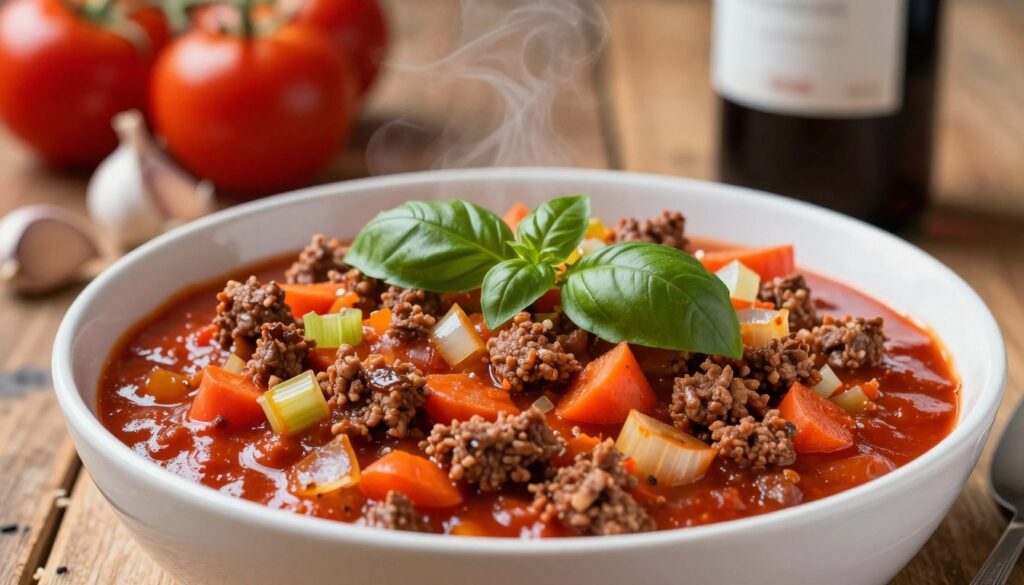
This timing matters. Add the cream once the sauce has reduced slightly and the flavours have mellowed. The result is a velvety, thick bolognese sauce that clings to pasta and tastes indulgent without being heavy.
Many cooks are surprised that the cream does not curdle when introduced at this stage. As long as the mixture is hot but not boiling, the dairy blends smoothly and enriches the overall flavour profile.
For best results:
- Remove the pot from direct heat, then stir in the cream gently.
- Allow the sauce to rest for a few minutes so flavours marry before serving.
- Adjust seasoning after adding cream to keep the balance perfect.
Expert Opinions on Traditional Variations
Leading chefs and culinary bodies still debate which additions best honour the classic recipe. Views vary on wine, dairy and the meat mix, yet all agree on respecting core technique: low heat and patient simmering.
The Role of Wine
White or red wine can lift the meat and vegetables. Mary Berry favours white wine, which adds a bright acidity to the sauce.
Use 150ml wine early to deglaze the pan and build depth before adding stock.
Italian Culinary Standards
The 1982 Italian Academy recipe lists beef, pancetta, onions, carrots and celery, plus passata, milk and white wine.
Antonio Carluccio urged respect for these standards while accepting that home recipes evolve.
Adapting to Modern Tastes
Good Housekeeping notes stirring in double cream gives a luxurious finish many families enjoy.
Whether you use pork, beef or a mince blend, the aim is the same: balanced flavour that complements pasta and seasoning of salt and pepper.
| Aspect | Traditional | Modern Twist |
|---|---|---|
| Meat | Beef and pancetta | Beef and pork mince blend |
| Wine | White wine (Academy) | White or red, depending on preference |
| Finishing | Milk to soften acidity | Double cream for richness |
Conclusion
Elevating a basic pasta plate only needs attention to quality and timing.
mary berry shows how small changes can make family meals feel special. Her method keeps cooking simple and reliable.
Exploring these different recipes helps you balance tradition with modern tastes. Try the cream finish or keep to the classic base.
Choose good pasta and fresh ingredients so the flavours shine, whether you serve it with spaghetti or a broader pasta shape.
We hope this guide inspires you to try new recipes tonight and to enjoy the journey of finding your own perfect sauce.
FAQ
What mince is best for this classic recipe?
Can I replace fresh celery and carrots with frozen vegetables?
Is wine essential for an authentic sauce?
How long should I simmer the sauce for best results?
Should I use chopped tomatoes, passata or fresh tomatoes?
Do I need beef stock and how much water should I add?
When should I add cream or double cream?
Can I cook this in the oven instead of on the hob?
How do I stop the sauce from becoming too watery?
Which herbs and seasonings work best?
Can I make the sauce ahead and freeze it?
What pasta pairs best with this rich sauce?
How do I control saltiness if I use stock cubes?
Mary Berry Spaghetti Bolognese
This classic British dish brings comfort and a touch of kitchen finesse to weeknight meals. The Mary Berry Spaghetti Bolognese is a simple yet elegant take on a family favourite that many cooks return to time and again.
Ingredients
- 500g pork mince
- 500g beef mince
- 4 tbsp tomato paste
- 200ml beef stock
- 150ml white wine
- 3 crushed garlic cloves
- 500g passata
- 400g chopped tomatoes
- 2oz fresh thyme
- Salt and pepper to taste
- 450g spaghetti
- 4 tbsp double cream
- Olive oil for frying
- 1 onion, chopped
- 2 carrots, chopped
- 2 celery sticks, chopped
Method
- Preheat the oven to 160C.
- In a large pan, heat olive oil and fry the pork and beef mince until browned. Set aside.
- In the same pan, add chopped onions, carrots, and celery. Fry over high heat for 5-6 minutes until softened.
- Stir in the crushed garlic and cook for an additional 30 seconds.
- Add the tomato paste, passata, chopped tomatoes, beef stock, and white wine to the pan. Season with salt, pepper, and thyme.
- Bring the mixture to a simmer, then cover with a heavy lid and place in the oven for 1 hour.
- After 1 hour, remove the lid and continue to simmer in the oven for another hour.
- Boil the spaghetti in salted water until al dente.
- After the sauce has simmered for 2 hours, remove it from the oven and stir in the double cream.
- Allow the sauce to rest for a few minutes before serving over the spaghetti.