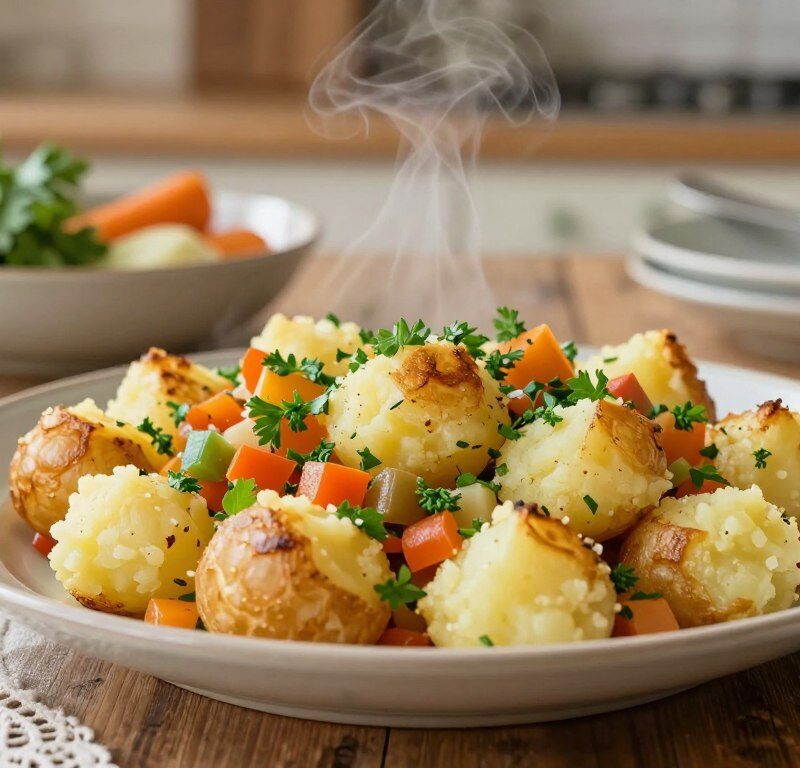
This classic dish reimagines simple leftover roast elements into a warm, satisfying plate. It is a staple across the United Kingdom and a clever way to make the most of what you already have.
Follow this recipe to cut down household waste while enjoying a comforting meal. The method is straightforward and relies on familiar ingredients and basic kitchen skills.
Her approach favours gentle seasoning and careful frying so the natural tastes of the vegetables can shine. A crisp, golden crust is the hallmark of success and something we will help you achieve.
These recipes work for a quick breakfast or a hearty dinner and suit busy weekday routines. Read on for clear steps that ensure consistent results with minimal fuss.
Key Takeaways
- Transforms leftovers into a tasty, thrifty meal.
- Simple technique highlights natural vegetable flavours.
- Helps reduce household food waste.
- Produces a signature golden-brown crust when done right.
- Versatile for breakfast or dinner occasions.
The History of a British Classic
Originating in British homes, the recipe turns leftover roast vegetables and potatoes into a simple, hearty meal. Families made it to stretch food after large Sunday or Christmas dinners.
The history of bubble squeak is closely linked to thrift and comfort. Generations relied on this dish to repurpose leftovers and to keep the larder full without waste.
Simple ingredients and plain technique made it a staple. Home cooks mixed mashed potato with greens such as cabbage or Brussels sprouts and fried the mix until it crisped.
Its curious name comes from the sounds the vegetables make as they fry — a little bubble, a gentle squeak that many will recognise. That sensory detail helped the dish keep a place in British food culture.
- Practical after a roast
- Thrifty and filling
- A comforting, traditional recipe
Essential Ingredients for Mary Berry Bubble And Squeak
Start with a solid potato base — it makes or breaks this humble, satisfying meal. Below we list the key ingredients that give the dish its texture and flavour.
The Potato Base
600g cooked potatoes, mashed or roughly crushed, form the backbone of the mixture. Use starchy varieties for a creamy interior that will crisp nicely in the pan.
- 600 g cooked potatoes — mashed or roughly crushed
- Season with salt and pepper to taste
Selecting Your Greens
Choose 300g of finely chopped cabbage or Brussels sprouts for balance. These cooked greens add sweetness and body to the leftover vegetable mix.
- 300 g cabbage or Brussels sprouts, finely chopped
- 30 g unsalted butter and 1 tablespoon olive oil for frying
Tip: Combine the potatoes and greens gently so the mixture holds together but stays slightly loose. This helps achieve a golden crust while keeping the centre soft.
Preparing Your Leftover Vegetables
With simple prep you can coax great flavour from leftover veg and roast potato. Chop the cooked cabbage or brussels sprouts finely so they mix evenly with the potatoes.
Place the potatoes and vegetables into a bowl. Use a potato masher to press and fold until you have a loose but cohesive mixture.
Season the mix with salt and black pepper. Add a light pinch of season salt if you like a little extra depth. Mix gently so the mixture holds together.
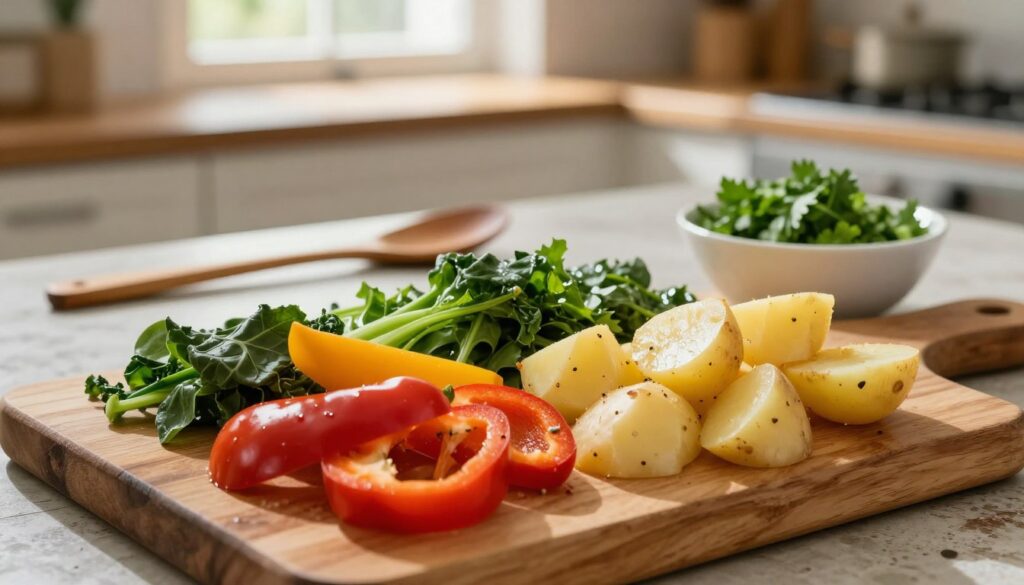
Take a few minutes to check texture: the potato should be mashed enough to bind, but not so smooth that it won’t crisp in the pan. These small steps lift simple British recipes and make ordinary food taste special.
- Chop sprouts finely for even distribution.
- Use a masher to combine without overworking.
- Season well before frying to enhance flavour.
Mastering the Perfect Pan-Fried Texture
Achieving a crisp exterior while keeping the centre tender takes simple technique and steady control of the pan.
Heat Management
Use a non-stick frying pan over pan medium heat so the mixture cooks evenly without burning. Add a mix of butter and olive oil to the pan for flavour and stability.
The Importance of Patience
Place the mash mixture into the pan and resist stirring. Leave it undisturbed for 6-8 minutes; this is the secret to forming a crisp base.
Achieving the Golden Crust
After the first fry, turn the potato mix in sections or flip as one large cake. Cook the other side for another 5-6 minutes until the bottom is golden.
- Use a non-stick surface for reliable results.
- Do not stir early; patience yields a crunchy crust and soft centre.
- These small steps make classic recipes sing and keep your vegetables tasting fresh.
Troubleshooting Common Cooking Issues
Small adjustments to heat and technique often save an over-soft bubble squeak. Start by ensuring your frying pan is up to a steady medium heat so the base can crisp.
If the mixture falls apart, press it down firmly in the pan before frying. A compact cake binds as it cooks and is less likely to break when you turn it.
Uneven browning usually comes from moving the mix too soon. Leave it undisturbed for several minutes and the bottom will form a consistent, golden crust.
If the dish looks pale at the end, raise the heat slightly for the final few cook minutes. This short burst helps the surface take on colour without drying the centre.
- Use consistent heat — medium heat works best for most recipes.
- Press the mixture in the pan to help it bind.
- Do not stir too soon; wait several minutes for colour to form on the bottom.
| Problem | Likely Cause | Quick Fix |
|---|---|---|
| Too soft or pale | Heat too low | Increase to medium heat; finish with higher heat for a few minutes |
| Mixture falls apart | Not compacted | Press firmly in pan and cook without flipping early |
| Uneven browning | Stirred too often | Leave undisturbed for several minutes to form a crust on the bottom |
Creative Serving Suggestions
A few thoughtful accompaniments turn this humble dish into a memorable meal. These ideas help you serve it for breakfast or as a hearty main without extra fuss.
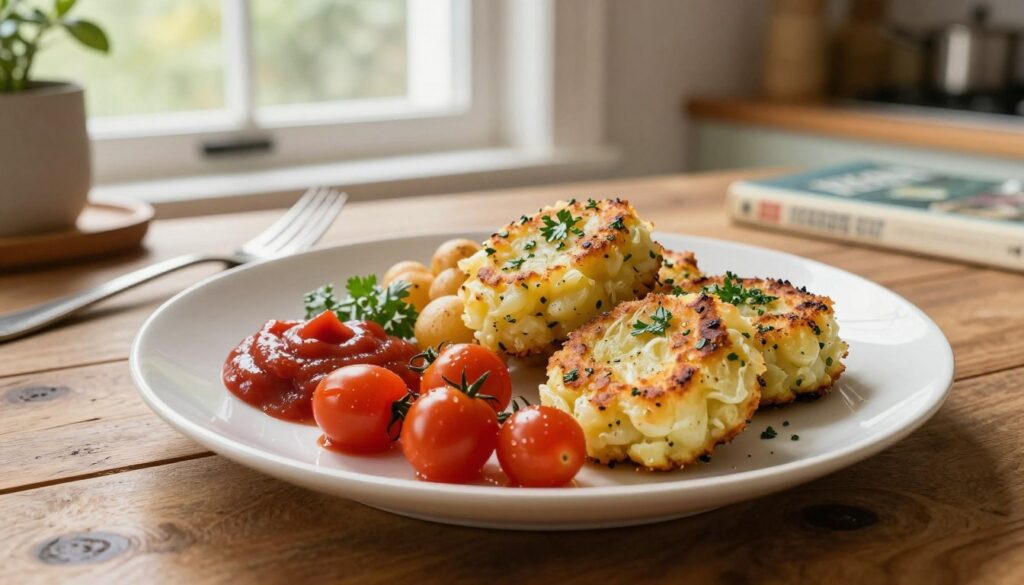
Traditional Accompaniments
Fried or poached eggs are classic. Place two eggs on top for a runny yolk that enriches every mouthful. For a lighter start, try a single poached egg per plate.
Fresh salad adds lift and texture. A lemon-dressed green salad or a crisp mixed salad cuts through the starchy richness and refreshes the palate. Use simple leaves, radish and cucumber for crunch.
For larger meals, serve alongside grilled sausages or cold meats to make the plate more substantial. Add a dollop of piccalilli or brown sauce at the side for tang. These small touches open many tasty ways to enjoy this classic.
| Serving Option | Best With | When to Serve |
|---|---|---|
| Fried eggs | Hot from the pan; yolk breaks over the top | Breakfast or brunch |
| Poached eggs | Gentle texture; suits lighter plates | Breakfast or lunch |
| Fresh salad | Light lemon dressing; mixed leaves | All day, especially dinner |
| Grilled sausages / cold meats | Hearty protein, smoky notes | Lunch or dinner |
Versatile Ingredient Swaps
A simple swap of greens or root veg gives you many tasty ways to reinvent the recipe. Use leftover roast potatoes and a few pantry staples to build a fresh plate without extra shopping.
Swap cabbage for kale or spinach to add iron and fibre. Wilted kale works well in the mixture and holds its texture when fried.
Replace butter with a dairy-free spread if you need a plant-based version. Use a splash of olive oil for added flavour and a crisp edge.
Try adding leeks or parsnips to the veg for a sweeter, earthier result. Using leftover roast roots gives the dish depth and saves food from going to waste.
Season the mix with salt, a pinch of season salt if you like, and a grind of black pepper. These basics balance the vegetables and lift the whole plate.
| Swap | Why | Best Use |
|---|---|---|
| Cabbage → Kale | More fibre and sturdy leaves | Mix into warm potatoes before frying |
| Butter → Dairy-free spread | Suitable for dairy-free diets | Fry as usual for a golden crust |
| Add leeks/parsnips | New flavour and sweetness | Fold into the mixture with roast veg |
| Brussels sprouts → Spinach | Delicate, quicker to wilt | Use when you want a lighter finish |
Storing and Reheating Your Leftovers
Treat your leftovers with a short crisping in a hot frying pan to revive texture and taste. Cool the cooked mixture fully before storing.
Best Practices for Reheating
Refrigerate for up to 2 days in an airtight container. Chilling quickly keeps flavour and stops bacterial growth.
When ready to eat, heat a non-stick frying pan over medium heat. Add a little oil and, if you like, a knob of butter to boost flavour.
Place the leftover cake in the pan and press gently. Cook for several minutes on each side until it is warmed through and the outside is crisp again.
Avoid the microwave. Microwaving softens the crust and spoils the texture that makes this dish appealing.
- Use a pan medium heat and allow the surface to brown.
- Reheat on a non-stick surface to reduce sticking and need for excess oil.
- Serve immediately for best results; reheating for too many minutes dries the potatoes.
| Step | Action | Why |
|---|---|---|
| Cool & store | Place in airtight container; refrigerate up to 2 days | Preserves flavour and safety |
| Reheat | Use non-stick frying pan; oil and a little butter; fry on medium heat | Restores crisp crust and warms centre |
| Avoid | Do not use microwave for reheating | Prevents soggy texture and loss of crunch |
Conclusion
A crisp, golden crust and a soft centre turn humble leftovers into a dish worth planning for.
This guide shows how a simple recipe using leftover potatoes and vegetables can become a reliable side or main. The classic bubble squeak relies on gentle frying and modest seasoning to lift plain food into something special.
At around 240 kcal per serving, it is budget-friendly and filling. Mastering heat and patience ensures the right texture — crisp outside, tender within — every time.
Use your leftover roast veg wisely and enjoy a golden, tasty result that saves waste and tastes great.
FAQ
What is bubble and squeak?
Which potatoes work best for the base?
Can I use different vegetables besides cabbage?
How do I get a crisp golden crust without sticking?
What heat is best for frying?
How long should I fry each side?
Should I use butter, oil or both?
How do I season the mixture?
Can I add eggs to the recipe?
What are good accompaniments?
How do I store leftovers?
What’s the best way to reheat bubble and squeak?
Can I make the mixture ahead of time?
Any tips to prevent soggy results?
Are there vegetarian or vegan versions?
Mary Berry Bubble And Squeak
This classic dish reimagines simple leftover roast elements into a warm, satisfying plate. It is a staple across the United Kingdom and a clever way to make the most of what you already have.
Ingredients
- 600 g cooked potatoes, mashed or roughly crushed
- 300 g cabbage or Brussels sprouts, finely chopped
- 30 g unsalted butter
- 1 tablespoon olive oil
- Salt to taste
- Black pepper to taste
Method
- In a bowl, combine the mashed potatoes and finely chopped cabbage or Brussels sprouts.
- Season the mixture with salt and black pepper, mixing gently to hold it together.
- Heat a non-stick frying pan over medium heat and add the butter and olive oil.
- Once the butter has melted, add the potato and vegetable mixture to the pan, pressing it down firmly.
- Cook undisturbed for 6-8 minutes until the bottom is golden brown.
- Carefully flip the mixture in sections or as one large cake and cook the other side for another 5-6 minutes until golden.
- Serve hot, optionally topped with fried or poached eggs.