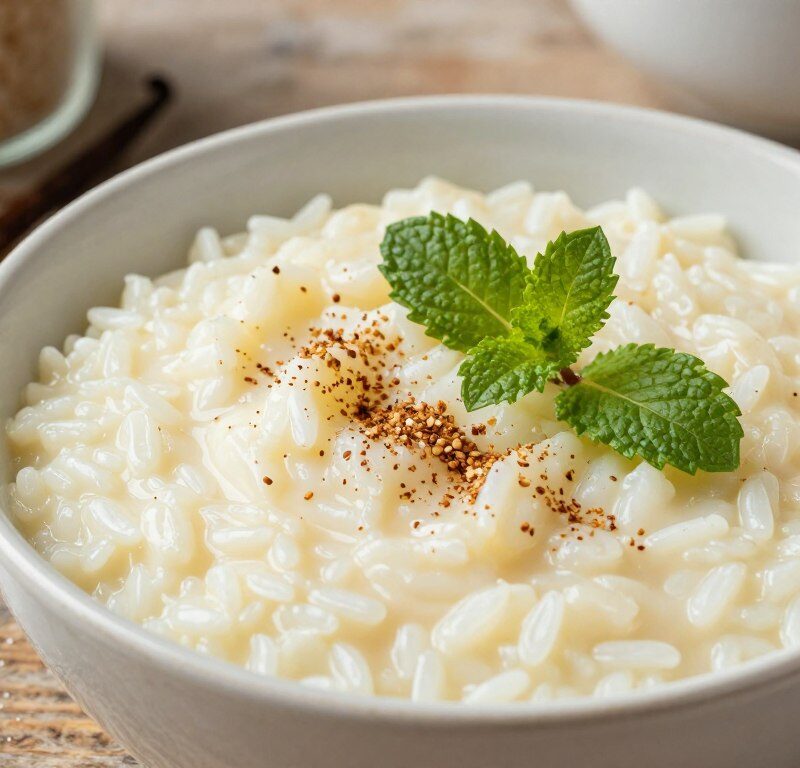
This time-honoured dessert brings comfort to the British table. Drawn from the pages of Mary Berry Everyday, the recipe shows how simple pantry staples can become something truly memorable.
Slow baking is the secret here. Gentle heat lets the milk and rice marry into a velvety texture while a golden skin forms on the top.
Using a reliable oven and a patient hand, you can recreate the exact mouthfeel of a homely pudding. The method is forgiving and ideal for family gatherings or an easy weekend treat.
Expect a creamy finish with a delicate caramelised skin that adds both flavour and charm. This approachable recipe proves that classic desserts need not be fussy to be unforgettable.
Key Takeaways
- The recipe originates from Mary Berry Everyday and celebrates simple, storecupboard ingredients.
- Slow, steady baking produces a lush texture and a caramelised top.
- A dependable oven helps the milk and rice combine evenly for best results.
- The dish is budget-friendly and perfect for family desserts.
- Patience during baking is the main ingredient for success.
The Appeal of a Traditional British Dessert
There is a special charm in desserts that rely on pantry staples and gentle cooking to coax out deep flavour. This dish sits firmly in the classic British tradition, offering warmth and nostalgia with every spoonful.
The version in the Mary Berry Everyday book shows how modest ingredients become something comforting at home. The method is friendly to beginners and forgiving for everyday cooks.
Such recipes are prized because they turn simple storecupboard items into a lush, creamy treat. Whether you want a quick indulgence or a soothing end to a meal, this dessert is reliably satisfying.
- Comfort: evokes family memories and cosy evenings.
- Simplicity: uses few ingredients but yields rich results.
- Accessibility: easy to follow recipes for every skill level.
Essential Ingredients for Mary Berry Classic Rice Pudding
A well-made pudding starts with accurate ingredients. This recipe depends on precise quantities to achieve the creamy texture and caramelised top that readers of the Mary Berry book expect.
Pantry Staples
The foundation is simple. Use exactly 1/3 cup (75g) pudding rice so the grains release the right starch for a velvety finish.
The recipe calls for 3 3/4 cups (900ml) full fat milk to give richness that low-fat alternatives cannot match.
- 75g pudding rice — essential for correct thickening.
- 900ml full fat milk — for a luxurious texture.
- 1 heaped tbsp sugar — caster sugar is preferred in the UK for quick dissolving.
- Grease your baking dish well with butter to prevent sticking and ease cleaning.
Fresh Nutmeg
Freshly grated nutmeg lifts the flavour with a warm, aromatic note. Use 1/2 tsp for balance.
“A little freshly grated nutmeg adds depth without overpowering the custard.”
Tip: Always grate nutmeg just before use to keep the aroma bright.
Selecting the Right Rice for Creaminess
The creaminess of the final dessert depends almost entirely on which grain you choose. Pudding rice is a short-grained variety that releases starch during slow cooking, giving a velvety mouthfeel and the proper body in the pot.
If pudding rice is unavailable, Arborio is an excellent substitute. Its high starch content breaks down in the same way and delivers a similarly rich texture and balanced finish.
Avoid long-grain varieties such as Jasmine or Basmati. These stay separate and firm, which can leave the dish hard rather than smooth. The time needed to reach creaminess also shifts with the grain, so stick to short-grained types for consistent results.
Key points:
- Choose short-grained pudding rice for best starch release.
- Arborio works well if you cannot find the specified grain.
- Avoid long-grain, Jasmine and Basmati to prevent a chewy texture.
Following this step will ensure your dessert is neither too stodgy nor too thin, but perfectly creamy every time.
Preparing Your Baking Dish
The right baking vessel sets the stage for a perfect skin and an easy serve. Take a moment now to choose and ready your dish; it makes the slow bake much more forgiving.
Greasing Techniques
Use a wide-based baking dish of about 2 qt / 1.6 litres. This size gives enough surface area for a golden skin to form and helps heat distribute evenly across the custard.
Thoroughly grease the dish with softened butter. Work the butter into the corners and sides so the mixture cannot stick as it bakes.
Paying attention to this step ensures you can serve every last spoonful without scraping. Even experienced cooks should not skip it; it is a small task that prevents frustration later.
- Use a wide-based dish to encourage an even skin.
- Butter the base and sides well to aid release and cleaning.
- Proper greasing promotes even heat during slow baking.
“A well-buttered dish is the quiet trick behind a smooth, stress-free bake.”
The Importance of Full Fat Milk
Full fat milk transforms humble grains into a luxuriously smooth dessert. The higher fat content gives a creaminess that thinner milks cannot match.
Mary Berry emphasises that full fat milk is the secret to the richest flavour and most indulgent texture. While semi-skimmed can be used in a pinch, the finish will be noticeably less velvety.
The milk is the primary cooking medium for the rice, so its quality shapes the final taste. When grains simmer slowly in full fat milk they release starch and become coated in a decadent liquid that feels satisfying on the tongue.
Choose whole milk for balance: the richness tames the sweetness and lifts the overall harmony of the dish.
“A simple swap to full fat milk elevates a basic recipe into a timeless Mary Berry masterpiece.”
- Full fat milk: best for depth, texture and flavour.
- Semi-skimmed: workable, but yields a thinner finish.
- Quality matters: better milk = better final taste.
Mastering the Oven Temperature
A consistently low oven temperature is the single best trick for a silky, even-textured pudding.
Preheat oven to 320°F / 160°C / gas mark 3. This gentle heat creates a slow, steady environment ideal for long cooking without sudden boiling.
Maintaining a low oven setting prevents the milk from boiling over and keeps the mix smooth. It also means the total time in the oven becomes predictable, so you can judge doneness accurately.
“A low oven gives the rice time to absorb the milk slowly, resulting in a tender, creamy finish.”
- Set to 160°C / gas mark 3 before you begin.
- Keep temperature steady to ensure even cooking.
- Check oven calibration — small differences change the outcome.
By mastering your oven settings you allow the grains to soften without becoming mushy. The method is precisely what mary berry recommends for a reliably creamy result.
Combining Ingredients for Success
Start by whisking the caster sugar into warm milk until it dissolves completely. This avoids grainy spots and gives a smooth, even base for the bake.
Once your oven is at the required preheat oven temperature, pour the sugared milk over the rice in the prepared dish. Make sure the grains spread evenly so no clumps remain.
A small knob of butter on top brings extra richness. It also helps form a lovely golden skin as the mixture goes into the oven. A light pinch of nutmeg at this stage adds a warm, spiced note.
- Whisk sugar into warm milk for even distribution.
- Combine rice and the sugared milk in the baking dish once the oven is ready.
- Spread rice evenly, add butter and a pinch of nutmeg if you wish.
“Careful combining of these ingredients sets the stage for a comforting, reliably creamy pudding.”
The Slow Baking Process
Slow, steady heat coaxes each grain to soften and the milk to thicken into a silky custard.
Begin by placing the dish in a low oven. Bake undisturbed for 30 minutes, then remove and stir gently so the grains cook evenly.
Return the dish and continue baking for a further 1 1/4 to 1 1/2 hours. The total time on the heat is roughly two hours; this long, gentle method allows starch to release and the liquid to set to a creamy consistency.
A good test is texture. When the rice is soft and a golden skin has formed on top, the dessert is ready to serve. Patience is key—rushing the process leaves loose grains swimming in thin liquid rather than a cohesive, comforting finish.
“Allowing the mixture to slow cook is what gives this dessert its deep, homely flavour.”
- Tip: Stir once after the first 30 minutes to promote even cooking.
- Result: Soft grains and a beautiful golden skin are signs of success.
Achieving the Perfect Golden Skin
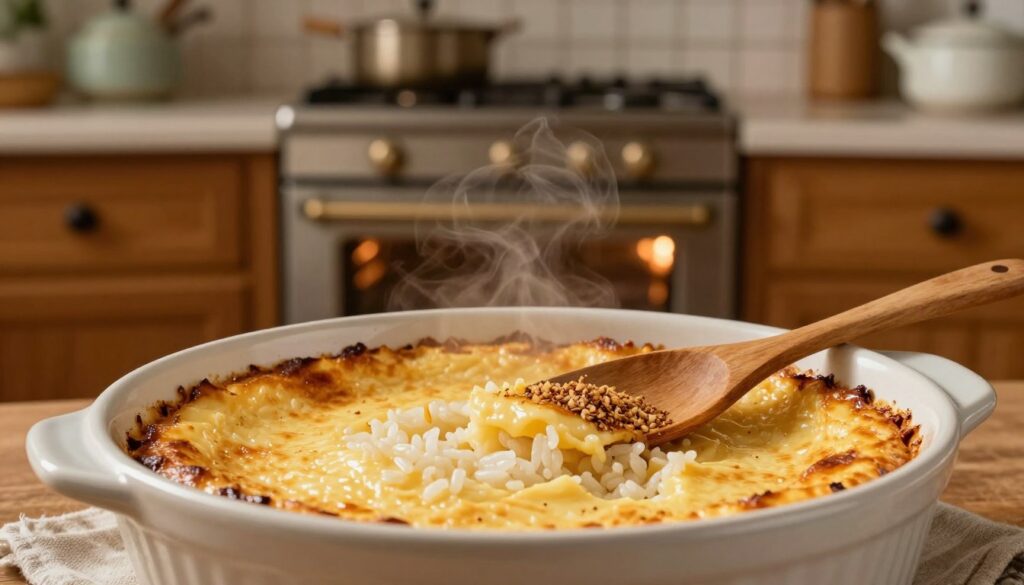
A glossy, golden skin forms when milk proteins caramelise under gentle heat. This is the prized finish on a traditional rice pudding and it begins on the surface as sugars and proteins brown.
Use a wide, shallow dish to give the oven a large surface area so the top can colour evenly. The butter you dotted earlier helps the colour deepen and adds richness to the skin.
Avoid stirring during the final hour of baking. Leave the surface undisturbed so the film can set and darken. Just before this stage, dust a little nutmeg over the top for extra aroma and a pretty finish.
“The contrast between the golden skin and the creamy rice beneath is what makes the dish so irresistible.”
| Factor | Why it matters | Practical tip |
|---|---|---|
| Dish shape | Large surface creates even browning | Choose a wide, shallow ovenproof dish |
| Butter | Boosts colour and flavour on the top | Dot small knobs across the surface before baking |
| Final hour | Undisturbed surface lets skin form | Do not stir; finish baking until golden |
For a contrasting fruity partner try a warm rhubarb crumble alongside this comforting dish.
Customising Your Pudding with Toppings
Toppings turn a simple, warm dessert into something personal and seasonal. Try one or mix a few to suit tastes across the table.
Sweet Jam and Syrup
A spoonful of jam or a drizzle of syrup adds quick colour and sweetness. Use a tart raspberry jam to cut through the creaminess.
For extra indulgence add a spoon of golden syrup or honey at the top before serving.
Fresh Fruit Additions
Fresh berries and sliced stone fruit give a bright, acidic contrast. They add freshness and make the dish feel lighter.
Serve fruit on the side for those who prefer to add it themselves during the week.
Crunchy Biscuits
Crumbled biscuits or a crisp wafer provide texture against the soft base. Scatter them over the top for immediate crunch.
For a modern twist, sprinkle chocolate chips or shavings so they melt into warm portions.
- Mary Berry suggests a spoonful of jam or syrup for extra indulgence.
- Try chocolate shavings for richness, or fruit for contrast.
- Crunchy biscuits make family meals more fun and give variety to leftovers.
“Whether you choose a classic jam or a daring chocolate finish, the base recipe is a perfect canvas for creativity.”
Storing and Reheating Leftovers
A little planning at the end of service makes this dish a handy weekday reward.
Store cooled portions in an airtight container in the fridge where they will keep for up to 3 days. Do not leave the dessert at room temperature for more than 2 hours to stay on the safe side.
When you reheat, warm gently on the stove or in short bursts in the microwave. Add a splash of milk to restore the creamy texture that firms as it cools.
Tip: the pudding may thicken after a few hours in the fridge. A little extra milk brings it back to a spoonable consistency without diluting flavour.
“Reheat slowly and ensure the centre is piping hot before serving.”
- Keep leftovers chilled in an airtight container for up to 3 days.
- Add milk when reheating to regain creaminess.
- This make-ahead trick suits a busy week and saves time on evenings.
Troubleshooting Common Texture Issues
Troubles with texture are common, but most are simple to fix with small timing or heat adjustments.
If the dessert is watery, bake for an extra 15–20 minutes so the rice can absorb more liquid. Check after the extra minutes rather than overbaking for hours.
If the grains are not rice soft, confirm you used pudding rice and that the oven temperature is accurate. Stirring once after the first 30 minutes helps even cooking and prevents cold pockets in the dish.
If the top is browning too quickly, cover the dish with foil for the first half of the baking time. This protects the skin while the centre cooks through.
If the pudding lacks creaminess, use full fat milk and give the mixture a gentle stir halfway through the method. Also check your sugar and other ingredients are measured exactly; small deviations change texture.
- Too watery: add 15–20 minutes baking.
- Grains firm: use proper pudding rice and check oven.
- Top burns: foil for the first half of cooking.
- Not creamy: full fat milk and mid-cook stir.
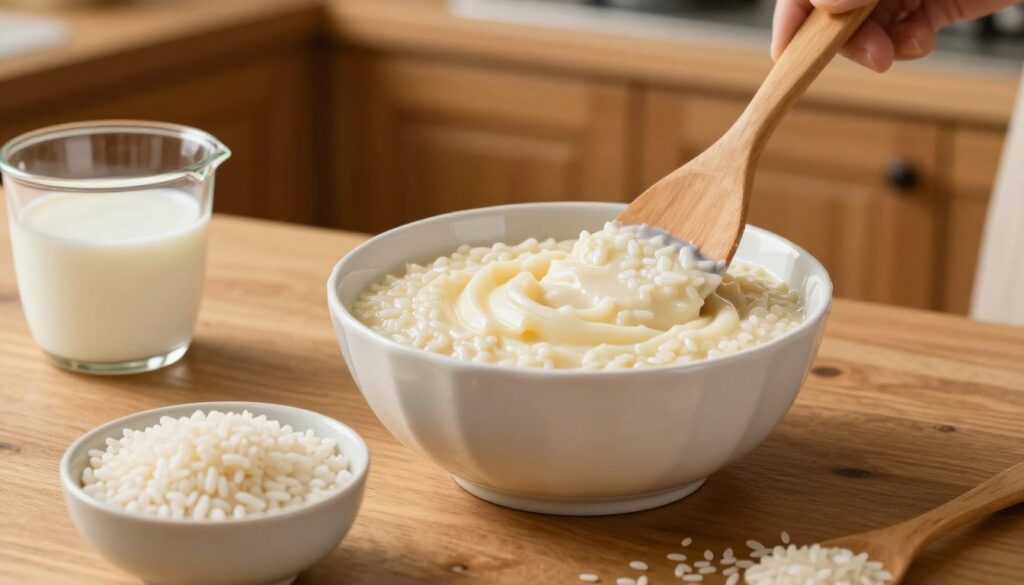
Careful timing and simple adjustments to the method usually restore the texture and deliver a perfect result.
Conclusion
This recipe proves that gentle technique and simple storecupboard ingredients can make a memorable family dessert.
Use pudding rice, full fat milk and a little caster sugar to build a rich cream that bakes into a lovely golden skin on the top. Slow, steady baking is the key.
Follow the method in the book or adapt with your favourite toppings. These recipes suit busy home cooks and make comforting meals for family and friends.
With accurate measures, patience and a reliable oven, you can enjoy this classic British treat time and time again.
FAQ
What type of rice makes the creamiest pudding?
Can I use semi-skimmed milk instead of full-fat?
How do I prevent a skin from forming, or should I keep it?
What oven temperature and baking time are best?
Should I preheat the oven and use a water bath?
How much sugar should I add and can I use alternatives?
Is nutmeg essential and how much should I use?
Can I add extras like chocolate, jam or fruit?
How long will leftovers keep and how should I reheat them?
My pudding turned out grainy or too runny—what went wrong?
How should I prepare the baking dish and prevent sticking?
Can I prepare the mixture ahead of time?
Are there good vegetarian or gluten-free variations?
Mary Berry Classic Rice Pudding
This time-honoured dessert brings comfort to the British table, showcasing how simple pantry staples can become something truly memorable with slow baking that creates a velvety texture and a golden skin.
Ingredients
- 75g pudding rice
- 900ml full fat milk
- 1 heaped tbsp caster sugar
- 1/2 tsp freshly grated nutmeg
- Butter for greasing
Method
- Preheat the oven to 160°C (320°F / gas mark 3).
- Grease a wide-based baking dish with softened butter.
- Whisk the caster sugar into warm milk until it dissolves completely.
- Pour the sugared milk over the pudding rice in the prepared dish, ensuring the rice is spread evenly.
- Dot a small knob of butter on top and add a pinch of nutmeg.
- Bake undisturbed for 30 minutes, then remove and stir gently.
- Return the dish to the oven and continue baking for an additional 1 1/4 to 1 1/2 hours.
- Check for doneness: the rice should be soft and a golden skin should have formed on top.
- Serve warm, optionally with toppings like jam, fresh fruit, or crumbled biscuits.