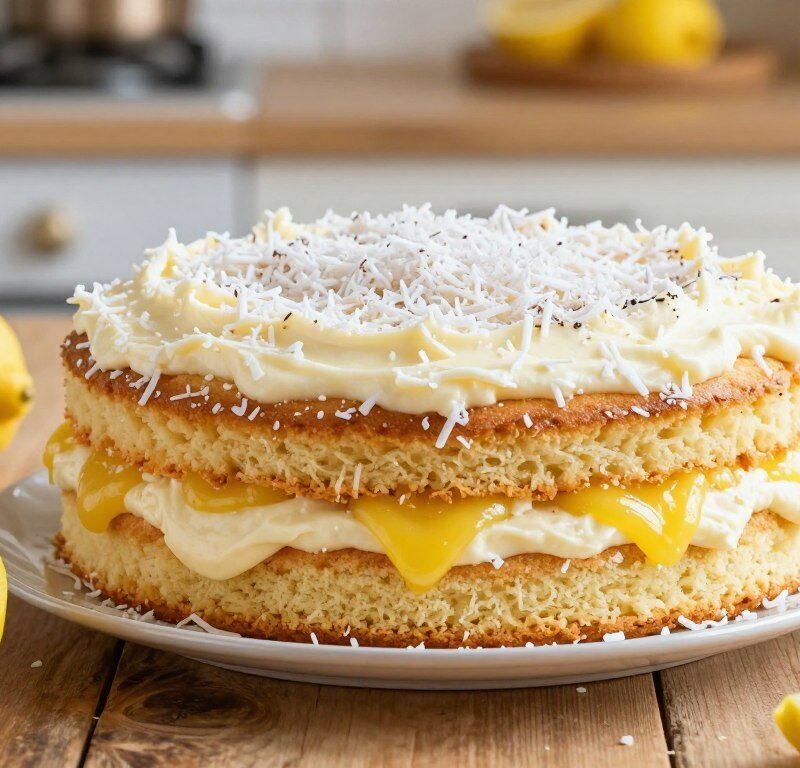
This classic British sponge blends zesty citrus with a soft, sweet tropical note to deliver a bright, uplifting flavour. It is a dependable recipe for afternoon tea or relaxed get-togethers, and the mix of textures feels both comforting and elegant.
Simple, budget-friendly ingredients make this a favourite for home bakers. The method uses an ordinary oven and takes roughly one hour from start to finish, so it fits well into a busy afternoon.
The instructions are straightforward and reliable, giving consistent results even for those new to baking. Expect a light, moist sponge that balances the tang of citrus with gentle, sweet coconut, never dominating the palate.
Key Takeaways
- Ready in about one hour — ideal for afternoon baking sessions.
- Uses simple, cost-effective ingredients found across UK supermarkets.
- Baked in the oven for a light, moist texture.
- Designed to be reliable for beginner and seasoned bakers alike.
- Combines citrus and tropical notes for a balanced flavour.
Why You Will Love This Mary Berry Lemon And Coconut Cake
This bright British sponge brings a light crumb and a gentle, fragrant lift to any tea table. It is simple to make yet feels special, so it suits both casual teatimes and small gatherings.
The Classic British Sponge
Reliable texture: Inspired by traditional techniques, the sponge stays moist while keeping an airy bite. Home bakers appreciate that the method produces even results every time.
Why Coconut and Lemon Work
Balanced flavour: The sharp citrus note cuts through the sweet, soft body of the batter. Desiccated coconut adds a subtle chew that does not overpower the delicate citrus aroma.
“A timeless pairing that feels bright yet comforting — perfect for sharing across several days.”
- Pairs well with tea and light creams.
- Holds freshness for a few days if wrapped well.
- Offers everyday elegance without fuss.
| Feature | Benefit | Result |
|---|---|---|
| Light sponge | Even crumb | Tender slices |
| Desiccated coconut | Subtle texture | Gentle chew |
| Citrus zest | Bright contrast | Fresh flavour |
Essential Ingredients for Your Sponge
A few simple ingredients, measured well, are all it takes to build a light, fragrant sponge. These staples are easy to find across UK shops and work together to give the right texture.
Key items: 175g unsalted butter (softened) and 175g caster sugar. Creaming these produces a smooth, fluffy base.
Whisk in 3 large eggs at room temperature to help the batter emulsify and avoid curdling. Stir in 175g self-raising flour with 1 teaspoon of baking powder for lift.
Add 50g of desiccated coconut for a gentle texture, plus the zest of 1 large lemon for bright aroma. Two tablespoons of milk will loosen the batter so it spoons neatly into the tin.
- Pro tip: If you want extra moisture, a splash of coconut milk can be mixed into the liquid.
- Note: These ingredients create a balanced batter that bakes into a moist, tender cake.
| Ingredient | Role | Amount |
|---|---|---|
| Butter | Structure & flavour | 175g |
| Caster sugar | Sweetness & aeration | 175g |
| Desiccated coconut | Texture & tropical note | 50g |
“Use room-temperature eggs and softened butter for the most reliable rise.”
Preparing Your Kitchen and Equipment
Before you start baking, preheat the oven to 180°C (350°F). A steady temperature helps the sponge rise evenly.
Choose a 20cm round tin or a loaf tin. Grease it well and line the base and sides with parchment. Proper lining prevents sticking when sugar and coconut meet the tin.
Lining Your Tin Correctly
Cut a circle for the base and a strip for the sides. Fit the parchment snugly so it reaches the rim. This makes removal simple and keeps the shape tidy.
Bring eggs to room temperature before mixing. Warm eggs beat more easily, improving aeration and the final texture.
- Have a large mixing bowl and an electric hand mixer ready.
- Place the oven shelf in the middle for even heat circulation.
- Check the oven temperature with a thermometer if you can.
| Step | Why it matters | Quick tip |
|---|---|---|
| Preheat oven | Ensures even rise | 180°C (350°F) |
| Grease & line | Easy release | Use good-quality parchment |
| Room-temperature eggs | Better aeration | Leave out for 30 minutes |
The Creaming Method for a Light Texture
Start by creaming the softened butter and caster sugar until the mixture turns pale and airy. Beat for several minutes — this step traps air that gives the sponge its fine texture.
Work in the eggs one at a time, beating well after each addition. Doing so keeps the batter stable and helps prevent curdling.
Use an electric hand mixer or a sturdy wooden spoon in a large bowl to reach a smooth, creamy consistency. A splash of milk will loosen the mixture so it spoons easily into the tin.
Temperature matters: room-temperature ingredients emulsify far better. This careful creaming forms the base of the sponge’s structure and ensures an even rise and tender texture.
“A pale, fluffy mixture is the hallmark of this classic creaming technique.”
Once the butter and sugar are fully creamed you are ready to fold in the dry ingredients and finish the zesty coconut cake batter.
Folding in the Dry Ingredients
Gently fold the self-raising flour, baking powder and desiccated coconut into the creamed mixture. Use a large metal spoon and cut through the centre, lifting the batter from the sides.
Keep the motion light and deliberate to protect the air bubbles created earlier. This care prevents a heavy, dense sponge and preserves the soft texture you want.
The lemon zest adds a bright note that lifts the 50g of desiccated coconut evenly through the batter. Make sure the dry ingredients are fully incorporated without overworking the mix.
If the mixture feels too stiff, stir in the milk a little at a time to loosen it. The final batter should be thick yet airy, with zest and coconut distributed for consistent flavour.
“Patience at this stage rewards you with a fragrant, moist cake ready for the oven.”
- Fold gently with a metal spoon.
- Incorporate dry ingredients fully but briefly.
- Add milk only as needed to adjust pourability.
Achieving the Perfect Bake
Getting a reliable finish means timing, temperature and a gentle touch all work together. Follow the bake time, check for doneness correctly and let the sponge cool so the texture sets before slicing.
Checking for Doneness
Bake the cake in the preheated oven for 40–45 minutes, or until the top is golden brown and the sponge springs back when pressed. Use a skewer inserted into the centre; it should come out clean to confirm the bake is complete.
The Importance of Oven Temperature
Maintain a steady temperature and avoid opening the door during the first 30 minutes of baking. A sudden drop in heat can make the middle sink and ruin the crumb.
If you use a fan oven, reduce the setting slightly to prevent the top from browning too fast. Rotate the tin only if your oven has uneven heat.
- Visual cue: a golden top shows the sugars have caramelised.
- Rest briefly: allow the tin to cool for a few minutes before turning out.
- Cool completely: transfer to a wire rack so the texture firms and slices cleanly.
“This Mary Berry method produces a moist, tender crumb when timing and temperature are respected.”
Creating the Zesty Lemon Drizzle
Mix 75g of icing sugar with 2–3 tablespoons of fresh lemon juice in a small bowl. Whisk until the icing is smooth and pourable. If you prefer a thinner glaze, add an extra teaspoon of juice.
Turn the baked sponge out while still warm. Use a spoon to drizzle the glaze across the top, letting the syrup travel into the crumb. Applying the icing while warm helps the juice sink in and keeps the sponge moist for days.
This zesty topping gives a sharp contrast to the sweet coconut base and forms a thin, glossy layer that sets with a delicate crunch as it cools. Adjust the tartness by varying the lemon juice to taste.
“A bright, thin drizzle is the simple finish that lifts this Mary Berry recipe.”
| Component | Amount | Effect |
|---|---|---|
| Icing sugar | 75g | Creates smooth, glossy icing |
| Lemon juice | 2–3 tbsp | Adds tang and helps syrup soak in |
| Application | Warm sponge, spoon | Pentrates crumb and yields a crisp top |
Tips for Avoiding a Dense Sponge
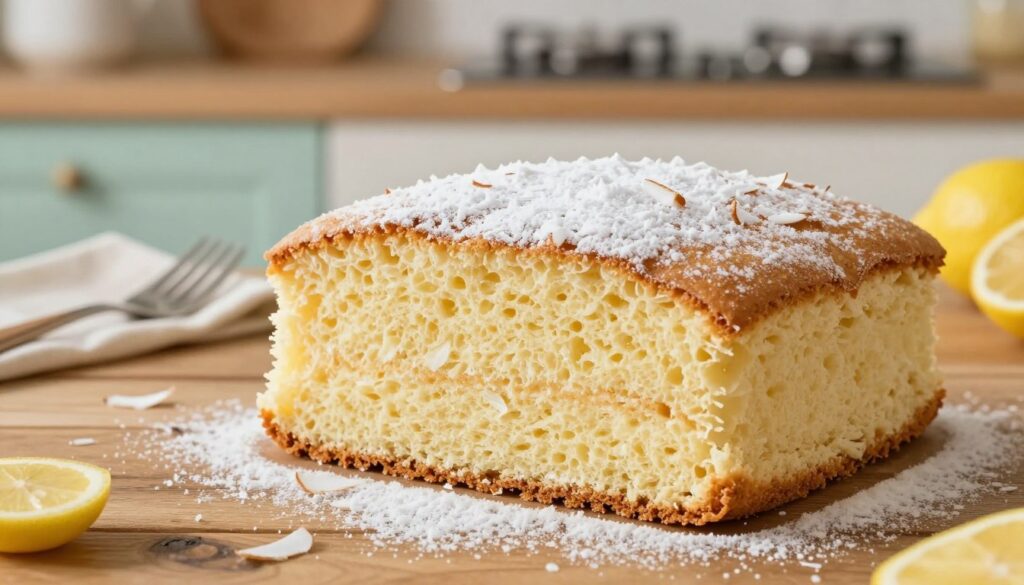
Gentle handling at the folding stage makes the biggest difference to texture. Keep movements slow and lift the mixture rather than stirring hard.
The Dangers of Overmixing
Avoid overworking the batter once the flour is added. Overmixing develops gluten and gives a heavy, tight crumb.
Use an airy folding action and stop as soon as the dry ingredients disappear. This preserves trapped air that creates a light sponge.
- If the cake seems dense, check baking powder and oven temperature.
- Add a splash of milk or coconut milk if the batter appears too stiff.
- Test with a skewer a few minutes before the end of the baking time to avoid overbaking.
- Use room-temperature ingredients so emulsification is clean and even.
- Resist opening the oven for the first part of the bake — it can cause the centre to sink.
“A careful fold and steady oven give the light, moist result most home bakers want.”
| Issue | Cause | Quick fix |
|---|---|---|
| Dense crumb | Overmixing or old raising agent | Fold gently; check baking powder |
| Sank centre | Oven door opened too soon | Wait until cake is set before checking |
| Dry slices | Overbaked | Skewer check a few minutes early |
Creative Variations and Flavour Twists
Small changes to the mix can create bold new flavours without altering the method.
Adding Fresh Fruit
Fold in a handful of fresh berries or chopped pineapple for a fruity lift. These additions add moisture and a pleasant contrast to the toasted desiccated coconut in the batter.
For a showy finish, slice the cooled cake and sandwich the layers with a thin spread of lemon curd or whipped cream before serving.
Using Different Citrus
Swap lemon zest for lime zest for a sharper, lively note. Try a mix of citrus zests to build complex aroma without extra sugar.
Drizzle with a glaze made from icing and a little lemon juice to balance the tropical sweetness.
Dairy-Free Alternatives
Replace butter with a plant-based spread and use coconut milk instead of dairy milk to make the recipe suitable for dairy-free diets. A splash of vanilla will round the flavour and enhance the coconut note.
“A few thoughtful swaps keep the basic baking method intact while expanding taste options.”
| Variation | Swap | Effect |
|---|---|---|
| Fruit addition | Fresh berries or pineapple | Juicy texture and tropical twist |
| Sugar swap | Coconut sugar for caster sugar | Richer, caramel-like flavour |
| Dairy-free | Plant spread & coconut milk | Suitable for dairy-free diets; keeps moist |
For the full method and ingredient list try this mary berry coconut recipe, which shows how small tweaks work with the original approach.
Serving Suggestions for Afternoon Tea
Serve this classic sponge on a pretty stand to make a simple afternoon feel special. Present thin slices so each guest can savour the bright lemon edge and the subtle coconut texture.
Pair with a hot cup of English Breakfast to balance the sweetness. For a lighter contrast, offer chamomile or mint as a herbal option.
For extra indulgence, set out a small pot of whipped cream or a scoop of vanilla ice cream alongside. A platter of fresh pineapple or mango slices will enhance the tropical notes and add colour.
“Thin slices and simple accompaniments let the sponge shine.”
- Serve in thin portions to highlight the delicate flavours.
- Display on a cake stand for a pleasing centrepiece.
- Offer both hot tea and a chilled herbal brew for variety.
Whether for a casual family get-together or a more formal tea, this versatile bake impresses with its simplicity. For another trusty afternoon recipe, try the apple and almond recipe.
Storing Your Cake for Maximum Freshness
How you store this sponge will decide how long it stays moist and flavourful.
Short-term: Place the cooled sponge in an airtight container at room temperature. This keeps the coconut bake fresh for up to 3 days and preserves the texture.
Medium-term: If you need longer storage, wrap the loaf tightly and refrigerate. Stored this way, it will keep for up to 5 days. Avoid high temperature when reheating — quick warmings are best.
Long-term: For freezer storage, wrap individual slices well in cling film and place in a sealed box. Frozen portions keep up to 1 month. When ready to eat, let them defrost at room for a few minutes to a few hours, depending on size.
Always cool completely before packing. Trapped steam makes the crumb soggy. The lemon drizzle helps lock in moisture, so this Mary Berry recipe suits advance preparation well.
“Proper wrapping and sensible storage mean you can enjoy great slices over several days without losing flavour.”
Nutritional Information and Dietary Considerations
When considering dietary needs, small swaps can make this recipe far more inclusive.
Each slice of this mary berry coconut cake contains roughly 310–360 kcal. A typical portion delivers about 5g protein and 14–18g fat, so it is a fairly rich treat.
The inclusion of desiccated coconut adds a little fibre, while a dash of lemon juice in the icing brings a touch of vitamin C. Accurate measuring of ingredients — for example 200g flour and 200g sugar — keeps these values consistent.
For dietary restrictions, swap the self-raising flour for a gluten-free blend. Use plant-based spread and coconut milk in place of butter and milk to make a dairy-free version.
Use room-temperature eggs and butter so the sponge rises correctly during the baking time. Allow the loaf to cool completely before slicing to preserve texture and icing finish.
“Enjoy slices in moderation as part of a balanced diet.”
| Nutrient | Per slice (approx.) | Note |
|---|---|---|
| Energy | 310–360 kcal | Depends on portion size and sugar |
| Protein | ~5 g | From eggs and flour |
| Fat | 14–18 g | Butter and desiccated coconut |
Conclusion
Finish with a glossy drizzle and let the loaf cool so the icing sets and the crumb firms. This quick final step helps the texture stay tender and keeps the syrup from making the top soggy.
Strong, practical tips make a reliable bake: use room-temperature eggs and butter, measure your ingredients accurately and fold gently to keep air in the sponge. A light dusting of caster sugar or a mix of icing sugar and fresh lemon juice lifts the flavour without weighing the crumb down.
Whether you stick to the classic mary berry approach or try a small twist with extra coconut or a splash of coconut milk, this recipe rewards simple attention. Enjoy sharing the cake at teatime — the result is a moist, bright slice that will please friends and family.
FAQ
What makes this lemon and coconut sponge different from other recipes?
Can I use coconut milk instead of desiccated coconut?
How do I know when the sponge is fully baked?
What temperature should I bake at and does fan oven change that?
How can I prevent the sponge from becoming dense?
Is it better to use caster sugar or granulated sugar?
How do I make the lemon drizzle without it going too runny?
Can I add fresh fruit to the batter and what works best?
What dairy-free swaps work for this recipe?
How should I store the cake and how long will it keep?
Can I make this recipe ahead for an afternoon tea?
Are there easy flavour variations I can try?
What size tin and baking time should I use?
Mary Berry Lemon And Coconut Cake
This classic British sponge blends zesty citrus with a soft, sweet tropical note to deliver a bright, uplifting flavour. It is a dependable recipe for afternoon tea or relaxed get-togethers, and the mix of textures feels both comforting and elegant.
Ingredients
- 175g unsalted butter (softened)
- 175g caster sugar
- 3 large eggs (room temperature)
- 175g self-raising flour
- 1 teaspoon baking powder
- 50g desiccated coconut
- Zest of 1 large lemon
- 2 tablespoons milk
- 75g icing sugar
- 2-3 tablespoons fresh lemon juice
Method
- Preheat the oven to 180°C (350°F) and grease and line a 20cm round tin.
- Cream the softened butter and caster sugar until pale and airy.
- Add the eggs one at a time, beating well after each addition.
- Fold in the self-raising flour, baking powder, and desiccated coconut gently.
- Stir in the lemon zest and milk until the batter is smooth.
- Pour the batter into the prepared tin and smooth the top.
- Bake in the preheated oven for 40-45 minutes, or until golden brown and a skewer comes out clean.
- Allow the cake to cool in the tin for a few minutes before transferring to a wire rack.
- Mix the icing sugar with lemon juice to create a drizzle and pour over the warm cake.