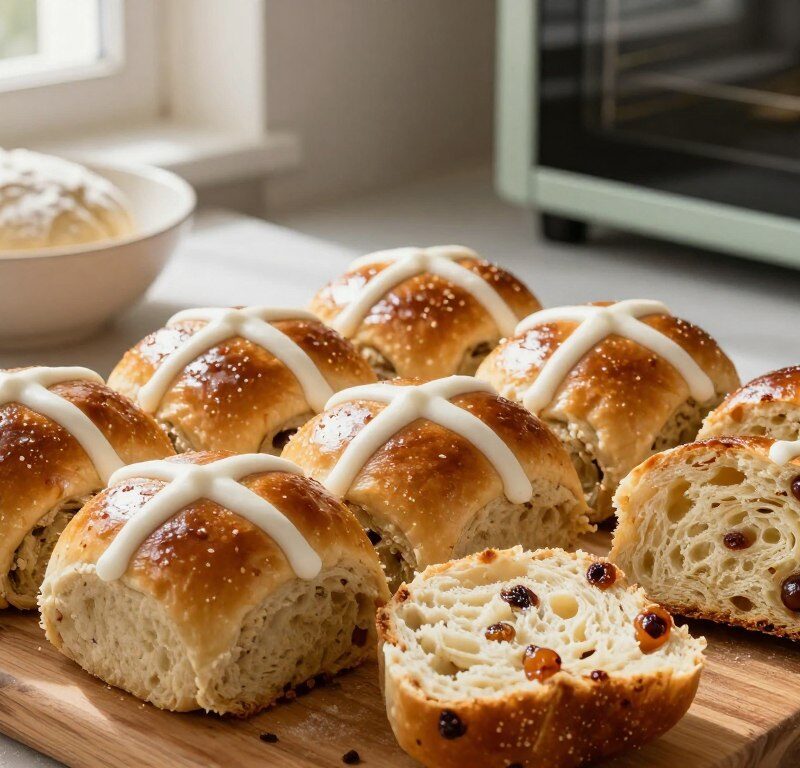
This classic recipe is widely regarded as foolproof for home bakers across the United Kingdom. It shows how a simple method delivers spiced, fruity treats that feel professional every time.
You will need 500g of strong white bread flour to give the dough the right light, elastic structure. Plan to set aside much of the day for kneading and rising — patience makes the difference.
These cross buns are a quintessential part of Easter, best served warm with plenty of butter. Follow the steps closely and you can recreate the results that made mary berry a household name in baking.
Key Takeaways
- Use 500g strong white bread flour for the correct dough texture.
- Allow sufficient time for kneading and rising to achieve light buns.
- The method produces consistent, professional results at home.
- Serve warm with butter to best enjoy the spiced, fruity flavour.
- Ideal recipe for bakers seeking a reliable Easter favourite.
Why Mary Berry Hot Cross Buns are an Easter Essential
For many families across the UK, these spiced, fruit‑filled rolls mark the heart of Good Friday gatherings. The scent of mixed spice and candied peel is instantly recognisable and deeply tied to seasonal rituals.
Baking at home beats shop‑bought every time. Lifestyle reporter Katherine McPhillips found that homemade versions deliver better texture and richer flavour than mass‑produced loaves.
Making the recipe yourself lets you choose top‑quality sultanas and raisins. You control sugar levels, spice balance and fruit quantity so each bite is juicy and satisfying.
“Sharing freshly baked treats with neighbours and family brings the best of the season to life.”
Many households, including the family of Marie Rayner, treat these cross buns as a cherished Good Friday tradition.
- Distinct flavour from mixed spice and candied peel.
- Homemade texture and fruit quality outperform supermarket options.
- Simple to share — a true communal Easter treat.
Essential Ingredients for Your Dough
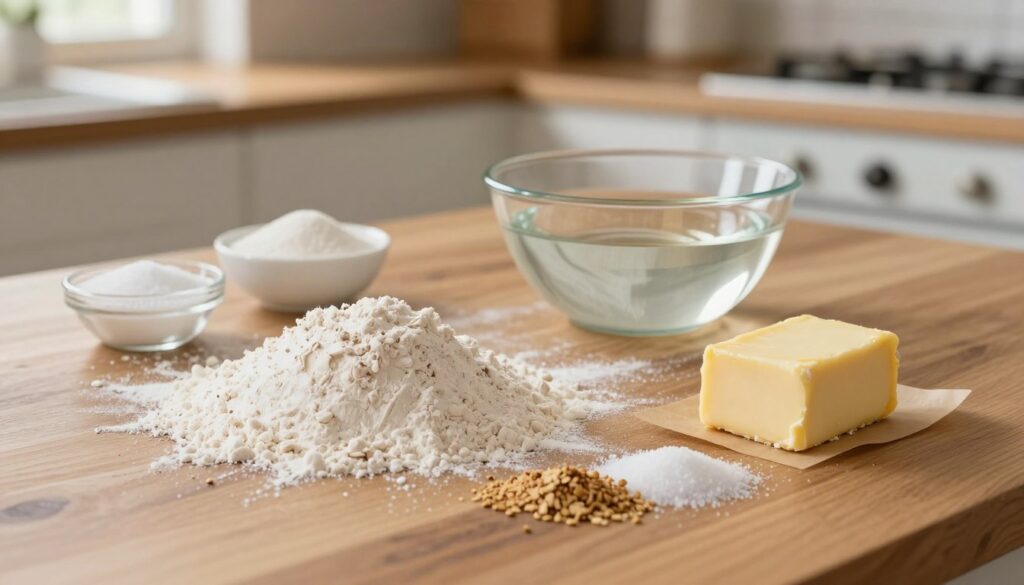
Start by choosing strong, high-protein flour and fresh spices for the best result. Precise measures make mixing straightforward and ensure the dough rises correctly.
Selecting the Right Flour
Use 500g of strong white bread flour. Aim for a protein level of 12–14% to give the dough good structure and chew.
Whisk the flour with 75g sugar and 2 tsp mixed spices in a large bowl. Add the grated zest of one lemon for brightness.
Preparing the Mixed Spice
Place 10g quick-acting yeast at one side of the large bowl and 1 tsp salt at the opposite side. This stops the yeast activating too soon.
Warm 300ml milk to blood temperature and melt 40g butter. Beat in one large free-range egg, then pour into the dry mix and combine to form a soft dough.
For the traditional cross topping: mix 70g plain flour with 100ml water to make a smooth paste for your piping bag.
Mastering the Kneading and Rising Process
Start by working the enriched dough on a lightly floured work surface until it feels silky and springy.
Knead for 10 minutes. This develops the gluten and gives the buns a fine crumb. Use firm, even pressure and fold the dough back on itself as you work.
When the dough is smooth, fold in 200g sultanas and 50g mixed peel so the fruit distributes evenly. Continue for a few turns until the fruit feels incorporated.
Place the dough in an oiled bowl, cover and leave in a warm spot to rise for 1.5 hours. It should double in size — about 90 minutes in a temperate kitchen.
Knock back the risen dough, knead for a further 5 minutes on the work surface, then return it to the bowl to rise again for one hour.
Tip: A gentle press with two fingers should leave an indent that springs back slowly — that confirms the second rise is complete.
- 10 minutes kneading to develop texture.
- 90 minutes first rise until doubled in a warm bowl.
- 5 minutes knock back and finish before a final hour in the bowl.
Shaping and Preparing the Buns for the Oven
Gently pat the enriched dough into an eight‑inch round on a lightly floured work surface. Use a sharp knife to cut the disc into 12 equal wedges so each portion bakes evenly.
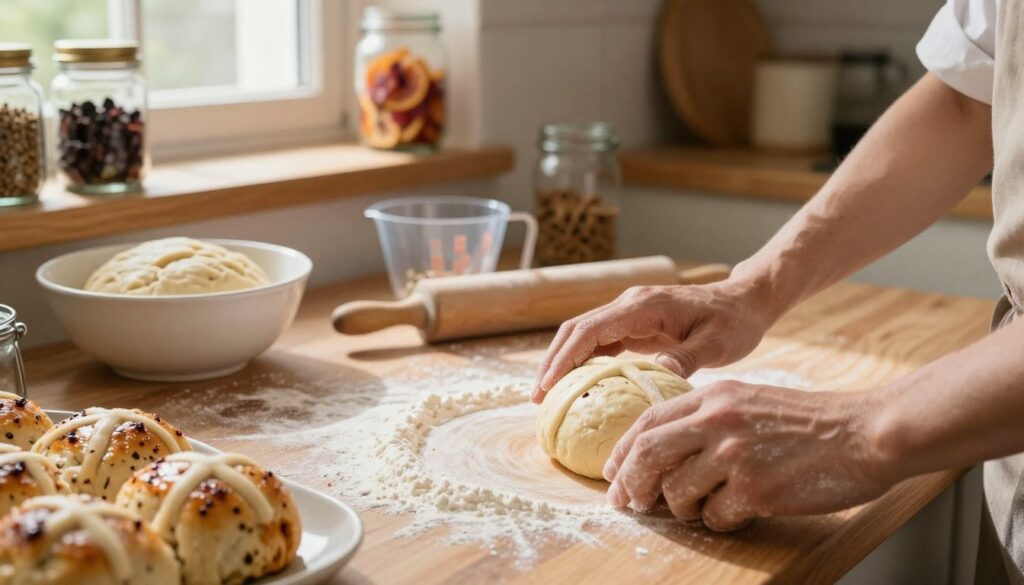
Shape each wedge into a smooth ball by pulling the dough under itself and using your palms to create surface tension. Place the balls close together on a baking sheet lined with paper so they rise into one another and keep soft sides.
Allow the buns to rise in a warm bowl or covered dish for 40 to 60 minutes. Stop when the buns have doubled in size; this ensures a tender crumb and even baking.
Prepare a piping bag with the flour‑and‑water paste for the traditional top cross. Pipe neat lines across each roll just before they go into the oven for a classic finish.
Once baked, brush each bun with 2 tablespoons of warm golden syrup for a glossy top. This final touch locks in shine and adds a light sweetness to the crust.
“Shaping carefully and allowing the buns to double in size gives the soft, risen texture that makes this recipe so reliable.”
| Step | Action | Timing |
|---|---|---|
| Divide | Pat dough to 8-inch round, cut into 12 wedges | 5 minutes |
| Shape | Form smooth balls and place close on lined sheet | 10 minutes |
| Rise | Leave until buns doubled in size before preheating oven to 220C | 40–60 minutes |
| Pipe | Prepare piping bag with flour + water paste and pipe crosses | Immediately before baking |
| Finish | Brush with warm golden syrup after baking | Right after oven |
Piping the Traditional Cross and Baking
Prepare to pipe the signature crosses slowly and steadily so the paste sits cleanly on the dough tops.
Fill a piping bag with the flour‑and‑water paste. If you lack a piping bag, use a zip‑lock bag and snip a small corner off the tip.
Pipe neat lines across each roll. Move deliberately to avoid blobs and to keep the top tidy.
Preheat the oven to 220C and slide the tray in. Bake for 15 to 20 minutes, turning the tray halfway for an even bake.
The buns are done when both top and bottom reach a golden brown. Remove the tray, brush each roll with warm golden syrup and transfer to a wire rack to cool completely.
| Action | Detail | Timing |
|---|---|---|
| Pipe | Use flour paste in a piping bag or zip‑lock bag | Before baking |
| Bake | Preheat oven to 220C, turn tray halfway | 15–20 minutes |
| Glaze | Brush warm golden syrup on top, cool on wire rack | Right after oven |
The History and Symbolism of Hot Cross Buns
A simple glazed roll can carry powerful symbolism, blending sacred meaning with everyday tradition.
Religious Significance
For Christians, the cross on the bun represents the crucifixion of Jesus Christ. The mixed spices used in the dough are said to recall those applied at his burial.
The practice of eating these spiced breads marks the end of the Lenten fast. Over centuries the bake became a ritual item on Good Friday and a way to teach the story through food.
Modern Traditions
Today the rolls are often available all year in shops, yet many households prefer to keep them as an Easter-only treat.
Baking at home reconnects people to the ingredients and history. Using cinnamon and mixed spice in your own oven highlights the aroma and link to older customs.
Even for those who are not religious, preparing the recipe has become a beloved seasonal habit in many British homes.
- Symbol: the cross denotes crucifixion and remembrance.
- Spices: link to burial rites and aroma of tradition.
- Tradition: home baking preserves meaning and flavour.
Conclusion
Follow measured steps and the right rising times to turn simple dough into tender, spiced loaves. ,
Mary Berry‘s classic hot cross buns recipe rewards patience and care. Use accurate weights, gentle shaping and a calm approach to baking for the best result.
The spice, sultanas and the signature cross make these cross buns ideal for sharing. Pipe the topping from a small bag with steady pressure and finish with a warm syrup glaze.
Try the method once and you will see how straightforward tradition can be in your own kitchen.
FAQ
What makes this classic recipe an Easter essential?
Which flour should I use for the dough?
How do I prepare the mixed spice?
What’s the correct kneading and rising process?
How do I shape the buns for consistent size?
What size should the buns be for baking?
How is the traditional cross piped on top?
When should I glaze the top for best shine?
Can I use dried fruit or candied peel in the mix?
How do I store leftover buns to keep them fresh?
What oven temperature and baking time give the best result?
Can I make the dough the night before?
Are there variations for a richer crumb?
How do I prevent the tops from burning while the centres remain underdone?
Mary Berry Hot Cross Buns
This classic recipe is widely regarded as foolproof for home bakers across the United Kingdom. It shows how a simple method delivers spiced, fruity treats that feel professional every time.
Ingredients
- 500g strong white bread flour
- 75g sugar
- 2 tsp mixed spices
- 1 lemon (zest only)
- 10g quick-acting yeast
- 1 tsp salt
- 300ml milk (warmed to blood temperature)
- 40g butter (melted)
- 1 large free-range egg
- 70g plain flour (for cross topping)
- 100ml water (for cross topping)
- 200g sultanas
- 50g mixed peel
- 2 tbsp warm golden syrup (for glazing)
Method
- Whisk the flour, sugar, and mixed spices in a large bowl. Add the grated lemon zest.
- Place the yeast on one side of the bowl and the salt on the opposite side.
- Warm the milk and melt the butter. Beat in the egg, then pour into the dry mix and combine to form a soft dough.
- Knead the dough on a lightly floured surface for 10 minutes until silky and springy.
- Fold in the sultanas and mixed peel until evenly distributed.
- Place the dough in an oiled bowl, cover, and leave to rise in a warm spot for 1.5 hours until doubled in size.
- Knock back the risen dough and knead for another 5 minutes, then return to the bowl to rise for another hour.
- Pat the dough into an 8-inch round and cut into 12 equal wedges.
- Shape each wedge into a smooth ball and place them close together on a lined baking sheet.
- Allow the buns to rise for 40 to 60 minutes until doubled in size.
- Prepare a piping bag with the flour and water paste for the cross topping and pipe crosses on each bun.
- Preheat the oven to 220C and bake the buns for 15 to 20 minutes, turning the tray halfway.
- Brush each bun with warm golden syrup immediately after baking and transfer to a wire rack to cool.