This bright, soft cake brings together fresh lemon zest with a warm hint of spice. It is a classic mary berry recipe that yields a tender sponge ideal for tea-time or a simple dessert.
The method is straightforward, using common British ingredients and minimal fuss. You do not need complex layering or special tools — just steady baking and a short preparation time.
The zesty lemon notes lift the flavour while the ginger adds subtle warmth. The finished traybake often wears a light icing or a dusting of sugar to finish.
Expect reliable results every time. This recipe suits celebrations, quick weekday treats or a comforting slice with a cuppa.
Key Takeaways
- Simple, dependable recipe that fits everyday baking.
- Bright lemon and warming spice create balanced flavour.
- Soft sponge that is ideal for tea or as a dessert.
- Minimal preparation time and easy technique.
- Finishes well with a light icing or sugar dusting.
Why You Will Love This Mary Berry Lemon And Ginger Traybake
This recipe shines because it makes professional results feel simple and stress-free for home bakers.
Beginner-friendly techniques mean you can produce a light, moist cake without specialist kit. The method is forgiving, so first-time bakers get consistent results every time.
The bright lemon zing pairs with warming ginger to give a balanced flavour that stands out at parties. It travels well, so you can cut neat squares and take them to gatherings with no fuss.
- Reliable sponge: a tender crumb that stays moist.
- Easy to serve: slices into tidy portions for crowds.
- Make ahead: freezes well for quick desserts on busy days.
Best of all, the recipe needs only a standard tin and basic utensils found in most British kitchens. This traybake is a fuss-free way to impress with minimal effort.
Essential Ingredients for Your Traybake
Start with measured, room-temperature ingredients for the best texture in this spiced cake.
Dry ingredients
225g self-raising flour gives the lift needed for a light crumb. Add 1 teaspoon baking powder and a pinch of salt to balance the sweetness.
- 225g caster sugar — the main sweetener.
- 2 teaspoons ground ginger or 3 tablespoons finely chopped crystallised ginger for texture.
- Zest of 2 lemons to brighten the flavour.
Wet ingredients
Use 225g softened butter and 4 large eggs. A splash of milk helps the batter reach the right consistency.
“Room-temperature butter and eggs emulsify smoothly, giving an even rise and tender crumb.”
| Ingredient | Amount | Purpose |
|---|---|---|
| Self-raising flour | 225g | Structure and lift |
| Butter (softened) | 225g | Fat for tenderness |
| Caster sugar | 225g | Sweetness and aeration |
| Eggs | 4 large | Bind and enrich |
| Ground or crystallised ginger | 2 tsp or 3 tbsp | Spice and texture |
Reserve fresh lemon juice for the icing. Ensure all ingredients are at room temperature to create a smooth, stable batter before baking.
Preparing Your Baking Tin and Oven
Begin by setting your oven to 180°C so the pan reaches an even heat before the batter goes in.
Preheat early: allow the oven to reach the full temperature; this helps the sponge rise evenly and keeps baking time consistent.
Use a 12 x 9 inches tray for best results. Grease the tin thoroughly, then line it with baking parchment so the cake releases cleanly. Taking this extra care now will save you minutes when unmoulding and cooling.
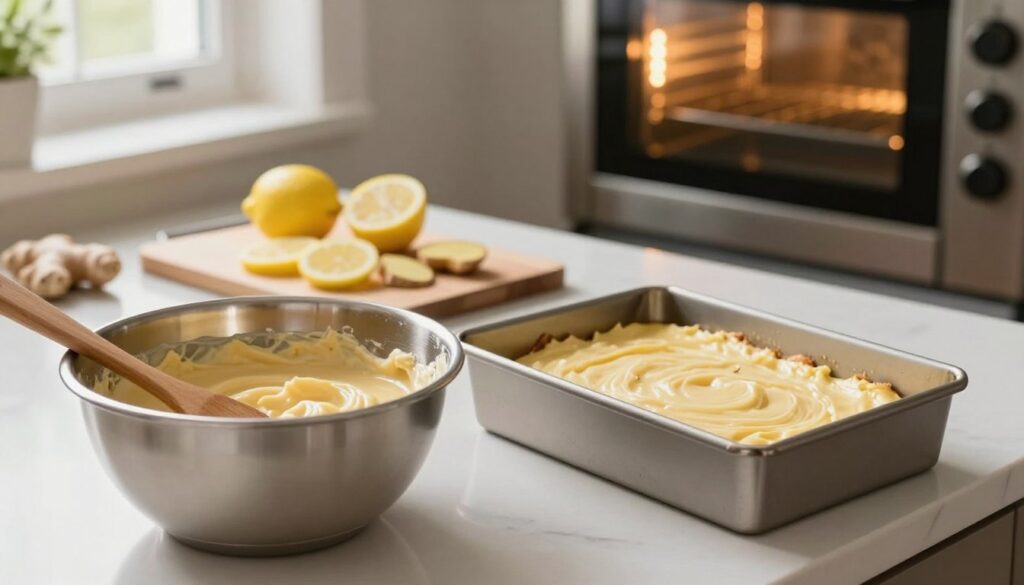
Position the rack in the centre of the oven. Centre placement gives consistent heat across the tray and prevents the edges from overbaking.
- Check the tray size matches the recipe — this ensures the right thickness for neat squares.
- Greasing plus lining prevents sticking and improves presentation.
- Allow a few minutes for the oven to stabilise at 180°C before you put the batter in.
“Proper preparation of the tin and oven is the small step that makes the biggest difference to the finished cake.”
Mixing the Perfect Batter
A well-aerated batter is the foundation of a soft, evenly risen cake. Follow a few clear steps and the mixture will bake into a light, tender sponge.
Creaming the Butter and Sugar
Beat the softened butter with caster sugar until the mix is pale and fluffy. This aeration is the key fat step for an even rise.
Incorporating Eggs
Add the egg one at a time, mixing well after each addition. Do this slowly to make sure the batter does not curdle.
Folding in the Flour
Sift the flour and baking powder together, then fold into the mixture gently with a spatula. Avoid overworking the batter to prevent a heavy cake.
- Add the zest and spice now so the flavour spreads through the batter.
- If the mixture looks stiff, stir in a splash of milk so it spreads easily in the tin.
- Use a light folding motion to keep air pockets intact for the best rise.
“Proper aeration of the fat and sugar is the secret to a successful traybake.”
| Step | Action | Why it matters |
|---|---|---|
| Creaming | Beat butter + caster sugar | Introduces air for light crumb |
| Eggs | Add one at a time | Prevents curdling, keeps mixture smooth |
| Folding | Sift flour & fold gently | Maintains air, avoids dense cake |
Baking to Golden Perfection
Pop the tray into the preheated oven and bake for about 35 minutes. Check that the top is golden and springy to the touch — this is the clearest sign it is done.
Mary Berry advises the cake is ready when it pulls away slightly from the sides of the tin. That gap shows the sponge has set and is cooked through.
Smooth the batter evenly before baking for a uniform height. If edges brown too fast, lower the shelf or reduce the oven temperature for the final few minutes.
“A golden top means the lemon and ginger flavours have had time to mature under heat.”
- Place your tray into the preheated oven and check after 35 minutes.
- Remove the tray and allow it to cool completely on a wire rack before icing.
Adding the Zesty Lemon Icing
A bright, glossy glaze transforms the finished sponge into a show-stopping, citrus-scented top. The icing adds shine and helps seal in moisture so each slice stays tender.

Achieving the Right Consistency
To make the icing, combine 175g icing sugar with 2–3 tablespoons fresh lemon juice and stir until smooth and pourable.
If you want a thinner glaze, add more juice a teaspoon at a time. For a thicker layer, sift in a little more sugar until the mixture holds its shape.
Ensure the cake has had time to cool completely. Applying icing while warm will make it soak into the sponge rather than set on the top.
- Prick the top lightly if you want a subtle tang to seep into the sponge.
- Drizzle the icing over the cooled cake and let it settle into a glossy finish.
- The glaze acts as a protective layer, keeping the ginger-infused sponge moist and giving a neat, professional look.
“A smooth, well-balanced icing brings out the lemon flavour and complements the warming spice.”
Troubleshooting Common Baking Issues
A few simple checks will fix most problems with cake texture or flavour. Use these tips to spot the cause and correct it quickly.
If the sponge is dense: you may not have creamed the butter and sugar long enough. Beat until pale and fluffy to trap air in the batter.
If the icing soaks in: make sure the cake has had time to cool completely before glazing. A warm top will pull the glaze into the crumb.
- Overbaked edges: move the tin to the centre of the oven and cut a few minutes from the baking time.
- Sunken middle: avoid opening the door for the first 20 minutes to prevent sudden temperature drops.
- Weak flavour: increase lemon zest or add finely chopped crystallised ginger to the mixture.
| Fault | Likely cause | Quick fix |
|---|---|---|
| Dense cake | Insufficient creaming | Beat butter & sugar longer; sift flour |
| Soggy top after icing | Iced while warm | Cool completely, then glaze |
| Overbaked edges | Rack too high or long time | Centre rack; reduce minutes |
| Sunken centre | Oven door opened early | Keep door closed for first 20 minutes |
Storage: Store the finished traybake in an airtight tin at room temperature. It will stay soft and moist for up to 3 days after baking.
“Practical tweaks during mixing and baking save time and give a reliable result.”
Creative Variations and Serving Suggestions
Experimenting with chips, syrup or crumbs adds personality and makes the dessert more festive. A few small swaps can change texture, sweetness and presentation without extra fuss.
Adding Texture with Ginger
Fold finely chopped crystallised ginger into the batter for chewy pockets of spice. This gives the sponge a lively note and a pleasant chew.
For extra contrast, sprinkle a few white chocolate chips into the mixture. The sweet chips balance the spice and lift the overall flavour.
Serving with Accompaniments
Serve slices warm with a scoop of vanilla ice cream for a hot-cold contrast that feels indulgent. A drizzle of lemon syrup or a light icing adds shine and moisture.
- Swap some butter for Greek yoghurt to lighten the fat in the recipe.
- Add poppy seeds or grated white chocolate on top for crunch and sweetness.
- Use a bowl to mix room-temperature eggs and butter so the batter emulsifies evenly.
“A scoop of ice cream and a warm slice make a simple tray dessert feel very special.”
Conclusion
With the right technique and measured ingredients, this classic bake rewards patience with a moist, flavourful slice. Follow each step, from creaming the butter and caster sugar to folding the flour, and the batter will set into an even, tender cake.
Finish with a glossy icing or a light lemon syrup for added shine and moisture. Store the cooled sponge in an airtight tin at room temperature so the texture and flavour stay at their best for several days.
Enjoy experimenting — small swaps to the mixture or a touch more ginger will tailor the result to your taste. This simple recipe makes a reliable dessert for any time you need a comforting, impressive treat.
FAQ
What size tin should I use for this traybake?
Can I substitute self-raising flour with plain flour?
How do I store the traybake to keep it moist?
What’s the best way to grate ginger for the batter?
Can I make the traybake ahead and freeze it?
How do I know when the cake is done?
Is it okay to use salted butter instead of unsalted?
How thick should the lemon icing be for a tidy finish?
Can I replace caster sugar with granulated sugar or a sweetener?
How do I add white chocolate or chopped nuts without weighing the sponge down?
What temperature should I bake at for the best rise and even colouring?
Could I make this as cupcakes instead of a traybake?
How can I increase the ginger flavour without making it too spicy?
What’s the best way to make a lemon syrup for extra moistness?
Mary Berry Lemon And Ginger Traybake
This bright, soft cake brings together fresh lemon zest with a warm hint of spice. It is a classic Mary Berry recipe that yields a tender sponge ideal for tea-time or a simple dessert.
Ingredients
- 225g self-raising flour
- 225g caster sugar
- 225g softened butter
- 4 large eggs
- 1 teaspoon baking powder
- pinch of salt
- 2 teaspoons ground ginger or 3 tablespoons finely chopped crystallised ginger
- Zest of 2 lemons
- splash of milk
- 175g icing sugar
- 2-3 tablespoons fresh lemon juice
Method
- Preheat the oven to 180°C and prepare a 12 x 9 inches tray by greasing and lining it with baking parchment.
- In a bowl, cream the softened butter and caster sugar until pale and fluffy.
- Add the eggs one at a time, mixing well after each addition.
- Sift the self-raising flour and baking powder together, then fold into the mixture gently with a spatula.
- Add the lemon zest and ginger to the batter, and if the mixture looks stiff, stir in a splash of milk.
- Pour the batter into the prepared tray and smooth the top evenly.
- Bake in the preheated oven for about 35 minutes, or until the top is golden and springy to the touch.
- Allow the cake to cool completely on a wire rack.
- To make the icing, combine the icing sugar with fresh lemon juice until smooth and pourable.
- Drizzle the icing over the cooled cake and let it set.