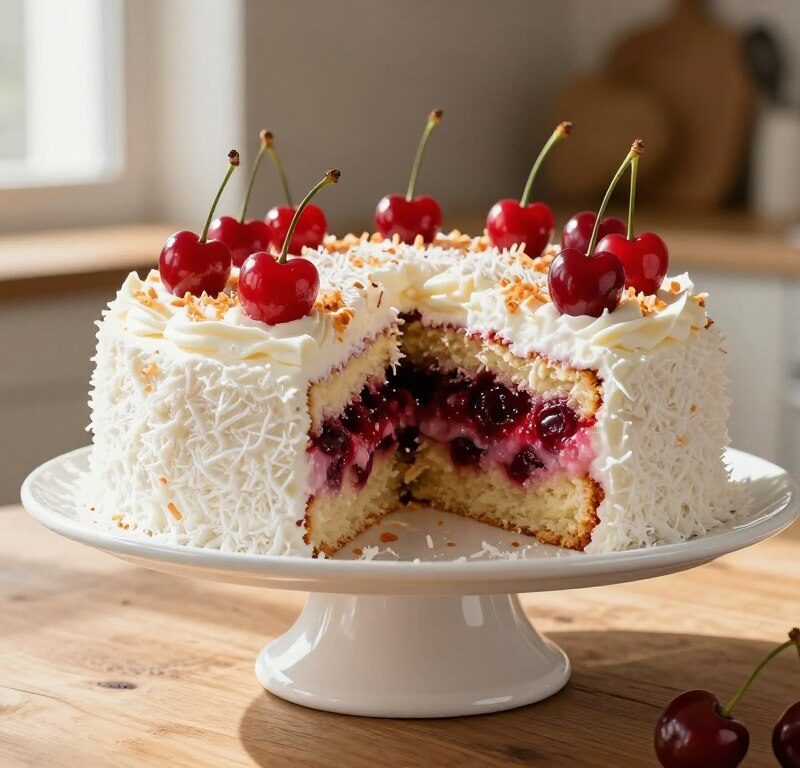
This classic sponge is a beloved British bake that pairs glace cherries with desiccated coconut for a warm, nostalgic flavour. It yields a soft, moist crumb that stays tender when stored in an airtight tin.
The straightforward recipe suits both beginners and seasoned bakers. Mary Berry’s signature approach keeps the taste clean and the texture light, so good ingredients can shine without fuss.
Serve thin slices with a pot of tea for a simple afternoon treat. The golden-brown top and even crumb make it ideal for casual gatherings or a comforting homemade gift.
Key Takeaways
- Classic pairing: cherries and coconut create a timeless flavour.
- Reliable result: simple steps give a consistent sponge every time.
- Longer freshness: stays moist for days in an airtight container.
- Great for tea: perfectly suited to an afternoon spread.
- Accessible: friendly for bakers of all skill levels.
Why You Will Love This Mary Berry Coconut And Cherry Cake
A soft sponge studded with glace cherries and flecks of desiccated coconut makes teatime feel a little more special.
The balance of fruit and gentle richness keeps the flavour light rather than heavy. That makes this bake ideal for a relaxed afternoon tea or a casual get-together.
The texture is soft and moist, thanks to the shredded coconut that holds moisture and adds subtle depth. Small bursts of cherry appear in every mouthful, so each slice tastes lively and well balanced.
- Uses everyday storecupboard ingredients for an impressive result.
- Simple steps mean the recipe suits busy bakers and beginners.
- Stays tender for days when wrapped in an airtight tin.
| Feature | Why it matters | Result |
|---|---|---|
| Glace cherries | Add sweet pockets of fruit | Bright, fruity bites in each slice |
| Desiccated coconut | Locks in moisture and flavour | Soft crumb and lasting freshness |
| Simple method | No tricky techniques | Reliable outcome every time |
Essential Ingredients for Your Sponge
Start with the best ingredients to make a reliably light, tender sponge every time.
Selecting Quality Ingredients
Unsalted butter and caster sugar form the backbone of the batter. Use 175 g of softened unsalted butter and 175 g of caster sugar to trap air as you cream them together. This step builds the light texture the recipe is known for.
Measure 175 g of self-raising flour accurately. Folding in 75 g of desiccated coconut gives moisture and a gentle nutty note. Choose fresh glace cherries for bright pockets of flavour.
The Importance of Room Temperature
Bring 3 large eggs to room temperature before whisking. Warm eggs emulsify more easily with butter and sugar, creating a smooth, stable batter that rises evenly.
- 175 g butter + 175 g caster sugar = stable creamed base.
- 3 room-temperature eggs = better emulsion and rise.
- 175 g flour + 75 g desiccated coconut = correct structure and moisture.
| Ingredient | Amount | Purpose |
|---|---|---|
| Unsalted butter | 175 g | Creates air pockets and tender crumb |
| Caster sugar | 175 g | Sweetens and helps structure |
| Self-raising flour | 175 g | Provides lift and a light texture |
| Desiccated coconut | 75 g | Adds moisture and subtle flavour |
For the full method and step-by-step guidance, try the complete recipe.
Preparing Your Cake Tin and Oven
Set up the environment before you start mixing. Preheat the oven to 180°C (160°C fan) so the batter meets the right heat straight away. Doing this ensures the sponge begins to rise as soon as it goes in, giving a light, even structure.
Line a 20 cm round or loaf cake tin with baking parchment. A correctly prepared tin prevents sticking and makes release easy when the baking time finishes.
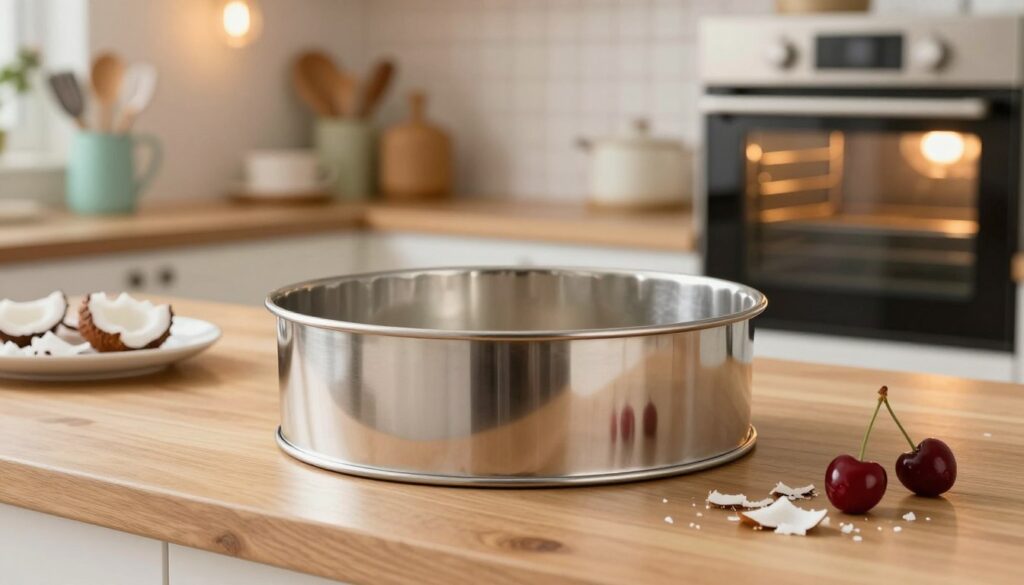
Take care to smooth the parchment into the sides so heat spreads evenly. A well-lined tin also protects the edges, helping them brown gently without going too dark during the 45–50 minute bake.
- Preheat first: set the oven to the right temperature before you mix.
- Choose the tin: use a 20 cm round or a loaf tin for best results.
- Line carefully: parchment makes turning out simpler and cleaner.
Mixing the Perfect Batter
Creaming correctly gives the sponge its lift and a light, even texture.
Start in a large mixing bowl: beat 175 g softened butter with 175 g caster sugar until the mixture is pale, light and fluffy. This traps air that yields a fine crumb after baking.
The Art of Folding
Beat in the 3 large eggs one at a time. Add a spoonful of flour with each egg to keep the mixture stable and prevent curdling.
Gently fold in the remaining flour, baking powder, a pinch of salt and 75 g desiccated coconut. Use a light hand to preserve the air you created.
Fold the glace cherries in last so they spread evenly through the tin. If the batter seems stiff, add a splash of cream or milk to make it smooth and spoonable before it goes into the oven for 45–50 minutes of baking.
| Step | Action | Tip |
|---|---|---|
| Cream | Butter + caster sugar | Beat until pale and fluffy |
| Add eggs | One at a time with flour | Prevents curdling |
| Fold | Flour, coconut, cherries | Use gentle strokes to keep air |
Baking to Golden Perfection
Place your loaf or round tin in the preheated oven and bake until the sponge is firm, springy and golden.
Bake for 45–50 minutes at the temperature given in the recipe. Check after 45 minutes. Insert a skewer into the centre; it should come clean when the internal structure is set.
Level the mixture gently in the cake tin before it goes in. This helps the sponge rise evenly and gives a neat top.
- Bake your loaf or round cake for 45–50 minutes until golden and firm to the touch.
- Verify doneness with a skewer in the centre; it should come clean.
- Leave the bake in the tin for 10 minutes so the crumb stabilises.
- Turn out onto a wire rack to cool completely so air circulates underneath.
| Stage | Action | Why it matters |
|---|---|---|
| Before baking | Level mixture in the tin | Ensures even rise and a flat top |
| Baking | 45–50 minutes in preheated oven | Gives a golden crust and set centre |
| Doneness check | Skewer into centre; comes clean | Confirms internal structure is cooked |
| Cooling | Rest 10 minutes in tin, then wire rack | Prevents a soggy base and keeps crumb tender |
Troubleshooting Common Baking Issues
A few common faults — sinking fruit, dry crumbs or an uneven rise — are easy to fix with small, practical steps. Read the short tips below before you bake so problems can be prevented rather than cured.
Preventing Sinking Cherries
If your cherries sink to the bottom, rinse and pat them dry first. Toss the fruit in a light dusting of flour so they stay suspended in the batter.
Avoiding a Dry Crumb
Dry crumbs usually mean overbaking. Check the cake 5 minutes before the end of the suggested time. If a skewer in the centre does not come clean, return the tin for a few minutes more.
Fixing Uneven Rises
Level the batter before it goes into the oven. This stops a high top and undercooked bottom. In a fan oven keep a closer eye, as the outside can brown faster than the centre sets.

- Quick check: flour-coated cherries suspend better.
- Timing tip: test early to avoid a dry crumb.
- Shape tip: level the surface to ensure an even rise.
| Problem | Quick fix | Result |
|---|---|---|
| Sinking fruit | Toss in flour after drying | Fruit stays mid-crumb |
| Dry crumb | Check earlier with skewer | Moist, tender slices |
| Uneven rise | Level batter before baking | Flat, even top |
Creative Variations and Flavour Twists
Small swaps and flavour lifts can turn this familiar loaf into a new favourite for teatime.
Reduce sugar by 25 g without harming the structure. The sponge will stay tender and rise as normal.
For a lighter fat option, replace 50 g of butter with Greek yoghurt. This keeps moisture and gives a subtly tangy texture that many prefer.
Add finely grated lemon zest to the batter. It brightens the crumb and cuts through the richness of the coconut and cherries.
Serve thin slices of loaf with a dollop of softly whipped cream or fresh raspberries. A light icing on the top gives a neat, professional finish for special serving moments.
- Swap desiccated coconut for fine shredded coconut for a different mouthfeel.
- Use dried cranberries instead of glace cherries for a tart contrast.
- Bake as a loaf for thinner slices that pair well with black tea or Earl Grey.
| Variation | Change | Effect |
|---|---|---|
| Reduced sugar | -25 g sugar | Retains rise; less sweet |
| Lighter fat | 50 g butter → Greek yoghurt | Moister crumb; lighter texture |
| Citrus lift | Add lemon zest | Fresh, bright flavour |
Storing Your Cake for Maximum Freshness
Store your loaf thoughtfully to keep slices soft and the flavour bright for days. Cooling and storage are simple steps that preserve texture and make future serving effortless.
At room temperature: place the completely cool loaf in an airtight container or tin. Keep it at room temperature and it will stay fresh for up to 4 days.
Do not refrigerate. A cold fridge dries the sponge and dulls the delicate crumb that the coconut brings to the recipe.
Freezing for Later
If you need to save time, wrap individual slices tightly in parchment, then foil, and freeze them for up to 1 month. This method keeps portions ready for quick snacks or unexpected guests.
When you want to serve frozen slices, thaw them at room temperature. For a warm treat, microwave a slice for 10–15 seconds. Use a wire rack when cooling before storing; this prevents condensation in the tin and keeps the crust intact.
“A cool cake stored correctly is a cake worth saving.”
| Method | Where | Result |
|---|---|---|
| Room storage | Airtight tin at room temperature | Fresh for up to 4 days |
| Freeze slices | Wrapped tightly, in the freezer | Good for up to 1 month |
| Before storing | Cool on a wire rack | Prevents condensation and soggy crust |
Conclusion
This homely loaf shows how a few good coconut and pantry staples become a memorable teatime treat. Use quality ingredients and follow the simple steps for a reliable recipe that pleases a crowd.
Take care with folding and prep so the cherry pieces stay well distributed. Good technique makes baking simpler and helps you hit the right texture every time.
Serve thin slices plain or with a dollop of fresh cream for a classic finish. Enjoy the process, share the result, and feel free to try the small variations to make the loaf your own.
FAQ
How do I prevent cherries sinking to the bottom of the tin?
What size of cake tin should I use for a loaf or round bake?
Can I use frozen cherries or do I need to use fresh?
How do I know when the sponge is baked through?
Is desiccated coconut interchangeable with fresh coconut?
What’s the best way to measure caster sugar and flour for accuracy?
Should eggs and butter be at room temperature?
How long can I store slices at room temperature and what’s best for longer storage?
My cake started to brown too quickly on top—what went wrong?
How can I keep the crumb moist without making the cake soggy?
Can I add a cream or icing topping and what pairs well?
How do I fix an uneven rise where one side is higher?
Is a fan oven better than conventional for this sponge?
Mary Berry Coconut And Cherry Cake
This classic sponge is a beloved British bake that pairs glace cherries with desiccated coconut for a warm, nostalgic flavour. It yields a soft, moist crumb that stays tender when stored in an airtight tin.
Ingredients
- 175 g unsalted butter, softened
- 175 g caster sugar
- 3 large eggs, room temperature
- 175 g self-raising flour
- 75 g desiccated coconut
- Glace cherries, as needed
Method
- Preheat the oven to 180°C (160°C fan) and line a 20 cm round or loaf cake tin with baking parchment.
- In a large mixing bowl, beat the softened butter and caster sugar until pale and fluffy.
- Add the eggs one at a time, mixing well after each addition and adding a spoonful of flour to prevent curdling.
- Gently fold in the remaining flour, baking powder, a pinch of salt, and desiccated coconut.
- Fold in the glace cherries last, ensuring they are evenly distributed.
- Level the mixture in the cake tin and bake for 45–50 minutes until golden and a skewer inserted into the center comes out clean.
- Leave the cake in the tin for 10 minutes before transferring it to a wire rack to cool completely.