Mastering this classic method turns simple citrus into a glossy, jewel-like ingredient for your cakes. The technique brings a bright, clean flavour that beats shop-bought versions and lifts home baking to a professional level.
Every batch uses fresh lemon to balance sweetness with gentle bitterness. The result is a versatile topping that pairs well with fruit cakes and simple sponges.
This friendly recipe suits both novices and seasoned cooks. Step-by-step guidance makes the process reliable, so you gain consistent, high-quality results for celebration cakes or everyday treats.
Key Takeaways
- Homemade candied peel delivers superior flavour to shop-bought options.
- Fresh lemon is essential for the right sweet–bitter balance.
- The method is suitable for bakers of all skill levels.
- It elevates a simple cake into a show-stopping dessert.
- Follow the recipe for consistent, professional results.
Why You Should Make Mary Berry Candied Peel
Making your own preserves lets you set the exact balance of sugar and bite. Fresh lemon gives a lively lift that shop jars often lack.
Soft, tender texture is easier to achieve at home. A mary berry approach keeps the peel pliant, so it complements a fruit cake instead of feeling hard or artificial.
Turning spare lemon into a small jar of candied peel is economical. It stretches fruit that might otherwise be wasted and creates a ready-to-use storecupboard ingredient.
You also gain longevity. Properly prepared, the preserve stores well and becomes a reliable component for festive baking all year round.
The process is rewarding. Follow this simple recipe and you add a slice of traditional British craft to your kitchen — with tasty results every time.
Essential Ingredients and Equipment
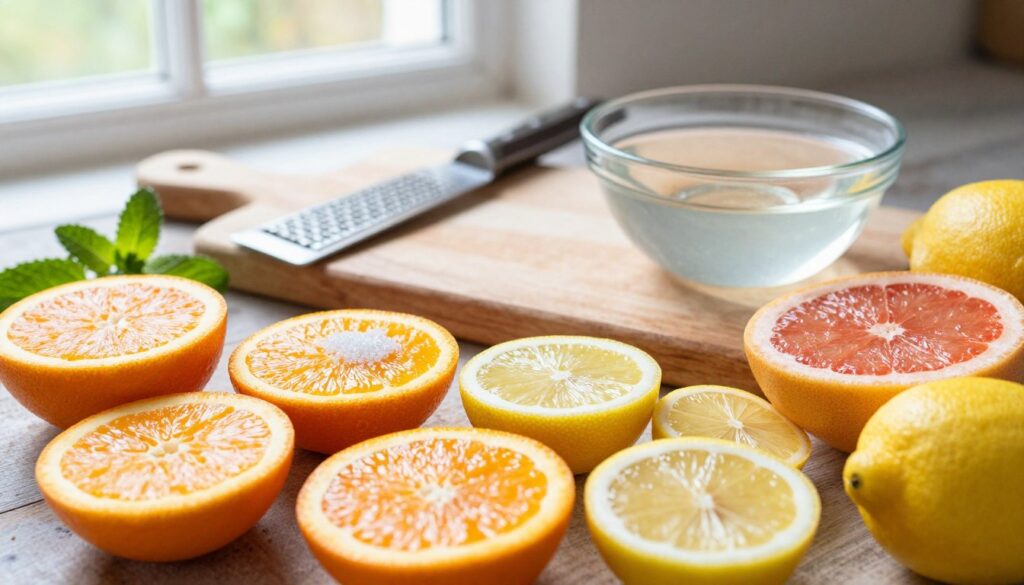
Start by checking your citrus for firmness and a glossy skin. Use three large unwaxed lemon fruits to avoid residual wax that blocks syrup absorption. Gather the main ingredients: 500g granulated sugar and 500ml water for the syrup.
Precision matters. Cut the peel into thin, uniform strips so each piece cooks and dries evenly. Keep a mixing bowl close for drained peel and a baking tray lined with parchment for the drying stage.
Selecting the Right Fruit
Choose lemons that feel heavy for their size. Heavy fruit holds more juice and a firmer peel. Avoid blemished or soft fruit to get clean, bright strips.
Necessary Kitchen Tools
- Sharp knife and vegetable peeler for neat strips.
- Medium pan and slotted spoon for simmering.
- Baking tray with parchment and a wire rack for cooling.
- Mixing bowl, and for the cake: 175g softened butter and 175g caster sugar.
| Item | Quantity | Purpose |
|---|---|---|
| Lemon (unwaxed) | 3 large | Source of peel strips |
| Granulated sugar | 500g | Syrup base |
| Water | 500ml | To dissolve sugar and blanch |
| Wire rack | 1 | Air circulation for drying |
Preparing the Citrus for Success
Good preparation makes all the difference. Wash each lemon thoroughly, then peel the skin in broad, even strips so the white pith stays with the rind. Keeping the pith adds structure and helps the fruit hold its shape when sweetened.
The Importance of Blanching
Place the peel in a saucepan and cover with cold water. Bring to the boil, then drain to pull out the initial bitterness.
Repeat this blanching two more times. Do this carefully; three short boils removes the harsh raw taste and readies the peel for sweetening.
After the final drain, combine the sugar and water in a clean pan and heat until a clear syrup forms. Add the strips back and simmer so the lemon peel soaks up the syrup evenly.
Consistent slicing of the strips is vital. Uniform pieces let the pith absorb the syrup in equal time, giving a balanced texture across every strip.
The Simmering Process
Set the pan to the lowest heat and add the prepared strips to the warm syrup. Keep the flame gentle so the sugar melts slowly and the lemon softens without becoming tough.
Simmer for 45–60 minutes, stirring occasionally. Watch until the strips look glossy and translucent—this shows the pith has absorbed the syrup and the texture is right for cake use.
Check the pan to ensure the granulated sugar has dissolved fully into the water. If any grains remain, the syrup can crystallise later, so keep the mixture clear and even.
- The low heat method preserves tenderness and prevents chewiness.
- Let the pith soak through; this gives sweet, balanced strips for fruit cake.
- After simmering, drain using a wire sieve to separate the syrup from the peel cleanly.
Once drained, spread the strips for drying or move straight to crystallising. Proper simmering makes all the difference to the final flavour and texture.
| Step | Time | Notes |
|---|---|---|
| Add peel to syrup | 0 minutes | Use warm syrup, lowest heat |
| Gentle simmer | 45–60 minutes | Stir occasionally; look for glossy, translucent strips |
| Drain | After simmer | Use a wire sieve; save syrup for reuse |
Drying and Crystallising Your Peel
A gentle drying stage removes excess moisture and firms up the citrus strips so they store well and work beautifully in a cake.
Oven drying techniques
Lift the strips from the pan with a slotted spoon and place them on parchment at room temperature for several hours.
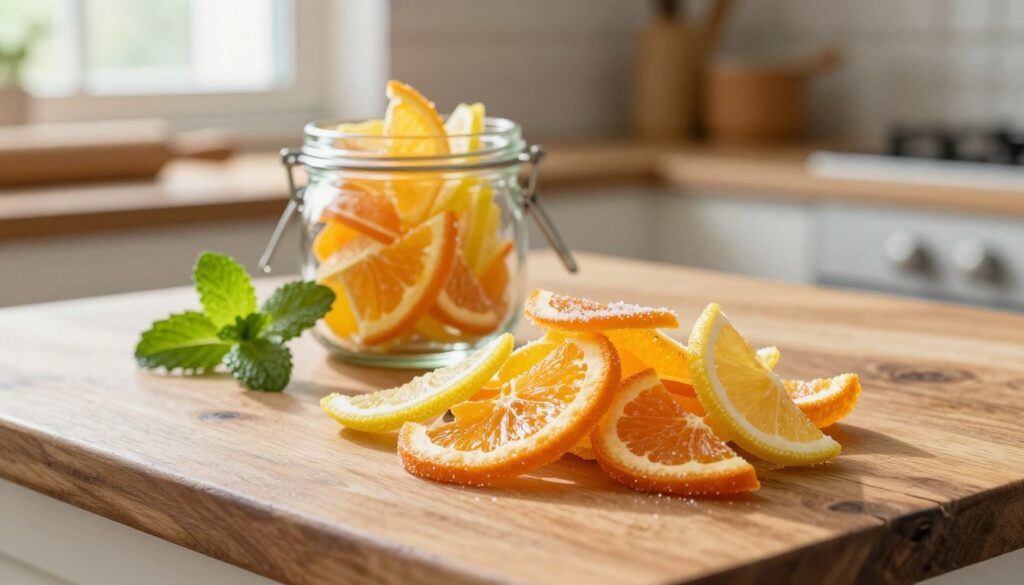
For a crystallised finish, sprinkle the peel with caster sugar, preheat oven to 110C (90C fan / Gas 1/4) and bake for 1 hour. Keep the heat very low so sugar does not burn while water evaporates.
Achieving the perfect texture
After oven time, move the pieces to a wire rack to cool completely. This stops residual syrup from making them sticky.
- Use a shallow pan so strips sit flat in the syrup before drying.
- Check after 45 minutes; some bake minutes may vary by oven.
- Store once cool in a jar—dry, not tacky, they will lengthen shelf life.
Creative Ways to Use Your Homemade Candied Peel
Bright strips of preserved citrus bring instant lift to simple sponges and rich loaves.
For a classic fruit cake, fold 225g self-raising flour and 50g ground almonds into your batter with 4 large free-range eggs. Add chopped candied peel and a knob of butter for richness.
Use an 18cm/7in cake tin and remember to preheat oven to 180C/160C Fan/Gas 4. Line the tin with parchment so the base releases cleanly after bake minutes.
Finely chopped peel works well when folded into the mixing bowl so every slice carries citrus flavour. The chewiness and syrup note pair especially well with caster sugar and warm spice blends.
Try other ideas:
- Stir small pieces into hot cross bun dough for extra bite.
- Scatter three longer strips on top of a loaf before the final bake minutes for a professional finish.
- Chop and fold into chocolate batters to balance richness.
Conclusion
Finishing this recipe rewards patience with a jar of glossy, ready-to-use citrus that lifts plain bakes into something special.
Follow the blanching steps and give the final hour of drying real time — this is where texture and shelf life are secured. Careful work with the sugar syrup and gentle oven time makes all the difference.
This preserve suits a rich fruit cake, simple sponge or as a bright garnish. With practice you will find the method cost-effective and reliable for everyday baking.
For a complete festive bake guide and tips on resting and icing your cake, see the Christmas cake recipe linked here: Mary Berry Christmas cake. Enjoy the process — and the delicious results.
FAQ
What is the best citrus to use for this candied peel recipe?
How do I remove the pith without wasting peel?
Why is blanching the peel important?
How long should I simmer peel in sugar syrup?
What sugar should I use for coating and syrup?
Can I dry the peel in the oven instead of air-drying?
How do I store finished candied peel?
Can I use the syrup left after simmering?
How do I prevent the peel sticking together during drying?
What are some creative uses for homemade candied peel?
Is there a difference between caster and granulated sugar in the recipe?
How can I get the perfect texture—chewy yet not tough?
Mary Berry Candied Peel
Mastering this classic method turns simple citrus into a glossy, jewel-like ingredient for your cakes. The technique brings a bright, clean flavour that beats shop-bought versions and lifts home baking to a professional level.
Ingredients
- 3 large unwaxed lemons
- 500g granulated sugar
- 500ml water
- 175g softened butter
- 175g caster sugar
Method
- Wash each lemon thoroughly, then peel the skin in broad, even strips, keeping the white pith with the rind.
- Place the peel in a saucepan and cover with cold water. Bring to the boil, then drain to remove initial bitterness. Repeat this blanching two more times.
- Combine the sugar and water in a clean pan and heat until a clear syrup forms. Add the strips back and simmer for 45-60 minutes, stirring occasionally until the strips look glossy and translucent.
- Drain the peel using a wire sieve to separate the syrup from the peel.
- For drying, lift the strips from the pan and place them on parchment at room temperature for several hours.
- For a crystallised finish, sprinkle the peel with caster sugar, preheat oven to 110C (90C fan / Gas 1/4) and bake for 1 hour.
- Move the pieces to a wire rack to cool completely before storing in a jar.