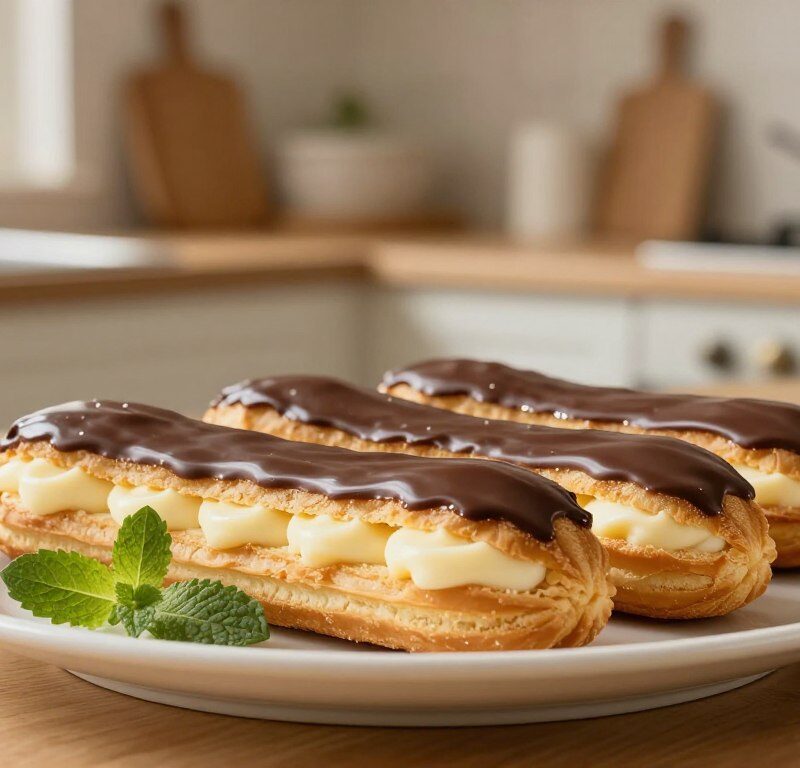
Reliable, simple and trusted — this introduction sets the scene for a classic recipe that many home cooks across the United Kingdom love. The method is known for its consistency, making it ideal for those learning the craft.
With just four basic ingredients, the classic choux pastry creates light, airy buns perfect for profiteroles or a dramatic croquembouche. The steps are straightforward, so newcomers gain confidence quickly.
This guide will show how to fill and finish your creations. You will learn to use a piping bag for neat results and how to dress treats with chocolate, cream and spun sugar for a professional look.
Key Takeaways
- Mary Berry recipes are reliable and beginner-friendly.
- Only four simple ingredients make the base dough.
- Perfect for making profiteroles or a croquembouche centrepiece.
- A piping bag gives clean, professional fillings.
- Finish with chocolate, cream and a scattering of sugar.
The Magic of Mary Berry Choux Pastry
A little patience and careful technique transform basic storecupboard items into airy, golden shells.
Follow the method and you’ll find choux pastry is far less daunting than it looks. Simple ingredients become crisp, hollow buns that are perfect for filling with cream or coating in chocolate.
Many home bakers use a piping bag to get a consistent shape for elegant profiteroles and éclairs. A steady hand makes a visible difference, but the steps are forgiving if you move slowly.
- Reliable results: the technique rewards patience.
- Versatile finishings: serve with warm chocolate sauce or whipped cream.
- Gateway to classics: mastering this Mary Berry recipe opens up many French recipes to try.
“The transformation from a simple dough to a hollow, golden shell is the true charm of this recipe.”
Next, we’ll list the essential ingredients and why each one matters.
Essential Ingredients for Perfect Pastry
Using the correct quantities and tools gives your profiteroles the best chance to rise.
Exact ingredients: 50g butter, 150ml water, 75g plain flour and 2 eggs. These four storecupboard items form the whole choux pastry base for this mary berry recipe.
Measure each ingredient precisely before you start. Accurate weighing helps the dough reach the right consistency and supports good baking results.
- Plain flour: choose a high-quality brand for structure.
- Eggs: provide lift and a glossy finish on baking.
- Butter and water: combine on the hob to form the paste.
- Equipment: saucepan, wooden spoon, sieve and a piping bag for neat profiteroles.
“Weigh and prep everything first — it makes the cooking stage calm and predictable.”
With ingredients and kit ready, you’ll move smoothly into the next step: making the dough on the hob.
Preparing the Dough on the Hob
Get the base right and the rest is straightforward.
Place 50g of butter and 150ml of water into a saucepan and let them heat slowly until the butter has completely melted. Keep the heat gentle so the mix just reaches a boil.
Now shoot in the plain flour all at once. Mary Berry advises adding the flour in one swift motion to stop lumps forming. Use a wooden spoon to beat the mixture hard.
Beat until the dough forms a smooth ball that pulls away from the pan. Return the pan to a low heat and cook for one minute to ensure the flour is fully hydrated and thickened.
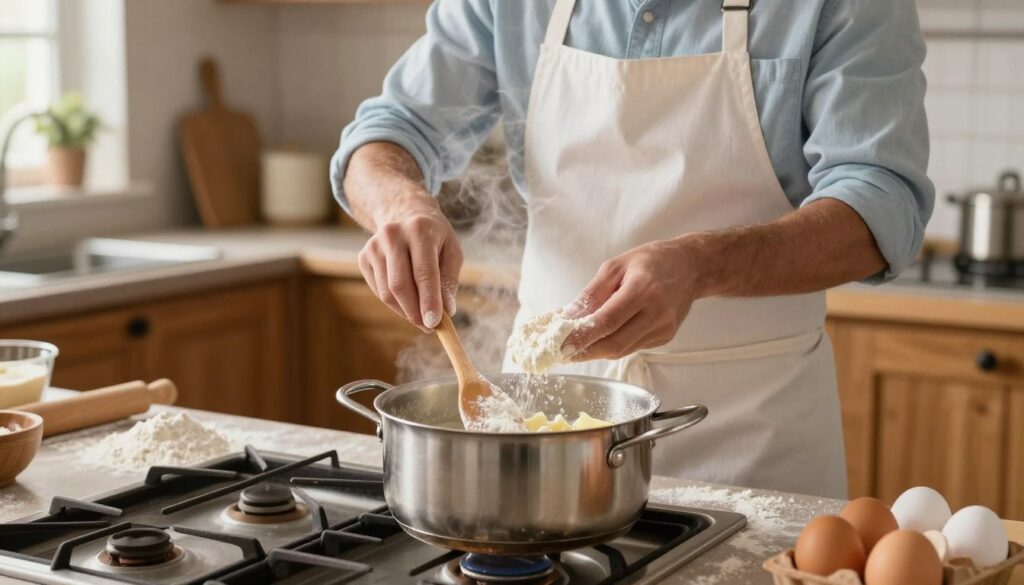
Remove from the heat and allow the dough a little time to cool for five minutes. This short resting time makes it safe to start adding eggs and keeps your baking on track.
“Beat vigorously until the dough forms a clean ball — that tells you it’s ready.”
Incorporating Eggs for a Glossy Finish
Gently folding eggs into the cooled dough gives you that glossy, pipeable finish every baker aims for.
Crack your two eggs into a small bowl and whisk lightly before the first addition. With the pan off the heat, add a little of the egg mixture and beat hard until fully combined.
Repeat the addition slowly. Work in the rest of the eggs a little at a time, beating thoroughly after each addition. This careful method keeps the choux texture smooth and prevents a split mixture.
The final dough should be thick, smooth and glossy. If it holds its shape on a spoon and makes a slight peak, it is ready for piping. Take a little time here — the correct structure helps the buns rise well.
“A patient, measured addition of egg gives the best rise and a shiny finish.”
| Step | What to do | Texture check |
|---|---|---|
| 1 | Whisk 2 eggs in a bowl | Runny, even mix |
| 2 | Add a spoonful to cooled dough off the heat | Mix smooth, glossy |
| 3 | Beat in remaining eggs in small additions | Thick, pipeable peak |
| 4 | Check before piping | Holds shape; ready for baking or filling with cream and chocolate |
Piping and Shaping Your Choux Buns
Make neat, even mounds so each bun puffs and bakes evenly.
Fit a piping bag with a 1cm to 1.5cm nozzle and pipe twenty mounds of dough onto your line baking tray. Leave space between each one; the choux will spread and rise in the oven.
Alternative methods without a piping bag
No piping bag? Use a spoon to dollop walnut-sized amounts of dough onto the tray. A steady hand gives better shape, but a spoon works well for home baking.
Dip a fingertip in water and gently flatten any sharp peaks on the top of each bun. This simple trick helps them bake to a smooth, golden finish.
- Kids can help by holding the piping bag or using a spoon.
- Keep a spare tray ready in case you need more space.
- Plan fillings like cream and chocolate while the buns cool.
| Tool | Action | Result |
|---|---|---|
| Piping bag (1–1.5cm nozzle) | Pipe 20 even mounds on lined tray | Uniform buns that rise well |
| Spoon | Dollop walnut-sized portions | Good for casual baking, kid-friendly |
| Water on finger | Flatten peaks on top | Smooth, even browning |
“Dip your finger in water to flatten peaks so buns bake evenly.” — mary berry
Baking Techniques for Maximum Rise
Good oven management turns soft dough into crisp, airy buns with a perfect hollow interior.
Managing Oven Temperatures
Preheat the oven to 220C / 200C fan / 425F and slide the tray in for 10 minutes so the heat gives an initial burst of lift. This high heat helps the choux build steam and rise quickly.
After those first 10 minutes, reduce the temperature to 190C / 160C fan / 375F and continue to bake for 15–20 minutes until the shells are a deep, even gold.
Piercing the Base
Once the initial bake is done, remove the tray and pierce the base of each bun with a skewer or small knife. This lets trapped steam escape and stops the interiors from becoming soggy.
Return the buns to the oven for a final 5–8 minutes at 190C so they dry out inside and crisp up. Proper timing here prevents them going flat when cooled.
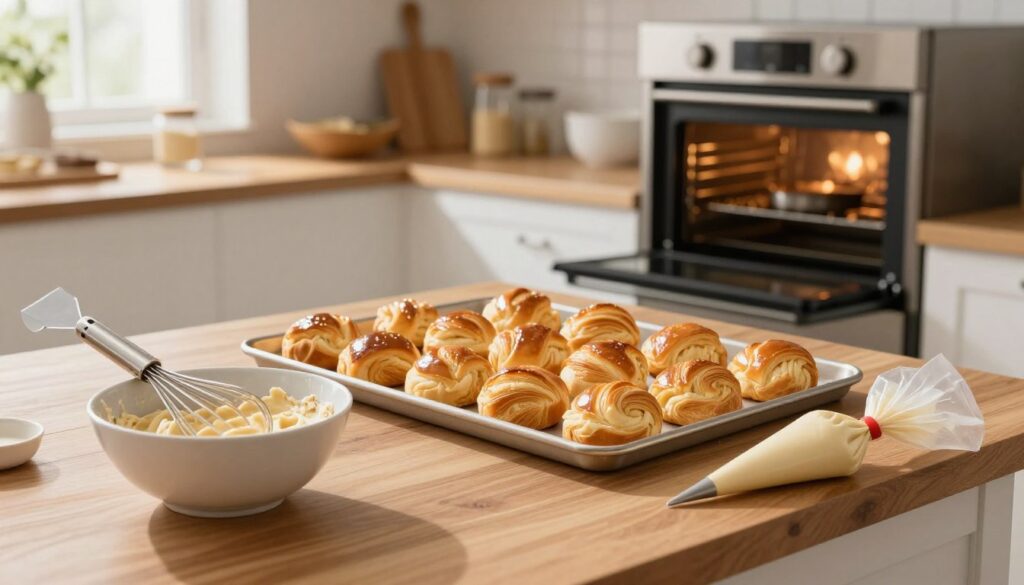
“Pierce the base after the first bake and finish at a lower temperature to ensure hollow, dry shells.”
- Start hot (220C / 200C fan) — 10 minutes to lift.
- Drop to 190C / 160C fan — 15–20 minutes to colour.
- Return to oven 5–8 minutes — dry the inside.
Cool the profiteroles on a wire rack so air circulates underneath. This keeps the shells crisp and ready to fill with cream or chocolate.
Filling and Topping Your Profiteroles
A light whipped cream and warm ganache turn basic buns into an elegant dessert.
Whisk 200ml double cream in a bowl with vanilla and 2 tbsp icing sugar until it reaches soft peaks. Use a piping bag to fill each cooled bun gently so the shells keep their hollow centre.
For the sauce, heat 75ml cream in a saucepan until it is just about to boil. Pour the hot cream over 75g dark chocolate in a pan or bowl and stir with a spoon until the mixture is smooth and glossy.
Serve options: dip each profiterole into the ganache for a neat coat, or arrange them and pour the sauce over the top for a dramatic stack. Let the ganache cool slightly so it sets but stays shiny.
“These filled profiteroles are perfect for dinner parties and much easier to make than you might think.”
- Work quickly so the cream stays chilled.
- Use a piping bag for neat results.
- Simple techniques give a professional finish with little time or fuss.
Storage and Freezing Advice
Store cooled shells correctly to keep their crisp texture and hollow centre. Always cool the buns completely on a wire rack so trapped steam does not make them soggy.
Keeping Buns Fresh
Unfilled buns keep well in an airtight container for up to three days, though they are best served fresh after filling. Once filled with cream, store the profiteroles in the fridge and eat within 24 hours for best texture and taste.
Freezing for Later
If you want to freeze your profiteroles, place them in a sealed container and freeze for 2–3 months. To refresh frozen buns, pop them into a medium heat oven for five minutes to restore crispiness before adding the filling.
“Cool on a wire rack first — that step protects the shell and keeps the interior hollow.”
- Keep unfilled buns airtight for up to three days.
- Freeze filled shells separately? Avoid it — fill after reheating.
- Re-crisp in the oven for five minutes before filling with cream or drizzling with chocolate.
Conclusion
,
A confident finish comes from neat technique, good timing and quality ingredients.
Mastering this recipe lets you make professional-quality profiteroles and éclairs at home with real ease. Follow the clear steps for melting butter, adding flour and managing the oven to get reliable results.
Pay attention to the ingredients and the mixing process. A glossy, pipeable dough starts with careful measurements and gentle handling.
Whether you fill your buns with soft cream or top them with rich chocolate ganache, the result will impress. Enjoy trying these classic recipes and sharing your bakes with family and friends today.
FAQ
What is the basic ratio of ingredients for a reliable choux pastry?
How do I know when to remove the pan from the heat after adding the flour?
Can I use plain flour instead of specialist pastry flour?
How many eggs should I add for a glossy, elastic mixture?
What oven temperature works best to get a good rise?
Do I need to pierce the base of the buns after baking?
Can I make profiteroles without a piping bag?
How long should I bake choux buns to ensure they’re cooked through?
What fillings and toppings work best for profiteroles?
How should I store leftover buns to keep them fresh?
Can I freeze unfilled choux shells and how do I reheat them?
What are common mistakes that stop choux from rising?
Mary Berry Choux Pastry
A classic recipe for making light, airy choux pastry buns perfect for profiteroles or croquembouche, featuring reliable techniques and simple ingredients.
Ingredients
- 50g butter
- 150ml water
- 75g plain flour
- 2 eggs
Method
- Place 50g of butter and 150ml of water into a saucepan and heat until the butter melts.
- Add 75g of plain flour all at once and beat the mixture until it forms a smooth ball.
- Cook the dough for one minute on low heat to ensure the flour is fully hydrated.
- Allow the dough to cool for five minutes before adding the eggs.
- Whisk the two eggs in a bowl and gradually add to the cooled dough, beating well after each addition until the mixture is thick and glossy.
- Fit a piping bag with a 1cm to 1.5cm nozzle and pipe twenty mounds of dough onto a lined baking tray.
- Preheat the oven to 220C and bake for 10 minutes, then reduce the temperature to 190C and bake for an additional 15-20 minutes.
- Pierce the base of each bun with a skewer to let steam escape and return to the oven for 5-8 minutes to dry out.
- Cool the profiteroles on a wire rack.
- Whisk 200ml double cream with vanilla and icing sugar until soft peaks form, then fill each cooled bun.
- Heat 75ml cream and pour it over 75g dark chocolate, stirring until smooth to create ganache.
- Dip each profiterole in the ganache or pour it over for serving.