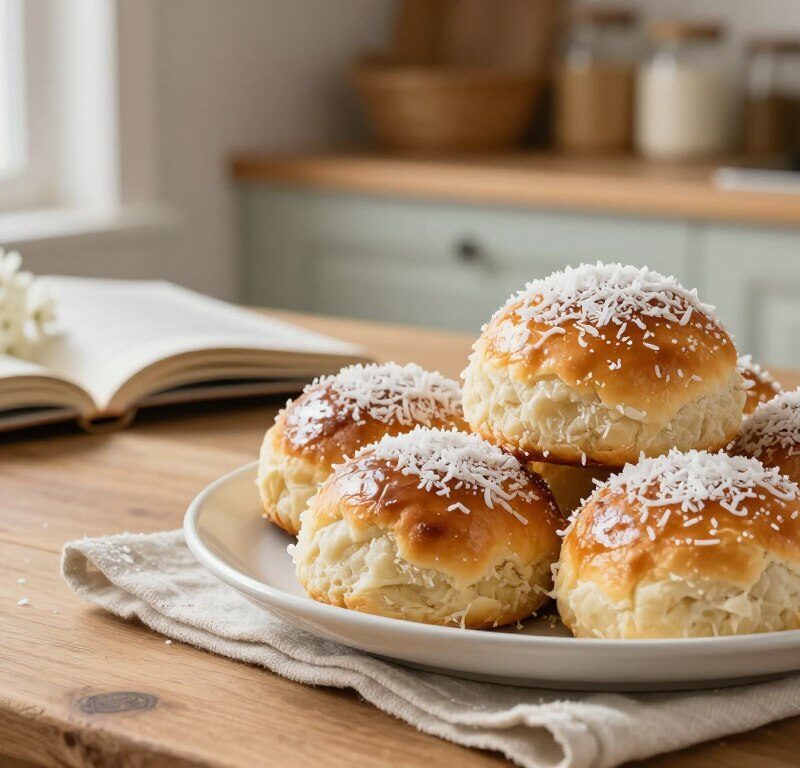
These soft, fragrant coconut buns bring a touch of nostalgic charm to your tea table. They use simple pantry staples, so both new and seasoned bakers can enjoy a satisfying result.
Perfect for tea time, brunch or lunch boxes, each serving provides about 220 calories, making it easy to plan a balanced week. The method is straightforward and quick, taking roughly 30 minutes from start to finish.
Each bun contains around 10g of fat, which gives the treat its rich, indulgent flavour. We will cover essential ingredients, clear steps and basic nutrition so you can bake confidently at home.
Key Takeaways
- This classic British bake is ideal for casual gatherings and packed lunches.
- Simple ingredients and clear technique suit beginner bakers.
- Plan for about 30 minutes of total time from prep to finish.
- One serving equals roughly 220 calories and ~10g of fat.
- Understanding nutrition helps you enjoy these bakery-style treats sensibly.
The Charm of the Mary Berry Coconut Buns Recipe
These soft, enriched buns are a brilliant blend of homely comfort and light, bakery-style finesse. The dough, made from flour, butter, sugar and milk, yields a fluffy interior that feels indulgent without being heavy.
The coconut topping adds sweetness and texture. It caramelises gently in the oven, creating a golden finish and a subtle tropical note that sets these tea-time treats apart.
They work beautifully for family gatherings, brunch or packed lunches. Serve them warm with a hot cup of tea or enjoy at room temperature when time is tight.
Versatile and dependable, this recipe suits both quick weekend baking and more leisurely projects. The result is simple: light, airy buns with a sweet, caramelised crown that everyone will love.
Essential Ingredients for Your Baking Project
A well-prepared ingredient list is the simplest step towards consistent, bakery-style buns. Measure everything before you begin so mixing stays quick and even.
Dry ingredients
Place 250g of self-raising flour into a large bowl. Add 50g of caster sugar and a pinch of salt if desired.
Tip: rub 75g of cold, cubed butter into the flour until the mixture looks like fine breadcrumbs. This gives the dough a light texture.
Wet ingredients
Beat 1 medium egg with 100ml of milk and 1 teaspoon of vanilla extract. Add this to the dry mix and stir until just combined.
For the topping, combine 75g of desiccated coconut with the remaining 50g of caster sugar. This coconut mixture adds texture and sweet, toasty flavour.
- Measure ingredients accurately in a large bowl before you start.
- Keep butter cold so the dough stays flaky.
- Separate sugars for balanced sweetness in dough and topping.
Necessary Kitchen Equipment
A few essential utensils will turn your ingredients into perfect tea-time treats. Start with a sturdy baking tray lined with parchment paper so the buns don’t stick and brown too fast.
Use a set of mixing bowls to keep dry and wet components separate. This makes it easier to rub cold butter into the flour and gives a more consistent dough.
A wooden spoon and a whisk are helpful for folding the mix and fully combining the egg and milk. A measuring jug is vital to pour exactly 100ml of milk for the right dough consistency.
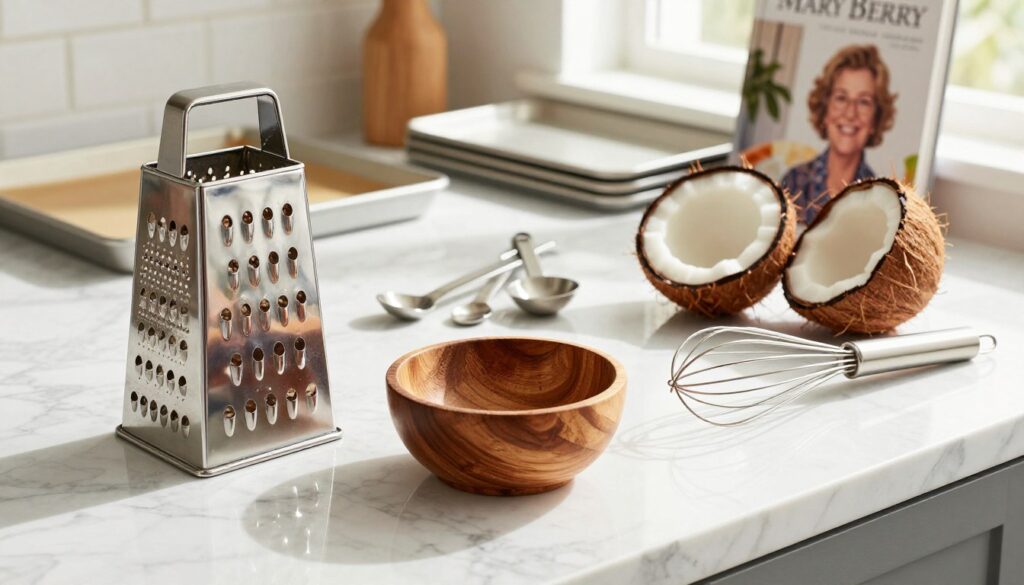
Finish with small tools: a pastry brush to glaze the tops and a reliable tray that allows even heat. These small choices make a real difference to the texture and look of your buns.
- Baking tray + parchment: prevents sticking and promotes even rise.
- Large mixing bowl: ideal for rubbing in butter and combining ingredients.
- Measuring jug: ensures the milk amount is accurate for consistent dough.
Preparing the Perfect Dough
Start by sifting 250g of self-raising flour and 50g of caster sugar into a large bowl. Add a pinch of salt and mix so the dry ingredients are even. This gives a consistent base for the dough.
Tip: rub 75g of cold butter into the flour with your fingertips until the texture looks like fine breadcrumbs. Doing this keeps the dough light and helps create a tender crumb.
Whisk 1 egg with 100ml of milk and 1 teaspoon of vanilla, then pour the wet mixture into the dry mix.
Kneading and Rising
Stir the ingredients gently until a soft dough forms. Handle the dough as little as possible to avoid a dense result.
Shape portions and place them on a lined baking tray, leaving space so the buns can rise evenly during baking. This careful handling is the secret to soft, fluffy coconut buns.
Crafting the Sweet Coconut Topping
Prepare a sweet coconut layer that clings to each bun as it bakes.
Combine 75g of desiccated coconut with 50g of caster sugar, 25g of melted butter and 1–2 tablespoons of milk in a small bowl. Stir the mixture until it becomes sticky so it will stay on the top of each roll.
For a flavour twist, add a splash of vanilla or almond extract. This little extra lifts the tropical notes and gives the topping a deeper, nuttier edge.
Spoon the coconut mixture onto each bun, pressing gently so it adheres before they go into the oven. The topping will caramelise as they bake, creating a sweet, crunchy contrast to the soft interior.
| Ingredient | Amount | Role |
|---|---|---|
| Desiccated coconut | 75g | Texture and flavour |
| Caster sugar | 50g | Sweetness and caramelisation |
| Melted butter | 25g | Richness and binding |
| Milk | 1–2 tbsp | Creates sticky mixture |
Shaping and Baking Your Buns
Divide the chilled dough into even portions and arrange them on a lined tray so each bun has room to rise. Shape each portion into a smooth round to give a uniform look and an even bake.
The second rise is essential. Leave the shaped rounds to rest until slightly puffy. This pause produces a lighter, airier crumb after baking.
The Second Rise
Place the shaped dough on a baking tray with a little space between each one. Cover loosely with a clean tea towel and leave to rise until noticeably larger.
Achieving a Golden Finish
Brush the top of each bun with a little milk just before they go into the oven. Bake at 180°C (350°F) for 15–18 minutes, or until the coconut topping turns a deep golden brown.
- Shape equal portions for a professional, consistent look.
- Allow a full second rise for light texture.
- Bake for 15–18 minutes so the dough cooks through and the top caramelises.
- Brush with milk for a glossy, golden crust.
- Remove from the oven and cool briefly on a rack before serving warm.
Troubleshooting Common Baking Issues
Simple adjustments at shaping and in the oven usually cure problems with spread and texture.
If your buns spread too much, the dough was likely too wet. Add a little extra flour when you mix next time. Work in small amounts until the dough holds shape.
When the coconut topping falls off, press it gently into the surface before baking. A touch of extra melted butter in the topping helps it cling during the 15–18 minutes in the oven.
A dense result often comes from overmixing. Stir only until the ingredients combine to keep the crumb light and airy.
If the buns seem dry, reduce the baking time by a few minutes and check the oven temperature with a thermometer. Even heat is vital for good rise and balanced nutrition in each bun.
| Problem | Likely cause | Quick fix |
|---|---|---|
| Spreading | Dough too wet | Add 1–2 tbsp flour; reshape |
| Topping slips | Not pressed or too dry | Press topping; add melted butter |
| Dense texture | Overmixing | Mix gently, stop when combined |
| Too dry | Overbaked | Reduce bake time by 2–3 minutes |
Expert Tips for Fluffy Results
Get the oven and your hands working together and the dough will reward you with a light crumb. These practical tips focus on small choices that change texture and flavour.
Temperature Control
Preheat the oven fully so baking starts the moment the tray goes in. Keep bake time consistent; 15–18 minutes usually gives a golden top and soft centre.
Handling the Dough
Use cold butter when rubbing into the dry ingredients. Mix gently to avoid toughening the gluten. Measure milk and the egg carefully so the dough is soft but not sticky.
Selecting Coconut
Always choose fresh desiccated coconut for best flavour. Fold the coconut mixture onto each roll from a large bowl so it adheres and caramelises.
Creative Variations to Try
Try a lemon twist by grating lemon zest into the dough or scattering it over the topping for a bright, fresh lift. This simple change pairs well with sweet coconut and cuts through the fat for a lighter finish.
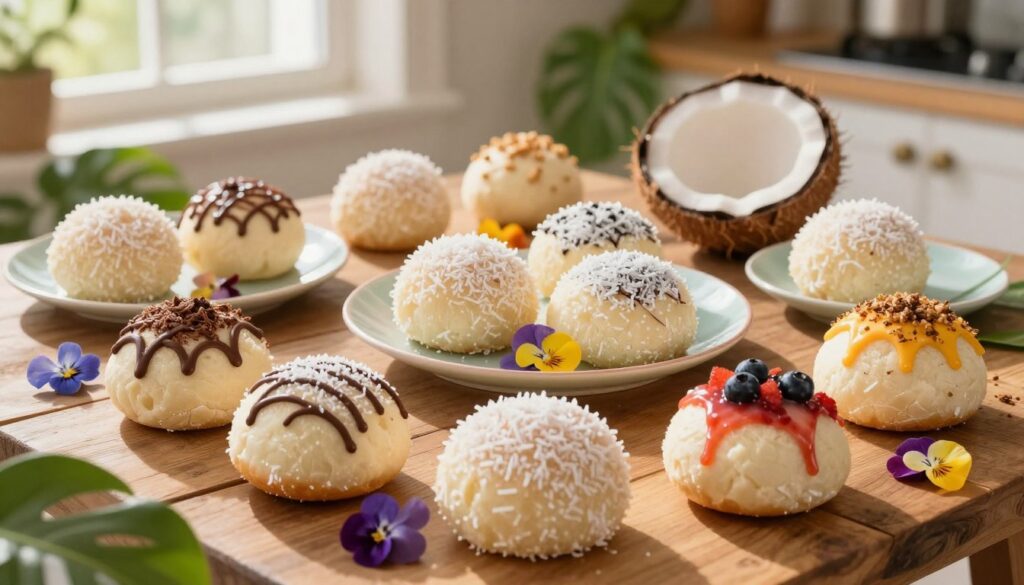
For a deeper, nuttier flavour, toast the desiccated coconut before mixing it into the topping. Toasting enhances aroma and gives the top a golden, caramelised note.
Add chocolate chips or mixed dried fruit to the dough to increase fibre and natural sweetness. You can also stuff each bun with a teaspoon of jam for a fruity centre that surprises on the first bite.
- Swap some white flour for wholemeal self-raising flour to add texture and fibre.
- Use a standard baking tray so all variations bake evenly on the tray and finish with a crisp top.
- Small changes in butter and sugar balance help manage overall fat and sweetness.
Experiment freely: these tips let you tailor ingredients and taste while keeping the classic charm of the bake.
Storage and Reheating Advice
How you store and reheat these treats makes a big difference to texture. Keep them at room temperature in an airtight container to preserve softness for up to 3 days. This prevents the crumb from drying and keeps the topping pleasantly crisp.
Avoid refrigeration. Cold air firms the crumb and spoils the light, fluffy interior that comes from the right balance of flour, milk and butter. If you need longer storage, freeze single portions wrapped tightly for up to 2 months.
Reheating Methods
- Oven: Warm at 150°C (300°F) for 5–7 minutes on a tray to restore that fresh-baked aroma and texture.
- Microwave: Heat a single bun for 10–15 seconds for a quick, warm snack.
- From frozen: Defrost at room time, then reheat in the oven as above for best results.
Serve warm with a little jam or a slice of lemon if you like. These small steps keep calories and fat in check while making sure every bun tastes as good as the first day.
Conclusion
To finish, a few short reminders will help you get consistently good results when baking these treats. Follow the method closely and use the topping technique to get a golden, caramelised finish every time.
This coconut buns recipe brings classic British baking into your kitchen. Use the tips above for shaping, timing and handling to keep the crumb light and the texture soft.
Keep an eye on calories, nutrition and overall fat when planning portions so you can enjoy these treats sensibly. Happy baking — share them warm with friends and family.
FAQ
What makes this coconut bun so light and fluffy?
Which flour is best — self-raising or plain?
Can I substitute caster sugar with another sweetener?
How much desiccated coconut should I add to the topping?
What oven temperature and baking time are best?
How do I stop the topping from falling off after baking?
Can I prepare the dough or topping ahead of time?
What are the best reheating methods to keep buns soft?
How long do these buns keep and how should I store them?
Can I add jam, lemon zest or other fillings to the buns?
Any tips for selecting desiccated coconut?
How can I reduce calories or fat without ruining the texture?
My buns are dense — what went wrong?
Can I make a vegan version?
Mary Berry Coconut Buns Recipe
These soft, fragrant coconut buns bring a touch of nostalgic charm to your tea table. Perfect for tea time, brunch or lunch boxes, each serving provides about 220 calories, making it easy to plan a balanced week.
Ingredients
- 250g self-raising flour
- 50g caster sugar
- Pinch of salt (optional)
- 75g cold, cubed butter
- 1 medium egg
- 100ml milk
- 1 teaspoon vanilla extract
- 75g desiccated coconut
- 25g melted butter
- 1-2 tablespoons milk (for topping)
Method
- Preheat the oven to 180°C (350°F) and line a baking tray with parchment paper.
- Sift 250g of self-raising flour and 50g of caster sugar into a large bowl. Add a pinch of salt if desired.
- Rub 75g of cold, cubed butter into the flour until the mixture resembles fine breadcrumbs.
- In a separate bowl, beat 1 medium egg with 100ml of milk and 1 teaspoon of vanilla extract.
- Pour the wet mixture into the dry ingredients and stir until just combined.
- Shape the dough into even portions and place them on the lined baking tray, leaving space for rising.
- For the topping, combine 75g of desiccated coconut with 50g of caster sugar, 25g of melted butter, and 1-2 tablespoons of milk until sticky.
- Spoon the coconut mixture onto each bun, pressing gently to adhere.
- Brush the tops of the buns with a little milk before baking.
- Bake for 15-18 minutes or until the coconut topping is golden brown.
- Remove from the oven and cool briefly on a rack before serving warm.