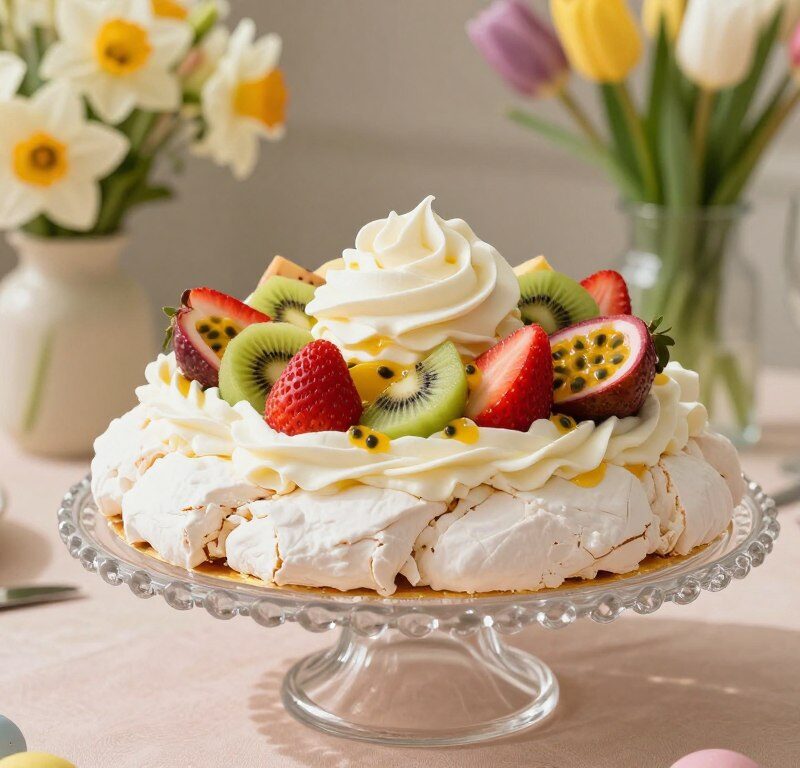
This iconic pavlova is a quintessential British dessert that brings elegance to spring gatherings and Sunday lunches. The crisp meringue shell gives way to a soft, marshmallow-like centre, while zesty lemon curd and light cream add a refreshing finish.
Inspired by the Great British Bake Off Masterclass special, the recipe shows how attention to the sugar and egg whites creates the perfect texture. Follow the steps and you will learn how to whip meringue to stiff peaks, pipe a neat base, and use the oven to gently dry the shell without browning.
The result is a show-stopping dessert that suits both novice and seasoned bakers. With clear guidance you can master this classic recipe and impress friends and family at any spring table.
Key Takeaways
- The recipe balances a crisp shell with a soft centre for ideal texture.
- Lemon curd and cream make the dessert light and refreshing.
- Careful whisking of sugar and egg whites is essential.
- The Great British Bake Off angle offers trusted techniques.
- Suitable for beginners and experienced bakers alike.
Why the Mary Berry Easter Pavlova is the Perfect Spring Dessert
For a refined spring centrepiece, a delicately baked meringue with lemon curd is hard to beat. This version from mary berry proved popular after the Great British Bake Off masterclass, and it stands out for its airy texture and pretty presentation.
The light, crisp shell gives way to a soft, marshmallow-like interior. Gentle baking in a low oven is key to this delicate finish. A bright smear of lemon curd cuts the sweetness and lifts the whole dessert.
This recipe is flexible. You can make the base ahead and add cream and fruit on the day. Many home cooks choose this Great British classic because it looks impressive yet remains surprisingly simple to master.
- Light texture: perfect for spring menus.
- Make-ahead friendly: less stress on the day.
- Customisable: swap toppings to suit guests.
Essential Ingredients for Your Meringue Base
Choosing the correct ingredients sets you up for a glossy, stable meringue every time.
The Meringue Components
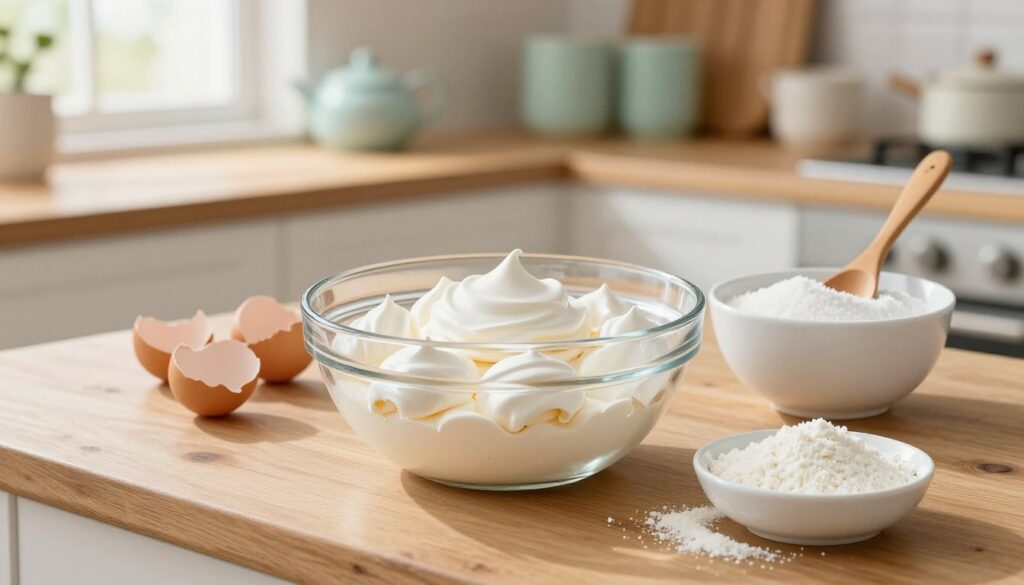
To build the base you will need 6 free-range egg whites at room temperature and 350g caster sugar. Ensure your bowl is completely grease-free so the whites reach stiff peaks.
Fold in 2 tsp white wine vinegar and 2 level tsp cornflour to stabilise the meringue mixture. These additions help create a marshmallow-like centre during gentle baking.
The Lemon Curd Filling
For the filling whisk 6 free-range egg yolks with the juice and zest of 4 lemons and 350g caster sugar in a heatproof bowl.
Cook over simmering water, whisking for about 10 minutes until thick enough to coat a spoon. Stir in 225g butter, then fold in 450ml whipped double cream for a rich, silky lemon curd that lifts the pavlova.
- Optional: a little grated chocolate can add contrast to the lemon flavour.
- Tip: keep ingredients measured and ready to ensure a smooth, glossy meringue.
Mastering the Mary Berry Easter Pavlova Method
Control of heat and patience are the two secrets to a crack-free, pale shell and soft interior.
Bake preparation: Preheat the oven to 160C/325F/Gas 3 and line a baking tray with baking paper. Draw a 25cm/10in circle on the paper to guide the base and keep the shape uniform.
Whisking and folding: Whisk the egg whites on the fastest speed until stiff peaks form. Gradually add caster sugar to create a glossy meringue mixture. Fold in cornflour and a splash of white wine vinegar gently so the base stays stable.
Baking and Cooling Techniques
Use a piping bag to pipe ten small nests around the circle for a neat finish. Slide the meringue into the oven and immediately reduce the heat to 150C/300F/Gas 2.
Bake for 1.5 to 2 hours, checking after the first hour. While the meringue bakes, prepare the lemon curd in a separate bowl so it has time to cool.
“Leave the pavlova in the oven with the door slightly open to cool gradually and prevent cracking.”
- Cool slowly in the oven with the door ajar for an hour to avoid sudden temperature change.
- Store the base in an airtight container once fully cool and add double cream and curd before serving.
Troubleshooting Common Meringue Issues
A gentle cool-down and steady oven heat stop most meringue mishaps before they begin. Follow a few clear checks and you can salvage a cracked shell, sticky base or grainy mix with confidence.
Preventing Cracks
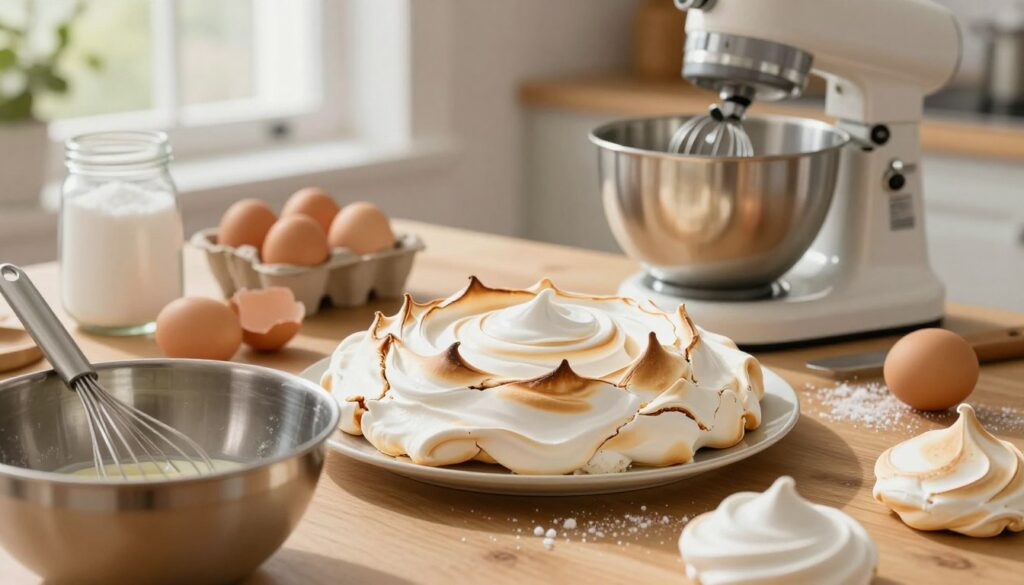
Cause: high oven heat or rapid cooling. To prevent cracks, reduce the oven temperature after sliding the tray in and leave the door ajar to cool slowly for an hour.
Achieving the Perfect Texture
If the meringue mixture feels grainy, you likely added caster sugar too quickly. Add it one tablespoon at a time and beat until glossy with stiff peaks.
Keep your mixing bowl free of fat and avoid overwhipping the cream—soft peaks hold the light, airy finish better than stiff, heavy cream.
Storing Your Base
Store the cooled base in an airtight container at room temperature to keep it crisp for up to 2 days. If the base is sticky, it was probably underbaked or exposed to humidity; check the baking paper and tray next time.
| Issue | Likely Cause | Quick Fix |
|---|---|---|
| Cracks | High oven temperature / fast cooling | Lower heat, cool in oven with door ajar for 1 hour |
| Sticky base | Underbaked / humid storage | Extend baking time slightly; store in airtight container |
| Grainy texture | Caster sugar added too fast | Add sugar slowly, beat until glossy |
| Collapsed nests | Grease in bowl / egg yolk contamination | Use a clean bowl and free-range egg whites; avoid yolk traces |
Creative Variations and Topping Ideas
Small additions — from candied zest to melted chocolate — lift the texture and flavour of the finished dish.
Candied lemon zest is an easy, showy topping. Boil thin strips of peel in 100g caster sugar and water until glossy. Drain and leave to dry on baking paper for a few hours or overnight for a syrupy finish.
Make individual nests with a piping bag to serve portions for a crowd. Use a 25cm circle as a guide for the main base or mark smaller circles for multiple nests on the tray.
Fold a little melted dark chocolate into the meringue mixture before baking for a richer note. Alternatively, swirl lemon curd through whipped cream for a marbled topping that looks lovely on the plate.
Finish with fresh seasonal fruit, toasted coconut or dark chocolate shavings. For full technique and the full recipe, follow the original method and adapt toppings to taste.
Conclusion
A careful approach to sugar, egg whites and oven time turns simple ingredients into a memorable dessert. Follow the method for the meringue base and lemon curd to get a crisp shell and soft centre.
Slow baking and a gradual cool-down are the real secrets to preventing cracks and keeping texture just right. Add whipped cream and seasonal fruit or a drizzle of chocolate to personalise the finish.
This recipe is rewarding and versatile. For full technique and a handy guide, see the linked recipe for step-by-step help: mary berry pavlova recipe.
Enjoy the process — mastering this classic brings confident results and a stunning spring centrepiece.
FAQ
What makes this Easter pavlova recipe ideal for spring entertaining?
What are the essential ingredients for a reliable meringue base?
Can I swap caster sugar for granulated sugar or superfine sugar?
How long should I bake and cool the meringue to avoid cracks?
What’s the best way to make lemon curd for the filling?
How do I stop the meringue from weeping when I add cream and fruit?
Can I make the meringue base ahead of time, and how should I store it?
How can I achieve a marshmallow-like interior while keeping a crisp shell?
What toppings work well beyond the classic fruit and cream?
Is it possible to pipe nests instead of a single circle, and what tools do I need?
My meringue turned out chewy throughout — what went wrong?
Mary Berry Easter Pavlova
This iconic pavlova is a quintessential British dessert that brings elegance to spring gatherings and Sunday lunches. The crisp meringue shell gives way to a soft, marshmallow-like centre, while zesty lemon curd and light cream add a refreshing finish.
Ingredients
- 6 free-range egg whites
- 350g caster sugar
- 2 tsp white wine vinegar
- 2 level tsp cornflour
- 6 free-range egg yolks
- juice and zest of 4 lemons
- 350g caster sugar (for lemon curd)
- 225g butter
- 450ml whipped double cream
Method
- Preheat the oven to 160C/325F/Gas 3 and line a baking tray with baking paper, drawing a 25cm/10in circle on the paper.
- Whisk the egg whites on the fastest speed until stiff peaks form.
- Gradually add caster sugar to create a glossy meringue mixture.
- Fold in cornflour and white wine vinegar gently.
- Use a piping bag to pipe ten small nests around the circle for a neat finish.
- Slide the meringue into the oven and immediately reduce the heat to 150C/300F/Gas 2.
- Bake for 1.5 to 2 hours, checking after the first hour.
- While the meringue bakes, prepare the lemon curd by whisking egg yolks, lemon juice, zest, and sugar in a heatproof bowl over simmering water for about 10 minutes until thick.
- Stir in butter and fold in whipped double cream to create the lemon curd.
- Leave the pavlova in the oven with the door slightly open to cool gradually for an hour.
- Store the cooled base in an airtight container and add cream and curd before serving.