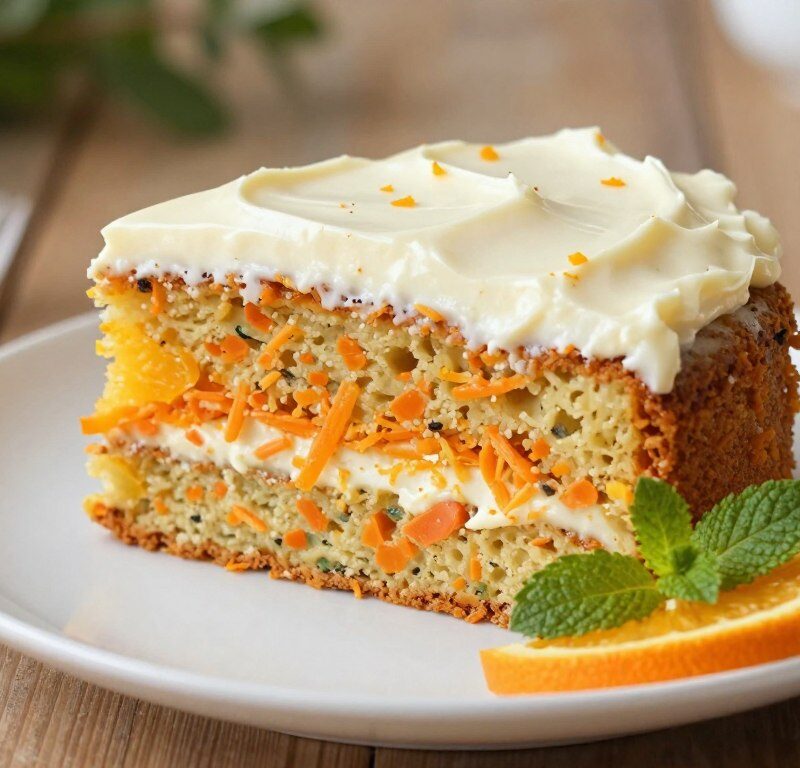
This beloved British classic arrives on your table with minimal fuss. The recipe needs under 20 minutes of preparation before the tin goes into the oven, so it suits busy afternoons and last‑minute plans.
The mix uses simple pantry ingredients such as flour, sugar, eggs and sunflower oil to create a moist, tender crumb. Fresh grated carrots pair with bright orange zest and juice to give a lively citrus lift that balances sweetness.
Light and versatile, this bake works for afternoon tea, family get‑togethers or seasonal celebrations. Warm spices and citrus combine to fill your kitchen with a comforting aroma that invites everyone to the table.
Key Takeaways
- Preparation takes less than 20 minutes, making it ideal for busy bakers.
- Simple ingredients like eggs and sunflower oil yield a soft, long‑lasting texture.
- Fresh orange zest and juice lift the flavour above a standard carrot cake.
- Suitable for afternoon tea, family events and seasonal gatherings.
- The recipe balances warmth from spices with bright citrus notes.
Why You Will Love This Mary Berry Carrot And Orange Cake
The balance of sweet root veg and zesty citrus gives this bake a refreshing, light character. The natural sweetness of grated carrots blends with fresh orange zest to create a flavour that never feels heavy.
Unlike darker, spice-led recipes, this mary berry version keeps things bright. The citrus cuts through the richness of the sponge and saves the dessert from becoming cloying.
Texture is a winning feature: the grated veg supplies constant moisture, so every slice stays soft for days. You’ll find this recipe avoids the dense feel common in some traditional bakes.
- You’ll love how the carrots keep the crumb tender and long‑lasting.
- The subtle tang of orange lifts sweetness for a clean, fresh finish.
- Finish with a simple icing or a rich cream cheese frosting to suit your taste.
- This carrot orange cake is straightforward and accessible for home bakers in the UK.
Essential Ingredients for Your Baking Success
A well-balanced ingredient list makes the difference between a good sponge and a great one. Gather everything before you begin so mixing is smooth and timings stay exact.
Dry Components
In a large bowl combine 225g self-raising flour with 1 tsp baking powder and 1 tsp ground cinnamon. Sift if you like a lighter texture.
Add 175g caster sugar and 50g light brown sugar to the dry mix so sweetness is evenly distributed.
Wet Components
In a separate large bowl whisk 150ml sunflower oil with 3 large eggs until smooth. Stir in the zest of two oranges for bright lift.
Fold in 250g grated carrots and the wet mix into the dry ingredients. If you prefer a richer sponge, swap the oil for 150g softened butter as mary berry suggests.
Preparing Your Kitchen and Equipment
Get your equipment in order and preheat the oven to 180°C (160°C fan) to avoid last‑minute scrambles. A steady temperature helps the cake rise evenly and finish with a fine crumb.
Use an 8‑inch round tin. Grease line it thoroughly with high‑quality baking parchment so the sponge releases cleanly.
Gather small, essential tools: a box grater for finely grated carrots, a citrus zester, and a sturdy spatula. These make mixing quick and tidy.
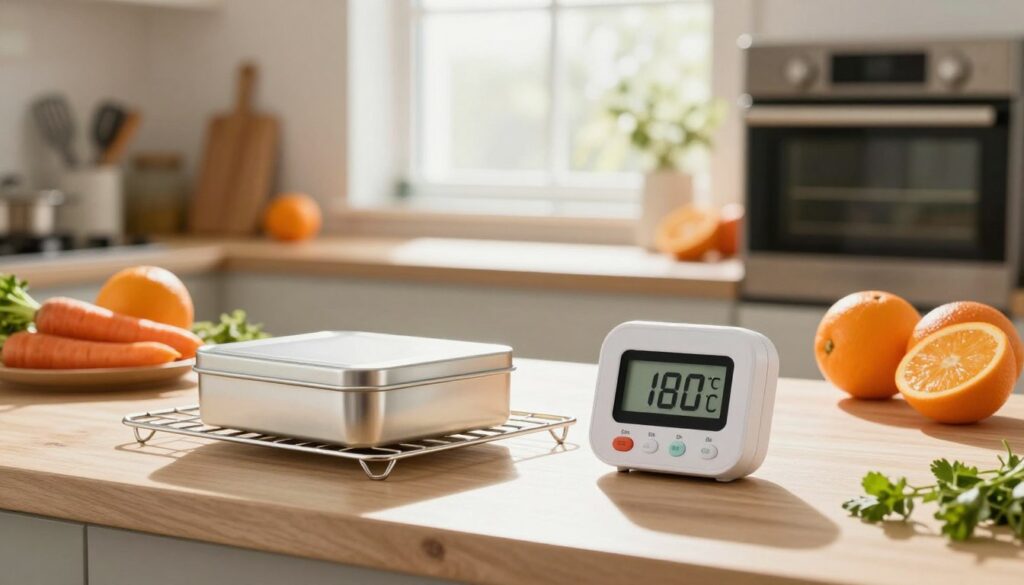
Have a wire rack ready for cooling. Transfer the tin to the wire rack soon after loosening the edges to avoid a soggy base.
“Organisation before you begin saves time and keeps the bake consistent.”
- Before you start, preheat oven to 180c (160 fan) for the mary berry recipe.
- Grease line your 8‑inch tin and set a wire rack nearby.
- Keep a box grater and zester at hand to speed through prep.
Step by Step Mixing Instructions
Start calmly and work in stages so the batter stays light and the final rise is even. Have all your scales, bowls and tools ready before you begin.
Combining Dry Ingredients
In a large bowl, sift or stir together 225g self-raising flour, 1 tsp baking powder, 1 tsp ground cinnamon, 175g caster sugar and 50g light brown sugar. Mix until the dry ingredients are evenly distributed and there are no lumps.
Whisking Wet Elements
In a separate bowl, whisk 3 eggs with 150ml sunflower oil until smooth and slightly thickened. Stir in the zest and a little juice from one orange for a fresh lift.
Folding in Carrots
Gently fold 250g grated carrots into the wet mix. Use a light hand to keep aeration; this helps produce a soft, tender cake crumb.
- Combine wet and dry mixtures gradually to avoid overmixing the batter.
- Mary Berry advises you to preheat oven to 180°C (160°C fan) so the tin can go in straight away.
- Pour the batter into a grease line tin and bake for the recommended time.
When baked, leave the sponge in the tin for 10 minutes. Then turn it out onto a wire rack to cool completely before any decoration or icing.
“Gentle folding keeps the crumb light and retains moisture.”
Mastering the Perfect Bake
A correctly preheated oven and centred tin ensure even cooking from edge to centre. Preheat oven to 180c (160 fan) so the batter meets a steady heat the moment it goes in.
Position the tin on the middle shelf. This gives the best air circulation when using a fan setting and helps the top brown evenly without the sides overcooking.
Bake for 40–45 minutes at 180°C (160°C fan). Resist the urge to open the door during the first 30 minutes; sudden drops in temperature can make the sponge sink.
Test doneness by inserting a skewer into the centre. It should come out clean with no wet batter. If the top is darkening too fast, loosely tent foil for the final 10 minutes.
Allow the loaf to rest in the tin for 10 minutes. This brief cooling time helps the structure set so you can turn it out without causing a collapse.
“Patience at the oven door preserves the rise and keeps the crumb light.”
- Always preheat oven to 180c (160 fan) before baking.
- Bake for about 40–45 minutes; check with a skewer.
- Keep the tin centred and avoid opening the oven early.
Creative Variations and Flavour Twists
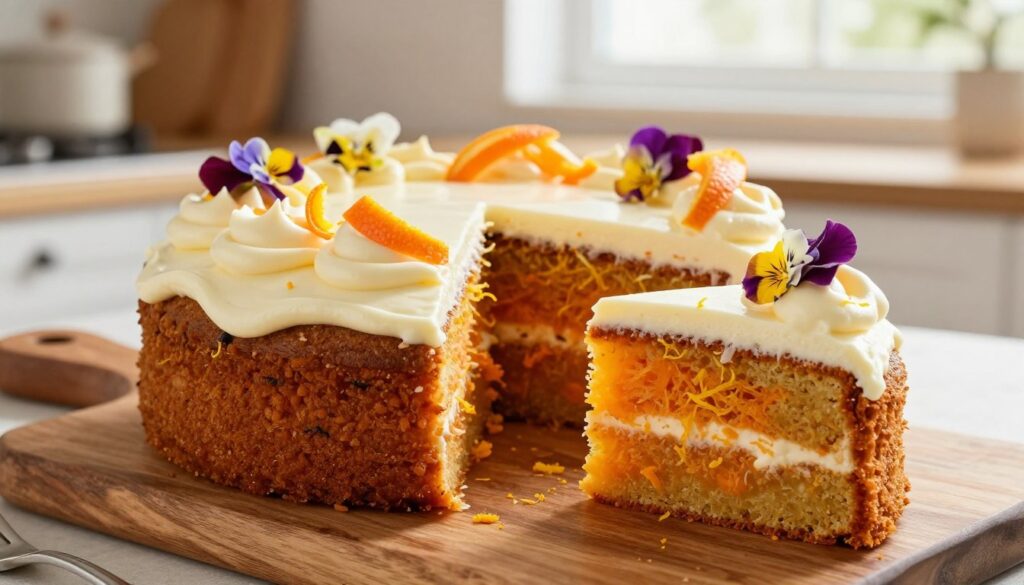
A few simple tweaks can turn this familiar bake into something bolder and more textured. Use mix‑ins and toppings to change mouthfeel and taste without altering your basic method.
Adding Texture and Spice
Swap or add nuts to introduce a pleasing crunch. Substitute 50g walnuts with 50g pecans for a richer note, or fold in 40g desiccated coconut for extra texture.
For warmth, add half a teaspoon of ground ginger. This small change boosts autumnal spice and pairs well with the citrus in the sponge.
| Variation | What it adds | Use with |
|---|---|---|
| Pecans (50g) | Crunch and buttery flavour | Plain or cream cheese frosting |
| Desiccated coconut (40g) | Chewy texture and tropical lift | Light icing or glaze |
| Ground ginger (½ tsp) | Warm spice, autumnal depth | Rich cream cheese frosting |
| Raisins (optional) | Sweet pockets of chew | Spiced sponge with nuts |
“A good frosting can transform a simple sponge into a showstopper.”
- Classic finish: top your carrot orange cake with a generous layer of cream cheese frosting for balance.
- Light option: make a glaze from icing sugar and fresh juice for a shiny, lighter icing.
- Quality counts: use a high‑grade cream cheese for smooth, stable cream cheese frosting.
Troubleshooting Common Baking Issues
A cake that turns out dense or sunken usually points to technique or ingredient problems rather than bad luck. Check these quick fixes before you start another bake.
Overmixing is a frequent cause of a heavy crumb. Fold the self-raising flour into the wet mix with a light hand and stop as soon as the streaks disappear.
If the sponge sinks, don’t open the oven during the first 30 minutes and confirm your baking powder is fresh. Expired leavening powder loses lift and will prevent a good rise.
Measure liquids carefully. Using more than 3 tbsp of orange juice or extra eggs can make the centre soggy and slow the bake.
- Line the tin with parchment to avoid sticking when you turn the cake out.
- If swapping sunflower oil for butter, use softened butter at room temperature so it blends evenly in the bowl.
- Keep tps and timings exact: a rushed cup of flour or a wrong tsp can alter the result.
“Small checks — fresh powder, gentle folding and correct measures — solve most problems.”
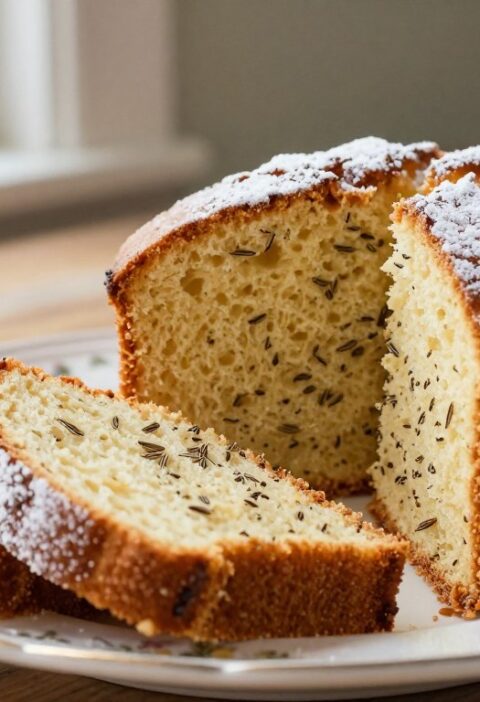
For more detailed tips and a trusted recipe, see this mary berry seed cake resource.
Serving Suggestions for Afternoon Tea
Present slices on a pretty platter to turn a simple bake into a refined afternoon treat. Keep portions thin for a classic tea feel and let the flavours sing without overwhelming the palate.
Frosting and Glaze Options
A dollop of fresh whipped cream complements the moist sponge and keeps the finish light. For a tangier finish, choose a smooth cream cheese frosting—its acidity balances the sweetness.
For a simpler look, dust with icing sugar or brush a thin orange glaze made from juice and a little icing sugar. These quick finishes take only a few minutes and look elegant.
Pairing with Hot Drinks
Serve thin slices with a pot of Earl Grey to highlight citrus notes. Black tea lifts the spices while keeping the overall experience classic and comforting.
If you prefer something lighter, offer Greek yogurt with a drizzle of honey instead of heavy frosting. For a decadent option, warm a slice slightly and serve with a scoop of vanilla ice cream.
- Classic: cream cheese frosting for a tangy contrast.
- Elegant: thin slices with hot Earl Grey.
- Simple: a light dusting of icing sugar or a thin glaze.
- Storage: refrigerate a frosted cake for up to 5 days; bring to room temperature before serving.
Conclusion
With the right technique and modest storecupboard items you can bake a reliably moist loaf that tastes both comforting and refined.
The Mary Berry recipe shows how simple ingredients combine to make a memorable teatime treat. Fresh carrots and bright zest sit in harmony, giving each slice a lively flavour without heaviness.
Try adding pecans for crunch or stick to the classic for a purer finish. Allow the loaf to rest overnight; the spices and citrus deepen and the texture firms for cleaner slices.
Follow these baking tips and you’ll produce a carrot cake that impresses with taste and texture. Enjoy sharing this carrot orange cake with friends and family.
FAQ
How long does the cake take to bake?
Can I use self-raising flour or plain flour with baking powder?
What fat is best: butter or sunflower oil?
How should I prepare the carrots and orange?
Can I add nuts or spice to the recipe?
What’s the best way to make cream cheese frosting?
How do I prevent the cake from collapsing?
Can I make the cake ahead of time?
How do I adapt the recipe for a fan oven?
What tin size should I use and how do I prepare it?
Mary Berry Carrot And Orange Cake
This beloved British classic arrives on your table with minimal fuss. The recipe needs under 20 minutes of preparation before the tin goes into the oven, making it ideal for busy afternoons and last-minute plans.
Ingredients
- 225g self-raising flour
- 1 tsp baking powder
- 1 tsp ground cinnamon
- 175g caster sugar
- 50g light brown sugar
- 150ml sunflower oil
- 3 large eggs
- zest of 2 oranges
- 250g grated carrots
Method
- Preheat the oven to 180°C (160°C fan) and grease and line an 8-inch round tin.
- In a large bowl, sift or stir together the self-raising flour, baking powder, ground cinnamon, caster sugar, and light brown sugar until evenly distributed.
- In a separate bowl, whisk the sunflower oil and eggs until smooth and slightly thickened, then stir in the zest and a little juice from one orange.
- Gently fold the grated carrots into the wet mixture.
- Combine the wet and dry mixtures gradually, folding gently to avoid overmixing.
- Pour the batter into the prepared tin and bake for 40-45 minutes, or until a skewer inserted into the center comes out clean.
- Allow the cake to cool in the tin for 10 minutes before transferring it to a wire rack to cool completely.