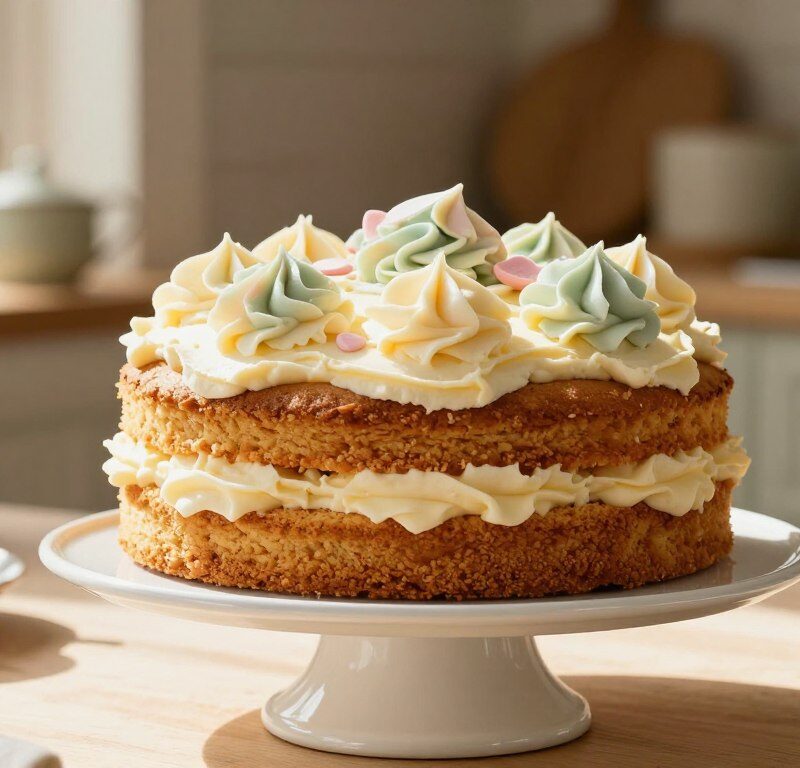
This classic sponge is a treasured British treat with gentle charm. Originating in north London, it has delighted families for many years with a soft crumb and nostalgic flavour.
The recipe is quick and approachable. From mixing to a dusting of pink icing and desiccated coconut, the whole process takes about 50 minutes.
It makes a perfect offering for afternoon tea or simple gatherings. The light sponge is cut into neat squares and shared, making it ideal for beginners and seasoned bakers alike.
Key Takeaways
- This traditional bake comes from north London and is loved for its light sponge.
- The full process takes about 50 minutes, so it fits well into busy afternoons.
- Distinctive pink icing and coconut topping give it a nostalgic look and taste.
- Simple ingredients make this recipe suitable for novice bakers.
- Serve in neat squares for easy sharing at tea or casual events.
The History of the Classic Mary Berry Tottenham Cake
This traybake started life as a celebratory treat handed out across north London in 1901 when locals marked a famous football win. Bakers sliced it into large squares so each family could enjoy an affordable, sweet food item.
Traditionally the pink icing was coloured with mulberries. Over the years, cooks began using raspberries or pink food colouring for a more reliable hue.
Today, the well-known version keeps the same focus: a soft sponge, a smooth spread of icing and a dusting of desiccated coconut. The result is a light traybake that fits snugly into afternoon tea culture.
“A sweet square for the whole street,”
Mary Berry‘s take honours the past while offering clear steps for modern baking. Local food editor Nadine Brown still makes this recipe for her children, keeping the tradition alive in homes across the UK.
Essential Ingredients and Kitchen Equipment
A well-prepared workspace and simple supplies set you up for a reliable, light sponge every time. Gather ingredients and kit before you begin to keep the process calm and fast.
Dry ingredients
For the sponge you will need 225g self-raising flour, 175g softened unsalted butter and 175g caster sugar. Add 1 tsp baking powder, 3 large eggs, 2 tbsp milk and 1 tsp vanilla extract.
Sift the flour and baking powder together to keep the light fluffy texture. For the topping, use 200g icing sugar, 2–3 tbsp water, a few drops of pink colouring and 2 tbsp desiccated coconut.
Necessary baking tools
Essential equipment includes a 9-inch square tin, mixing bowls, an electric hand mixer, a rubber spatula and a cooling rack. Always line baking tin with parchment so the cake releases easily after 20–25 minutes in a 180°C oven.
“Sifting and lining are small steps that save time and protect the sponge’s texture.”
| Item | Quantity | Purpose |
|---|---|---|
| Self-raising flour | 225g | Structure for the sponge |
| Caster sugar | 175g | Sweetness and creaming with butter |
| Icing sugar | 200g | Topping for the pink icing |
| 9-inch square tin | 1 | Shape and bake evenly |
Preparing Your Mary Berry Tottenham Cake
Set the oven to 180°C, grease a 9-inch square tin and line it with baking parchment for a clean finish.
In a large bowl, cream softened butter with caster sugar using an electric mixer until the mix is light and fluffy.
Add the eggs one at a time, beating well after each addition. Gently fold in sifted flour and baking powder, then stir in milk and vanilla extract.
Pour the batter into the prepared tin, smooth the top with a spatula and bake for 25–30 mins until the sponge is golden. Allow it to cool in the tin for 10 minutes.
Transfer the tray to a wire rack to cool completely. To make the icing, mix icing sugar with a little water and a few drops of pink food colouring until spreadable.
Once cool, spread the icing over the sponge and scatter desiccated coconut if you like. This simple method keeps the texture light and the process one time and fuss-free.
| Step | Action | Timing |
|---|---|---|
| Preheat & prepare | 180°C; grease and line 9-inch tin | 5 mins |
| Cream | Butter and caster sugar until light | 3–5 mins |
| Mix | Add eggs, fold in flour & baking powder | 2–3 mins |
| Bake | Pour batter into prepared tin and bake | 25–30 mins |
| Ice | Mix icing sugar with water and pink food | 2 mins |
Achieving the Perfect Sponge Texture
Getting the sponge texture right depends on gentle technique and steady timing. Use room temperature butter so it creams easily with caster sugar. This step builds the air that gives a light, fluffy sponge.
Creaming butter and sugar
If using an electric mixer, beat the butter and sugar for 4–5 mins until pale and noticeably increased in volume. Stop a few times to scrape the bowl so everything mixes evenly.
Folding the batter
Sift flour with baking powder and fold it into the batter with a rubber spatula. Work gently to keep the air bubbles intact. Level the top of the batter in the prepared tin with the back of a spoon before you pour batter prepared to bake.
Oven temperature control
Preheat the oven to 180°C and maintain that temperature throughout. A steady heat helps the traybake rise evenly and prevents sinking.
When the top springs back to the touch, the sponge is ready to cool on a rack. Cool fully before adding icing.
| Step | Key action | Check |
|---|---|---|
| Creaming | Beat butter & sugar 4–5 mins | Pale and increased volume |
| Folding | Fold in sifted flour & baking powder | Light, no streaks of flour |
| Oven | Maintain 180°C for 25–30 mins | Top springs back; even colour |
Creative Variations for Your Traybake
Try small swaps to refresh the traybake without changing the method. Natural fruit purées and a dash of citrus lift the flavour and colour. These ideas suit a busy kitchen and keep the recipe approachable.
Natural Fruit Colouring
For a natural pink icing, gently cook 75g raspberries with 2 tbsp water in a small pan until they break down and release juice.
Press the cooked fruit through a sieve to remove pips, then mix the vibrant juice with icing sugar to make a fresh pink icing.
If you prefer deeper colour, swap raspberries for blueberries. They give a rich, dark pink or purple hue to the topping.
- Add zest of one lemon to the batter for a bright citrus note before you bake.
- Create a feathered design on the top by piping thin white icing lines, then dragging a skewer through them before the icing sets.
- If you dislike coconut, replace it with colourful sprinkles or chopped pistachios for texture and crunch.
| Variation | Key change | Effect |
|---|---|---|
| Natural pink | 75g raspberries + 2 tbsp water, sieve, mix with icing sugar | Fresh, natural pink icing |
| Deeper hue | Use blueberries instead of raspberries | Richer dark pink/purple topping |
| Lemon sponge | Add lemon zest to batter | Bright citrus lift to the cake |
| Textural finish | Swap coconut for sprinkles or pistachios | Different crunch and flavour |
Storage and Serving Suggestions
How you store and serve each square makes a big difference to texture and flavour.
Store your tottenham cake in an airtight container at room temperature. It will remain soft and delicious for up to 3 days.
If you need to keep the sponge for longer, freeze un-iced slices in a suitable freezer bag. They will keep for up to 2 months. Allow frozen pieces to thaw fully at room temperature before adding any icing.
When serving, enjoy slices at room temperature or warm a portion in the microwave for 8–10 secs for a cosy treat. Pair squares with a cup of English breakfast tea for a classic British experience.
“Proper storage keeps the sponge light and the pink topping bright.”
The coconut topping is optional but adds a traditional finish that suits the light sponge and hints of lemon in the icing. If you need a reminder of other simple bakes, see this apple and almond recipe.
| Method | Condition | Keep for |
|---|---|---|
| Room storage | Airtight container, room temperature | Up to 3 days |
| Freezing | Un-iced slices in freezer bag | Up to 2 months |
| Serving | Room temp or 8–10 secs microwave | Immediate |
Conclusion
Finish with confidence: a quick cool and a smooth spread of icing lock in the light sponge and keep the topping bright.
This tottenham cake recipe brings a touch of nostalgia to any tea table. Follow the simple baking steps and you will recreate the fluffy sponge and iconic pink icing with vanilla notes and just the right amount of sugar.
Try traditional coconut for the classic finish or swap in fresh fruit for a modern twist. Store slices in an airtight tin at room temperature so they stay soft for several days.
Enjoy sharing this modest, charming bake with friends and family — a small piece of North London history on your plate.
FAQ
What is the origin of the classic Tottenham traybake?
Which dry ingredients are essential for an authentic version?
What baking tools do I need to make a traybake successfully?
How do I cream butter and sugar properly?
What is the best way to fold the batter without knocking out air?
How important is oven temperature control for a perfect sponge?
Can I use natural food colouring for the icing?
How should I store the traybake to keep it fresh?
Can I add lemon or other flavours to the batter?
What causes a traybake to sink in the middle and how do I prevent it?
Mary Berry Tottenham Cake
This classic sponge is a treasured British treat with gentle charm, featuring a soft crumb and nostalgic flavor, perfect for afternoon tea or gatherings.
Ingredients
- 225g self-raising flour
- 175g softened unsalted butter
- 175g caster sugar
- 1 tsp baking powder
- 3 large eggs
- 2 tbsp milk
- 1 tsp vanilla extract
- 200g icing sugar
- 2–3 tbsp water
- a few drops of pink food coloring
- 2 tbsp desiccated coconut
Method
- Preheat the oven to 180°C and grease a 9-inch square tin, lining it with baking parchment.
- In a large bowl, cream the softened butter with caster sugar using an electric mixer until light and fluffy.
- Add the eggs one at a time, beating well after each addition.
- Gently fold in the sifted flour and baking powder, then stir in the milk and vanilla extract.
- Pour the batter into the prepared tin and smooth the top with a spatula.
- Bake for 25–30 minutes until the sponge is golden and springs back when touched.
- Allow the cake to cool in the tin for 10 minutes before transferring it to a wire rack to cool completely.
- To make the icing, mix the icing sugar with a little water and a few drops of pink food coloring until spreadable.
- Once the cake is cool, spread the icing over the sponge and scatter desiccated coconut on top.