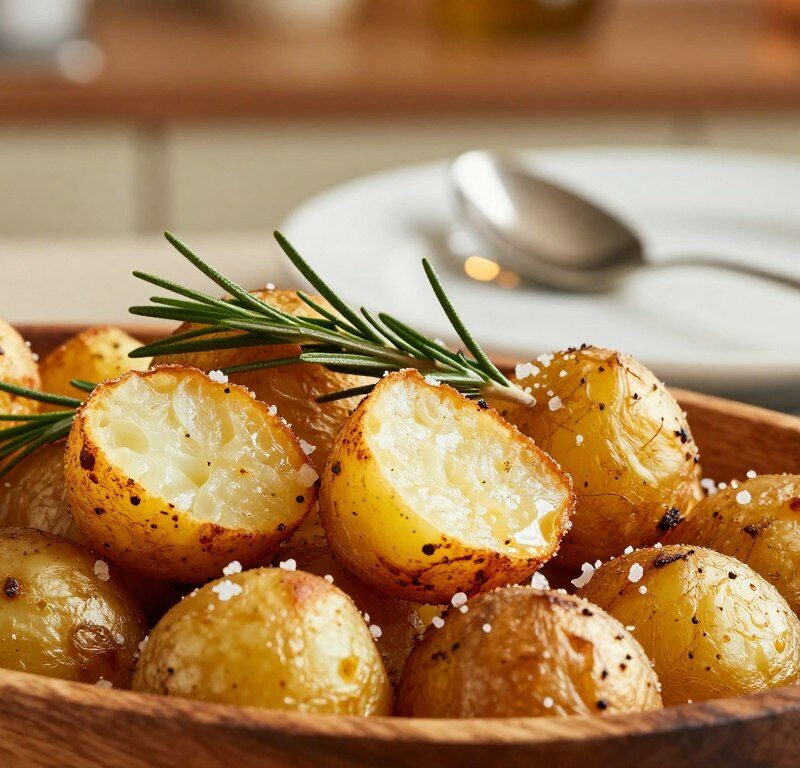
This classic method transforms humble spuds into a golden, crunchy delight. The two-stage approach ensures a crisp exterior and a light, fluffy interior that suits Sunday dinners and festive gatherings alike.
Follow each step with care so the texture turns out just right and the finish is evenly browned.
The process is simple yet reliable, making it a favourite in many British homes for serving with meat and seasonal vegetables.
Use the recipe as a guide, adjust timings for your oven, and enjoy the satisfying crunch that this traditional technique delivers.
Key Takeaways
- The two-step method produces a crisp outside and fluffy centre.
- Perfect for Sunday roasts and celebratory meals.
- Careful timing and heat give that signature golden finish.
- Suitable as a comforting side with meat and vegetables.
- Easy to follow and widely loved across the United Kingdom.
The Appeal of Mary Berry Twice Cooked Roast Potatoes
Parboiling before the oven is the secret. It roughens the surface so the heat creates crisp, golden edges while the centre stays light and fluffy.
This contrast makes the dish the ultimate side for a christmas turkey or a simple Sunday spread. The method gives a reliably crisp finish that looks and tastes impressive.
When you are busy baking mince pies or attending to the main, these roast potatoes are forgiving. You can parboil earlier in the day and finish them in a hot oven when it’s time to serve.
- Crunchy outside thanks to pre-boil and roughing.
- Light inside for a pleasing bite.
- Easy to time alongside other festive dishes.
For cooks who want a simple, show-stopping side, this technique is hard to beat.
Essential Ingredients for Success
Start with the right spud and a hot tin — they do most of the heavy lifting for crisp edges.
Choose 1.5kg of Maris Piper or King Edward. These varieties give a fluffy interior and a crunchy exterior when roasted.
Preheat your oven to 220C (fan 200C/gas 7) so the roasting tin is smoking hot by the time the potatoes go in.
Selecting the Right Potato Variety
Use 4 tbsp of goose fat, vegetable oil or duck fat to coat the potatoes for richer flavour and better browning. Add a few fresh thyme sprigs in the tin to infuse aroma while roasting.
“Every step of this recipe relies on high-quality ingredients to achieve the perfect result for your Sunday roast.”
| Ingredient | Amount | Purpose |
|---|---|---|
| Maris Piper or King Edward | 1.5kg | Fluffy centre, crisp edges |
| Goose fat / oil / duck fat | 4 tbsp | Golden browning and rich flavour |
| Thyme sprigs | 3–4 sprigs | Aromatic finish while roasting |
| Oven temperature | 220C (fan 200C) | Preheated oven for instant sizzle |
Tip: Use top-quality ingredients at every step to get the best roast potatoes and a reliable result each time.
Preparing Your Potatoes for the Perfect Texture
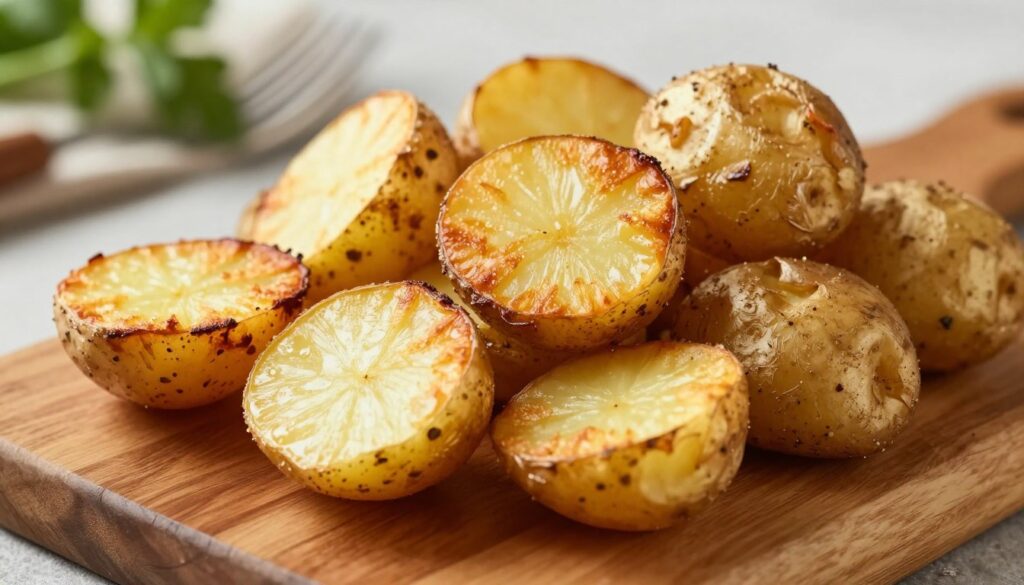
Good preparation makes the difference between tidy spuds and truly cracking roast potatoes. Start by peeling and cutting your chosen spuds into even chunks so every piece cooks at the same rate.
Choose Maris Piper or King Edward and aim for uniform pieces. Consistent sizing prevents some from overcooking while others stay underdone.
Peeling and Cutting Evenly
Peel carefully and cut into matched chunks. Use a sharp knife and try to make each piece similar in volume.
The Importance of Roughening Edges
After parboiling and draining, place the hot pieces in a colander and give them a good shake to roughen edges. Those ragged surfaces catch fat and make the exterior crisp when roasting.
The fat you choose will cling better to roughened edges, helping each piece brown evenly and achieve a golden finish. This simple step is what separates an ordinary roast potato from an exceptional one.
“This preparation is the key step that gives a crisp, uniform result.”
- Peel and cut evenly for uniform cooking.
- Drain, then shake in a colander to roughen edges.
- Use the chosen fat so it adheres to the roughened surface.
Mastering the Parboiling Process
To parboil correctly, add the chopped spuds to a large pan, cover with cold water and season lightly. Take care when you add potatoes so the cold water does not splash.
Warm the pan gently and bring to the boil. Time the parboil for about 5 to 10 minutes so the edges soften but the centres remain firm.
Drain the pieces very well in a colander. Give the colander a good shake to fluff and roughen edges; those ragged surfaces catch fat and brown best during roasting.
This parboiling step is vital to the Mary Berry method. It helps the inside stay fluffy while the outside crisps when you add fat and transfer the pieces to a hot oven for roasting.
Achieving the Golden Brown Crisp
Heat and space are the two essentials for a dependable brown crisp. Get the roasting tin hot in a preheated oven so the fat smokes and sizzles on contact.
Heating the goose fat
Place 4 tbsp of goose or other fat in a large roasting tin and heat in the oven until it is piping hot and smoking.
Be careful when handling the tin; hot fat reacts the moment you add the pieces.
Avoiding overcrowding the tin
Do not pack the tin. Spread the pieces in a single layer so each one browns rather than steams.
Overcrowding will lengthen cooking time and ruin the golden brown finish.
Turning for even colour
Carefully add potatoes to the hot fat, spooning fat over each piece to coat fully and shaking the tin to stop sticking.
Roast for 40 to 60 minutes, turning the pieces halfway through the roast minutes to ensure even colour and crispness.
“A hot tin, roomy spacing and a mid-cook turn give the best, even brown crisp.”
| Action | Why | Timing |
|---|---|---|
| Heat fat until smoking | Instant sear for crisp edges | Preheat oven first |
| Place potatoes in single layer | Prevents steaming, aids browning | Throughout roast |
| Turn halfway | Even colour and crisp on all sides | After ~20–30 minutes |
Expert Tips for Superior Results
A few expert tricks will help you get a reliable, golden finish every time.
Use goose fat sparingly. One good spoonful per tray gives great colour and flavour without making the pieces soggy. Too much fat can weigh down the surface and stop crisping.
Add a couple of crushed garlic cloves and extra thyme sprigs to the hot tin for an aromatic boost. These infuse the potatoes while they roast and pair well with a christmas turkey or other roast main.
When the pieces first hit the hot fat, spoon it over each one so every side seals quickly. Turn once during cooking to get an even brown.
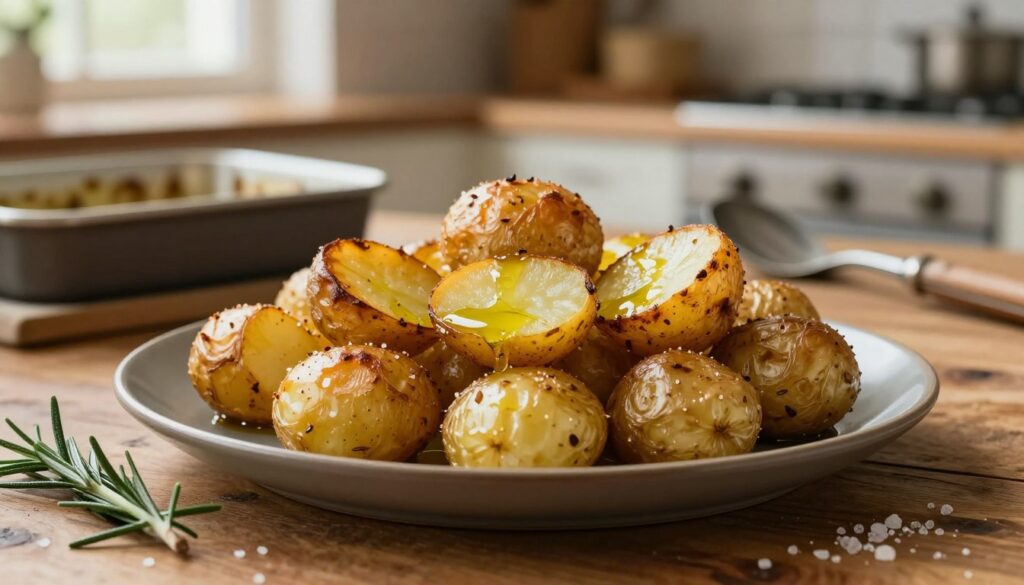
- Roughen edges after parboil so the fat clings better.
- Space pieces to prevent steaming.
- Serve with sauce or a rich gravy for contrast.
“Every careful step helps you cook the best roast potatoes for a classic Sunday or a festive meal.”
Creative Variations and Flavour Twists
Experimenting with different fats and aromatics gives the dish a fresh personality.
Try swapping goose fat for duck fat or a neutral vegetable oil if you prefer a lighter finish. Use 4 tbsp of your chosen fat to get good browning without greasiness.
For garlicky depth, tuck a few roasted garlic cloves into the tin. The mellow, sweet notes of roasted garlic pair well with thyme or rosemary and lift every bite.
Add a sprinkle of smoked salt or cracked black pepper for a savoury edge. These small touches change the flavour profile without extra fuss.
Serving and Pairing Ideas
These spuds match a wide range of mains. Serve alongside a roast chicken or a rich vegetarian nut roast for a balanced plate.
At festive meals, the variations sit happily with a christmas turkey and homemade mince pies, while a simple gravy or herb sauce complements the crisp texture.
“A little change in fat or seasoning yields big flavour rewards.”
Storing and Reheating Your Leftovers
Proper storage and reheating revive texture, keeping each piece crisp and golden.
Store any leftover roast potatoes in an airtight container in the fridge for up to 3 days. Cool them quickly before sealing to keep moisture low and flavour fresh.
To re-crisp, preheat the oven to 200C and place the pieces on a clean roasting tin. Ensure the fat in the tin is piping hot before you add the spuds so they sizzle on contact.
Reheat for about 15 to 30 minutes until they turn golden brown and regain the brown crisp. Turn once during the roast minutes for even colour.
Avoid the microwave. Microwaving makes them soft and spoils the texture. If you are preparing for a christmas turkey dinner, parboil ahead to save time on the day.
| Step | Action | Why |
|---|---|---|
| Store | Airtight container, fridge, up to 3 days | Prevents moisture and absorbs fridge flavours |
| Reheat | Oven 200C, 15–30 minutes | Restores crisp surface and warms centre |
| Prep | Clean roasting tin, fat piping hot | Instant sear for a golden brown crisp |
| Avoid | Microwave reheating | Leaves texture soft and soggy |
Conclusion
A careful finish turns simple tubers into a show-stopping side that suits both midweek dinners and festive tables.
mary berry‘s method brings a fluffy centre and a crisp golden edge. Choose floury varieties such as Maris Piper or King Edward for best texture.
Remember to bring the water to a boil, drain well in a colander and refresh briefly in cold water when needed. Roughen the edges before you add hot fat so each piece browns evenly.
Add a little roasted garlic or fresh herbs to lift these simple ingredients. Follow each cooking step and the roast potato will take centre stage at your next family dinner.
FAQ
What potato varieties work best for Mary Berry’s twice-cooked roast potatoes?
Do I need to peel the potatoes first, and how should I cut them?
What is the purpose of roughening the edges before roasting?
How long should I parboil the potatoes and do I start in cold water?
Is goose fat essential, and can I use alternatives?
How hot should the oven and fat be before adding the potatoes?
How many potatoes should I place in the roasting tin at once?
How often should I turn the potatoes during roasting?
Can I add garlic and herbs while roasting, and when is best?
How do I get the crispiest edges without drying out the centres?
Can I prepare the potatoes ahead and finish them later?
What’s the best way to reheat leftover roast potatoes so they stay crisp?
How much fat should I use per batch of potatoes?
Any tips for serving with a Christmas turkey or other roast meat?
Mary Berry Twice Cooked Roast Potatoes
This classic method transforms humble spuds into a golden, crunchy delight. The two-stage approach ensures a crisp exterior and a light, fluffy interior that suits Sunday dinners and festive gatherings alike.
Ingredients
- 1.5kg Maris Piper or King Edward potatoes
- 4 tbsp goose fat, vegetable oil, or duck fat
- 3–4 sprigs of fresh thyme
Method
- Preheat your oven to 220C (fan 200C/gas 7).
- Peel and cut the potatoes into even chunks.
- Place the chopped potatoes in a large pan, cover with cold water, and season lightly.
- Bring the water to a boil and parboil the potatoes for about 5 to 10 minutes until the edges soften but the centers remain firm.
- Drain the potatoes well in a colander and give them a good shake to roughen the edges.
- Place 4 tbsp of goose fat in a large roasting tin and heat in the oven until it is piping hot and smoking.
- Carefully add the potatoes to the hot fat, spooning fat over each piece to coat fully.
- Spread the potatoes in a single layer in the roasting tin to prevent steaming.
- Roast for 40 to 60 minutes, turning the potatoes halfway through to ensure even color and crispness.
- Serve hot alongside your favorite main dish.