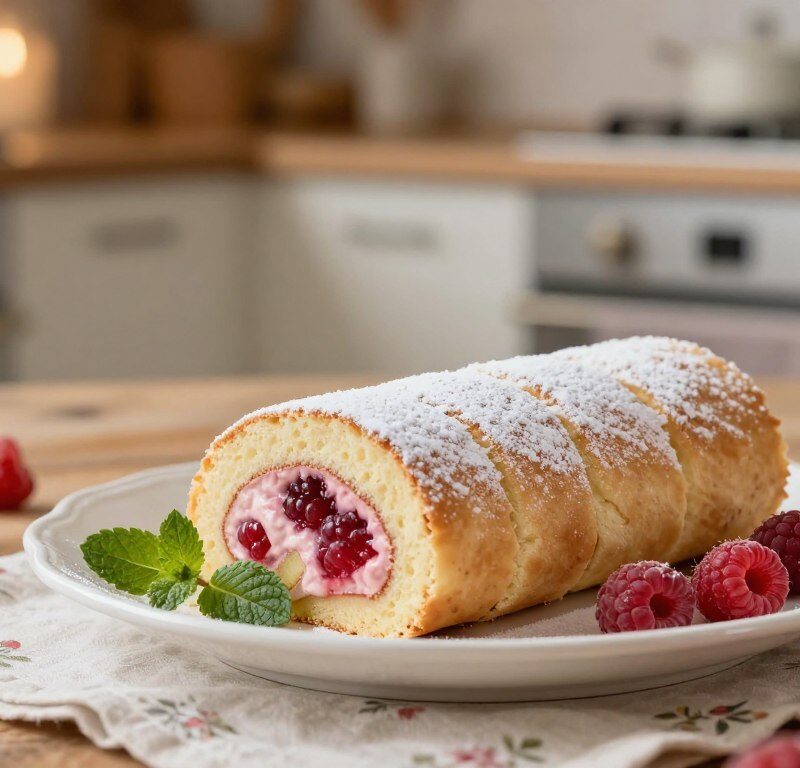
The Mary Berry Raspberry Roulade is a classic British dessert that pairs a light, airy sponge with softly whipped cream and fresh fruit. This flourless sponge relies on the strength of whipped egg whites to give it a cloud-like texture and a crisp, meringue-like exterior.
The method is straightforward and rewards careful handling more than lengthy effort. With clear steps, even a novice baker can achieve the elegant spiral presentation of a swiss roll-style cake.
This recipe shines at summer gatherings and afternoon tea, offering a delicate flavour that is never overly sweet or heavy. It is a lovely example of simple baking techniques producing professional-looking results.
Key Takeaways
- Light texture: Whipped egg whites create the signature airy sponge.
- Quick to make: Precise technique beats long preparation time.
- Elegant finish: The spiral presentation impresses guests.
- Versatile dessert: Perfect for afternoon tea or a special occasion.
- Accessible recipe: Clear instructions suit beginners and experienced bakers alike.
The Elegance of a Mary Berry Raspberry Roulade
A well-made roulade turns basic ingredients into a dessert that looks far more complex than it is.
Inspired by generations of home bakers, this recipe showcases clear technique and reliable steps that build confidence. The roulade—from the French for “a rolling”—owes its charm to a soft, flourless sponge that depends on whipped egg volume rather than flour.
The result is a flexible, melt-in-the-mouth sponge that avoids the density of many sponge cakes. Fresh berries and lightly whipped cream give a bright, tart contrast to the sweet filling, lifting the whole presentation.
Why this bake is loved:
- Simple technical skills create a show-stopping finish.
- Ideal for summer when fresh fruit is at its best.
- Mastering the roll lets you present a neat spiral, much like a swiss roll but lighter in feel.
Perfect for practising classic meringue techniques, this roulade remains a staple in British recipes and a lovely way to show off your baking.
Essential Ingredients for Your Roulade
Start by gathering the few ingredients that make this classic sponge sing. Having everything measured and at room temperature helps you get the best lift and texture.
Fresh Raspberries and Double Cream
Fresh fruit: Use 200–250 g of ripe berries for colour and a bright flavour contrast to the cream.
Double cream: Whip 300 ml until thick so it holds between the sponge layers. Add a little lemon zest if you want a citrus lift.
Pantry Staples
For the sponge you will need 4 large egg whites and 125 g caster sugar to build a stable meringue-like base. A teaspoon of vanilla lifts the flavour.
Icing sugar is essential for dusting the baking parchment so the sponge releases cleanly when rolling. Ensure all eggs are at room temperature for best volume when whisking.
| Ingredient | Amount | Purpose |
|---|---|---|
| Egg whites | 4 large | Structure and lift for the sponge |
| Caster sugar | 125 g | Sweetens and stabilises the meringue |
| Double cream | 300 ml | Silky filling; whip to thick peaks |
| Fresh raspberries | 200–250 g | Tart freshness and colour |
| Icing sugar | For dusting | Prevents sticking when rolling |
Tip: Keep the ingredients simple and handle the whisked whites gently. This small care makes a big difference in baking results and final presentation.
Preparing Your Swiss Roll Tin
Prepare your tin carefully to give the sponge the best chance of lifting and rolling cleanly. Use a 23 x 33 cm swiss roll tin so the sponge has the right thickness for an easy roll.
Preheat the oven to 200°C (180°C fan). A hot oven helps the sponge set quickly and keeps the structure needed for the roulade.
Lightly oil the base and sides of the tin before placing high-quality baking paper. Make small diagonal snips in the corners for a snug fit.

“A well-lined tin prevents tearing and makes turning out a dream.”
Tip: The paper acts as a barrier so you can peel the lining away cleanly once the sponge has had its initial bake. Always check your oven temperature with a thermometer; an accurate heat ensures a golden-brown finish.
- Use the correct size tin for consistent thickness.
- Oil, line and snip corners for a neat fit.
- Confirm oven accuracy before baking your recipe.
Mastering the Whisking Technique
The lift in your sponge comes from mastering how you whisk the whites. This stage creates the air that gives the cake its cloud-like texture.
Achieving stiff peaks means the egg whites should be glossy, thick and able to hold their shape. Use an electric whisk and beat the eggs and caster sugar until the mixture is pale and falls in a ribbon from the beaters.
Check stiffness by inverting the bowl briefly; the mixture should stay put. Stop whisking as soon as peaks stand firm. Over-whisking can form large bubbles that weaken the sponge and cause cracks.
Tip: Eggs at room temperature reach maximum volume faster. Add the sugar gradually for a stable meringue and keep your whisking time efficient to avoid drying out the mixture.
When folding in the remaining ingredients, use a light touch and a metal spoon. Gently fold in thirds to preserve air. This careful handling ensures a flexible roll that will bend without breaking when turned out of the tin.
“A patient whisk and a gentle fold are the secrets behind a perfect meringue roulade.”
- Use an electric whisk for consistent volume.
- Room-temperature eggs give better lift.
- Fold gently with a metal spoon to keep the mixture airy.
Baking the Perfect Sponge
A rapid, even bake helps the sponge keep its spring and makes rolling much easier.
Preheat the oven to the correct temperature and use the fan setting for even heat. Line a swiss roll tin with baking paper and dust it lightly with icing sugar to prevent sticking.
Bake the mixture for approximately 8 minutes until the surface is golden and feels firm to the touch. The cake will naturally fall a little as it cools; this is normal and helps the texture.
Turn the sponge out onto a sheet of baking paper dusted with icing sugar. Peel the lining paper away carefully while the sponge is still warm — it is more flexible and less likely to crack.
Leave the sponge to cool for about 10 minutes. At this point it should be firm but still springy, ready to take a layer of whipped cream and fruit when you roll.
“A quick, well-timed bake is the secret to a neat roll and a light meringue-like texture.”
- Tip: Check oven temperature with a thermometer for consistency.
- Tip: Peel the paper while warm to avoid tearing.
- Tip: Let the sponge leave cool slightly before rolling to prevent breakage.
Filling and Rolling Your Mary Berry Raspberry Roulade
The final assembly is a patient step that turns separate elements into a neat roll.
Work on a clean surface and have your whipped cream ready. Ensure the sponge has had time to leave cool so it is flexible but not cold.
Spreading the Cream
Spread the cream evenly across the sponge, leaving a 2 cm border all the way round. This small edge prevents the filling from squeezing out when you roll.
If the cream feels soft, whisk until it reaches thick peaks so the filling holds its shape.
Adding Fresh Fruit
Scatter the strawberries or other fruit in a single, even layer. Aim for consistent distribution so each slice has the same balance of cream and fruit.
Rolling Technique
Use the baking paper to lift and guide the sponge. Roll from the long side in one gentle, decisive movement to form a tight spiral.
Wrap the roll in the paper and chill for at least 30 minutes in the fridge to set the filling and make slicing easier.
“A steady roll and a short chill make slicing neat and reliable.”
- Dust with a fine sprinkling of icing sugar before serving for a clean finish.
- If desired, grate a little white chocolate over the top for extra indulgence.
| Filling consistency | How to test | Result on slicing |
|---|---|---|
| Soft cream | Runs from spoon | Slices lose shape |
| Thick peaks | Holds tip on whisk | Clean, even slices |
| Over-whipped | Grainy texture | Firm but dry mouthfeel |
These small steps ensure your roulade looks and tastes great. A final note: a swift chill of the roll for the right number of minutes makes all the difference when you slice and serve this classic recipe.

Troubleshooting Common Roulade Cracks
When a roulade splits, the cause is usually one of timing, temperature or technique rather than bad ingredients. Check the sponge at the 8-minute mark while baking to ensure it remains soft and flexible.
Overbaked sponge: If the cake feels dry or firm, the oven is likely too hot or the bake minutes were exceeded. Reduce temperature slightly and test earlier next time.
Roll while warm: Rolling the sponge while it is still warm makes the structure pliable and helps prevent cracks. Use fresh baking paper to turn out and guide the roll.
If it does crack: Don’t worry. A light dusting of icing sugar or a generous smear of extra cream will hide small imperfections and keep slices looking neat.
“A warm, confident roll beats a timid cold attempt every time.”
- Check oven temperature with a thermometer; a hot oven dries the sponge.
- Use the correct tin size so the mixture has the right thickness for rolling.
- Whisk egg whites properly to a stable foam to support the cake during baking.
| Problem | Likely cause | Quick fix |
|---|---|---|
| Surface cracks | Overbaked; oven too hot | Check at 8 minutes; lower temperature next bake |
| Large split when rolling | Rolled cold or sponge too thin | Roll while warm; use correct tin size |
| Sponge tears on turn out | Sticking to old paper or damp paper | Always use fresh baking paper; dust with icing sugar |
| Collapsing centre | Under-whisked whites or overfolded mixture | Whisk egg whites to firm peaks; fold gently |
Serving Suggestions and Storage Tips
A chilled slice, a dusting of icing sugar and a few fresh berries turn this bake into a showpiece. Serve the roulade straight from the fridge so the filling stays firm and the sponge feels fresh.
Storage advice: Store your finished roll in an airtight container in the refrigerator to stop the cream absorbing other odours. Consume within 24 hours for best texture and flavour.
Avoid freezing the cake. The high dairy content in the filling will split and lose smoothness when thawed.
Finishing touches
Just before serving, add a light dusting of icing sugar and a few extra strawberries or mixed berries at the side for colour.
For a special addition, drizzle melted white chocolate over the top. Slice into thick portions for afternoon tea to show the spiral of cream and fruit.
“Keep the roll covered until the last moment to preserve moisture and chill.”
| Action | Why it helps | Timing |
|---|---|---|
| Refrigerate in airtight tin or box | Maintains cream texture; blocks odours | Immediately after chilling for 30 minutes |
| Consume within 24 hours | Best flavour and structure | Same day or next day serving |
| Do not freeze | Cream will split on thawing | Not recommended |
Conclusion
A confident roll and a brief chill turn simple ingredients into a memorable dessert. Focus on the proper whisking of egg whites and a careful roll while the sponge is still warm.
Keep the bake to about 8 minutes, and handle the mix gently to keep the meringue-like texture. The result is a light, flourless cake with a fresh citrus hint from a little lemon.
This Mary Berry classic rewards patience. Whether for a celebration or afternoon tea, the roulade looks impressive and tastes lovely. For another fruit-based showstopper, see the strawberry pavlova recipe.
FAQ
What size of swiss roll tin should I use?
How long should the sponge bake for?
How do I achieve stiff peaks when whisking egg whites?
Can I use icing sugar instead of caster sugar in the filling?
What’s the best way to roll the sponge without cracks?
How do I stop the cream making the roulade soggy?
Can I make a meringue roulade instead?
How long can I store an assembled roulade in the fridge?
Is it okay to add lemon or white chocolate to the filling?
My roulade cracks—what went wrong?
Can I use frozen fruit in the filling?
Should I dust with icing sugar before serving?
Mary Berry Raspberry Roulade
A classic British dessert featuring a light, airy sponge filled with softly whipped cream and fresh raspberries, perfect for summer gatherings and afternoon tea.
Ingredients
- 4 large egg whites
- 125 g caster sugar
- 300 ml double cream
- 200–250 g fresh raspberries
- Icing sugar for dusting
Method
- Preheat the oven to 200°C (180°C fan) and prepare a 23 x 33 cm swiss roll tin by lightly oiling it and lining it with baking paper.
- Whisk the egg whites until stiff peaks form, gradually adding the caster sugar until glossy.
- Gently fold in the vanilla extract and any additional ingredients, being careful not to deflate the mixture.
- Pour the mixture into the prepared tin and spread evenly, then bake for approximately 8 minutes until golden.
- Turn the sponge out onto a sheet of baking paper dusted with icing sugar and peel away the lining paper while warm.
- Let the sponge cool for about 10 minutes, then spread the whipped cream evenly across the sponge, leaving a 2 cm border.
- Scatter the fresh raspberries evenly over the cream.
- Using the baking paper, roll the sponge tightly from the long side to form a roulade.
- Wrap the roulade in the paper and chill in the fridge for at least 30 minutes before slicing.
- Dust with icing sugar before serving and enjoy.