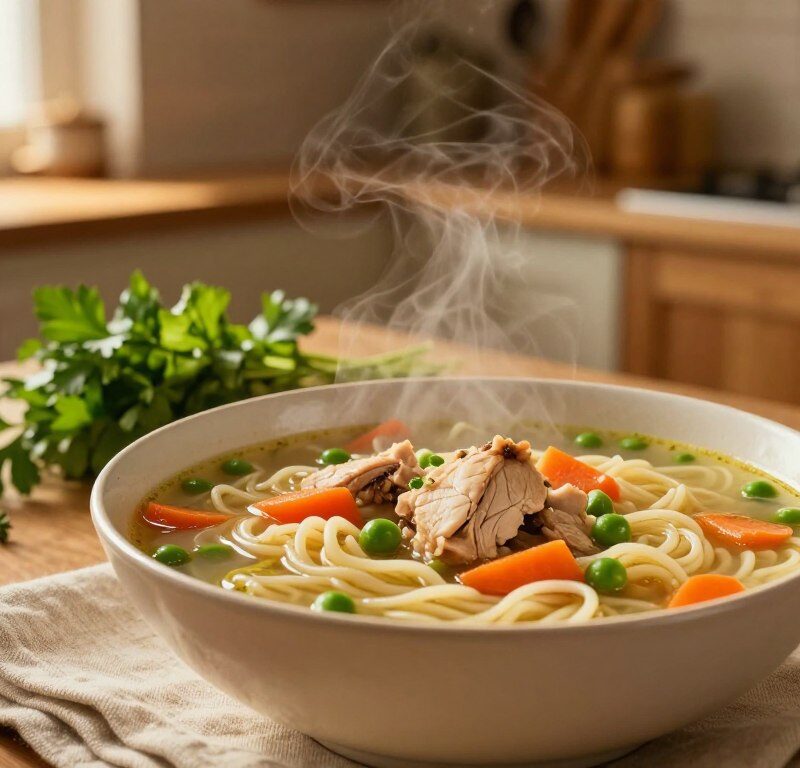
This classic recipe offers a warm, comforting bowl of nourishment for chilly days or when you need a gentle, soothing meal.
It blends traditional British simplicity with rustic charm and relies on simple, natural flavours. The method is quick and easy and is ready in under 40 minutes.
Family-friendly and versatile, the dish suits adults and children and works well with leftover poultry or any kind of pasta you have to hand.
Light yet hearty, this creation stores well in the fridge or freezer, making it a reliable make-ahead meal for busy evenings.
Key Takeaways
- The mary berry recipe delivers comfort in a simple, nourishing bowl.
- Ready in under 40 minutes with basic ingredients.
- Suitable for families and gentle enough for recovery days.
- Versatile — use any noodles or leftover chicken you have.
- Stores well in the fridge or freezer for quick dinners.
The Appeal of Mary Berry Chicken Noodle Soup
This recipe offers a bowl of gentle warmth that feels like a homemade remedy on cold days and is ideal when you need something restorative. It’s a classic chicken noodle soup that comforts and nourishes without fuss.
One big draw is how well it uses leftover roast meat. Turn roast leftovers into a simple, wholesome meal in minutes. The dish keeps costs low and avoids waste.
The dish bursts with aromatic flavours while remaining mild enough for all ages. The balance of tender chicken and soft noodle creates a pleasing texture that feels both light and hearty.
- Nourishing and restorative: perfect for cold days or recovery.
- Waste-smart: transforms leftovers into a satisfying meal.
- Adaptable: tweak herbs, pasta type or seasoning to suit the family.
- Homely flavours: every bowl feels like a homemade classic.
Essential Ingredients for Your Pantry
Gather simple, reliable staples and you’ll have a bowl ready in no time. Start with fresh vegetables and a good stock; they form the backbone of this comforting chicken noodle soup.
Fresh Produce
Use 1 onion, finely chopped, plus 2 medium carrots and 2 celery sticks, both diced. A cleaned and sliced leek adds sweetness and depth.
For garlic, crush 2 garlic cloves to release flavour. Keep salt and freshly ground black pepper to hand for seasoning.
Quality Proteins
Start with 200g of cooked chicken from a roast or a poached bird. This gives the soup a hearty feel without fuss.
Use 1.5 litres of good chicken stock — homemade or low-sodium — as the base. Add 120g egg noodles late in the cook so they stay tender, not mushy.
- Fat for sautéing: 2 tbsp olive oil or butter.
- Herbs: 1 tsp dried thyme and 1 bay leaf.
- Seasoning: salt and a pinch of black pepper to taste.
Preparing Your Fresh Vegetables
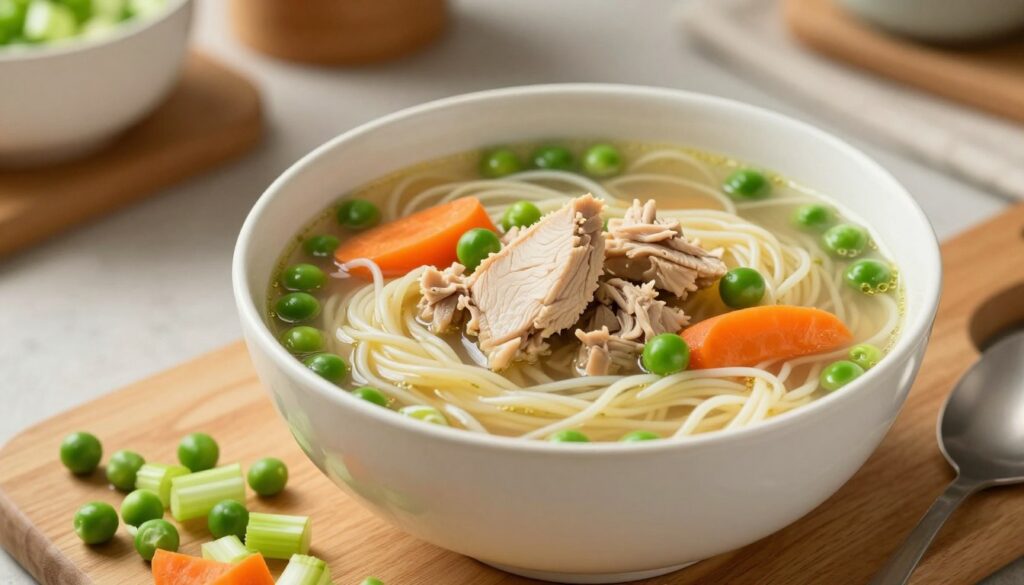
A hot pan and a little oil turn simple vegetables into the flavour backbone of this dish. Heat 2 tbsp olive oil or butter in a large pan over medium heat.
Add the onion, 2 garlic cloves, carrots, celery and leek once the fat shimmers. Chop the veg evenly so everything cooks at the same pace.
Sauté for 5–6 minutes until the vegetables soften and release fragrance. Crush the cloves finely so the garlic flavours spread through the pot.
- Use a large saucepan to stir easily and avoid burning during the initial fry.
- Even chopping and steady heat create a balanced, aromatic base for the broth.
- These ingredients define the first layer of taste in every spoonful.
| Step | Action | Time |
|---|---|---|
| 1 | Heat 2 tbsp oil or butter in a large pan | 1–2 minutes |
| 2 | Add onion, garlic, carrots, celery, leek | Immediate |
| 3 | Sauté until soft and fragrant | 5–6 minutes |
Mastering the Perfect Chicken Stock
A rich, well-made stock turns a humble bowl into something memorable and sets the tone for every spoonful.
Start by pouring 1.5 litres of good-quality chicken stock into the pan. Add a teaspoon of dried thyme and one bay leaf.
Bring the liquid to a boil, then lower the heat and let it reduce to a gentle simmer. Stir well so the herbs release their aromas.
Enhancing Depth of Flavour
Stir in shredded cooked chicken from a roast. Let the mixture simmer for about 10 minutes so the meat absorbs the herb notes.
A small splash of lemon juice at this stage brightens the stock and lifts the deeper flavours. Keep the simmer steady; avoid a rolling boil.
- Tip: a high-quality stock is the recipe’s backbone.
- Timing: simmer minutes are crucial — ten minutes warms the meat without drying it.
Cooking Instructions for the Best Results
When the stock is hot and fragrant, add the noodles and cook for 6–8 minutes until tender. Increase the heat to bring the liquid to a gentle boil, then reduce to a steady simmer minutes for even cooking.
Use a large saucepan so the pasta does not stick together. Stir occasionally after you add noodles to the pot to prevent clumping and to help them absorb the flavours evenly.
Remove the bay leaf before you season. Taste and then season with salt and freshly ground black pepper to suit your preference.
Ladle into bowls and serve with a wedge of lemon. A squeeze of juice brightens the rich chicken stock and lifts the dish.
- Tip: 1 tsp herbs and 1 tbsp oil or butter during cooking builds deeper flavours.
- Mary Berry: recommends tasting before serving and adjusting seasoning.
Creative Variations to Customise Your Soup
Little changes — from a pinch of heat to extra vegetables — lift this classic into new territory. Experimenting is simple and keeps the dish fresh for weeknight meals.
Adding Extra Heat
Add chilli flakes if you like a warming kick. Start with a pinch and taste after a few minutes; increase in small amounts so the stock stays balanced.
If you prefer fresh heat, add sliced fresh chilli in the final minutes to preserve colour and bite.
Vegetable Additions
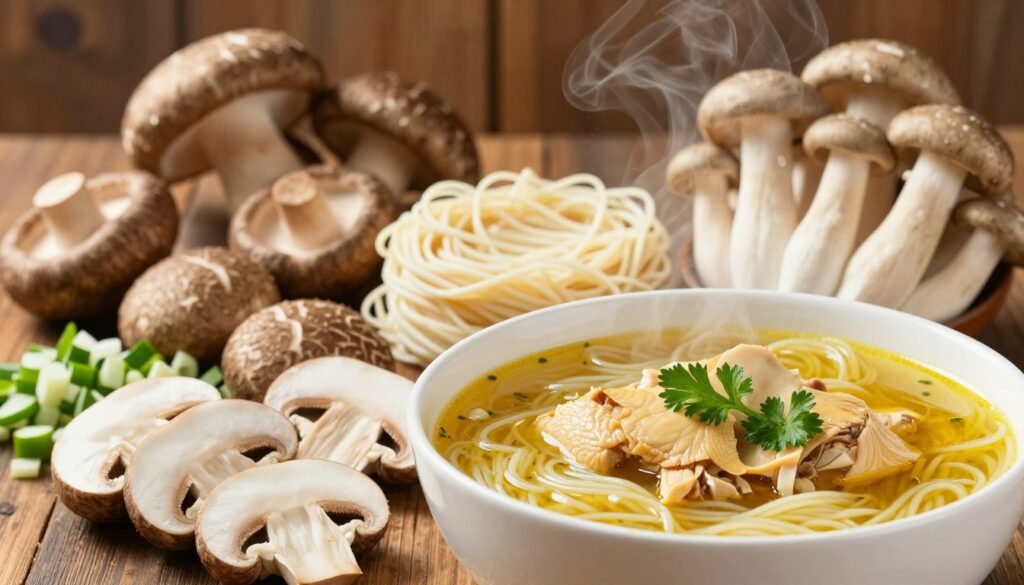
For extra depth, stir in sliced mushrooms or peas. Three different types of mushrooms — chestnut, shiitake and button — give texture and a richer savoury note.
Peas add a pop of sweetness and colour in the last few minutes, while mushrooms benefit from a short sauté first.
Protein Swaps
You can easily replace the main meat with turkey or any leftover roast meat from the fridge. Cut the meat into small pieces so it heats through in the final minutes.
Using pre-cooked meat keeps the cooking time low and preserves tenderness. Try egg noodles or other pasta shapes to alter the mouthfeel.
- Tip: add chilli flakes sparingly for controlled heat.
- Tip: three mushrooms boost umami and make the bowl feel more gourmet.
- Tip: cut meat into bite-sized pieces so it warms evenly in a few minutes.
Expert Tips for Avoiding Soggy Noodles
For a lively texture, boil the noodles in a separate pan and combine them with the hot soup just before serving. This simple step keeps the pasta springy and stops the broth becoming starchy and heavy.
To protect texture when making a large pot, cook the pasta to al dente in plain water. Drain and keep it lightly tossed in oil so the strands do not cling together.
When plated, stir the cooked pasta into the bowl and ladle over the hot stock and shredded meat. This method preserves the bite in a classic chicken noodle dish and helps with portion control.
- Mary Berry suggests cooking pasta separately as key instructions to avoid sogginess.
- By choosing to add noodles at the end, you stop them from soaking up too much liquid when storing leftovers.
- For a dinner party, cook the pasta in a separate pot so every bowl serves with the right texture.
- Always follow the packet guidance to cook to the perfect al dente noodle stage before combining.
Storing and Reheating Your Leftovers
With a few easy steps you can enjoy the same comforting bowl for days without losing texture or flavour. Cool the pot to room temperature before storing to keep food safe and tasty.
Short-term storage: Transfer the stew into airtight containers and refrigerate. You can keep your leftover mary berry soup for up to 3 days without losing fresh flavour.
Freezing Guidelines
For longer storage, freeze the broth and shredded meat but omit the noodles. Pasta soaks up water and becomes soft when frozen.
- Cool completely, then freeze in labelled portions.
- Add cooked noodles fresh when you reheat to retain bite.
- Defrost overnight in the fridge before reheating in a clean pan or warming bowl.
Reheating Methods
Reheat on the stove in a wide pan so the stock heats evenly. Warm over medium heat for 5–7 minutes until piping hot throughout.
Tip: Use a separate pan for noodles if you cooked them earlier. Combine just before serving into warmed bowls to keep texture and flavour bright.
Nutritional Profile of This Comforting Meal
A typical portion gives useful nutrition without feeling heavy or overly rich.
Per bowl: roughly 310 kcal, with about 28 g of protein, 25 g of carbohydrates, 10 g of fat and 3 g of fibre. Sodium sits near 480 mg, so you can easily manage salt by adjusting seasoning at the end.
Protein supports muscle repair and keeps you full for longer. The carbs and fibre provide steady energy without weighing you down.
- Calories: ~310 kcal per serving.
- Protein: 28 g — filling and restorative.
- Carbs & fibre: 25 g and 3 g respectively for sustained energy.
To reduce sodium, lower added salt and use low-sodium stock. Finish with a squeeze of lemon juice and a pinch of freshly ground black pepper to season and lift the flavours without extra salt.
Conclusion
Conclusion: This soup is a classic, comforting finish to any day. It is easy to make and soothes the body and mind with every warm spoonful.
A well-made bowl brings together ease, flavour and family-friendly appeal in every spoonful. Follow the steps to create a balanced chicken noodle soup that feels homemade and honest.
Use good stock and fresh vegetables for the best result. The simple mix of tender meat and soft noodle soup creates a nourishing, reliable meal for lunch or dinner.
Enjoy this recipe as a quick weeknight treat or a gentle remedy. It is humble, flexible and made to be shared.
FAQ
What key ingredients do I need to make this classic chicken and noodle broth?
Can I use leftover roast poultry for the recipe?
How do I make a rich homemade stock from scratch?
What’s the best way to cook noodles so they don’t become soggy in the soup?
How long should I simmer the soup after adding vegetables?
Can I add heat to the recipe, and what’s the best method?
What are suitable protein swaps if someone prefers fish or tofu?
How should I store leftovers and how long do they keep?
What is the best way to reheat frozen or refrigerated soup?
Are there simple vegetable additions to boost nutrition?
How can I enhance the depth of flavour quickly if I’m short on time?
What seasoning tips help the flavours sing without overpowering the dish?
Mary Berry Chicken Noodle Soup
This classic recipe offers a warm, comforting bowl of nourishment for chilly days or when you need a gentle, soothing meal. It blends traditional British simplicity with rustic charm and relies on simple, natural flavours.
Ingredients
- 1 onion, finely chopped
- 2 medium carrots, diced
- 2 celery sticks, diced
- 1 leek, cleaned and sliced
- 2 garlic cloves, crushed
- 200g cooked chicken, shredded
- 1.5 litres chicken stock
- 120g egg noodles
- 2 tbsp olive oil or butter
- 1 tsp dried thyme
- 1 bay leaf
- Salt to taste
- Freshly ground black pepper to taste
- Lemon wedge for serving
Method
- Heat 2 tbsp of olive oil or butter in a large pan over medium heat.
- Add the onion, garlic, carrots, celery, and leek to the pan.
- Sauté the vegetables for 5–6 minutes until they soften and release fragrance.
- Pour 1.5 litres of chicken stock into the pan and add the dried thyme and bay leaf.
- Bring the stock to a boil, then lower the heat and let it simmer gently.
- Stir in the shredded cooked chicken and let it simmer for about 10 minutes.
- Add the egg noodles and cook for 6–8 minutes until tender.
- Remove the bay leaf and season with salt and freshly ground black pepper to taste.
- Ladle the soup into bowls and serve with a wedge of lemon.