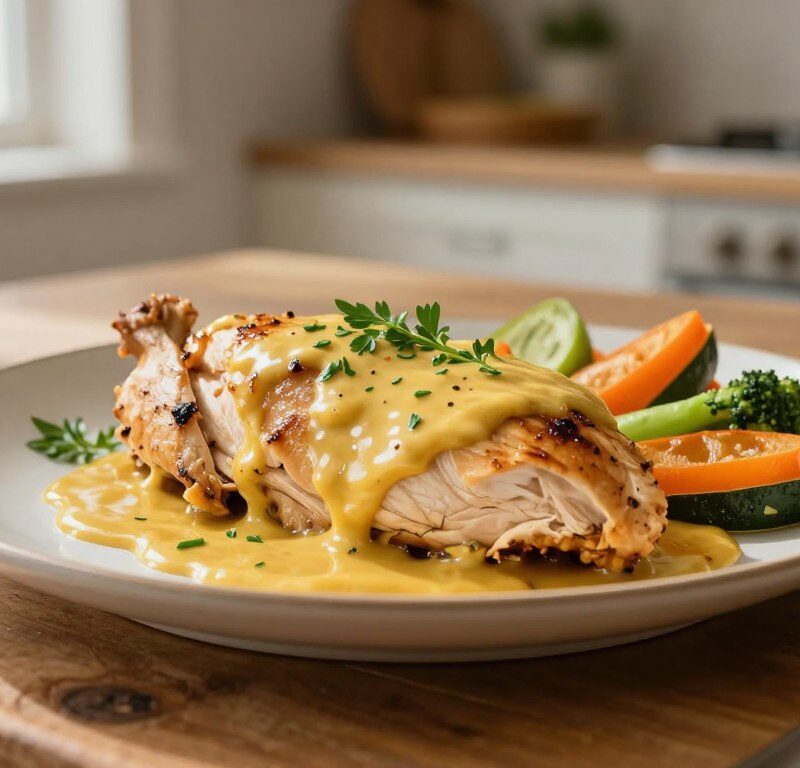
This is a classic, elegant midweek recipe that cooks in around 40 minutes from start to finish. It pairs tender meat with a rich, velvety mustard sauce that feels comforting yet refined.
The recipe is a favourite in modern British kitchens because it is quick and reliable. Using quality cream and good mustard lifts a simple dish to restaurant standard with little fuss.
Whether you need a dependable family supper or a small dish to impress guests, this berry chicken creation delivers balanced flavours and easy techniques. It saves time without skimping on taste.
Key Takeaways
- Prepares in about 40 minutes — ideal for midweek meals.
- Combines tender chicken with a creamy mustard sauce.
- Uses simple ingredients to create a restaurant-style dish.
- Perfect for family dinners or casual entertaining.
- One reliable recipe to keep in your regular collection of recipes.
Why Mary Berry Dijon Chicken is a Midweek Favourite
Home cooks love this recipe because it turns pantry basics into a special meal. It was created as a simple midweek solution that yields a silky sauce without fuss. The balance of rich cream and sharp mustard gives the dish a grown-up flavour that still feels comforting.
The recipe is flexible. You can swap sides, stretch portions or adapt seasoning to suit family tastes. Serve with boiled potatoes or toss with pasta so the sauce soaks in.
Many cooks pick this berry chicken as a go-to because it looks and tastes like an effortful dinner while being quick to make. Few techniques and common ingredients mean consistent results most nights.
- Fast to prepare: ideal for busy evenings.
- Versatile: pairs well with pasta, potatoes or greens.
- Impressive flavour: cream and mustard create depth with little work.
Essential Ingredients for Your Pantry
Stocking the right ingredients turns a simple midweek supper into something special. Gather the basics before you start so cooking is smooth and stress-free.
Selecting Quality Protein
Use 4 boneless, skinless chicken breasts or chicken thighs for the best results. Both give reliable juiciness; breasts cook faster, thighs are more forgiving.
Choosing the Right Mustard
For the signature sauce you need 2 tbsp of mustard and 1 tsp of wholegrain mustard. Combine these with 150ml of double cream to build a creamy, tangy base.
- 1 tbsp olive oil and 1 ounce butter—good fat helps a golden sear.
- 1 small onion and 2 garlic cloves—these form the flavour base.
- Season with salt, black pepper and freshly ground black pepper to taste.
- Optional: 300ml white wine for depth; serve with pasta or steamed veg.
- 1 tsp fresh thyme (or 1 tsp dried thyme) for aroma.
Preparing the Chicken for Perfect Browning
Get the pan hot and prepare to build a deeply caramelised crust on your meat. Begin by patting the chicken breasts or chicken thighs dry with kitchen paper. Drying helps the surface brown quickly.
Season both sides generously with salt, pepper and freshly ground black pepper. Be sure to season right before the meat meets the heat so the salt doesn’t draw out moisture too early.
Heat butter and olive oil in a large frying pan over high heat until sizzling. Use high heat during these cook minutes to seal the juices and form a golden crust.
- Place the pieces in the hot pan and sear 5–6 minutes per side to reach a deep, golden brown.
- Watch the time closely—5–6 minutes per side is the ideal window for a good sear.
- Remove the chicken and set aside to rest while you make the sauce; the browned bits in the pan add big flavour.
Tip: Using high heat and the right fats—butter plus oil—gives a rich colour without burning. This step is vital for the recipe’s success and for a sauce that tastes full and savoury.
Mastering the Creamy Dijon Sauce
Nailing the sauce turns simple cooked meat into a dish that tastes restaurant-ready. Start by using the same frying pan so the browned bits add depth. Keep sentences short and purposeful while you work.
Building the flavour base
In the pan, sweat the onion and garlic in butter and oil until soft. Deglaze with white wine and scrape the browned bits to lift flavour.
Achieving the perfect consistency
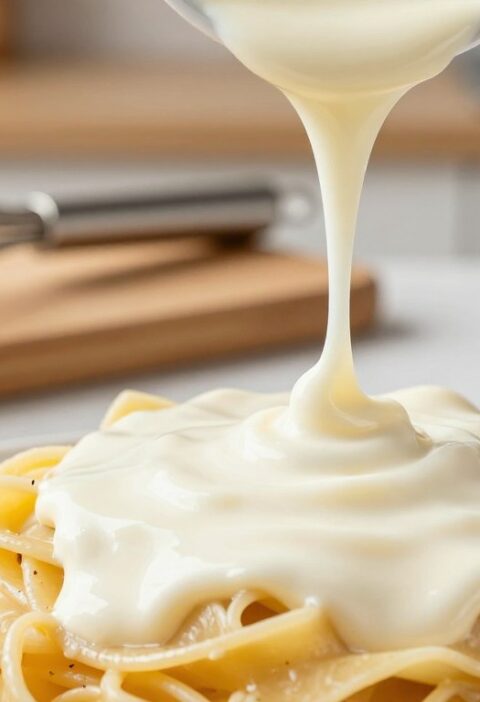
Stir in 1 tbsp mustard, 1 tsp thyme and 150ml double cream. Whisk gently over low heat until smooth. If the creamy sauce feels too thick, add a splash of water or stock to loosen it.
Balancing the tang
Return the chicken breasts or thighs to the pan and simmer for 10–12 minutes. This lets the tender chicken absorb the mustard sauce fully.
“Keep the heat low once cream goes in; this prevents curdling and keeps the sauce velvety.”
| Step | Tip | Timing |
|---|---|---|
| Sauté onion & garlic | Use butter + oil for flavour | 2–3 minutes |
| Deglaze with wine | Scrape browned bits from pan | 1–2 minutes |
| Add cream & mustard | Whisk over low heat | 2–4 minutes |
| Simmer with chicken | Set aside juices to stir back in | 10–12 minutes |
Finish: Taste and season with salt and pepper. Serve the creamy sauce with pasta or steamed veg for a balanced plate.
Combining Flavours for a Sophisticated Finish
Bring everything together in the pan, coating each piece with the warm, silky mustard-cream sauce.
Return the chicken breasts or thighs to the pan and spoon the sauce over them. Simmer for a few minutes so the tender chicken soaks up flavour.
Finish with a light dusting of salt pepper and freshly ground black pepper to season the dish. The mix of garlic, onion and white wine lifts the sauce to a more refined level.
Keep the heat steady so the cream stays smooth. Stir in a little thyme to perfume the pan while the sauce reduces.
Serve suggestion: toss with pasta to catch every drop of sauce and plate immediately for best texture.
| Step | Why it matters | Timing |
|---|---|---|
| Return meat to pan | Coats pieces in sauce for even flavour | 2–4 minutes |
| Season with salt & pepper | Balances acidity from wine and mustard | Immediate |
| Simmer with thyme | Infuses aroma into the sauce | 2–3 minutes |
Serving Suggestions to Complement the Dish
Choose sides that let the creamy sauce shine while adding texture and colour to the plate.
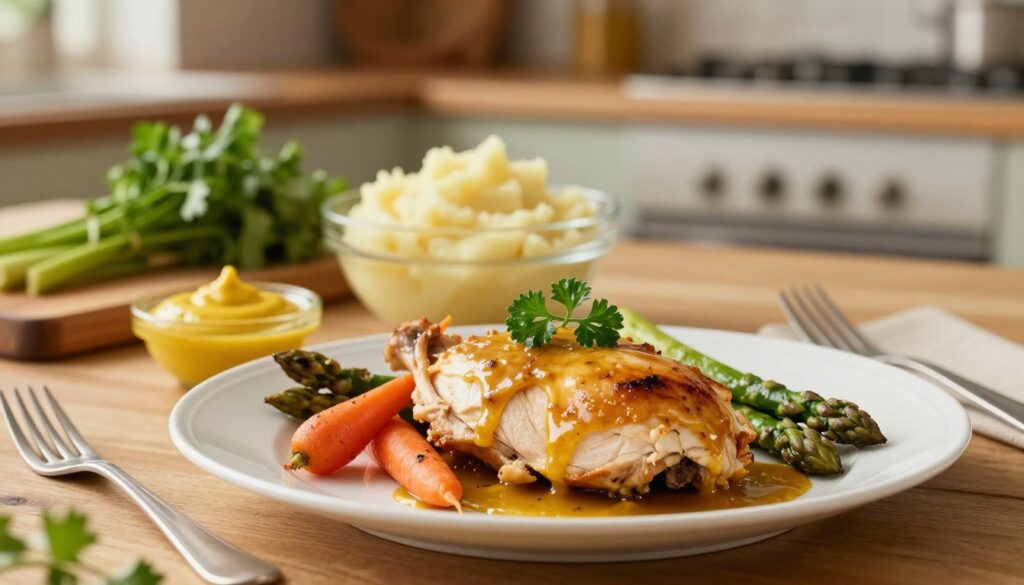
Ideal Side Dishes
Creamy mashed potatoes are perfect for soaking up every drop of the rich mustard and cream sauce. They add comfort and weight to the plate.
Steamed green beans or roasted vegetables give a fresh, crunchy contrast. The brightness cuts through the richness and lifts the overall flavour.
A warm, crusty baguette or buttered rice provides a rustic option to mop up sauce. Both keep the meal relaxed and satisfying.
- Buttered rice or a light pilaf — neutral base that highlights complex flavours.
- Pasta tossed with a little butter and herbs — more substantial and family-friendly.
- Garnish with parsley or chives for colour and brightness at serving.
“Small sides that offer texture and freshness make this dish feel balanced and complete.”
| Side | Why it works | Best for |
|---|---|---|
| Mashed potatoes | Absorbs sauce, adds creaminess | Comfort meals |
| Roasted vegetables | Provides contrast and crunch | Balanced plates |
| Baguette or buttered rice | Mops up sauce, rustic feel | Casual dining |
| Pasta with butter | Boosts portion, pairs with sauce | Family dinners |
Expert Tips for Avoiding Common Pitfalls
A few practical checks while cooking prevent the most frequent midweek mishaps.
Reduce the heat to low before you pour in the double cream. This helps the sauce stay smooth and prevents curdling.
If the sauce seems thin, let it simmer gently for a few extra minutes to reduce naturally. Resist the urge to thicken with flour; time does the job cleanly.
Choose skinless chicken breasts or chicken thighs to control excess fat while keeping good quality protein on the plate.
Use a good olive oil and fresh garlic to build a clear flavour base. These small choices define the success of this recipe.
“Keep a close eye on the pan and the time; the sauce continues to change as it rests.”
- If mustard gets too strong, add a splash of double cream or white wine to soften the bite.
- Always check internal temperature, especially for thicker breasts or thighs, to ensure it’s safely cooked.
- Watch the minutes during simmering to avoid dry meat; brief resting lets juices redistribute.
| Problem | Cause | Quick fix | Best practice |
|---|---|---|---|
| Curdled sauce | High heat when cream added | Lower heat; whisk gently | Add cream on low heat |
| Thin sauce | Insufficient reduction | Simmer a few extra minutes | Cook slowly without flour |
| Bland flavour | Weak fat or garlic | Add olive oil or fresh garlic | Use quality oil and fresh garlic |
| Dry meat | Overcooking in pan | Reduce time; rest meat | Monitor time and internal temp |
Creative Variations to Customise Your Meal
Simple changes to the veg, herbs or liquids let you tailor the meal to what’s in your cupboard. Use these ideas to refresh the basic recipe without adding fuss.
Adding Fresh Greens
Fold in fresh spinach or kale at the very end of the cooking process. The leaves wilt quickly and add fibre and colour.
Stir through just before serving so the greens keep some bite. This pairs especially well with pasta or mashed potatoes.
Incorporating White Wine
Deglaze the pan with a splash of white wine or cider for more depth. Pour it in after the onion and garlic soften and scrape the browned bits.
This boosts acidity and balances the cream and mustard. Let the wine reduce for a minute or two before adding cream.
- Swap chicken breasts for chicken thighs if you prefer richer meat that holds up to simmering.
- Add sautéed mushrooms or peas to make the dish heartier.
- To cut fat, use a light olive oil spray instead of butter and try a lower-fat cream alternative.
- Finish with a sprinkle of Parmesan or experiment with thyme, tarragon or rosemary for a fresh twist.
“Small swaps let you make the same recipe feel brand new each week.”
Storing and Reheating Your Leftovers
A little care with cooling and reheating keeps the sauce silky and the meat tender.
Allow the cooked chicken and sauce to cool completely before transferring to an airtight container. Store in the fridge for up to 3 days.
If freezing, place portions in a sealed tub and freeze for up to 2 months. For best results, reheat without the double cream and add it fresh at the end.
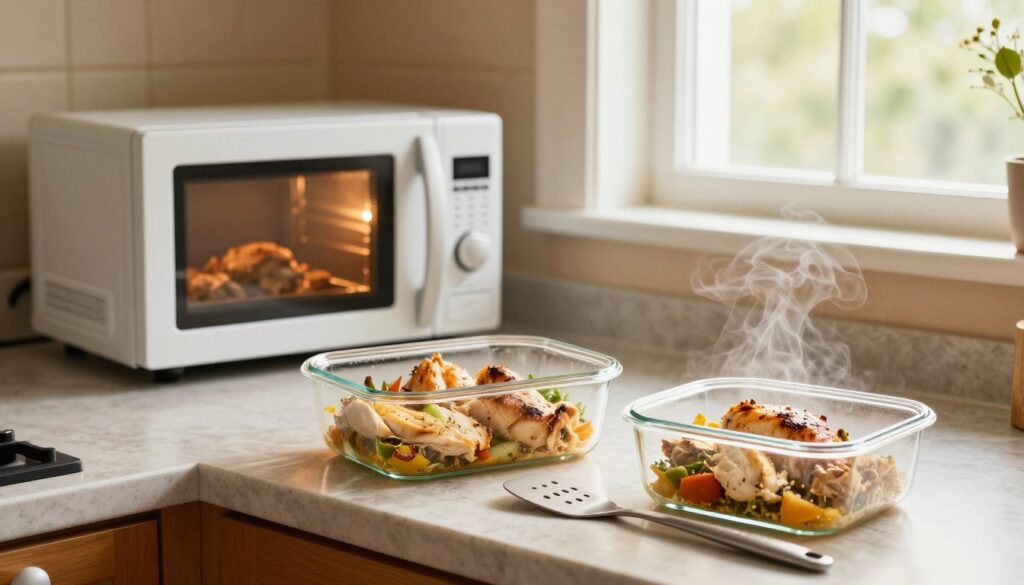
To reheat on the stovetop, warm in a shallow pan over low heat, stirring often so the cream stays smooth. Microwave portions for 2–3 minutes, stirring halfway.
For frozen portions, defrost overnight in the fridge, then reheat slowly. Add a splash of fresh cream or a little water if the sauce has thickened.
“Avoid boiling the sauce during reheating; gentle warmth preserves texture and flavour.”
| Storage | Reheat method | Timing |
|---|---|---|
| Fridge, airtight | Low heat on hob; stir | 3–5 minutes |
| Freezer, sealed | Defrost overnight; reheat gently | 10–15 minutes |
| Microwave | Short bursts; stir halfway | 2–3 minutes |
Conclusion
Conclusion
With straightforward technique and everyday ingredients, this recipe delivers an elegant, fuss-free supper. The creator has crafted a balanced dish that tastes far more complex than the work involved.
The magic lies in the creamy sauce and the careful use of mustard, salt and pepper. Whether you are new to cooking or confident at the hob, this berry chicken recipe is one to keep among your favourite recipes.
Pay attention to quality ingredients and good browning; these small steps make every serving feel special. Thank you for following the guide — enjoy the recipe and happy serving.
FAQ
What cut of poultry works best for this recipe?
How should I season the meat before frying?
What fat is best for browning the chicken?
Can I use low-fat cream in the sauce?
How do I prevent the sauce from splitting?
Is white wine necessary for the flavour?
How long should I cook the chicken in the pan?
What aromatics build the best flavour base?
How do I adjust the tang of the mustard without overpowering the dish?
Which herbs pair well with the creamy mustard sauce?
What are suitable side dishes to serve with the meal?
Can I add fresh greens to the sauce? When should I add them?
How should I store and reheat leftovers?
Are there common pitfalls to avoid when making the sauce?
Can I incorporate other proteins into the recipe?
What cooking times should I expect when adding wine to the sauce?
Mary Berry Dijon Chicken
A classic, elegant midweek recipe that pairs tender chicken with a rich, velvety mustard sauce, perfect for family dinners or impressing guests.
Ingredients
- 4 boneless, skinless chicken breasts or thighs
- 1 tbsp olive oil
- 1 ounce butter
- 1 small onion, chopped
- 2 garlic cloves, minced
- 2 tbsp mustard
- 1 tsp wholegrain mustard
- 150ml double cream
- 300ml white wine (optional)
- 1 tsp fresh thyme (or 1 tsp dried thyme)
- Salt and black pepper to taste
Method
- Pat the chicken dry and season both sides with salt and pepper.
- Heat olive oil and butter in a large frying pan over high heat until sizzling.
- Sear the chicken for 5–6 minutes on each side until golden brown. Remove and set aside.
- In the same pan, sauté the onion and garlic until soft, about 2–3 minutes.
- Deglaze the pan with white wine, scraping up the browned bits for flavor, and simmer for 1–2 minutes.
- Stir in the mustard, thyme, and double cream, whisking gently over low heat until smooth.
- Return the chicken to the pan and simmer for 10–12 minutes, allowing the chicken to absorb the sauce.
- Taste and adjust seasoning with salt and pepper before serving.