This Mary Berry Norwegian Loaf boasts an impressive 4.7 out of 5 stars from 62 ratings. It has become a trusted choice in many UK kitchens for its hearty texture and reliable results.
The recipe is intentionally simple and yields a dense, moist, seeded loaf that feels wholesome and satisfying. It suits both beginners and experienced bakers who want consistent outcomes.
This loaf offers a healthy, gluten-free option and fits well into everyday baking. Try the straightforward steps and enjoy a bread that has earned widespread affection across British homes.
Key Takeaways
- Highly rated: 4.7 out of 5 from 62 ratings.
- Designed to be dense, moist and seeded for great texture.
- Accessible for novices yet reliable for experienced bakers.
- A healthy, gluten-free option for varied diets.
- Simple steps deliver consistent, satisfying results.
Why You Will Love This Mary Berry Norwegian Loaf
You’ll soon love this seeded bread for its firm crumb and rich, nutty depth. The texture is close and compact, making it perfect for hearty sandwiches or thin canapé bases.
It’s also a wholesome choice. Naturally gluten-free and packed with seeds and nuts, this recipe brings real nutritional value to your daily meals without fuss.
The loaf is versatile. Slice it thick for a rustic breakfast or thin for elegant toppings. Home bakers often praise the simple shaping — no fancy techniques needed.
“A compact crumb and toasted seeds create a loaf that stays moist and satisfying for days.”
- Close, firm texture: holds up to spreads and toppings.
- Nutty flavour: deep, toasty notes from mixed seeds.
- Easy to make: minimal shaping, ideal for busy cooks.
- Stays moist: keeps well for several days when stored correctly.
| Benefit | Why it matters | Use |
|---|---|---|
| Firm crumb | Better bite and structure | Sandwiches, toasts |
| Seed-rich | High in fibre and nutrients | Breakfast, canapés |
| Gluten-free | Suitable for varied diets | Everyday baking |
The Story Behind the Recipe
A string of lunchtime conversations during lockdown laid the foundation for the recipe.
mary berry developed this seeded bread after regular, practical phone chats with her very lovely agent, Joanna Kaye.
The idea came from a loaf Joanna had enjoyed and described with enthusiasm. That memory became the seed for a simple, sturdy bread that many now bake at home.
Inspiration from Joanna Kaye
The concept is a tidy combination of close, firm texture and a pleasing nutty flavour.
As featured in Love To Cook, this recipe reflects the comforting, no-fuss approach that makes it ideal for a light lunch.
“A compact crumb and toasted seeds create a loaf that stays moist and satisfying for days.”
- Born from lockdown food chats.
- Inspired by a memorable loaf Joanna had eaten.
- Designed to be filling yet perfect for lunch.
Essential Ingredients for Your Loaf
Gathering the right pantry items makes all the difference to a successful seeded loaf. These essentials are straightforward to source and simple to combine.
Dry Ingredients
Keep measurements accurate for consistent results. Include the sea salt and chopped fruit with your seeds and flours so the flavours disperse evenly.
Wet Ingredients
To begin, preheat the oven to 180C/160C Fan/Gas 4 so the bake starts in the correct environment.
- You will need 4 large eggs. Break them into a bowl and beat with a fork until combined.
- The recipe calls for 3 tbsp olive oil and 5g sea salt to add moisture and seasoning.
- Incorporate 50g soft dried dates, which must be finely chopped so they spread through the mix.
These ingredients form a sturdy, flavoursome base. Measure carefully and the bake will reward you.
Preparing Your Loaf Tin
Prepare your 900g/2lb tin carefully to ensure a clean release and even bake.
Grease the base and sides of the loaf tin thoroughly with butter or a light oil. This prevents sticking and helps the crust colour evenly.
Line the base with non-stick baking paper so the bread lifts out easily when cool. Fold the paper to fit snugly against the sides for neat edges.
These small steps preserve the shape of your loaf and make turning out simple. A tidy release keeps the bottom and sides golden and professional in appearance.
- Grease base and sides well before adding paper.
- Use parchment on the base to aid removal.
- Check the paper sits flat to avoid creases in the crust.
| Step | Why it matters | Tip |
|---|---|---|
| Grease base & sides | Prevents sticking | Use softened butter or oil |
| Line with parchment | Easy release | Trim to fit the base |
| Check fit | Keeps loaf shape | Smooth paper to remove folds |
Mixing the Seeded Batter
With your eggs beaten in a bowl, add the remaining ingredients and begin to combine.
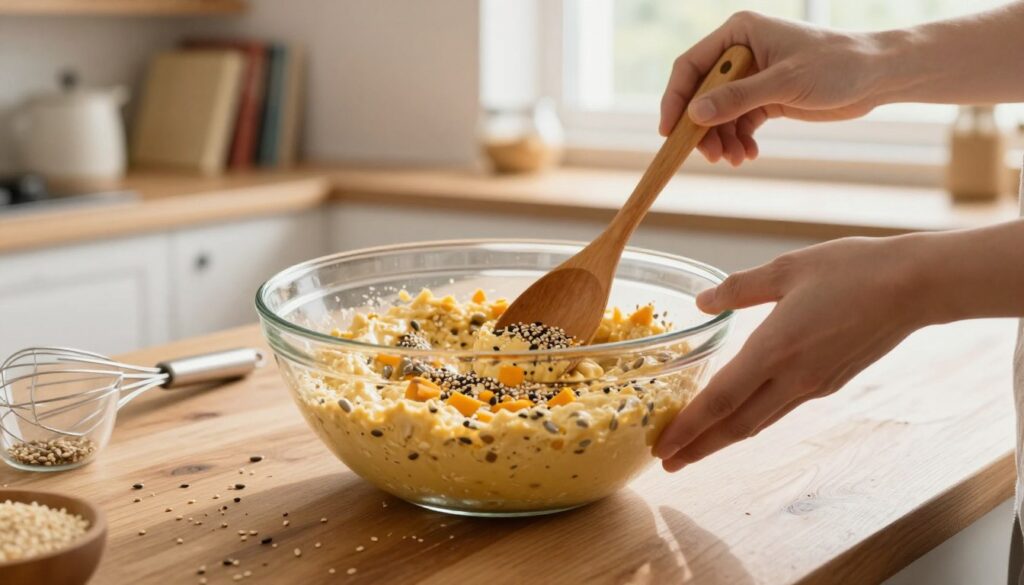
Use a sturdy wooden spoon to fold the wet and dry items together. The mix will be thick and heavy, so the spoon gives the best control.
Ensure the finely chopped dates and all the seeds are thoroughly mixed in. Stir until the batter looks uniform and every seed is distributed.
Coat each seed with the egg and oil mixture so the bread holds its structure during the long bake. This step helps the crumb stay firm and even.
When the batter is consistent, scrape it into your prepared loaf tin. Level the top with the back of the spoon and gently tap the tin to remove any large air pockets.
- Beat eggs in a bowl first.
- Mix using a wooden spoon for best results.
- Fold in seeds and finely chopped dates until even.
The Importance of Quality Seeds
A thoughtful blend of seeds gives texture, taste and nutrition to every slice.
Choose well and the finished bread will reward you with crunch and depth.
Pumpkin and Sunflower Seeds
High-quality pumpkin seeds and sunflower seeds supply the nutty crunch that defines the traditional style.
Opt for fresh, raw varieties for the best flavour. They add structure and help the loaf keep its firm crumb.
Sesame and Chia Seeds
Include 50g of sesame seeds and 3 tbsp of chia seeds to boost nutrition and texture.
Sesame brings a toasty, earthy note that balances the sweetness of dates. Chia swells slightly and binds the mix, adding density and moisture.
- Tip: Toast a small handful to test freshness and aroma before adding to the batter.
| Seed | Role | Selection tip |
|---|---|---|
| Pumpkin | Crunch, nutty depth | Buy raw, check nutty aroma |
| Sunflower | Light crunch, fibre | Choose fresh, unsalted packs |
| Sesame & Chia | Texture, binding, flavour | Measure 50g sesame, 3 tbsp chia |
Baking Your Loaf to Perfection
Start the timed bake once your loaf tin is in the centre of a fully preheat oven at 180C/160C Fan/Gas 4.
Bake the mixture for 45–50 minutes. Check that the top turns a lovely golden brown and that the crust is even.
The loaf is ready when it feels firm in the centre, showing the eggs have set and the structure is steady.
Keep an eye on the oven during the final few minutes so the top does not brown too quickly for your liking. If it colours too fast, tent a sheet of foil loosely over the tin.
- Place the tin on the middle shelf for steady heat.
- Bake for the stated minutes, then test for firmness.
- When done, remove the tin carefully and set it on a heat-proof surface to rest.
| Step | What to look for | Tip |
|---|---|---|
| Start bake | Oven at 180C/160C Fan | Put tin in centre |
| Timing | 45–50 minutes | Watch last 5 minutes |
| Finish | Firm in the centre | Rest on heat-proof surface |
Cooling and Resting the Bread
Cooling correctly is the small step that makes the biggest difference to texture and slicing.
After you remove the loaf from the oven, leave cool tin for five minutes. This brief rest lets the structure settle and prevents the crumb from collapsing.
Run a palette knife gently around the edges to loosen the bread. Doing this carefully stops tearing when you lift the loaf from the tin.
Lift the bread out and place it on a wire rack to cool completely. Using a rack prevents moisture building beneath the base and keeps the crust crisp.
Leave cool on the rack until the centre feels firm. Patience here is essential — a fully cooled loaf slices cleanly and holds its shape when served.
- Leave in the tin for five minutes to set the crumb.
- Loosen edges with a palette knife to avoid damage.
- Transfer to a rack to cool completely and stop sogginess.
For extra tips on seeded baking and storage, see these seeded baking tips.
Achieving the Perfect Texture
The right mix and a careful cool-down are what turn a good bake into a great one. Aim for a close, even crumb by paying attention to binding, bake time and a patient rest after baking.
The Role of Eggs
Eggs act as the main binder, holding the seeds and other ingredients in a tight, firm matrix. Beat them well so they coat seeds evenly and support the structure as the loaf sets.
When the bake is complete, check the centre for firmness. A fully set centre signals that the internal structure is stable and the texture will slice cleanly.
Leave cool tin for five minutes, then remove the bread to a wire rack and allow it to cool completely. Air circulating around the crust improves flavour and helps the crumb finish firming up.
“Cutting too soon can spoil the delicate texture you worked to achieve.”
- Use a careful combination of ingredients for moisture without crumbliness.
- Trust the rest: leave cool and cool tin-free for best results.
- For related tips on eggs in baking, see the egg custard tart recipe for handling eggs.
Serving Suggestions for Afternoon Tea
For an afternoon tea that feels classically British, present thin, buttered slices on a wooden board.

Spread generously with high-quality butter to bring out the toasted, nutty notes in each slice. Keep the cuts thin so the texture stays pleasing and the flavour shines.
Use the bread as a refined base for canapés. Arrange topped slices on a platter with smoked fish, herb creams or small vegetable picks for a smart party display. mary berry often recommends this approach for easy entertaining.
- Offer small portions — the dense crumb is filling, so thin slices work well for large groups.
- Provide a selection of toppings so guests can customise their bites.
- Consult Love To Cook for more inspired pairings and presentation ideas.
| Serving style | Why it works | Best pairing |
|---|---|---|
| Thin buttered slices | Highlights seed flavours and keeps portions light | Good salted butter or cultured spread |
| Canapé bases | Elegant, easy to top and serve | Smoked salmon, herbed cream, charcuterie |
| Decorative board | Inviting display and variety | Cheeses, pickles, fresh herbs |
Pairing with Savoury Toppings
Use thin, toasted slices as a sturdy base for an array of savoury toppings. The dense crumb and crunchy seeds stand up well to rich flavours and bold textures.
Smoked Salmon and Charcuterie
Smoked salmon with a light smear of butter or cream cheese is an instant classic. The saltiness of the fish cuts through the nutty crumb for a refined bite.
Pair slices with high-quality charcuterie on a shared board. The loaf’s firm structure supports cured meats and prevents sogginess, so you can pile on flavours without losing texture.
Cheese and Pickles
For a vegetarian option, top slices with mature cheese and tangy pickles. Sharp cheese balances the richness of the bread and brings out toasted seed notes.
Serve a selection of cheeses alongside a little charcuterie too, if you like. The contrast of creamy, sharp and acidic creates a well-rounded platter for lunch or tea.
| Pairing | Why it works | Best match |
|---|---|---|
| Smoked salmon | Salt and cream cut richness | Light butter or cream cheese |
| Charcuterie | Robust flavours, hearty texture | Sliced salami, prosciutto |
| Cheese & pickles | Sharp meets tangy for balance | Mature cheddar, gherkins |
Storing Your Freshly Baked Bread
Store your freshly baked loaf correctly and it will reward you with stable texture and brighter flavour the next day.
Always let the loaf cool completely on a wire rack before you package it. Trapping heat will soften the crust and encourage condensation.
For short-term storage, place the cooled loaf in an airtight container or wrap it tightly in foil. A bread bin kept out of direct sunlight also works well to preserve texture.
Storing the loaf for a day often helps the flavours to meld and deepen. Many bakers find the taste improves slightly after resting.
If you live where humidity is high, refrigerate the loaf to prevent spoilage over the course of a day. Remove it from the fridge an hour before serving so the crumb relaxes.
- Cool completely before wrapping to keep the crust crisp.
- Use foil or airtight container to retain moisture without trapping steam.
- Store in a cool, dark place or refrigerate in humid climates.
Freezing for Future Lunches
Freezing slices is the simplest way to make this seed-rich loaf work for busy weekdays.
This loaf freezes well, so prepare a batch and save time later. Slice the bread while it is fully cooled for neat portions that thaw quickly.
Wrap each slice tightly in cling film and slip them into a freezer bag. Protecting the slices this way stops freezer burn and keeps the seeds fresh for several weeks.
When you are ready, toast a frozen slice for a few minutes until warm and crisp on the outside. A hot slice makes a speedy, healthy lunch on a hectic day.
- Batch prep: slice and wrap individually for grab-and-go meals.
- Storage tip: label bags with the date to track how long they have been frozen.
- Serving: toast from frozen for best texture and flavour in minutes.
Customising Your Loaf
Small changes to the fruit and seed mix can transform the loaf without altering the method. This approach keeps the bake simple but fresh for your tastes.
Swapping Dates for Fruit
You can easily customise this mary berry recipe by swapping the dates for an equal amount of dried cranberries or chopped figs. Both choices add a different tartness or sweetness while keeping the texture steady.
If you want to change the seed mix, try different varieties but keep the total weight of pumpkin seeds and sunflower seeds consistent. The sesame seeds and chia seeds form a reliable base, so treat them as core ingredients.
- Add a handful of chopped nuts for extra crunch — walnuts or almonds work well.
- Every extra seed you add boosts fibre and nutrients, so feel free to adapt by pantry stock.
- Reduce the amount of dates if you prefer a less sweet loaf; the bread stays satisfying with less fruit.
Troubleshooting Common Baking Issues
A few quick checks in the kitchen will usually reveal why a seeded bread misbehaves.
Measure ingredients carefully. If the loaf feels too heavy, check the weight of the seeds and the amount of salt. Small errors change texture fast.
If the centre still feels soft after 50 minutes, return the tin to the oven for a few extra minutes. Test by pressing the centre gently; it should feel firm.
If the top browns too quickly in the tin, cover it loosely with foil to protect the crust. Also verify your oven is calibrated correctly — an incorrect temperature spoils baking results.
“Simple checks — weight, heat and timing — solve most home-baking problems.”
- Weigh dry ingredients and seeds for consistency.
- Allow extra minutes if the centre is underdone.
- Cover with foil if the crust colours too fast.
| Problem | Likely cause | Fix |
|---|---|---|
| Dense, heavy loaf | Too many seeds or wrong ingredient ratios | Reweigh ingredients and reduce seeds slightly |
| Centre not set | Insufficient baking time or oven temp | Return to oven for a few minutes; check temperature |
| Top burns quickly | Too high heat or position in tin | Move tin lower; tent with foil |
Conclusion
A modest mix of seeds and pantry staples can produce a bread that feels both hearty and elegant.
This mary berry recipe is a testament to how simple home baking delivers satisfying results. Its seeded texture and nutty flavour make it ideal for breakfast, lunch or entertaining.
Serve thin slices with good butter or top with smoked salmon for a classic pairing. The loaf also works brilliantly as a canapé base with creamy or savoury toppings.
Thank you for following the guide in Love To Cook. Enjoy your baking, and may this recipe become a staple in your kitchen.
FAQ
How long should I bake the seeded loaf in a standard oven?
What size loaf tin works best for this recipe?
Can I add smoked salmon or other savoury toppings before serving?
Which seeds give the best flavour and texture?
Can I replace eggs in the recipe?
How do I achieve a firm, even crumb without drying the bread?
Is it possible to swap the dates for other fruit?
How should I store leftover slices to keep them fresh?
What’s the best way to freeze the loaf for future lunches?
Why did my loaf sink in the middle and how can I prevent it?
Can I add cheese into the mixture for a savoury twist?
Should I toast the seeds before adding them to the batter?
How important is it to let the loaf cool completely in the tin?
Mary Berry Norwegian Loaf
This Mary Berry Norwegian Loaf boasts an impressive 4.7 out of 5 stars from 62 ratings. It has become a trusted choice in many UK kitchens for its hearty texture and reliable results. The recipe is intentionally simple and yields a dense, moist, seeded loaf that feels wholesome and satisfying.
Ingredients
- 4 large eggs
- 3 tbsp olive oil
- 5g sea salt
- 50g soft dried dates, finely chopped
- 50g pumpkin seeds
- 50g sunflower seeds
- 50g sesame seeds
- 3 tbsp chia seeds
Method
- Preheat the oven to 180C/160C Fan/Gas 4.
- Grease a 900g/2lb loaf tin with butter or oil and line the base with non-stick baking paper.
- In a bowl, beat the eggs until combined.
- Add olive oil, sea salt, and finely chopped dates to the beaten eggs and mix well.
- In a separate bowl, combine the pumpkin seeds, sunflower seeds, sesame seeds, and chia seeds.
- Fold the wet ingredients into the dry ingredients using a sturdy wooden spoon until well combined.
- Scrape the mixture into the prepared loaf tin and level the top.
- Bake in the preheated oven for 45–50 minutes until the top is golden brown and the loaf feels firm in the center.
- Remove from the oven and let it cool in the tin for 5 minutes before transferring to a wire rack to cool completely.