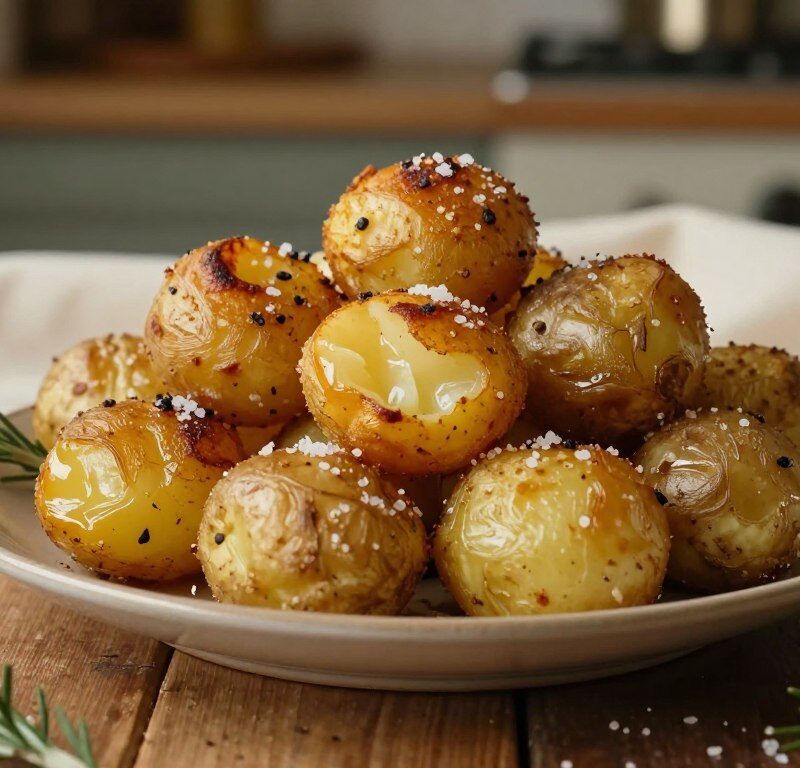
Classic British roast potatoes gain a new twist in this trusted, easy method. Follow a simple technique to transform plain tubers into golden, crunchy sides that lift any meal.
A small addition of semolina adds a crisp outer texture that a regular oven alone cannot create. The crumbly coating locks in a fluffy interior, making these spuds reliably satisfying for weeknight dinners or special Sunday plates.
For an aromatic finish, add a few sprigs of fresh thyme to the roasting tin as they brown. Many home cooks in the United Kingdom now use this approach to bring a professional touch to familiar recipes.
This introduction prepares you to learn a clear, tested method that helps you cook consistently better sides every time.
Key Takeaways
- Semolina creates a crisp, golden crust not achieved by plain roasting.
- This method is simple and suited to busy home cooks.
- Fresh thyme adds a subtle herbal note during roasting.
- Technique yields fluffy interiors with a crunchy exterior.
- Ideal for classic British meals and Sunday favourites.
Why Mary Berry Roast Potatoes With Semolina Are The Best
A single, small tweak to a standard roast yields noticeably crunchier edges and a tender centre.
The Appeal Of The Recipe
This mary berry recipe is loved for its simplicity. It fits both a busy weeknight and a festive christmas turkey dinner.
Many home cooks reach for a mary berry book when they want dependable results. The method is forgiving, so even beginners can serve a classic Sunday dinner that looks and tastes impressive.
Why Semolina Works
Semolina forms a coarse, gritty layer that crisps under high heat. Unlike plain flour, it keeps its texture and will not turn gummy.
The result is a firm exterior and a soft, fluffy inside. These recipes are intentionally foolproof, giving consistent results whether you cook for family or guests.
Essential Ingredients For Your Roast
Start with quality staples to make sure each roast turns out crisp and golden. Gather 1.5kg of floury potatoes — they give that fluffy centre every cook wants.
Use 4 tbsp of goose fat or vegetable oil to achieve a deep, golden colour during roasting. Add 2 tsp of sea salt and 2 tbsp of semolina to coat the pieces for an extra-crispy finish.
Optional garlic cloves in the roasting tin infuse the fat with aroma and subtle sweetness as the potatoes brown. Choose high-quality salt; seasoning balances the richness of the fat and lifts the final dish.
- 1.5kg floury potatoes — for texture and a light interior.
- 4 tbsp goose fat or vegetable oil — essential for colour and flavour.
- 2 tbsp semolina — creates a crunchy crust.
- 2 tsp sea salt & garlic — seasoning and aroma.
| Ingredient | Quantity | Purpose |
|---|---|---|
| Floury potatoes | 1.5kg | Fluffy centre |
| Goose fat / vegetable oil | 4 tbsp | Deep colour, savoury fat |
| Semolina | 2 tbsp | Crispy coating |
| Sea salt & garlic | 2 tsp; optional cloves | Seasoning and aroma |
“Simple, well-chosen ingredients will change the way you roast.”
Preparing The Perfect Potatoes
Start by selecting the right variety of potato; the correct starch level makes all the difference. For best results choose 1.5kg of Maris Piper or King Edward, both prized for a light, fluffy centre.
Choosing The Right Potato Variety
After peeling, cut the potato into even-sized chunks so they cook at the same rate. Place them in a large saucepan of cold, salted water and bring to a gentle boil.
Simmer for 8–10 minutes until the edges are soft but the centres still feel firm. This parboil time helps the surface break down slightly for better crisping later.
- Drain thoroughly in a colander to remove excess water.
- Give the colander a gentle shake to roughen the edges; this creates a perfect surface for the semolina coating.
- Use 4 tbsp of vegetable oil or fat to ensure even coverage and crispiness during roasting.
“Parboiling and roughing the edges are simple steps that pay off with deep colour and great crunch.”
The Secret To Achieving Extra Crispy Edges
A crucial trick for crisp edges is to roughen each piece after parboiling so the coating can cling.
Mary Berry stresses that those torn surfaces catch the semolina and form the golden crust you want. Handle each chunk gently to keep the centre intact while creating a textured exterior.
When you place the pieces into the hot fat, the semolina and oil work together to fry the edges. This frying action gives a deep, satisfying crunch that contrasts with the soft inside of the potato.
- Roughen after draining — a gentle shake in a colander does the job.
- Preserve shape — avoid overworking the pieces when coating.
- Use hot fat so the semolina fries on contact for instant crisp.
“Create texture early; the rest is heat and time.”
| Step | Why it matters | Quick tip |
|---|---|---|
| Roughen surface | Helps semolina adhere | Shake the colander gently |
| Hot fat | Instant frying of edges | Preheat fat until shimmering |
| Careful handling | Keeps fluffy interior | Toss once, don’t press |
Mastering The Semolina Coating Technique
Coating the warm, slightly damp chunks is the key step that makes the crust hold fast.
Sprinkle 2 tbsp of semolina over the drained potatoes while they are still hot. Toss gently so every piece gets a light, even dusting.
mary berry recommends using a colander or a bowl to shake the pieces. This helps the grains cling to the roughened surfaces without breaking the centres.
That fine layer acts as a barrier. It stops each potato from soaking up too much fat as they roast and forms the crispy shell you want.
- Aim for coverage that is thin rather than heavy; too much grit makes the texture clumsy.
- Toss once or twice only — overworking will compact the coating and crush the pieces.
- After coating, place the pieces straight into hot fat so the semolina toasts and turns golden.
| Action | Amount | Why it matters |
|---|---|---|
| Sprinkle semolina | 2 tbsp | Creates crisp outer crust |
| Toss in colander | One gentle shake | Even coating, preserves fluff inside |
| Transfer to hot fat | As prepared | Instant toasting and browning |
Heating The Fat For A Sizzling Finish
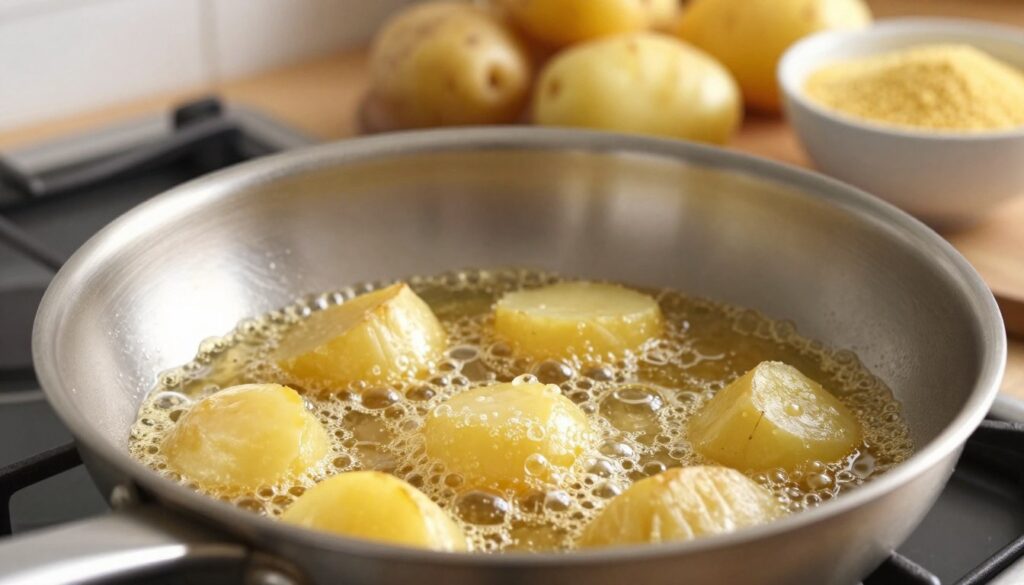
Get your roasting tin blazing hot with the fat inside before you tip in the pieces for an instant sear. Preheat oven and tin so the 4 tbsp of goose fat or vegetable oil is piping hot and just starting to smoke. This initial heat is the key to a crisp exterior.
Carefully add potatoes so they land with a sharp sizzle. Space them out to allow even heat circulation and to prevent steaming.
Turn each piece once in the fat so every surface gets coated. This helps prevent sticking and ensures uniform browning.
Scatter fresh thyme and garlic over the tin after the spuds are in. The herbs infuse the fat without burning when added at this stage.
- Always preheat the oven and the roasting tin with the fat inside.
- Ensure the fat is piping hot so the pieces sizzle on contact.
- Turn the potatoes in the fat to coat fully and encourage even colour.
“The initial temperature of the fat determines the final texture of your roast.”
| Action | Why it matters | Quick tip |
|---|---|---|
| Preheat tin & fat | Immediate sear on contact | Heat until fat just smokes |
| Space pieces | Even heat, less steaming | Use a wide tin |
| Add thyme & garlic | Infuses flavour without burning | Scatter after spuds go in |
Roasting Times And Temperature Guidelines
Begin by heating the oven to 200°C (180°C fan) so the tin and fat are hot when the pieces arrive. A steady, high temperature gives an instant sear that begins the crisping process.
Oven Settings For Fan Assisted Cooking
Set fan ovens to 180°C and standard ovens to 200°C. Preheat the oven thoroughly; a consistent heat ensures even roasting and a deep golden colour.
Turning For Even Colour
Roast for 40–45 minutes, turning the pieces once at the halfway mark. This single turn helps every side brown to a uniform crisp.
- mary berry suggests 40–45 minutes at the temperatures above.
- Use a large roasting tin to allow airflow when you cook multiple portions.
- Watch the last few minutes of roast time, as ovens vary in performance.
“The right temperature and a timely turn are what make reliable roast potatoes for any special dinner.”
Serving Suggestions For A Traditional Sunday Roast
Pairing matters: the right accompaniments lift these crisp pieces into a memorable dinner.
The semolina-coated potatoes are ideal beside roast beef, lamb or a christmas turkey. Their crunchy shell contrasts well with slow-cooked, tender meats.
Serve with a rich gravy and seasonal vegetables to complete the classic British plate. Roasted parsnips or carrots added in the last 15 minutes make a festive touch.
They also work brilliantly alongside a vegetarian nut roast. The golden crunch brings texture and interest to meat-free mains.
- Place potatoes on a warmed serving dish so they stay hot.
- Serve immediately from the oven for best crunch.
- Offer a jug of gravy and a bowl of steamed greens on the side.
| Main | Best match | When to add veg |
|---|---|---|
| Roast beef | Mustard gravy | With 15 mins left |
| Lamb | Redcurrant jus | With 10–15 mins left |
| Nutrient roast (veg) | Vegetarian gravy | Keep separate, serve hot |
“Serve straight from the oven; the first mouthful should be at its crunchiest.”
Storing And Reheating Leftover Potatoes
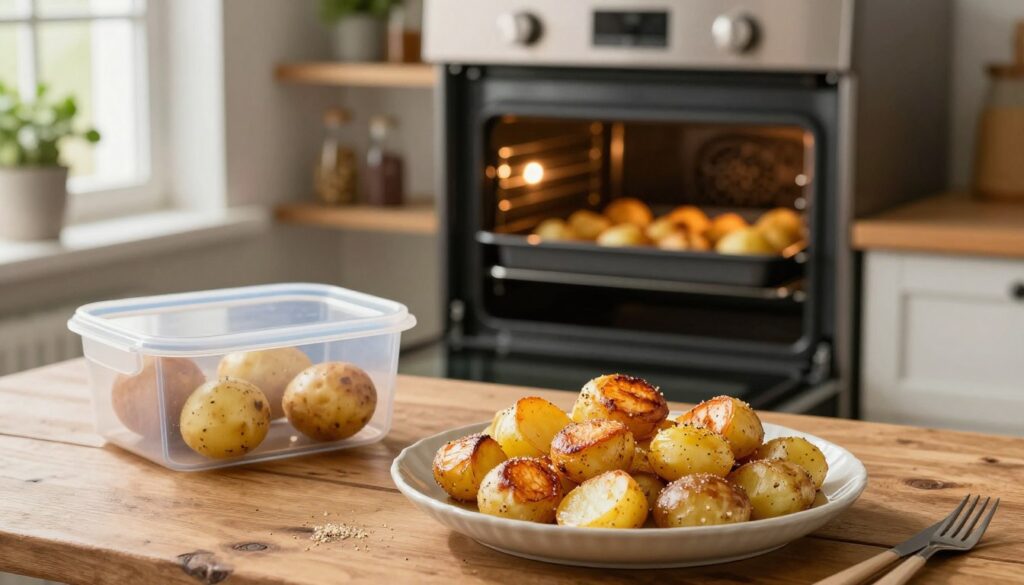
Cool the roast pieces on a tray, then transfer to an airtight container for storage. Store in the fridge for up to three days once they have fully cooled. Proper storage protects texture and flavour.
Reheating Methods For Maximum Crunch
Oven method: Preheat to 200°C (180°C fan) and reheat for about 15 minutes. This allows the fat to melt and the semolina coating to crisp without drying the centre.
Air fryer option: Heat at 180°C for 8–10 minutes. The circulating air restores crunch quickly and uses less oil.
Avoid the microwave. Microwaving softens the outer crust and ruins the crisp finish you achieved.
“Reheat in a hot oven so the coating revives and the inside stays fluffy.”
| Method | Temperature | Time | Best for |
|---|---|---|---|
| Oven | 200°C / 180°C fan | ~15 minutes | Even crisp, restores fat |
| Air fryer | 180°C | 8–10 minutes | Fast, energy-efficient crisp |
| Fridge storage | 4°C (fridge) | Up to 3 days | Short-term keeping before reheating |
Troubleshooting Common Roasting Mistakes
Common faults — from cold fat to crowded tins — are usually reversible with one or two tweaks.
If the pieces stick to the roasting tin, the likely cause is that the fat was not piping hot when you added potatoes. Preheat the tin and fat until it shimmers, then tip the potato chunks in so they land with a sizzle.
Too much semolina can weigh the crust down. Use a light dusting only; a heavy layer gives a clumsy texture instead of crisp edges.
- If potatoes fail to crisp, check you used floury varieties such as Maris Piper or King Edward.
- Mary Berry warns that crowding the roasting tin causes steaming; give each piece space or use two tins.
- If spuds are soggy, you may have used excess goose fat or vegetable oil, so reduce the fat next time.
- Always bring water to a rolling boil before you add potatoes and parboil for 8–10 minutes to soften edges correctly.
“If you forget salt, sprinkle it over the hot roast potatoes just before serving to lift the flavour.”
| Problem | Likely cause | Quick fix |
|---|---|---|
| Sticking to tin | Fat not hot | Reheat fat until smoking, then add pieces |
| Heavy crust | Too much semolina | Use 2 tbsp max and dust lightly |
| Soggy results | Too much fat or crowding | Reduce fat & space out on tin |
Conclusion
mary berry roast technique is a simple way to lift a classic dinner.
A short rest after roasting helps the crisp shell settle and keeps the centre fluffy. Follow the parboil, roughen and light coating steps, then give the tray time to cool for a moment before serving.
Keep the tin piping hot and allow the full cooking minutes so the outer crust achieves a rich, golden colour. With basic ingredients and a small amount of patience, this recipe rewards you with reliably crunchy, fluffy potatoes.
Try it next time you cook a roast and make these recipes a favourite on your table.
FAQ
What potato variety gives the best results for this recipe?
How much goose fat should I use for a tray of roast spuds?
Is semolina essential, and why is it used?
Should I par-boil the potatoes, and for how long?
How do I rough up the potato surfaces effectively?
Can I substitute goose fat with another fat?
What oven temperature should I use for fan-assisted ovens?
How long do the potatoes need in the oven?
When should I add garlic or herbs like thyme?
Can I prepare the potatoes ahead of time?
What’s the best way to reheat leftover roast potatoes?
My potatoes turned out soggy—what went wrong?
How do I prevent the semolina from burning?
Are these spuds suitable for serving with a Christmas turkey?
Mary Berry Roast Potatoes With Semolina
Classic British roast potatoes gain a new twist with a simple technique that transforms plain tubers into golden, crunchy sides. A small addition of semolina adds a crisp outer texture, locking in a fluffy interior.
Ingredients
- 1.5kg floury potatoes
- 4 tbsp goose fat or vegetable oil
- 2 tbsp semolina
- 2 tsp sea salt
- Optional: garlic cloves
- Optional: fresh thyme
Method
- Preheat the oven to 200°C (180°C fan) and place the roasting tin with fat inside to heat.
- Peel and cut the potatoes into even-sized chunks.
- Place the potatoes in a large saucepan of cold, salted water and bring to a gentle boil.
- Simmer for 8-10 minutes until the edges are soft but the centres are still firm.
- Drain the potatoes thoroughly in a colander and give it a gentle shake to roughen the edges.
- Sprinkle 2 tbsp of semolina over the hot, drained potatoes and toss gently to coat.
- Carefully add the potatoes to the hot fat in the roasting tin, ensuring they land with a sizzle.
- Turn each piece once in the fat to coat fully and encourage even browning.
- Scatter fresh thyme and optional garlic over the potatoes after they are in the tin.
- Roast for 40-45 minutes, turning the potatoes halfway through for even color.
- Serve immediately from the oven for the best crunch.