This classic dish turns simple storecupboard items into a stylish, comforting meal that suits weeknights and small gatherings across the United Kingdom.
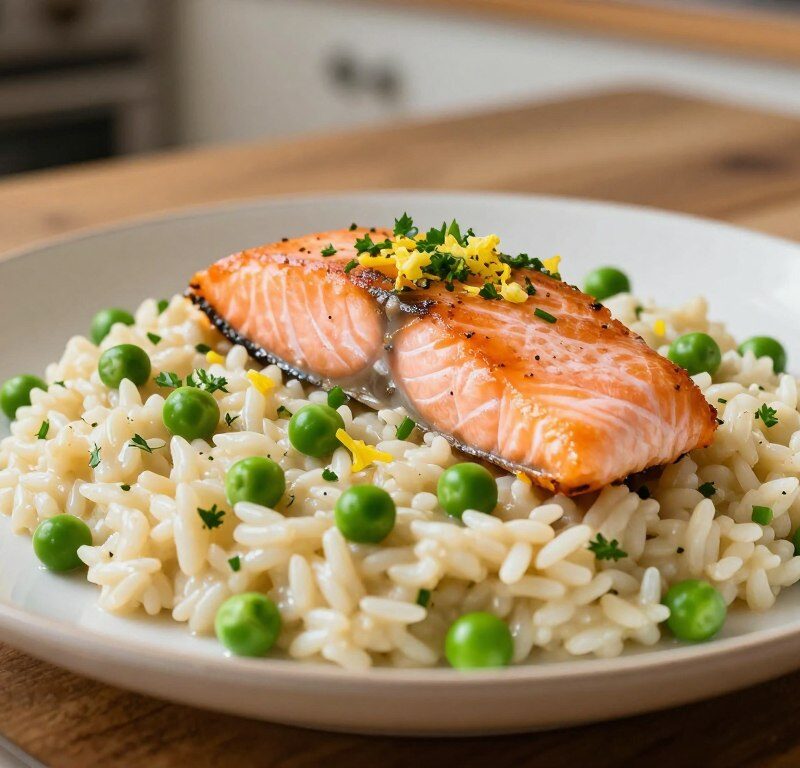
The recipe blends creamy Arborio rice with tender flakes of salmon and lightly sweet peas for a balanced plate. It feels elegant yet remains approachable for home cooks.
Ready in under an hour, the stovetop method gives the best silky texture. The meal is rich in protein and omega-3s, while the vegetables add fibre and colour.
Every spoonful offers delicate flavour and a restaurant-quality finish without fuss. Many cooks keep this recipemary berry salmon in their regular rotation for family dinners.
Key Takeaways
- One-pot preparation gives a creamy, comforting result with minimal fuss.
- Combines protein, healthy fats and fibre for a nourishing supper.
- Cooked stovetop in under an hour for simple weeknight service.
- Arborio rice creates a silky texture that lifts the dish to a restaurant level.
- Remains approachable for cooks of all levels across the UK.
Why You Will Love This Mary Berry Salmon And Pea Risotto
This mary berry-inspired risotto feels like an indulgence that is easy to achieve. It works as a cosy midweek supper and also shines when you want something a bit special for guests.
The one-pan method keeps washing up to a minimum. You cook rice, fish and peas together, so there is less fuss and more time at the table.
This dish balances rich, flaky fish with the natural sweetness of peas. The result is a creamy texture and a clean, satisfying flavour that most households love.
Highly customisable, the recipe accepts extra veg, fresh herbs or a squeeze of lemon to lift the flavours. It also delivers good nutrition — protein, omega-3s and fibre in one plate.
- Minimal prep: one pan, simple steps.
- Versatile: adapts to what you have in the fridge.
- Reliable results: a classic approach that helps you make mary berry-style meals with confidence.
Essential Ingredients For Your Risotto
Choose ingredients that will deliver flavour and texture before you even switch on the hob.
Start with the staples: 250g of arborio rice gives the creamy bite you need. Prepare 1L of hot vegetable or fish stock to keep the rice cooking steadily for about 18 to 20 minutes.
Selecting Quality Salmon
Use 400g of salmon fillets, skin removed, for four portions. High-quality fillets give a firm, glossy finish when folded through at the end.
Choosing The Right Rice
Arborio rice is essential. It releases starch slowly and makes the dish silky. Add 150g of peas for colour and a sweet note.
“Good ingredients are half the work; the rest is patience at the pan.”
| Ingredient | Amount | Purpose |
|---|---|---|
| Arborio rice | 250g | Creamy texture |
| Salmon fillets | 400g | Protein, flavour |
| Hot vegetable/fish stock | 1L | Even cooking |
| Dry white wine | 100ml | Deglaze, depth |
| Parmesan cheese | 50g | Finish, creaminess |
- Use 50g butter and 2 tbsp olive oil to sauté onion and garlic.
- Finish with lemon juice, 2 tbsp fresh parsley or fresh dill, and black pepper to season.
Preparing Your Kitchen Equipment
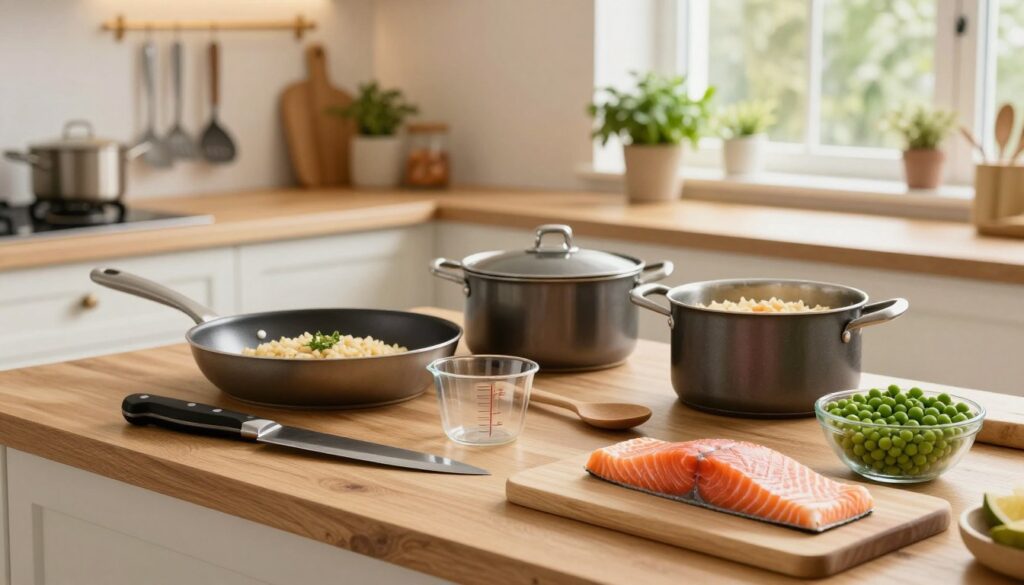
A few well-chosen pieces of equipment will set you up to make a smooth, creamy risotto with ease.
Start with a heavy-based saucepan or a wide frying pan. This gives even heat and stops the bottom from catching as you add stock.
Keep a wooden spoon to hand. Stirring with wood helps release the rice starch for that glossy finish. Use a ladle to add hot stock little by little so the rice absorbs it evenly.
Have a sharp knife and sturdy chopping board ready for finely chopping onion and preparing garlic cloves. A cheese grater will let you finish with freshly grated parmesan for depth and saltiness.
Prepare your salmon fillets by removing the skin before you pan-fry them for 3–4 minutes each side. Measure out 2 tbsp olive oil to sauté the aromatics without burning the garlic or onion.
- Pan: heavy-based saucepan or wide frying pan
- Tools: wooden spoon, ladle, sharp knife, chopping board, grater
- Prep: skinless fillets, 2 tbsp olive oil, chopped garlic
| Item | Why it matters | Tip |
|---|---|---|
| Heavy-based pan | Even heat distribution | Wide pan gives more surface area for stirring |
| Wooden spoon | Releases starch without damaging grains | Use gentle, regular stirs |
| Ladle | Adds stock gradually | Keep stock hot in a separate pot |
| Grater | Fresh parmesan finish | Grate at serving for best flavour |
The Importance Of Warm Stock
Always have hot stock ready in a separate saucepan to protect the rice from temperature shocks. Keeping the liquid warm matters for even cooking and a glossy finish.
Set the saucepan on the lowest heat and leave it there for the whole cooking time. Hot vegetable or fish stock helps rice absorb gently without interrupting the simmer.
Maintaining The Simmer
Add stock one ladle at a time, allowing the grains to soak up the liquid before the next pour. Stir frequently; this releases starch and creates creaminess rather than a dry texture.
The rice will take about 18–20 minutes to cook minutes to al dente. Watch the heat so the pan stays at a gentle simmer — too high and the liquid will evaporate; too low and the grains will cook unevenly.
| Action | Why it helps | Practical tip |
|---|---|---|
| Keep hot stock in a saucepan | Prevents temperature shock to rice | Use low heat and cover lightly |
| Add stock by ladle | Controls texture and avoids soupy results | Wait until liquid is mostly absorbed |
| Stir often | Releases starch for a creamy finish | Use a wooden spoon and gentle strokes |
- Use warm stock throughout to follow mary berry salmon technique.
- Keep a ladle to hand so you can add stock quickly and steadily.
- Monitor time and heat to achieve perfect rice in the saucepan.
Mastering The Art Of Toasting Rice
Start by toasting the arborio rice for 1–2 minutes in a warm saucepan with butter and a splash of oil. Keep the heat at medium so the onion and garlic do not brown. You want the grains to look lightly coated and slightly translucent at the edges.
Pour in a little dry white wine and let it reduce until the liquid is absorbed. This step adds depth and a subtle acidity that lifts flavour.
Stir frequently during toasting and wine reduction. Gentle stirring helps rice release its initial starch, which later creates the creamy texture you seek.
Only add the first ladle of hot stock after the wine has fully absorbed. That timing helps the grains stay distinct while still becoming creamy as you cook minutes later.
- Tip: Medium heat prevents burning and keeps control over timing.
- Result: Toasting ensures each grain remains defined yet silky when you add stock.
| Action | Why it helps |
|---|---|
| Toast arborio 1–2 minutes | Develops nutty base and seals grains |
| Add dry white wine | Builds flavour before stock |
| Use a ladle for stock | Controls absorption and texture |
Adding Stock Gradually For A Creamy Texture
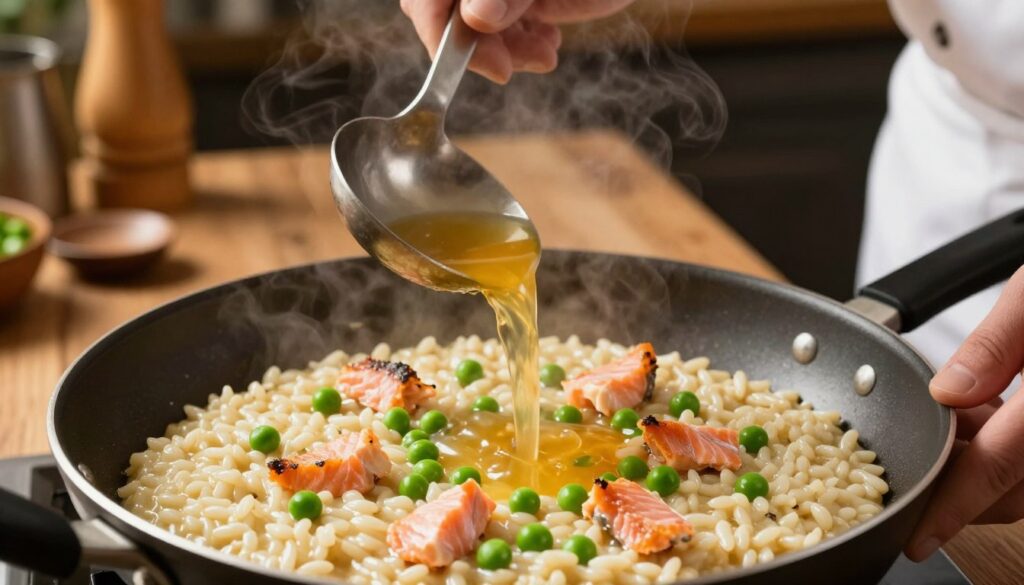
A steady hand and a warm ladle are the secret to coaxing silkiness from the rice. Use one spoonful of hot stock at a time and stir gently until the liquid is mostly absorbed before the next addition.
Stirring frequently helps release starch from the arborio rice into the vegetable stock, building that classic, clingy texture you want. This process usually takes about 18–20 minutes of steady attention.
Keep roughly 250ml of stock in reserve when the grains are near al dente. At this point, fold in the cooked salmon carefully so it warms through without breaking up.
Add a squeeze of lemon juice and a little zest at the end to lift the dish and balance the richness. Finish with grated parmesan cheese for depth and a glossy finish.
| Action | Why it helps | Timing |
|---|---|---|
| Add stock with a ladle | Controls absorption and texture | One spoonful at a time |
| Stir often | Releases starch for creaminess | Throughout 18–20 minutes |
| Reserve 250ml stock | Allows finishing without overcooking | When rice is nearly al dente |
Incorporating Salmon And Peas
Gently fold the flaked fish and peas in during the final two to three minutes so textures stay distinct and flavours remain bright.
Pan-fry your salmon fillets for 3–4 minutes each side until just cooked. Rest briefly, then break into large, tender chunks with a fork.
Add the flakes and peas when the rice is nearly al dente. Stir only a few times so the fish keeps its shape and the peas keep their colour.
Turn the heat off before gently folding in parmesan and a squeeze of lemon. Season with salt and black pepper to taste.
Finish with 1 tbsp of butter or a drizzle of oil and scatter fresh parsley for a bright finish.
| Step | Timing | Purpose |
|---|---|---|
| Pan-fry fillets | 3–4 minutes each side | Seal juices; prevent overcooking |
| Add flakes & peas | Final 2–3 minutes | Warm through; keep texture and colour |
| Finish off | Off the heat | Fold in parmesan and lemon; season with pepper |
Expert Tips For Perfect Results
A steady rhythm at the hob helps the rice develop a silky texture every time. Stirring consistently releases starch from the arborio rice and is the key to a glossy finish.
Stirring Techniques
Use a wooden spoon and gentle, regular strokes. Stir often but avoid frantic movement; the goal is steady agitation to coax out starch.
When the pan looks nearly dry, add stock and wait until it is mostly absorbed before the next ladle. This pacing helps rice cook evenly and keeps grains distinct.
Balancing Flavours
Taste as you add the hot stock so you can adjust seasoning. A squeeze of lemon juice and a little grated parmesan at the end will brighten and balance the richness.
Don’t overcook the salmon fillets — fold warm flakes in during the final minutes so the fish stays moist. Finish with fresh dill or parsley for colour and lift.
Achieving Al Dente
Stop cooking when the rice is soft outside but has a slight bite within. This usually takes about 18–20 minutes of steady attention.
If the risotto thickens too much, stir in a splash of extra hot stock to loosen the consistency before serving. Always serve immediately; the rice will continue to absorb liquid if left in the pan.
| Action | Timing | Why it helps |
|---|---|---|
| Stir regularly | Throughout cooking | Releases starch; creates creaminess |
| Add stock by ladle | One at a time | Controls texture and prevents sogginess |
| Fold in fish & peas | Final minutes | Keeps texture and moisture |
Creative Variations To Try
Swap the main protein for smoked trout or cooked prawns to give the dish a smokier or sweeter note. These changes keep the method the same while altering texture and flavour.
Change the veg by using broad beans or edamame instead of peas. Or add courgettes and spinach for more fibre and colour in each serving.
For a lighter finish, use tbsp olive oil in place of butter and stir in low-fat crème fraîche rather than heavy cream or lots of parmesan. A splash of lemon juice and zest will lift the pan if you skip the dry white wine.
- Try Carnaroli rice or pearl barley for a nuttier bite.
- Sprinkle toasted pine nuts for crunch and contrast.
- Finish with fresh dill and a grind of black pepper.
| Variation | Swap | Why try it |
|---|---|---|
| Protein | Smoked trout / prawns | Different flavour profile; quick to fold in |
| Legume / veg | Broad beans / edamame | New texture and colour |
| Grain | Carnaroli / pearl barley | Nuttier mouthfeel; firmer grains |
| Light finish | Olive oil + crème fraîche | Lower fat, fresh finish |
Storing And Reheating Your Leftovers
How you store and reheat this dish makes a big difference to texture and taste. Once cooked, let the food cool completely at room temperature for no more than two hours before refrigerating.
Refrigerate any leftover risotto in an airtight container for up to 2 days to keep it safe to eat. If possible, store the fish separately from the rice. This helps you reheat the rice without overcooking the salmon.
Safe Reheating Methods
Stovetop reheating gives the best result. Place the rice in a saucepan over low heat, add a splash of hot stock or water and stir gently until the mixture loosens and becomes glossy again.
If you use a microwave, heat in short bursts of around 30–45 seconds, stirring between intervals so the rice warms evenly and does not dry out. Avoid using the oven — high heat will easily dry the rice and wreck the delicate texture.
“A gentle return to heat and a little hot stock will bring creaminess back to life.”
- Do not freeze: freezing ruins the creamy texture and may make the salmon mushy on thawing.
- Timing: reheat until piping hot throughout, but only for the time needed to warm through to avoid overcooking.
- Calories: each serving is roughly 490 kcal — useful when planning meals for the next day.
| Action | Recommendation | Why it helps |
|---|---|---|
| Cool completely | Within 2 hours, then refrigerate | Prevents bacterial growth; maintains quality |
| Reheat on stovetop | Low heat, splash of hot stock | Restores creaminess without drying |
| Microwave | Short bursts, stir between | Even heating; avoids hot spots |
| Freeze | Not recommended | Texture loss; salmon becomes mushy |
Conclusion
With a few careful steps you can create a silky, flavourful result that feels special. This berry salmon recipe balances creamy texture, citrus lift from lemon and a salty finish from parmesan to make a comforting, elegant dish.
The recipemary berry salmon method is straightforward. You do not need fuss to make mary berry-style food at home. Gentle stirring and gradual stock addition are the real secrets.
Serve warm to keep the texture and share the moment with family. Use quality ingredients and the simple timings in this recipe to make mary berry favourites with confidence.
FAQ
How long does the dish take to cook from start to finish?
What rice should I use for the creamiest result?
Can I use frozen peas instead of fresh?
Do I have to use dry white wine, and what if I don’t have any?
How do I know when the rice is cooked correctly?
What’s the best way to keep stock warm while cooking?
Can the fish be cooked separately and added later?
How much Parmesan should I add, and can I use alternatives?
What herbs and seasonings work best with this recipe?
Can I prepare any elements in advance?
How should I store and reheat leftovers safely?
Is it possible to make a vegetarian version of this dish?
Mary Berry Salmon And Pea Risotto
This classic dish turns simple storecupboard items into a stylish, comforting meal that suits weeknights and small gatherings across the United Kingdom. The recipe blends creamy Arborio rice with tender flakes of salmon and lightly sweet peas for a balanced plate.
Ingredients
- 250g Arborio rice
- 400g salmon fillets, skin removed
- 1L hot vegetable or fish stock
- 100ml dry white wine
- 50g Parmesan cheese
- 50g butter
- 2 tbsp olive oil
- 150g peas
- 2 tbsp fresh parsley or fresh dill
- black pepper
- lemon juice
Method
- Heat the butter and olive oil in a heavy-based saucepan over medium heat.
- Add chopped onion and garlic, sauté until softened but not browned.
- Toast the Arborio rice in the pan for 1-2 minutes until lightly coated and translucent at the edges.
- Pour in the dry white wine and let it reduce until fully absorbed.
- Gradually add the hot stock one ladle at a time, stirring frequently until mostly absorbed before adding more.
- Cook the rice for about 18-20 minutes until al dente.
- Pan-fry the salmon fillets for 3-4 minutes on each side until just cooked, then flake into large chunks.
- In the last 2-3 minutes of cooking, gently fold in the flaked salmon and peas.
- Turn off the heat and fold in the grated Parmesan and a squeeze of lemon juice.
- Season with salt and black pepper to taste, and finish with fresh parsley or dill.