Mary Berry Eves Pudding is a classic British dessert that combines softly cooked apples with a light sponge topping.
The method is simple and reliable, so it suits both weekday family meals and a relaxed Sunday lunch. The dish relies on familiar ingredients and a straightforward approach rather than fancy techniques.
Each portion is about 360 kcal, making it a comforting but not overly heavy treat. The balance between sharp fruit and sweet sponge gives a pleasing contrast of flavour and texture.
Whether you are new to baking or experienced, this recipe delivers a warming finale that feels like home.
Key Takeaways
- Traditional British dessert pairing tart apples with a soft sponge.
- Simple method, ideal for everyday family cooking and Sunday lunch.
- Reliable results using common pantry ingredients.
- About 360 kcal per serving — comforting, not too rich.
- Balanced flavours and easy texture to recreate at home.
The Timeless Appeal of Mary Berry Eves Pudding
Few desserts capture homely comfort like a classic apple bake crowned by a pillowy sponge. The eve pudding combines stewed fruit at the base with a light sponge batter poured on top.
This recipe works for midweek family cooking and for slower Sunday afternoons. The balance is key: tender apples remain the star while the sponge stays soft and airy.
“Every bite offers a contrast of tart fruit and sweet cake — familiar, warm and reliably pleasing.”
The act of baking this dessert is rewarding. It connects you to long-standing recipes and simple techniques that have lasted over time.
- Comforting flavour: gently sweet apples with a soft topping.
- Visual contrast: apples topped light sponge creates an appealing finish.
- Reliable result: an easy, classic recipe for many occasions.
| Element | Characteristic | Best for |
|---|---|---|
| Apples | Tart, stewed base | Family dinners |
| Sponge | Light sponge, airy | Sunday lunch |
| Overall | Homely dessert, easy baking | Cosy evenings |
Essential Ingredients for Your Dessert
Start with the best apples and a handful of pantry staples to ensure success every time.
Selecting the Right Apples
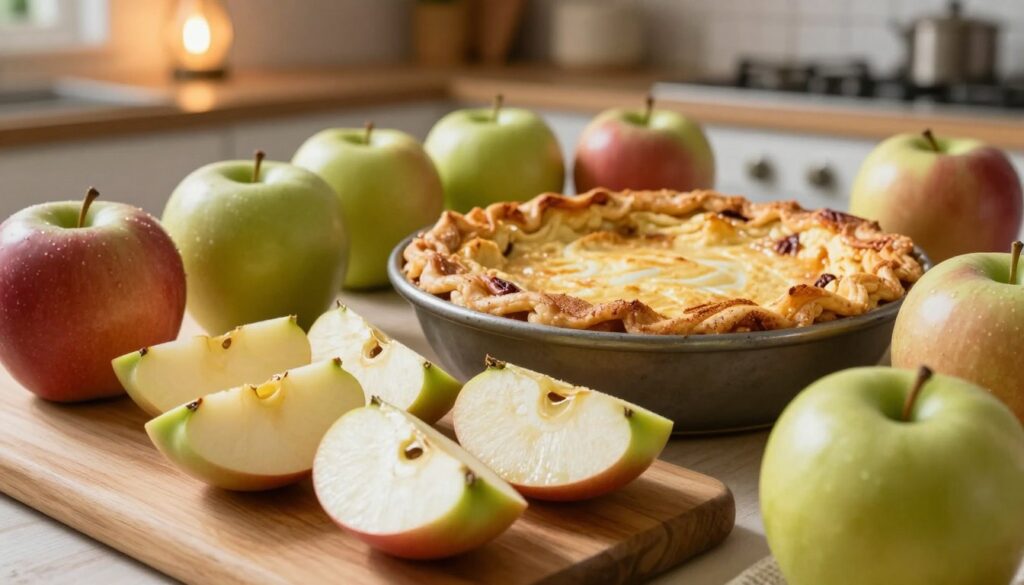
750g cooking apples, ideally Bramley, give the base a sharp, tangy flavour that cuts through the sweet sponge. Use peeled, cored and thickly sliced apples for even cooking.
Pantry Staples
This recipe needs 150g of caster sugar in total, split between the apple base and the sponge topping. Cream 125g softened unsalted butter with caster sugar to build a light texture.
- 125g self-raising flour for a reliable rise.
- 2 large eggs at room temperature to bind the sponge.
- 1 teaspoon vanilla extract and the zest of half a lemon for brightness instead of lemon juice.
| Ingredient | Quantity | Purpose |
|---|---|---|
| Cooking apples (Bramley) | 750g | Tart base |
| Caster sugar | 150g (total) | Sweetens fruit and sponge |
| Unsalted butter | 125g | Light, creamed sponge |
| Self-raising flour | 125g | Gives rise |
| Eggs | 2 large | Bind and structure |
These ingredients are common in most kitchens, so the dish is easy to prepare and reliable every time.
Preparing the Apple Base
Begin by warming the oven to oven 180c. This steady heat helps the cooking apples soften evenly and keeps their texture just right.
Lightly butter a baking dish then place sliced apples in a single layer so they form an even base for the sponge. Spread them out to help heat circulate.
Sprinkle the apples evenly with half the sugar to draw out juices and create a syrupy layer beneath the cake. This small step gives the pudding a glossy, caramelised base.
Bake the apples for about 15 minutes until they are tender but still hold their shape. Fifteen minutes is enough to soften the fruit without turning it to mush.
Once the apple layer is ready, remove the dish and set it aside while you prepare the sponge. A suitable baking dish matters: it lets the heat reach every slice and keeps the apple layer neat for the next stage.
- Tip: use cooking apples for tart flavour and good structure.
- Timing: check after 10 minutes and finish at 15 minutes for best results.
Creating the Perfect Sponge Mixture
A light, well-aerated sponge begins with patient creaming and careful folding to keep the texture airy.
Creaming the Butter and Sugar
Start by beating 125g softened butter with the caster sugar until the mix is pale and fluffy. This step builds the air that gives the sponge its light texture.
Incorporating Eggs
Beat in the eggs one at a time. If the batter looks like it might curdle, add a spoonful of flour between additions to stabilise the mixture.
Folding in Flour
Gently fold 125g self-raising flour into the batter to keep the air. Add 2–3 tablespoons of milk so the batter reaches a soft dropping consistency ready to spoon over the apples.
- Tip: a teaspoon of vanilla extract and lemon juice zest lifts the flavour.
- Do not overmix; a few streaks are better than a dense sponge.
- Spoon the batter evenly to form a golden, light sponge during the final bake.
Assembling and Baking the Dish
Carefully spoon the sponge mixture over the warm apples, spreading gently so the batter sits atop the fruit and does not sink into the base.
Place the baking dish on the middle shelf of a preheated oven at oven 180c to start the final bake minutes. This position helps the sponge brown evenly while keeping the apples tender below.
Bake for 35–40 minutes. During these minutes the sponge will rise, turn golden and form a light crust that contrasts with the juicy apples underneath.
Check the minutes sponge takes to set by pressing the top lightly; it should spring back when done. If the centre feels soft, give it a few more minutes and test again.
- Step: spoon the sponge mixture over the apples topped light and avoid pressing down.
- Timing: bake minutes total 35–40 to ensure the sponge is fully set.
- Tip: rotate the dish once halfway through if your oven runs hot.
This step balances a crisp, golden sponge with a rich, fruity base — the hallmark of a classic eve pudding recipe ready to serve warm.
Serving Suggestions for a Cosy Tea Time
Bring the baking dish to the table and let the steam and scent welcome everyone. Serve the warm eve pudding straight from the oven to keep the sponge soft and the fruit juicy.
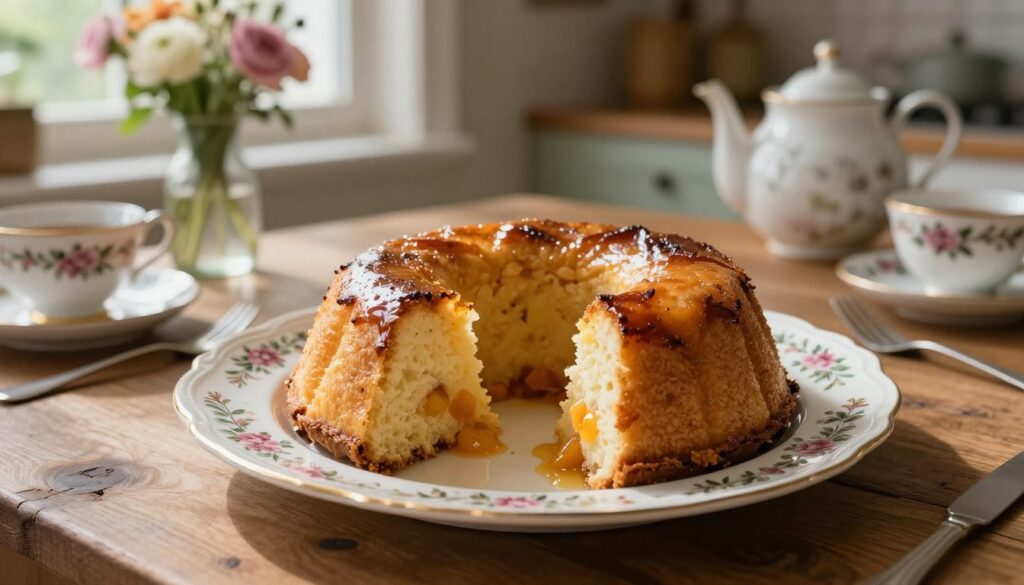
Traditional Accompaniments
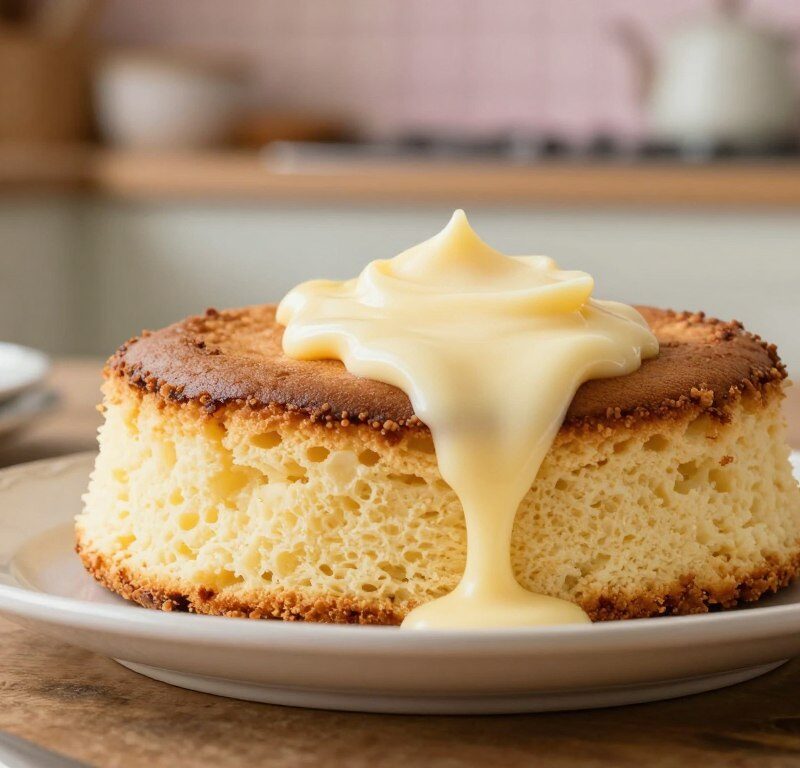
Custard is the classic choice. A generous pour of hot custard complements the sharp apples and balances the sweet sponge.
If you prefer something richer, pour cold cream over each serving for a velvety contrast. Vanilla ice cream also works well — the cold cream melts into the warm sponge for a lovely temperature contrast.
- Serve warm: spoon the pudding straight from the dish for a rustic feel.
- Custard or cream: both lift the overall flavour; custard gives warmth, cream adds richness.
- Ice cream: a scoop of vanilla ice cream makes this dessert feel indulgent.
- Be ready: have your custard or cream warmed or chilled before bringing the pudding out.
These simple touches make teatime comforting and memorable.
Creative Variations and Healthy Swaps
A few small swaps to ingredients can freshen this classic and make it lighter on sugar and fat. Reduce the caster sugar slightly if your apples are very sweet to balance the overall flavour.
For more fibre, replace half the self-raising flour with wholemeal self-raising flour. This keeps the rise but adds texture and nutrition.
Trim the fat: use a little less butter and add an extra spoonful of milk to the batter for a lighter sponge. The result stays soft but uses less fat.
“A pinch of cinnamon or nutmeg in the apple layer brings warmth that pairs perfectly with custard or ice cream.”
- Try lemon juice or lemon zest for brightness instead of extra sugar.
- Add a teaspoon of vanilla extract to lift the sponge flavour.
- These swaps keep the core structure: tender apple base with a light sponge on top.
| Swap | Why | Result |
|---|---|---|
| Less caster sugar | Reduce sweetness when apples are very sweet | Balanced flavour, lower sugar |
| Half wholemeal flour | Increase fibre | Heartier texture, more nutrition |
| Less butter + extra milk | Lower fat while preserving moisture | Lighter sponge with good crumb |
Storing and Reheating Your Leftovers
Good storage and gentle reheating bring this classic back to life after the first bake. Treat leftovers with care to preserve the contrast between the tart apples and the light sponge.
Fridge Storage
Store in an airtight container and keep the dish chilled for up to 3 days. This prevents the sponge from drying out and keeps the apple base moist.
If possible, transfer portions rather than the whole baking dish to limit repeated cooling and reheating.
Reheating Methods
Oven: Warm at a low temperature in the oven to restore the original texture. Reheating for a few minutes helps the sponge regain some spring and brings the apple juices back to life.
Microwave: Heat in short bursts of 30 seconds. This ensures even warming without making the sponge rubbery. Check between bursts until thoroughly warmed.
- Use the oven to best recover the sponge’s crumb and surface.
- Microwave for speed—use 30-second bursts to avoid overcooking.
- Remember that the batter and butter used originally mean the pudding keeps well but tastes best within 3 days.
Conclusion
A few easy steps turn sharp apples and a light sponge into a reliably pleasing teatime treat. This version of eve pudding keeps the fruit prominent while the sponge stays soft and airy.
Serve warm with a pour of custard, a spoonful of cream or a scoop of ice cream for a comforting finish. Each option brings a different texture and warmth to the plate.
The recipe is forgiving in baking time and ingredient swaps, so you can lower sugar and fat without losing the classic taste. Try small changes to suit your household and season.
Simple, dependable and friendly to make, this dish — inspired by mary berry — is one to keep in your rotation for many cosy tea times to come.
FAQ
What are the best apples to use for this classic pudding?
Can I use ordinary flour instead of self-raising flour?
How do I stop the apples going brown while I prepare them?
What’s the easiest method for making a light sponge topping?
Can I replace butter in the sponge with a lower-fat alternative?
How long and at what temperature should I bake the assembled dish?
Is it possible to make this dessert ahead of time?
What are classic accompaniments to serve with the pudding?
How can I add extra flavour to the apple base?
Can I make a gluten-free version of this recipe?
What’s the best way to reheat individual portions?
Can I add chopped nuts or dried fruit to the sponge?
How do I prevent the sponge from going soggy on top of the apple layer?
Mary Berry Eves Pudding
A classic British dessert that combines softly cooked apples with a light sponge topping, delivering a comforting and homely treat.
Ingredients
- 750g cooking apples (ideally Bramley), peeled, cored, and thickly sliced
- 150g caster sugar (split between the apple base and sponge)
- 125g unsalted butter, softened
- 125g self-raising flour
- 2 large eggs, at room temperature
- 1 teaspoon vanilla extract
- Zest of half a lemon
Method
- Preheat the oven to 180°C (350°F).
- Lightly butter a baking dish and arrange the sliced apples in a single layer.
- Sprinkle half of the caster sugar evenly over the apples.
- Bake the apples for about 15 minutes until tender but still holding their shape.
- In a bowl, cream the softened butter with the remaining caster sugar until pale and fluffy.
- Beat in the eggs one at a time, adding a spoonful of flour if the mixture curdles.
- Gently fold in the self-raising flour and add 2-3 tablespoons of milk to achieve a soft dropping consistency.
- Spoon the sponge mixture evenly over the warm apples.
- Bake for 35-40 minutes until the sponge is risen, golden, and springs back when lightly pressed.
- Serve warm with custard, cream, or ice cream.