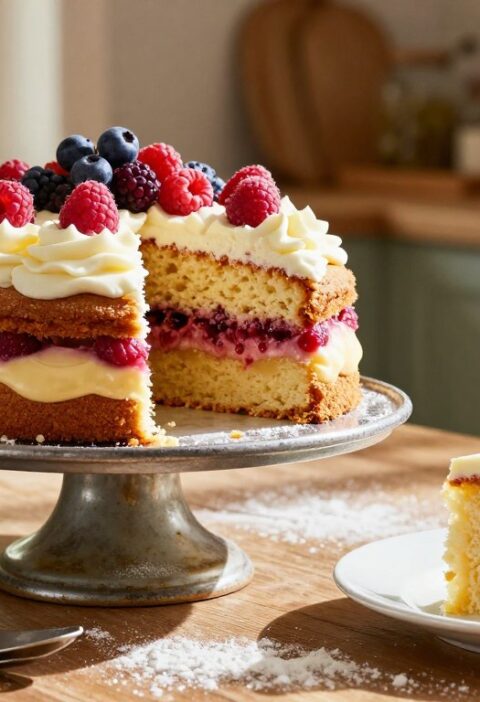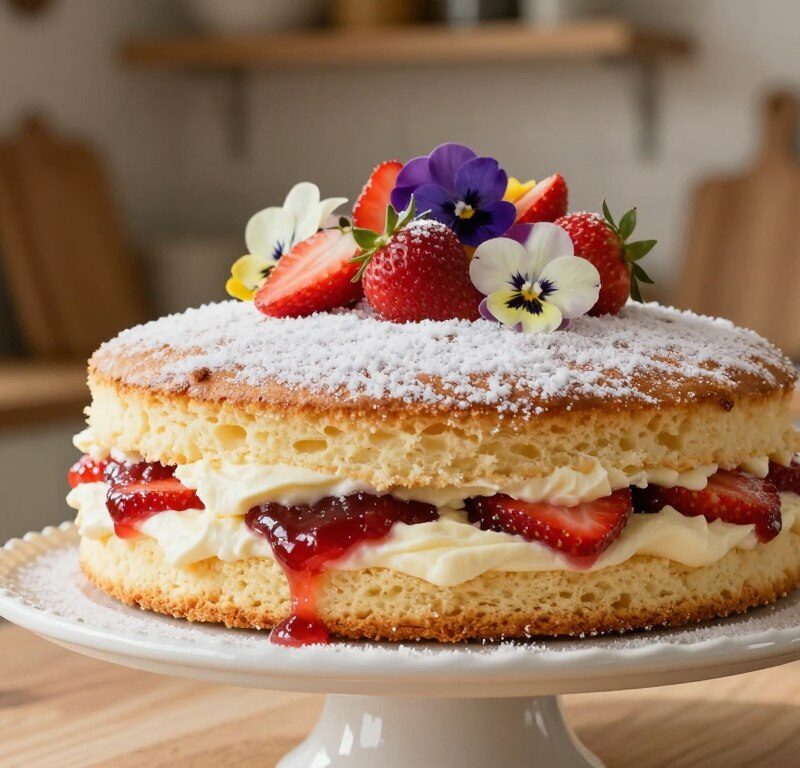
The Mary Berry Victoria sponge is a quintessential British teatime treat that has charmed home bakers for generations.
This simple recipe yields a light, airy sponge with a moist crumb and gentle flavour. It relies on quality butter, caster sugar and a layer of jam to lift the texture and taste.
Whether you are new to baking or a confident cook, the method is straightforward and reliable. You get consistent cakes that look lovely on the table and taste just as good as they look.
We also explore the cake’s timeless appeal and a few practical tips to help you bake a perfect slice every time.
Key Takeaways
- This classic recipe creates a light, airy teatime cake.
- High-quality butter and sugar make a noticeable difference.
- A thin layer of jam adds moisture and balance.
- The method suits both novice and experienced bakers.
- Simple ingredients deliver a refined, traditional flavour.
The Timeless Appeal of a Mary Berry Victoria Sponge
Few teatime cakes mix simplicity and elegance as well as the traditional Victoria sandwich. It remains a staple in British baking because the method is straightforward and the flavour is reliably refined.
Marie Rayner adapted this version from the Ultimate Cake Book and highlights how the recipe suits any occasion. Home cooks treasure it for its predictability and the warm ritual of serving a slice with tea.
Why it endures: the cake uses everyday ingredients, needs little specialised kit and rewards careful technique. That accessibility makes it ideal for busy bakers who still want a high-quality result.
“A simple recipe can teach you the fundamentals that lead to consistent, excellent cakes.”
| Quality | Suitable For | Typical Result |
|---|---|---|
| Ease of Prep | Novices & time-poor cooks | Reliable, even rise |
| Flavour | Afternoon tea & gatherings | Light crumb, balanced sweetness |
| Tradition | Family tables | Comforting, classic appeal |
Essential Ingredients for Your Sponge
Start with quality butter and flour to ensure a soft crumb and steady rise in your cake. Choose ingredients that give structure and flavour. Measure into a large bowl or a freestanding mixer to use the all-in-one method with confidence.
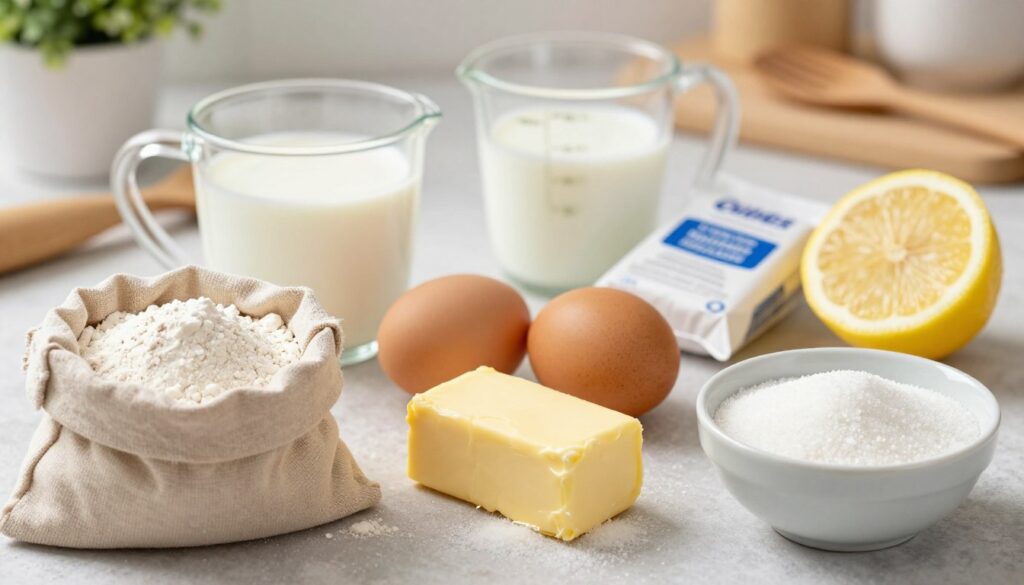
Choosing Quality Butter and Flour
Selecting the right butter or baking spread is crucial. Baking spread often yields a lighter rise than very soft butter, helping the sponge stay even.
Use plain strong or plain all-purpose flour of good quality so the cake keeps its shape without becoming heavy.
The Importance of Caster Sugar
Caster sugar dissolves faster than granulated sugar. That fine grain prevents a speckled texture and gives an even crumb to the sponge.
If needed, blitz granulated sugar in a food processor to make your own caster. Fresh, free-range eggs add richness and bind the dry ingredients together.
“A little care in choosing butter, flour and sugar saves steps later and yields a reliably light cake.”
| Ingredient | Role | Tip |
|---|---|---|
| Butter / Baking spread | Fat for tenderness | Choose baking spread for lighter rise |
| Caster sugar | Even sweetness & texture | Blitz granulated sugar to make caster |
| Flour | Structure | Use good-quality plain flour |
| Baking powder | Lift | Measure tsp baking powder precisely |
Follow these simple choices and your victoria sandwich or other sponge will be more consistent. For classic mary berry-style results, accurate measuring makes the biggest difference.
Mastering the All-in-One Baking Method
The all-in-one method lets you combine every ingredient in a single bowl for a quick, foolproof cake batter.
Start by preheating the oven to 180°C/160°C fan/Gas 4. Grease two 20cm (8in) deep loose-bottomed sandwich tins and line the bases with non-stick paper.
Place butter, sugar, eggs, flour and baking powder into a large bowl. Use an electric mixer and beat for about 2 minutes until the batter is smooth and pale.
Divide the batter evenly between the two tins — weighing helps for identical cakes. Smooth the top gently with a spatula so the surface is level before baking.
When the oven reaches temperature, put the tins on the middle shelf for an even rise. Bake until golden and set; this simple routine saves time and helps produce consistent results.
“A well-prepared tin and a smooth batter are the small steps that make a great tea-time cake.”
Achieving the Perfect Bake
Watch the cake closely in the final minutes: colour, spring and shrinkage tell you when it is done. A proper bake combines correct oven heat and the right baking time so the batter sets and the top colours evenly.
Signs Your Cake is Ready
Bake for about 25 minutes until the edges begin to pull away from the sides of the tins. This is a reliable visual cue that the structure has set.
- Spring test: the top should spring back when pressed lightly with a finger.
- Colour: a golden top shows the sugar has caramelised correctly.
- Timing: total minutes can vary with each oven, so check in the last few minutes.
When you remove the cakes from the oven, leave them in the tins for a few moments. Run a palette knife round the edge before turning each cake out.
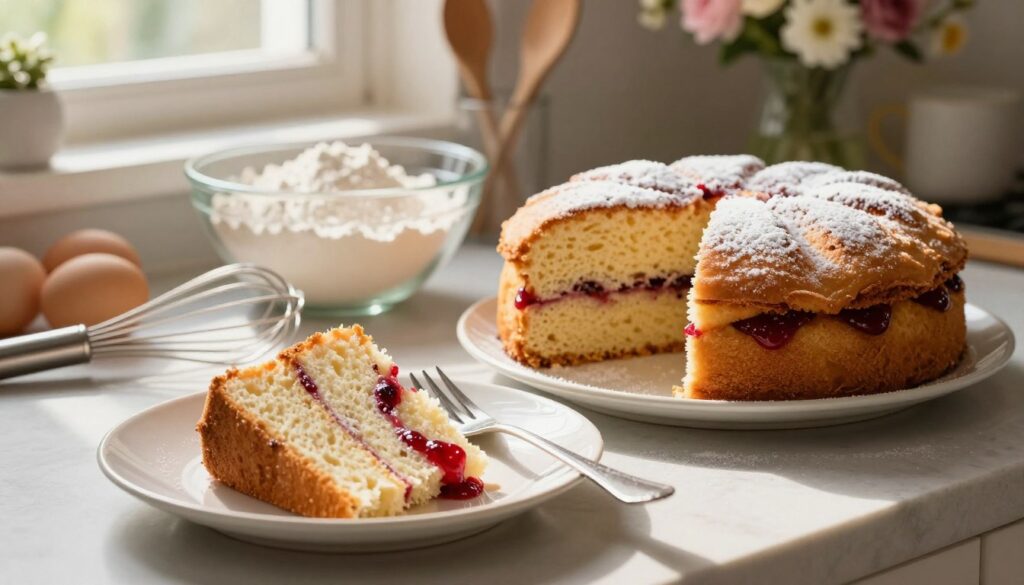
“A quick visual and tactile check saves a soggy bottom and ensures a light, even crumb.”
Transfer sponges to a wire rack to cool completely. This step stops steam collecting under the base and keeps the cake dry and ready for filling.
Creative Filling and Topping Ideas
The right filling transforms a plain bake into an inviting teatime centrepiece. Small swaps in jam, cream or icing change texture and sweetness with minimal fuss.
Classic Jam and Cream
High-quality jam gives the most reliable flavour and set. Bonne Maman is a popular choice for its fruitiness and consistent texture.
Tip: Spread a thin layer of jam to avoid a soggy middle, then add softly whipped cream for a balanced filling.
Adding Vanilla Buttercream
For a richer treat, use a simple buttercream. Beat 3 tablespoons softened butter with 1 tablespoon cream or milk, then fold in 260g icing sugar until smooth.
This buttercream pairs well with jam for a decadent two-layer filling that holds up at room temperature for a few hours.
Using Fresh Fruit
Fresh strawberries or raspberries with whipped cream make a light, seasonal option. This filling is best eaten the same day to keep the cake fresh.
For a zesty twist try lemon drizzle or a smear of lemon curd before dusting the top with caster sugar or icing sugar.
“A thin layer of jam and a light spread of cream keeps the balance between sweet and fresh.”
| Filling | Best For | Note |
|---|---|---|
| Strawberry jam + cream | Traditional teatime cake | Use Bonne Maman for reliable fruit flavour |
| Vanilla buttercream + jam | Celebration or indulgent treat | Buttercream recipe: 3 TBS butter, 1 TBS cream, 260g icing sugar |
| Fresh fruit + whipped cream | Summer parties | Consume same day to avoid sogginess |
| Lemon curd / lemon drizzle | Zesty alternative | Pairs well with a light dusting of caster sugar |
Tips for Successful Cake Storage
A few simple steps will help your cake stay fresh for longer.
Plan ahead: you can assemble your cake up to 8 hours before serving if you wrap it securely and refrigerate. This saves time and keeps fillings stable.
Serving: always bring the cake to room temperature before you serve it. That allows butter and cream to soften and the flavours to open up.
- Keep sponges wrapped in the fridge to protect jam and cream from spoilage.
- If you used a baking spread, store it chilled until you start baking to maintain structure.
- Cooked cakes freeze well; freeze layers flat and wrap tightly for later use.
- Proper storage prevents a dry crumb and keeps sugar and butter textures balanced.
“Keep your cakes cool and covered to preserve moisture and flavour.”
Adapting Your Recipe for Different Tin Sizes
Changing tin diameter needn’t mean guessing ingredient amounts — weighing keeps the results consistent.
Baking by weight is the best way to scale a recipe for 6-inch, 7-inch or 8-inch tins. Keep the ratio of flour, butter and sugar the same and adjust totals by weight to retain texture.
The all-in-one method still works. Place all ingredients in the bowl, use a mixer and beat until smooth. Divide the batter evenly between tins so each cake rises the same.
Adjust the amount of baking powder and eggs to match the weight of the flour. A tsp baking powder guideline helps for standard amounts; reduce or increase slightly when you scale up or down.
- Always grease and line tins to prevent sticking.
- Use a fan oven setting with care; check colour and timing as smaller tins bake faster.
- Cool cakes on a wire rack before filling to avoid a collapsed sandwich layer.
“Weighing ingredients removes guesswork and gives reliable results for any size cake.”
Conclusion
With careful weighing and the all-in-one method, even novice bakers can produce a perfect mary berry victoria sponge for tea. It’s a classic cake and a comforting treat that suits any afternoon.
Follow the recipe, use good flour and eggs, and measure your sugar and tsp of baking powder precisely. A smooth batter and the right oven time make the difference.
Choose a thin layer of jam or a light buttercream filling. A dusting of icing sugar or a neat icing finish lifts the look for a special occasion.
Allow the cakes to cool for a few minutes, then assemble. In under an hour, including cooling minutes, you’ll have a lovely victoria sandwich to share.
FAQ
What size and type of tin should I use for this classic sandwich cake?
Can I substitute caster sugar with granulated sugar or baking spread?
What’s the best method for combining the eggs, butter and flour?
How do I know when the sponge is fully baked?
Should I use jam, cream or buttercream for the filling?
How long can I store the finished cake and what’s the best way?
Can I adapt the ingredient quantities for different tin sizes or a single deep tin?
Is it important to sift the flour and icing sugar?
Can I add lemon drizzle or other flavours to the batter?
How do I prevent the top from doming or cracking?
Mary Berry Victoria Sponge
The Mary Berry Victoria sponge is a quintessential British teatime treat that has charmed home bakers for generations. This simple recipe yields a light, airy sponge with a moist crumb and gentle flavour.
Ingredients
- 200g unsalted butter or baking spread
- 200g caster sugar
- 4 large free-range eggs
- 200g plain flour
- 1 tsp baking powder
- Strawberry jam
- Whipped cream
Method
- Preheat the oven to 180°C/160°C fan/Gas 4.
- Grease two 20cm (8in) deep loose-bottomed sandwich tins and line the bases with non-stick paper.
- Place the butter, sugar, eggs, flour, and baking powder into a large bowl.
- Use an electric mixer to beat for about 2 minutes until the batter is smooth and pale.
- Divide the batter evenly between the two tins and smooth the top gently with a spatula.
- Bake in the preheated oven for about 25 minutes until golden and set.
- Check if the cakes are done by ensuring the edges pull away from the sides and the top springs back when pressed.
- Leave the cakes in the tins for a few moments, then run a palette knife around the edge before turning each cake out.
- Transfer the sponges to a wire rack to cool completely.
- Once cooled, spread a thin layer of strawberry jam on one sponge, add a layer of whipped cream, and place the second sponge on top.