The classic teatime treat gets a wholesome update in this simple, reliable bake. Using 225g of wholemeal self-raising flour gives the scones a nutty, hearty flavour that feels indulgent yet balanced.
Ready in about 30 minutes, the recipe suits busy cooks and baking beginners alike. It teaches basic techniques — rubbing cold butter into the flour, pressing rounds without twisting and brushing tops with milk — to achieve a soft, slightly crumbly texture.
Follow this friendly guide and you’ll produce consistent results every time. Try the companion cheese scone tips at Mary Berry cheese scone recipe for more oven and tool suggestions.
Key Takeaways
- Uses 225g wholemeal self-raising flour for a nutty flavour and good texture.
- From mix to cooling takes roughly 30 minutes, ideal for quick baking sessions.
- Simple steps — rub in butter, press cutters straight down, brush with milk — improve rise and colour.
- Beginners can expect soft, slightly crumbly results that suit afternoon tea.
- Use a sharp 5cm cutter and a wire rack to prevent soggy bases after baking.
Why You Will Love Mary Berry Wholemeal Scones
Light, nutty and reliably tender, these scones bring comforting flavour to breakfast or afternoon tea.
Soft and slightly crumbly, the texture feels indulgent without being heavy. The wholemeal flour gives a pleasant earthiness that pairs beautifully with clotted cream or jam.
These scones are ideal for a quick bake when you need something nourishing and familiar. They work for breakfast, a casual tea or a weekend treat.
“A classic, straightforward recipe that helps bakers of every level get dependable results.”
The method keeps steps simple, so you spend less time fussing and more time enjoying a warm scone. Versatile toppings mean you can go sweet or savoury in a heartbeat.
- Nutty flavour: pairs with clotted cream and preserves.
- Light texture: superior to many heavier store-bought options.
- Dependable recipe: simple steps for consistent results.
Essential Ingredients for Your Scone Dough
The texture and rise of your bake hinge on choosing the correct flour and leavening.
Selecting the Right Flour
Measure exactly 225g wholemeal self-raising flour into a large bowl. Precise weighing sets the base for a consistent dough and good rise.
Stir in 1 tsp baking powder to guarantee lift. The extra powder ensures the mixture stays light when baked.
Rub in 55g cold, cubed unsalted butter so the mixture becomes crumbly. Add 40g light brown sugar if you prefer a touch of sweetness.
Pour in about 150ml buttermilk to bind the dough. If you lack buttermilk, add a teaspoon of lemon juice to milk and leave briefly to thicken.
- For savoury batches, fold grated cheese into the dry ingredients before adding liquid.
- Always use fresh flour and powder; stale ingredients reduce the final rise.
“Careful measuring and fresh ingredients make the difference between a dense bake and a tender, airy scone.”
Preparing the Oven and Workspace
Start by setting the oven hot and your counter clear so the dough meets heat and space straightaway.
Preheat oven to 220°C (200°C fan). This high temperature helps a rapid rise and a light crumb in the finished mary berry scones.
Clear the work surface. A tidy bench makes shaping easier and protects the cold butter you need for a good texture.
Line a baking tray with baking parchment to prevent sticking and to help an even, golden colour on the bases and tops.
Check the oven settings precisely before you start. Accurate heat is the secret to a professional-looking wholemeal result.
Organise tools—cutter, mixing bowl and a baking rack—so you can work quickly and keep ingredients cool.
“A properly prepared oven and workspace can turn a good recipe into a great bake.”
| Step | Why it matters | Quick tip |
|---|---|---|
| Preheat oven to 220°C (200°C fan) | Ensures rapid rise and even bake | Allow full preheat before placing tray inside |
| Line tray with parchment | Prevents sticking and browning spots | Use fresh parchment for best results |
| Tidy workspace | Makes shaping quicker and keeps butter cold | Clear a space at least 30cm square |
| Arrange equipment | Saves time and reduces handling | Have cutter and rack within arm’s reach |

Mixing the Dough to Perfection
Cold butter and a gentle touch make all the difference when you want light scones that slice well. Use a chilled bowl and work quickly so the fat stays cold.
Rubbing in the Butter
Tip the flour and baking powder into the bowl. Add the cubed cold butter and rub with your fingertips until the mixture resembles fine breadcrumbs.
A good butter rub prevents toughness and helps the scone lift evenly in the oven.
Achieving the Right Consistency
Stir the milk in with a knife and fold gently. Stop as soon as the dough just comes together — the dough should be soft but not sticky.
- If too dry, add a splash more milk; if too wet, dust in a little more flour.
- Add lemon zest or grated cheese now if you want extra flavour.
- Ensure the baking powder is evenly distributed for a consistent rise.
| Stage | What to check | Quick action |
|---|---|---|
| Rubbing butter | Mixture resembles fine breadcrumbs | Use fingertips, keep butter cold |
| Mixing liquid | Dough soft, not sticky | Stir with knife; stop early |
| Final texture | Light, even crumb after baking | Handle minimally; chill briefly if warm |
“Gentle handling and a cold butter rub are the quickest ways to a tender scone.”
Shaping and Cutting Your Scones
A tidy working surface and a steady hand make all the difference when forming scones.
Turn the dough onto a lightly floured surface and pat it gently to about 2.5cm thick. This thickness gives even baking and a good rise.
The Importance of a Clean Cut
Use a 5cm plain cutter and press straight down onto the dough. Do not twist the cutter — twisting seals the edges and stops the scone from rising properly.
Place each round onto a tray that has been dusted or lined so the bases do not stick. Putting scones onto lightly floured surfaces before baking helps them keep their shape.
- Press firmly and lift the cutter straight up.
- Handle the dough as little as possible to protect the cold butter pockets.
- Always brush tops with a little milk for a golden finish.
“A clean cut and careful placement are small steps that deliver a big rise.”
| Action | Why it matters | Quick tip |
|---|---|---|
| Pat dough to 2.5cm | Ensures even bake and texture | Use a ruler if unsure |
| Press cutter straight down | Preserves sharp edge for rise | Do not twist the cutter |
| Place onto lightly floured surface/tray | Prevents sticking and distortion | Space pieces about 2cm apart |
Baking for a Golden Finish
A short, high-heat bake is the secret to a light interior and a glossy, golden top.
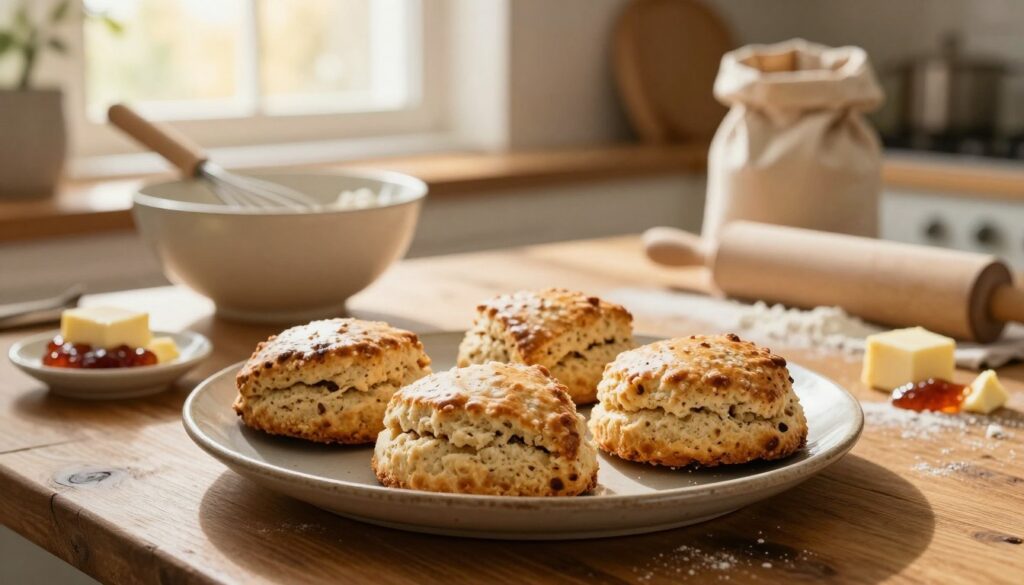
Place your prepared scones into the hot oven and bake for 12 to 15 minutes. The quick oven minutes allow the butter pockets to steam and the crumb to lift.
Before they go in, brush tops with a little milk. This simple step gives an appetising, golden shine to the tops as they brown.
When the baking time is complete, remove the tray and transfer the scones to a wire rack. Let them cool slightly so steam can escape and the bases stay crisp.
- Use a very hot oven to get an immediate rise and a light texture.
- Brush with milk for colour and a glossy finish.
- Rest on a wire rack to prevent soggy bottoms and keep the crumb tender.
“A blast of heat and a quick rest on a rack make all the difference to a perfect wholemeal bake.”
Troubleshooting Common Scone Issues
A few simple checks will usually explain why your batch turned out dense or flat. Keep solutions practical so you can correct the next bake quickly.
Preventing Dense Texture
Overworking the dough tightens gluten and makes bakes heavy. Fold gently and stop as soon as the dough comes together.
Wholemeal flour soaks up more liquid. If the mix looks dry, add a splash of milk or a tsp of buttermilk to keep the dough soft.
Ensuring an Even Rise
Always press the cutter straight down without twisting. Twisting seals the edge and prevents a good rise.
Check your baking powder is fresh and your oven is fully preheated to 220°C. A hot oven gives a quick lift and a light crumb.
Fixing Pale Tops
If tops are pale, brush them with a little milk just before they go into the hot oven. That simple step gives a glossy, golden finish.
Using a mix of self-raising flour and wholemeal can keep treats lighter. Add a tsp of lemon juice to the milk if you need extra lift when using more wholemeal.
- Dense? Reduce handling and add a touch more liquid.
- Fail to rise? Replace baking powder and verify oven temperature.
- Add-ins like grated cheese should be folded in sparingly so they do not weigh the dough down.
“Small changes in handling and heat often transform a heavy bake into a light, well-risen one.”
Creative Variations and Serving Suggestions
Serve them warm for best flavour, then experiment with sweet and savoury finishes.
For a simple treat, spread salted butter and drizzle local honey over each warm scone. The contrast of sweet and salty highlights the nutty wholemeal base.
For a classic British cream tea, pair with clotted cream and strawberry jam. This combination brings a rustic charm to any afternoon gathering.
If you prefer savoury, fold grated cheese and a pinch of black pepper into the dry ingredients before you add the milk. Reduce sugar in the mixture to balance salty toppings.
A lemon drizzle makes a light, zesty finish. Mix a little lemon juice with icing sugar and brush the tops after cooling slightly.
“These simple ideas keep this recipe versatile enough for breakfast, tea or a casual supper.”
| Serving style | Key additions | Best paired with |
|---|---|---|
| Sweet | Salted butter, honey, lemon drizzle | Black tea or coffee |
| Traditional | Clotted cream, strawberry jam | Afternoon cream tea |
| Savoury | Grated cheese, black pepper, reduced sugar | Tomato chutney or savoury chutney |
| Light option | Low sugar in mixture, fresh fruit | Herbal tea |
Conclusion
With careful handling and the right oven heat, you can achieve bakery-style results in under half an hour.
Master this simple recipe and you bring a comforting British bake into your kitchen. Use good quality wholemeal flour and follow the 12 to 15 minutes oven minutes for a light crumb and golden top.
Handle the dough gently and transfer the warm scones to a wire rack to cool. The wire and rack let steam escape so bases stay crisp.
Whether you add a touch of lemon or serve them plain, these bakes reward friends and family with reliable, delicious results.
FAQ
What type of flour should I use for wholegrain scones?
How do I achieve a light, crumbly texture that resembles fine breadcrumbs?
How much sugar and salt should go in the dough?
What is the best way to add milk without overworking the dough?
How thick should I roll the dough and how do I cut scones without twisting?
Should I brush the tops before baking and with what?
What oven temperature and baking time produce the best rise?
How do I prevent pale tops or uneven browning?
What causes dense scone texture and how can I fix it?
Can I add flavours like lemon or cheese, and when should they go in?
Is there a preferred way to cool and store scones?
How can I tell when scones are fully baked inside?
Any tips for working on a lightly floured surface without adding too much flour?
Can I use chilled grated butter instead of rubbing it in by hand?
Mary Berry Wholemeal Scones
The classic teatime treat gets a wholesome update in this simple, reliable bake. Using wholemeal self-raising flour gives the scones a nutty, hearty flavour that feels indulgent yet balanced.
Ingredients
- 225g wholemeal self-raising flour
- 1 tsp baking powder
- 55g cold, cubed unsalted butter
- 40g light brown sugar (optional)
- 150ml buttermilk (or milk with lemon juice)
- Milk for brushing the tops
Method
- Preheat the oven to 220°C (200°C fan).
- Line a baking tray with baking parchment.
- In a large bowl, mix the wholemeal flour and baking powder.
- Rub in the cold, cubed butter until the mixture resembles fine breadcrumbs.
- Stir in the buttermilk with a knife until the dough just comes together.
- Turn the dough onto a lightly floured surface and pat it to about 2.5cm thick.
- Use a 5cm cutter to cut out rounds, pressing straight down without twisting.
- Place the rounds on the prepared baking tray and brush the tops with milk.
- Bake in the preheated oven for 12 to 15 minutes until golden.
- Transfer the scones to a wire rack to cool slightly before serving.