This recipe uses simple pantry staples like self-raising flour, butter and mature cheddar to create warm, savoury treats. The method is designed to be easy to follow, so even a novice in the kitchen can enjoy success.
Serve them straight from the oven for the best texture and flavour. Light, fluffy and golden-brown, these British bakes make a perfect snack or an accompaniment to soup and salad.
With clear steps and a focus on technique, the guide helps you master the art of making these iconic savoury scones at home. Follow the instructions and you will impress family and friends with minimal fuss.
Key Takeaways
- The recipe relies on everyday ingredients and simple technique.
- Results are best when served warm from the oven.
- Instructions suit beginners and experienced bakers alike.
- Use mature cheese and cold butter for the best texture.
- Expect light, golden-brown scones that are easy to share.
Why You Will Love Mary Berry Mini Cheese Scones
These bite-sized savouries prove that simple pantry ingredients can deliver bakery-quality results in under 30 minutes.
Reliable, fail-proof baking: The reputation of mary berry means this recipe is designed for consistent outcomes. Home bakers often find it becomes a go-to in their recipe collection.
Versatile and family-friendly: Serve the scones at afternoon tea, pack them for a picnic or offer them as a quick savoury lunch. They also skip sugar, making them a more savoury option for children.
“Quick to make and hard to resist — a firm favourite in many households.”
- Ready in less than 30 minutes from start to finish.
- Uses everyday pantry staples for easy shopping.
- Adaptable recipes: add herbs or mustard for a twist.
Essential Ingredients for Your Savoury Bake
Start with the right pantry staples and the result will follow. Use 250g of self-raising flour as the base for a reliable texture. If you only have plain flour, add 1 1/4 tsp of baking powder per 150g to create a light lift.
Selecting the Right Cheese
Cheese defines the flavour. Stir in 125g of mature cheddar to give the scones a deep, savoury character. For more bite, fold in a little parmesan or another strong hard cheese.
The Role of Mustard Powder
Just 1/2 tsp of mustard powder adds a subtle tang that complements mature cheese. It brightens the mixture without overpowering it.
- Butter: Keep it cold and rub into the flour for flaky layers.
- Salt: A small pinch rounds flavours.
- Baking powder: Use as instructed to ensure a good rise.
Necessary Kitchen Equipment
Prepare your workspace and tools first so the 15 minutes in the oven gives the best results.
Essential kit includes measuring cups, measuring spoons and digital scales. A good cheese grater and a rolling pin make the job quicker and neater.
Use a sharp round cutter for shaping the dough. Do not twist the cutter when cutting — a straight press helps the scones rise evenly.
Line a baking tray with baking paper to stop sticking and to help even cooking. Have a clean wire rack ready to cool the bakes so the bottoms stay crisp.
| Tool | Why you need it | Tip |
|---|---|---|
| Digital scales | Accurate measures for consistent results | Weigh ingredients rather than spooning |
| Sharp round cutter | Shapes dough without compressing it | Press straight down; avoid twisting |
| Baking tray + baking paper | Ensures even browning and easy removal | Preheat the tray in the oven for crisper bases |
| Wire rack | Allows air to circulate while cooling | Transfer scones soon after the oven to prevent soggy bottoms |
Preparing the Dough Mixture
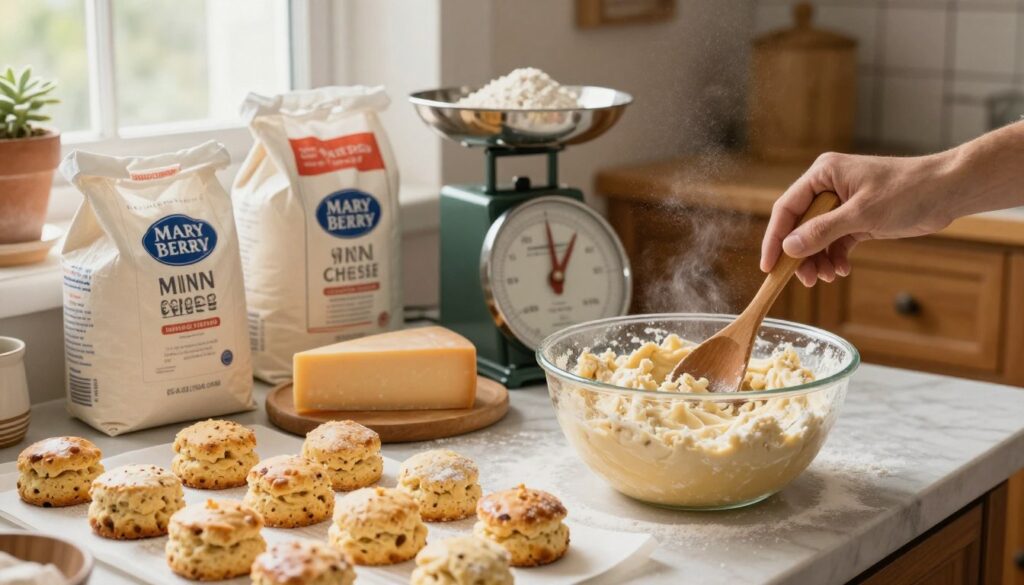
Begin at the countertop: rub chilled butter into the flour until the mix looks like fine breadcrumbs. This is a key sensory step — the crumbs should be even and cool to the touch.
Rubbing in the Butter
Measure 250g of flour into a large bowl and add 60g of cold butter in small cubes. Use your fingertips to rub the butter into the flour until the texture resembles breadcrumbs.
Crack one egg into a measuring jug and pour in milk until you reach 160ml. Whisk the liquid until smooth.
Gradually pour the egg-and-milk mix into the dry mixture, stirring as you go. Mix by hand so you can judge when the dough becomes a soft sticky dough.
- Tip: do not add all the milk at once — flour absorbency varies.
- Tip: use a large bowl so the dough can be brought together without overworking.
Mixing by hand helps you feel when the mixture is just right — firm enough to handle but still soft and slightly tacky. This makes for the best rise and texture in the final bake.
How to Shape and Cut Your Scones
A gently floured surface makes all the difference when you roll and cut the dough.
Lightly dust your work surface with flour before turning the mixture out. Pat the dough to about 2cm thickness using your hands; keep each movement light to avoid overworking the dough.
Use a sharp cutter to stamp out rounds. Press straight down — do not twist — so the rounds rise evenly in the oven.
If you lack a cutter, a clean glass will do the job well. Dip the rim in flour between each press to prevent sticking.
Handle the dough gently. Overworking makes the texture tough, so aim for quick, confident cuts.
Place the cut scones on the prepared tray with space for them to rise. Brush the tops with a little beaten egg or milk if you like a glossy finish.
“Light handling and a sharp cutter give the lightest, flakiest results.”
Achieving the Perfect Golden Bake
A searingly hot oven gives a fast lift and a glossy crust to your small bakes.
Preheat to 220°C (200°C fan) so the heat acts immediately when the tray goes in. This helps the rounds rise quickly and brown on top.
Before baking, brush tops with a little milk and scatter extra grated cheese for colour and flavour. Place the rounds on a lined baking tray with space between each item to allow even baking.
Bake for 12–15 minutes until the scones have puffed and reached a deep, appetising golden colour. Keep an eye in the final minutes — ovens vary and colour can change fast.
- Check that baking paper sits flat to stop any cheese burning onto the metal.
- Use the fan setting if you want a slightly quicker, even bake.
- Brush with milk rather than egg for a softer sheen if preferred.
“Transfer to a wire rack straight from the oven so the base stays crisp and steam can escape.”
Cool on a wire rack for a few minutes before serving — this keeps the exterior crisp while the inside stays tender and moist.
Tips for Working with Kids in the Kitchen
Letting little ones join the baking process turns ordinary time into a hands-on learning moment. Start with clear, small tasks so each child feels successful.
Sensory Play for Little Bakers
Rubbing butter into flour is a tactile task children love. They can feel the mix change to fine breadcrumbs and learn how texture affects the dough.
Measuring ingredients teaches numbers and patience. Ask them to count spoonfuls and pour slowly while you watch and guide.
Building Confidence with Cutters
Using cutters is like playdough practice and improves fine motor skills. Encourage children to press straight down and lift gently.
Let them work on brushing milk on top of the rounds. Supervise closely near the oven, but give them small leadership tasks to boost confidence.
“Keep it relaxed — the aim is to enjoy learning together and to create tasty results.”
Customising Your Scone Flavours
Give your scone base a fresh twist by folding in herbs and spices before you shape the rounds.
Herbs and aromatics: Stir chopped chives, parsley or rosemary into the dry flour with 1/2 tsp of mustard powder. These herbs add bright, fresh notes that lift the savoury flavour.
Want heat? Add a pinch of cayenne powder or a small amount of finely chopped jalapeño to the dough. Keep the amounts modest so the spice complements rather than overwhelms.

Try different cheeses: Swap some mature cheese for red Leicester or a little grated parmesan for a nuttier profile. Small cubes of cooked bacon or ham also work well if you want a heartier snack.
- Adjust seasoning to taste — the base recipe is forgiving.
- Fold ingredients in gently to keep the texture light.
“Experimenting a little changes each batch into something new and delicious.”
Serving Suggestions for Afternoon Tea
Serve these warm rounds split and buttered for instant comfort and crowd-pleasing flavour.
Best served warm: Split each scone in half while still warm and pile on a generous knob of cold butter. The contrast between warm crumb and chilled butter is simple and satisfying.
Pairing with Chutney and Butter
Tangy accompaniments lift the savoury notes. Offer a sharp chutney or a sweet chilli jam alongside the butter to create a bright contrast of sweet, hot and savoury flavours.
For a heartier option, serve with a steaming bowl of tomato soup. The soup highlights the rich cheese element and turns teatime into a more substantial lunch.
- For breakfast, arrange warm scones with eggs and bacon for a filling start.
- On an afternoon spread, place them next to cakes and finger sandwiches for a savoury alternative.
“Split while warm, smear with cold butter and add a spoonful of chutney for a classic pairing.”
Storing and Reheating Your Treats
Store leftover scones in an airtight container at room temperature. They keep well for up to two days and will retain a soft crumb if kept away from direct heat or sunlight.
Avoid the fridge. Cold air dries the crumb and dulls the rich cheese flavour.
If you need longer storage, freeze the rounds for up to two months. Thaw them at room temperature before reheating.
To refresh: warm in the oven for 3–4 minutes. This short blast restores texture and revives the flavour. Serve with a little extra butter when reheating to rehydrate the interior and boost taste.
| Storage | How long | Best reheating |
|---|---|---|
| Airtight container (room temp) | Up to 2 days | Oven, 3–4 minutes |
| Fridge | Not recommended | Dries out; avoid |
| Freezer | Up to 2 months | Thaw, then oven 3–4 minutes |
“A quick few minutes in a hot oven brings back the bakery texture.”
Troubleshooting Common Baking Issues
Common faults in baking are easy to correct once you know what to check first.
No rise? Check that your self-raising flour is fresh and that you pressed the cutter straight down. Twisting the cutter compresses layers and prevents lift.
Dense crumb: Overworking the dough squeezes out air. Handle gently and keep the butter cold so the breadcrumbs-like texture stays intact.
Dough too wet: You may have added too much milk. Always add milk gradually from the jug until the mixture reaches a soft sticky dough you can handle.
Scones spreading: A soft mixture or a low oven temperature causes spreading on the tray. Preheat the oven well and avoid over-softening the butter when you work the dough.
Pale tops: Brush tops with a little egg or milk before baking to get a golden finish every time. A short blast in a hot oven for a few minutes browned the top best.
“Quick checks of ingredients and technique fix most problems and improve future bakes.”
| Issue | Likely cause | Quick fix |
|---|---|---|
| Little rise | Old flour or twisted cutter | Use fresh self-raising flour; press cutter straight |
| Dense texture | Overworked dough; warm butter | Handle gently; use cold butter; stop mixing early |
| Spreading | Too soft mixture or low oven | Chill dough briefly; raise oven temp; use fan if needed |
| Pale tops | No wash applied | Brush tops with egg or milk before baking |
Conclusion
, A few simple techniques turn basic pantry items into warm, shareable treats everyone will enjoy.
Mastering the mary berry approach makes home baking feel easy and rewarding. Measure your ingredients, handle the dough gently in a bowl and keep the butter cold.
Use a small dash of mustard powder and the right amount of salt and baking powder to lift flavour and texture. Remember to add milk gradually so the dough stays soft, not sticky.
These recipes give reliable, tasty results. With practice you will soon have a favourite cheese scone to share at teatime and beyond.
FAQ
What ingredients do I need to make these mini cheese scones?
How do I choose the best cheese for flavour and texture?
What is the role of mustard powder in the recipe?
Which kitchen equipment do I need?
How should I rub in the butter for the right dough texture?
My dough feels too sticky — what should I do?
How do I shape and cut the scones without them sticking?
Should I brush the tops with egg or milk before baking?
What oven temperature and baking time produce the best golden scones?
Can children help make these scones safely?
How can making scones be a good sensory activity for little bakers?
What flavour variations work well with this base recipe?
What are good serving suggestions for afternoon tea?
How should I store and reheat any leftovers?
Why did my scones not rise as expected?
How can I prevent tough scones?
Mary Berry Mini Cheese Scones
This recipe uses simple pantry staples like self-raising flour, butter and mature cheddar to create warm, savoury treats. Light, fluffy and golden-brown, these British bakes make a perfect snack or an accompaniment to soup and salad.
Ingredients
- 250g self-raising flour
- 60g cold butter, cubed
- 125g mature cheddar, grated
- 1/2 tsp mustard powder
- Pinch of salt
- 1 egg
- Milk (enough to make 160ml when combined with egg)
Method
- Preheat the oven to 220°C (200°C fan).
- Rub the cold butter into the self-raising flour until the mixture resembles fine breadcrumbs.
- In a jug, crack one egg and add enough milk to make a total of 160ml. Whisk until smooth.
- Gradually pour the egg and milk mixture into the flour mixture, stirring until a soft, sticky dough forms.
- Turn the dough out onto a lightly floured surface and pat it to about 2cm thickness.
- Use a sharp round cutter to stamp out rounds, pressing straight down without twisting.
- Place the cut scones on a lined baking tray with space between them.
- Brush the tops with a little beaten egg or milk for a glossy finish.
- Bake for 12-15 minutes until puffed and golden brown.
- Transfer to a wire rack to cool slightly before serving.