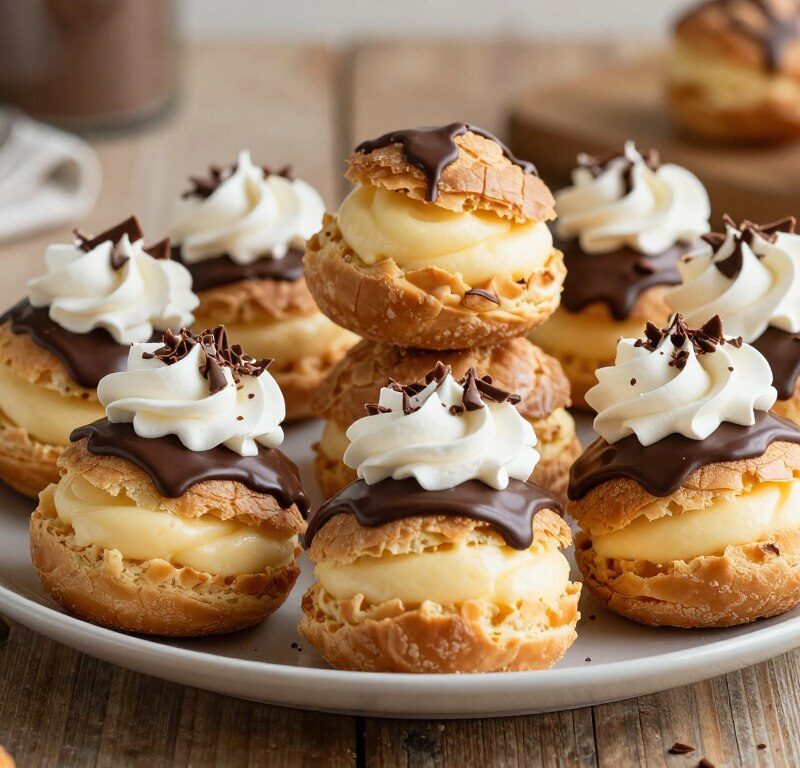
strong. Creating the perfect Mary Berry Profiteroles at home brings classic British elegance to your kitchen.
The trusted mary berry method in this recipe gives a foolproof route to light, airy choux pastry every time. Follow clear steps and simple techniques to balance crisp pastry with a silky filling.
Whether you are hosting a dinner or craving a sweet treat, these profiteroles offer a polished dessert that feels professional yet accessible. We will guide you through each stage so your homemade pastries look and taste like those from a bakery.
Key Takeaways
- Classic result: A reliable approach to achieve light choux pastry.
- Professional finish: Simple techniques give bakery-style presentation.
- Accessible steps: Clear instructions suitable for home cooks.
- Versatile dessert: Ideal for parties or a comforting treat.
- Trusted source: The mary berry approach simplifies tricky stages.
Why Everyone Loves Mary Berry Profiteroles
Home cooks love this version because it makes bakery-quality pastry feel surprisingly simple and quick. The method helps you make profiteroles with confidence, even if you have only a little time to prepare dessert.
The charm lies in the contrast of textures. A crisp choux shell gives way to silky cream and a glossy chocolate topping. That combination keeps the flavours rich but balanced, and appeals across generations.
Reliable and impressive: this recipe is one of those classic British recipes that rarely fails. It’s ideal for special occasions when you want a polished result without hours in the kitchen.
Try it once and you’ll see why cooks keep returning to this approach. The technique is forgiving, the finish looks professional, and the final taste proves why these profiteroles remain a firm favourite.
- Accessible for home bakers
- Quick to assemble when short on time
- Classic flavour pairing of cream and chocolate
Essential Ingredients for Perfect Choux Pastry
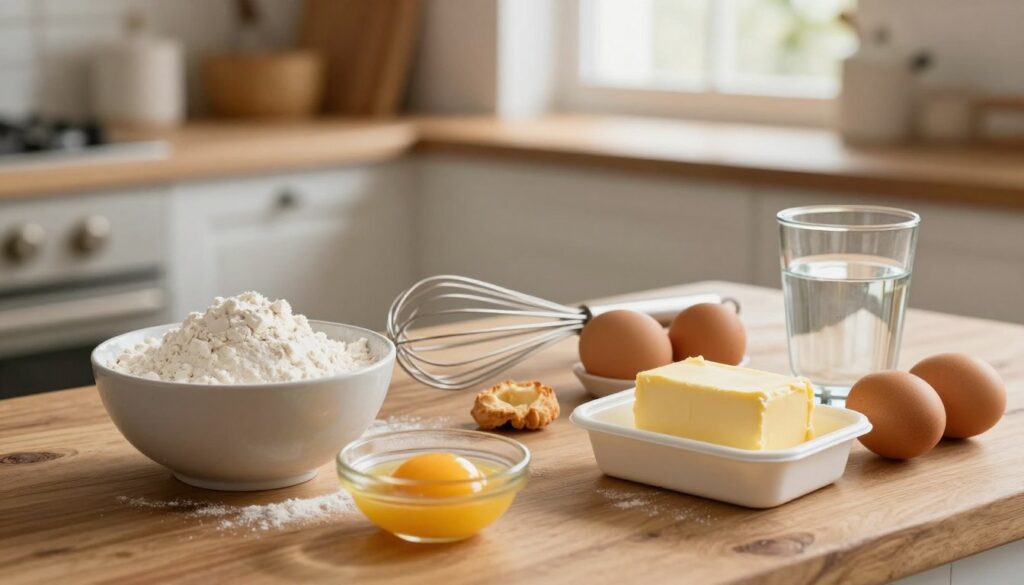
Before you begin, gather everything you need. Measure quantities and place them in a bowl so the process flows. This helps avoid pauses when you are beating in eggs.
Start on the stove: put 150ml water and 50g butter into a pan. Heat until the butter melted and the liquid comes to a boil.
The Science of Choux
When the water boils, you must remove heat before adding the plain flour. This stops the dough from going lumpy and makes it easier to form.
Use a sturdy wooden spoon to beat the mixture until it forms a smooth ball. Return the pan to the heat and heat cook for about a minute to dry the dough slightly.
The puffing action of choux comes from steam produced by water and eggs. Make sure eggs are at room temperature before you add them.
- Use quality flour for structure so buns rise well in the oven.
- Have all ingredients ready in a bowl to speed the process.
- Follow the recipe timings to achieve crisp shells ready for chocolate filling.
Mastering the Mary Berry Profiteroles Technique
Mastering technique turns simple ingredients into perfectly risen choux that bake into crisp, hollow shells.
Shooting the Flour
Start with 150ml water and butter 150 in a pan until the butter melted and the liquid boils.
Now remove heat and shoot the plain flour in all at once. Use a sturdy wooden spoon to beat until a smooth ball forms.
Return the pan briefly to heat cook the dough for about a minute. This dries the mixture so steam can puff the choux in the oven.
Beating in the Eggs
Allow the dough to cool for five minutes before you add eggs. This stops the egg from scrambling in the hot mixture.
- Beat eggs in slowly, making a glossy, thick batter after each addition.
- Aim for a dough that holds its shape when piped into buns or spooned on the tray.
- If tops look too sharp, dip a finger in water and smooth them before baking.
Tip: follow this recipe and you will master choux, creating light shells ready to be filled with cream and a drizzle of chocolate.
Achieving the Ideal Bake
Getting the oven settings right gives your choux the rapid steam lift it needs for airy buns.
Preheat to 220C / 200C fan / 425F so the shells get a fast burst of heat. This initial blast helps choux rise and set the shape.
After 10 minutes, drop the temperature to 190C / 160C fan / 375F. Slow baking then crisps the pastry through without burning the tops.
Follow the mary berry guidance: pierce the base of each bun to release steam. Return them to the oven for a further 5–8 minutes to dry the interior.
Look for a deep golden colour and a light feel when you lift from the tray. Proper temperature management — the 220c 200 start, then 190c finish — is the secret to crisp choux pastry.
| Stage | Setting | Time |
|---|---|---|
| Initial bake | 220C / 200C fan | 10 minutes |
| Finish bake | 190C / 160C fan | 5–12 minutes (see note) |
| Rest | Wire rack | Cool completely |
- Pierce each bun, then return to oven to ensure crispness.
- Cool on a wire rack to stop condensation softening the base.
- These steps give reliable results whether you add chocolate ganache or a cream filling.
Creating the Creamy Filling and Chocolate Ganache
Perfectly whipped cream and a smooth ganache bring bakery polish to your choux. This stage is quick but makes a big difference to the final taste and texture.
Whipping to Soft Peaks
Place double cream, icing sugar and a splash of vanilla in a large bowl. Whisk until soft peaks form—lift the whisk and the cream should hold shape gently.
Use the cream straight away or chill briefly. This keeps the pastry crisp when you assemble the profiteroles.
Preparing the Ganache
Heat cream in a pan until it is nearly boiling. Pour it over chopped chocolate and stir slowly until the mixture is glossy and smooth.
Cut buns in half or use a piping bag to inject the filling through the base. Drizzle ganache over the filled tops while still warm.
- Assemble just before serving to retain crunch.
- Use a wire rack when glazing for a neat finish.
- Store components separately in the fridge up to 24 hours if needed.
Expert Tips for Storing and Freezing
Treat freezing as part of your baking workflow to save time and keep quality high.
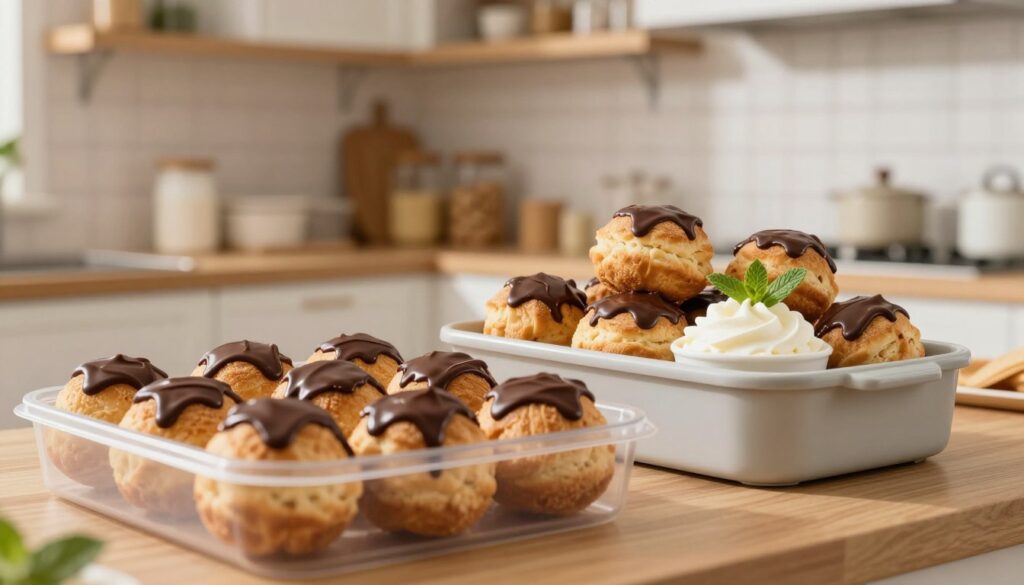
Unfilled profiteroles freeze brilliantly. Pack them in an airtight container for 2–3 months. When you have a little time, remove the box and let the buns defrost at room temperature for several hours so any trapped water evaporates.
Refreshing Your Buns
If the pastry goes soft, give a quick blast of heat. Pop the buns in a medium oven for 5 minutes to crisp the top and sides.
“Keep cream and pastry separate until the last moment to retain texture and flavour.”
- Store unfilled buns in an airtight container up to three days if not freezing.
- Defrost fully at room temperature before reheating.
- Once filled with cream and chocolate, serve within 24 hours; otherwise the texture suffers.
| Storage | Duration | Refresh |
|---|---|---|
| Fridge (unfilled) | Up to 3 days | Room temp then 5 minutes in oven |
| Freezer (unfilled) | 2–3 months | Defrost several hours, then 5 minutes in oven |
| Filled | Serve within 24 hours | Do not reheat after filling |
Conclusion
strong. Finishing these classic choux buns lets you enjoy a show-stopping dessert with minimal fuss. Follow the method and you will build real confidence in your baking.
Mastering temperature control and the gentle preparation of cream and ganache ensures light, airy shells and a glossy finish. The precise steps make it easy to get a golden, bakery-quality result every time.
Whether you are a beginner or more practiced, this mary berry approach gives a reliable path to professional results. Enjoy making and sharing these treats with family and friends at your next gathering.
FAQ
What oven temperature should I use to bake choux pastry?
How do I know when the buns are fully baked?
Can I replace plain flour with self-raising flour?
How much butter and water do I need for the pastry pan method?
What is the best way to add the eggs?
Why did my choux collapse after baking?
Can I freeze unbaked or baked choux buns?
How do I make a smooth chocolate ganache for topping?
What cream is best for filling and how do I get soft peaks?
How should I store filled profiteroles to keep them crisp?
Is there a trick to piping even-sized buns?
Can I make the dough on the hob and in what pan?
Mary Berry Profiteroles
Creating the perfect Mary Berry Profiteroles at home brings classic British elegance to your kitchen. This recipe gives a foolproof route to light, airy choux pastry every time.
Ingredients
- 150ml water
- 50g butter
- 150g plain flour
- 3 large eggs
- Double cream
- Icing sugar
- Vanilla extract
- Chopped chocolate
Method
- Preheat the oven to 220C / 200C fan / 425F.
- In a pan, heat 150ml water and 50g butter until the butter melts and the liquid boils.
- Remove from heat and add 150g plain flour all at once, stirring with a wooden spoon until a smooth ball forms.
- Return the pan to heat and cook for about a minute to dry the dough slightly.
- Allow the dough to cool for five minutes before beating in the eggs one at a time until glossy and thick.
- Pipe or spoon the dough onto a baking tray, smoothing any sharp tops with a wet finger.
- Bake for 10 minutes at 220C, then reduce the temperature to 190C / 160C fan / 375F and bake for an additional 5-12 minutes.
- Pierce the base of each bun to release steam and return to the oven for 5-8 minutes to dry the interior.
- Cool on a wire rack.
- Whip double cream with icing sugar and vanilla until soft peaks form.
- Heat cream until nearly boiling and pour over chopped chocolate, stirring until smooth to make ganache.
- Cut buns in half or use a piping bag to inject the cream filling, then drizzle ganache over the tops.