This classic mary berry marzipan recipe is a staple in many British homes. It delivers a rich, nutty flavour that easily outshines shop-bought alternatives.
The method is simple and gives a smooth, pliable dough perfect for festive treats. Clear, step-by-step guidance helps both novices and seasoned bakers get professional results in their own kitchens.
Use this berry marzipan to cover traditional fruit cakes or to shape decorative figures for special occasions. Its versatility makes it ideal throughout the year, from Christmas to weddings and birthday bakes.
Follow the authentic guide and you will create a sweet almond paste that balances delicate flavours with a firm, reliable texture. The section that follows outlines essential ingredients and techniques that make this creation a timeless favourite across the United Kingdom.
Key Takeaways
- Authentic recipe yields a superior, nutty flavour.
- Technique creates a smooth, pliable dough for easy shaping.
- Suitable for both beginners and experienced bakers.
- Versatile uses: cake covering or decorative modelling.
- Focus on texture and balanced almond sweetness.
- Perfect for British festive and everyday celebrations.
The Appeal of Mary Berry Marzipan
This classic almond paste blends ground almonds, sugar and egg into a silky, pliable dough that home cooks treasure for its rich, nutty flavour. It feels familiar and reliable, the sort of recipe that turns simple ingredients into something special.
Used beneath icing on fruit cakes, it gives a sweet, stable base that complements dense, spiced sponges. The same paste can be rolled and modelled to make festive decorations that look professional but are easy to create at home.
Many bakers prefer these recipes because traditional techniques produce consistent results. The balance of sugar and almond lifts the taste without overwhelming the cake, so even plain bakes feel elevated.
- Rich, nutty flavour and smooth consistency.
- Ideal almond paste for covering cakes or shaping decorations.
- Gives homemade bakes a polished, authentic finish.
Essential Ingredients for Success
Choosing the right staples sets the foundation for a flawless almond paste every time. Good ingredients make mixing and shaping much easier.
Quality Almonds
Ground almonds are the backbone of this recipe. Use 250g of fresh, high-quality ground almonds to avoid any bitter flavours.
The freshness of the almonds affects both aroma and texture. Fresh ground nuts give a creamier paste that rolls and models well.
Sugar Selection
Balance is key. The recipe calls for 125g icing sugar and 125g caster sugar to create a smooth, not-grainy mix.
- 125g icing sugar helps the paste bind and remain pliable.
- 125g caster sugar balances sweetness and improves mouthfeel.
- Add exactly 1/2 tsp almond extract to lift the natural nutty notes.
Tip: Choosing the right ingredients at the start saves time and gives a consistent texture when you make mary berry marzipan.
Preparing Your Workspace
Start with a dry, uncluttered surface to avoid unwanted moisture in the dough.
Before you begin these recipes, clear and wipe your worktop. Moisture can ruin the texture, so work on a dry surface.
Gather tools next: a large mixing bowl, a wooden spoon or spatula and a sieve for the icing sugar. These cut time and keep the process tidy.
Set aside a clean area for kneading. A smooth, flour-dusted board helps you shape the paste without it sticking.
- Have measuring spoons and scales ready to avoid pauses.
- Keep a damp cloth nearby to wipe hands and surfaces quickly.
- Lay cling film within reach to wrap the paste as soon as it’s formed.
Preparing everything in advance lets you focus on technique and yields a neater finish. For reliable results follow the mary berry guidance and keep distractions to a minimum.
Combining Dry Ingredients
Begin with the dry components to build a reliable base.
In a large bowl, tip in the ground almonds, icing sugar and caster sugar. Use measured amounts so the balance is right and the texture stays consistent.
Stir the dry mixture thoroughly to break up any lumps. A wooden spoon or spatula works well for this. Keep stirring until the colour and grain look even throughout.
Mary highlights that integrating the sugar and almonds first helps the mixture bind evenly when liquid is added. This step prevents sticky patches and gives a smooth paste for rolling or modelling.
| Ingredient | Role | Tip |
|---|---|---|
| Ground almonds | Body and flavour | Sift if slightly clumped |
| Icing sugar | Binding and smoothness | Use a sieve for best results |
| Caster sugar | Balance sweetness and texture | Mix well to remove grit |
Adding Flavour and Binding Agents
A careful balance of flavour and liquid is what turns dry nuts and sugar into a smooth, workable paste.
Stir in ½ tsp of almond extract and 1 tsp of lemon juice to brighten the profile and cut through the sweetness. The lemon juice acts as a balancing agent so the sugar does not overwhelm the delicate nutty notes.
Gradually add one large, beaten free-range egg to the dry mixture while mixing in a large bowl with a wooden spoon. Do this slowly so the mixture binds without becoming overly wet.
If you prefer an egg-free option, use 2 tbsp golden syrup instead. This gives a similar texture and keeps the dough pliable for rolling and shaping.
- Stir in ½ tsp almond extract and 1 tsp lemon juice for flavour balance.
- Add the beaten egg bit by bit until the mixture forms a soft dough.
- For an egg-free mix, substitute 2 tbsp golden syrup to bind the ground almonds.
| Ingredient | Amount | Purpose |
|---|---|---|
| Free-range egg | 1 large, beaten | Binding and moisture |
| Golden syrup | 2 tbsp (egg-free) | Binding alternative |
| Almond extract | ½ tsp | Enhances almond flavour |
| Lemon juice | 1 tsp | Balances sweetness |
Kneading for the Perfect Texture
Spend just one to two minutes coaxing the dough and you will notice the texture change under your hands.
Turn the dough onto a clean surface lightly dusted with icing sugar. Knead gently for 1–2 minutes until the mixture feels perfectly smooth.
“Knead briefly; over-working can release the nut oils and alter the finish.”
mary berry advises against over-kneading. Pressing too long may cause the almond oil to come out, which can leave the paste oily and soft.
The aim is a pliable mass that rolls easily and covers cakes without tearing. If the marzipan feels slightly sticky, add a pinch more icing sugar and knead again briefly.
- Work lightly and keep movements even.
- Stop as soon as the paste is smooth and elastic.
- Wrap in cling film straight away to rest before rolling.
Chilling and Resting the Mixture
A short rest in the fridge transforms a sticky ball into a smooth, workable sheet.
Wrap the marzipan tightly in cling film and refrigerate for at least 30 minutes before you plan to use it. This simple pause makes a big difference when you need thin, neat layers.
The resting time allows the ingredients to fully hydrate. As the dough cools it firms up and becomes far easier to roll or shape. This firmness helps when covering large or heavy fruit cakes.
“Chill for half an hour; a rested paste is kinder to work with and gives a cleaner finish.”
- Wrap tightly to prevent drying and odours.
- Refrigerate for at least 30 minutes to set the texture.
- Use chilled dough for even, thin layers and tidy decorations.
| Step | Action | Why it helps |
|---|---|---|
| Wrap | Cling film tightly | Prevents crusting and absorbs smells |
| Chill | Refrigerate 30+ minutes | Firms the dough for rolling |
| Rest | Bring to room temp briefly before rolling | Makes shaping smoother without sticking |
Troubleshooting Common Issues
Most sticky or cracked batches can be rescued with a few simple adjustments at the bench.
Fixing Sticky Dough
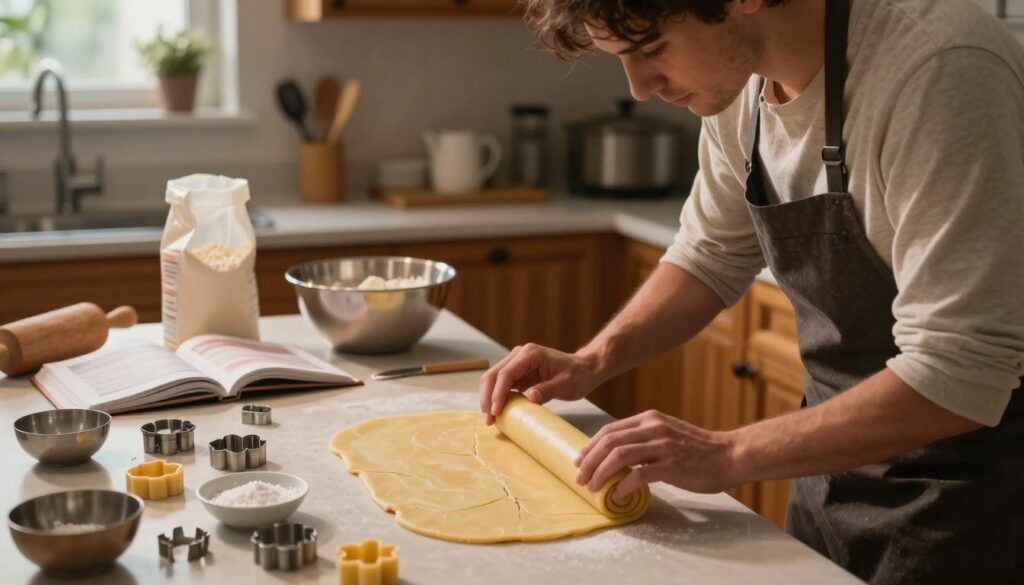
If your marzipan feels too tacky, add a tablespoon of icing sugar at a time. Knead gently until the dough reaches a smooth, non-sticky feel.
Keep kneading sessions brief. Over-working for more than a couple of minutes can force out oils and ruin the finish.
Correcting Dryness
When the mixture cracks while rolling, restore elasticity with a few drops of water or orange juice. Knead in only tiny amounts until the dough softens.
This trick brings back pliability without making the paste overly wet or sticky.
Preventing Cracks
Always let the paste rest for at least 30 minutes in cling film before rolling. A chilled, relaxed dough rolls evenly and resists tearing on a lightly dusted board.
“If the mixture becomes oily, it is likely due to over-kneading; keep handling time to just 1–2 minutes.”
- Use extra icing sugar sparingly to correct stickiness.
- Add tiny liquid drops for dry, cracking batches.
- Rest chilled dough to avoid cracks when covering fruit cakes.
Creative Variations for Your Bake
Experimenting with flavour and colour gives your homemade paste a fresh, modern twist.
Chocolate twist: Stir 1 tablespoon of cocoa powder into the dry mix for a rich chocolate marzipan that pairs beautifully with dark sponge cakes.
Play with extracts: Try vanilla or a drop of rose extract to lift the aroma. A tiny change in extract can transform the whole batch.
For a fruitier note, swap the lemon juice for orange juice. Or fold in 1–2 teaspoons of freeze-dried raspberry or strawberry powder for vivid flavour.
- Add a single drop of gel food colouring to make bright decorations for festive cakes.
- Mix in ground hazelnuts or pistachios with the almonds for a different texture and nutty profile.
- Keep sugar levels steady when adding dry powders so the dough stays pliable.
“Small swaps yield big results — try one change at a time to find your favourite.”
Tip: Test tiny batches when you experiment. That way you protect the main mix and keep your recipes reliable.
Traditional Uses in British Baking
Traditional bakes rely on a neat layer of almond paste to create a clean finish and steady surface for icing.
mary berry marzipan is a firm favourite for Christmas fruit cake. It forms a smooth, stable layer under royal icing and helps keep rich sponges moist.
The same paste appears in Simnel cake, a classic Easter cake where a thin sheet of almond paste sits between layers or on top for decoration. mary berry often mentions this use in her recipe notes.
Let the paste dry at room temperature for 2–3 days before applying icing. This drying time gives a firm surface that resists tearing and reduces trapped moisture beneath the icing.
Beyond covering cakes, the versatile mix works as a filling for pastries or rolled into small balls and dipped in chocolate for bite-sized treats. These age-old recipes have been passed down and remain a staple of British baking.
| Use | Occasion | Tip |
|---|---|---|
| Under royal icing | Christmas fruit cakes | Dry 2–3 days for firm surface |
| Layer or topping | Simnel cake (Easter) | Roll thinly for neat finish |
| Filling / confections | Pastries, truffles | Chill before dipping in chocolate |
“Allow your paste to rest; patience gives a cleaner finish and longer-lasting cakes.”
Storing Your Homemade Marzipan
Store leftover paste correctly and it will be ready for your next bake with minimal fuss. Wrap the batch tightly in cling film and refrigerate for up to 2 weeks to keep moisture and flavour locked in.
If you need longer storage, freeze the paste for up to 3 months. Wrap in two layers — cling film first, then an airtight bag or container — to avoid freezer burn and retain pliability.
- Bring the marzipan to room temperature for 20–30 minutes before you roll or shape it for a cake.
- Keep it away from humidity; damp air makes the paste sticky and hard to handle.
- Label frozen portions with the date so you use older batches first.
| Storage | Duration | Tip |
|---|---|---|
| Refrigerator | Up to 2 weeks | Wrap tightly in cling film |
| Freezer | Up to 3 months | Double-wrap and use airtight container |
| Before use | 20–30 minutes | Bring to room temperature for easy rolling |
“Proper storage is key to maintaining moisture and pliability.”
Follow these simple steps and your batch, inspired by mary berry, will be ready in a few minutes when you need it for the next celebration.
Adapting for Dietary Requirements
A few simple swaps make this almond paste kinder to dietary needs without losing flavour.
Egg-free binding: Replace the beaten egg with 2 tablespoons of golden syrup. This keeps the dough soft and pliable for rolling a neat cake layer.
Finer texture: Use almond flour instead of coarser ground almonds for a smoother finish. The finer grind gives a silkier mouthfeel and a cleaner look under icing.
If you want to reduce sugar, increase the amount of ground almonds and cut the icing sugar by 25%. This maintains the almond flavour and improves texture while lowering sweetness.
For natural sweeteners, substitute refined sugar with honey or agave syrup. These keep the paste moist and preserve the essential almond profile when used sparingly.
“Small adjustments let everyone enjoy homemade marzipan, whatever their dietary needs.”
| Adaptation | Replacement | Effect on texture |
|---|---|---|
| Egg-free | 2 tbsp golden syrup | Pliable, easy to roll |
| Finer finish | Almond flour for ground | Smoother, silkier layer |
| Lower sugar | -25% icing sugar; more ground almonds | Less sweet, firmer texture |
| Natural sweetener | Honey or agave for sugar | Moist paste, retained almond flavour |
Professional Tips for Better Results
Simple timing and handling tips will improve the finish on every cake you cover.
Choose fresh ingredients: use fresh almonds and quality ground almonds to avoid any bitter notes. mary berry recommends this to protect the delicate almond flavour.
Handle briefly: avoid overmixing. Knead for only a few minutes so the texture stays smooth and non-oily.
Chill before rolling: rest the paste for 30–60 minutes so it firms and is easier to roll into a neat layer. Lightly dust your board with icing sugar to stop sticking.
- Use thin layers for a clean, professional finish under icing.
- Add 1 tsp of almond extract or a little citrus zest to enhance flavour without flooding the recipe.
- Work in short bursts of a few minutes to protect the paste and keep the surface even for cakes.
“A rested, gently handled paste gives the smoothest, most reliable finish.”
| Tip | Why it helps | Quick action |
|---|---|---|
| Fresh almonds | Better flavour and aroma | Inspect and smell before use |
| Chill | Prevents tearing and sticking | 30–60 minutes in fridge |
| Light dusting | Clean, thin layer | Use icing sugar sparingly |
Conclusion
Good marzipan finishes bring a homemade bake to life.
mary berry marzipan shows how simple steps make a reliable, tasty paste. This recipe helps you achieve smooth, balanced almond flavour with minimal fuss.
Use the tips on kneading, chilling and flavouring with almond extract to improve your results. For festive decorating or a neat cake covering, the berry marzipan variant adds bright flavour to every slice.
Enjoy the process and share your results. We hope this guide inspires your next baking project and that your cake becomes a new family favourite.
FAQ
What is the basic recipe for marzipan following Mary Berry’s style?
Which type of almonds gives the best texture and flavour?
How much sugar should I use for a balanced sweetness?
Can I substitute almond extract with something else?
What is the role of lemon juice in marzipan?
How do I prepare my workspace to avoid mess and sticking?
What’s the best way to combine dry ingredients evenly?
How long should I knead marzipan for the perfect texture?
Why is chilling the mixture important and for how long?
My dough is sticky — how can I fix it?
The marzipan feels dry and crumbly — what should I do?
How can I prevent marzipan from cracking when rolled thin?
What creative variations can I try for bakes?
How is marzipan traditionally used in British baking?
What is the best way to store homemade marzipan?
Can marzipan be adapted for dietary requirements?
Any professional tips for smoother results?
Mary Berry Marzipan
This classic mary berry marzipan recipe is a staple in many British homes, delivering a rich, nutty flavour that easily outshines shop-bought alternatives. It creates a smooth, pliable dough perfect for festive treats.
Ingredients
- 250g ground almonds
- 125g icing sugar
- 125g caster sugar
- 1/2 tsp almond extract
- 1 large free-range egg, beaten
- 1 tsp lemon juice
Method
- Prepare your workspace by clearing and wiping your worktop to avoid moisture.
- In a large bowl, combine the ground almonds, icing sugar, and caster sugar. Stir thoroughly to break up any lumps.
- Add the almond extract and lemon juice to the dry mixture.
- Gradually add the beaten egg while mixing with a wooden spoon until the mixture forms a soft dough.
- Knead the dough gently on a clean, icing sugar-dusted surface for 1-2 minutes until smooth.
- Wrap the marzipan tightly in cling film and refrigerate for at least 30 minutes before use.