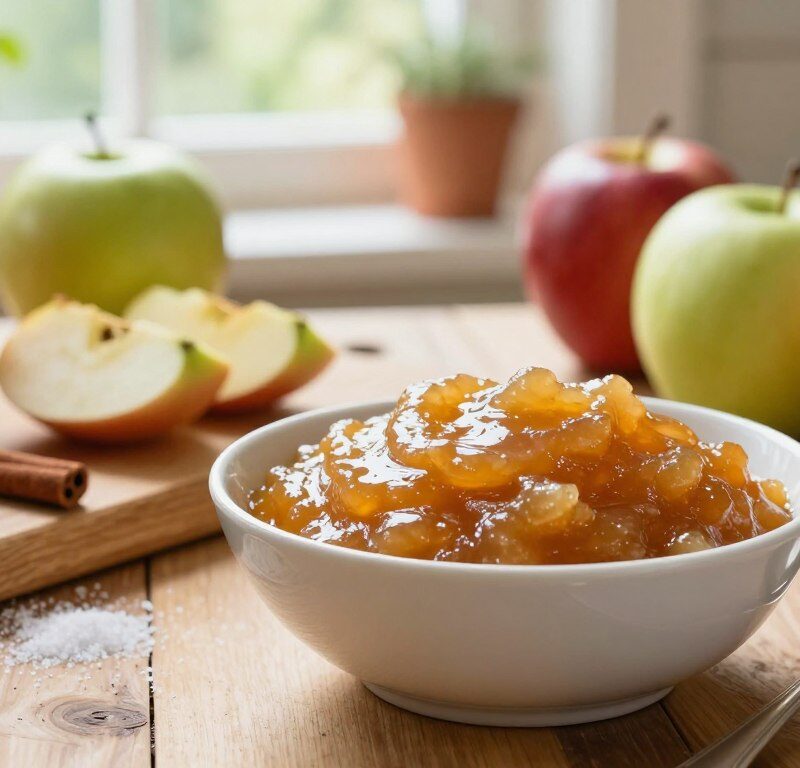
Discover a timeless, British-style purée that lifts roasted meat and simple puddings alike. This smooth, gently sweetened condiment combines fresh apples with a touch of sugar, butter and a dash of lemon to create a fragrant, balanced taste.
It is simple to make and takes under 25 minutes from start to finish. Softening the fruit in a little juice produces a lovely texture that is far superior to jarred alternatives.
The method is foolproof for cooks of any level. Follow a straightforward recipe and you will end up with a sauce made with clean, wholesome ingredients that families adore.
Key Takeaways
- Quick to prepare — ready in under 25 minutes.
- Uses fresh apples for brighter taste and better texture.
- Pairs beautifully with roast pork and desserts.
- Easy steps ensure a smooth texture every time.
- Free from additives when you make it at home.
The Appeal of Mary Berry Apple Sauce
Simple fruit and a little patience produce a refined condiment with wide appeal. This recipe turns fresh fruit into a silky, lightly sweet purée that lifts both roasts and puddings.
The enduring charm lies in how humble ingredients become sophisticated. Home cooks praise this berry apple sauce because it cuts through rich, fatty dishes and adds a bright contrast.
The balance is key. A touch of sugar calms natural tartness while butter and lemon add depth. You can serve the sauce warm for cosy meals or chilled for lighter dishes.
- Versatile—pairs with meat, porridge and desserts.
- Quick to make—ideal for busy families.
- Reliable results—consistent texture and flavour every time.
| Serving | Best Pairings | Texture |
|---|---|---|
| Warm | Roast pork, game | Silky, spoonable |
| Chilled | Yoghurt, puddings | Set, refreshing |
| Room temperature | Cheese boards, sandwiches | Soft, spreadable |
Essential Ingredients for Your Sauce
Good results begin with the right fruit and a few simple pantry staples. Below are the essentials that shape flavour and texture in this mary berry apple recipe.
Selecting the Right Apples
Use 4 large Bramley apples, peeled, cored and chopped. Bramley apples are classic cooking apples that break down quickly and give a soft, silky texture.
Choose naturally sweet or slightly tart fruit to balance the sugar. That control lets you make apple purée to suit your taste and the dish you serve it with.
The Role of Butter and Sugar
A small knob of unsalted butter (25g) enriches the sauce and smooths the texture. Add 2 tablespoons caster sugar to gently sweeten without masking the fruit.
Stir in 3 tablespoons water or apple juice so the fruit breaks down evenly. Finish with a squeeze of lemon juice and a pinch of cinnamon to add warm depth.
- Ingredients are minimal: fruit, butter, sugar, water/juice and a little lemon.
- These choices ensure reliable texture and natural sweetness every time.
Preparing Your Cooking Apples
Begin with even chopping — this simple step sets you up for a flawless purée. Peel, core and cut the apples into uniformly sized pieces so they cook at the same rate.
Choose Bramley apples where possible. Bramley apples break down quickly over gentle heat and yield a silky texture that is ideal for a mary berry apple recipe.
Toss the chopped fruit with a little lemon juice to stop browning and keep the colour bright. Add a measured splash of water or a dash of juice to the pan so the pieces soften evenly without sticking.
Measure your sugar and add it later in the cook to control sweetness. Uniform chopping is the secret; mary berry recommends it to avoid some pieces staying hard while others become mushy.
- Peel, core and chop evenly.
- Toss with lemon juice to prevent browning.
- Add water/juice and heat gently.
The Cooking Process
A low, even simmer is what turns chunks of fruit into a glossy, fragrant purée. Keep the heat gentle and the pan covered so steam helps the pieces collapse without drying out.
Managing Heat Levels
Cook low heat for 10-12 minutes, stirring occasionally. This short time at low heat minutes is ideal to ensure the cooking apples soften and release natural juices.
Start with a splash of water or juice, add caster sugar so it dissolves while the fruit warms, and keep the lid on. Stirring occasionally prevents the mixture from sticking to the base and burning.
When the pieces have collapsed, remove the lid. Use a potato masher or a stick blender to set the desired texture. A few pulses give a slightly rustic result; more blending creates a silky finish.
Add a pinch of cinnamon and a squeeze of lemon juice at the end to balance sweetness. This simple step lets you tweak the flavour so the sauce made is bright and perfectly balanced for roast dinners.
Achieving the Perfect Texture
Deciding how to break down the fruit will set the character of your apple sauce.
Use a potato masher for a rustic result. A few firm presses leave small pieces for a homely feel.
If you want a silkier finish, blend while the mix is still warm. This helps butter and sugar emulsify and gives a sauce smooth sheen.
For the most refined purée, pass the cooked mix through a fine sieve. That removes skins and tiny lumps and creates a truly smooth texture.
Cooking apples such as Bramleys break down easily, so they are ideal when you aim for a silky finish.
- Control the feel by how vigorously you use your masher or blender.
- Choose the method to match the dish — chunky for breakfasts, very smooth for roasts.
- Pro tip: blend warm for a professional emulsified finish.
Balancing the Flavours
Season and taste as you go to avoid a cloying finish or a sour bite.
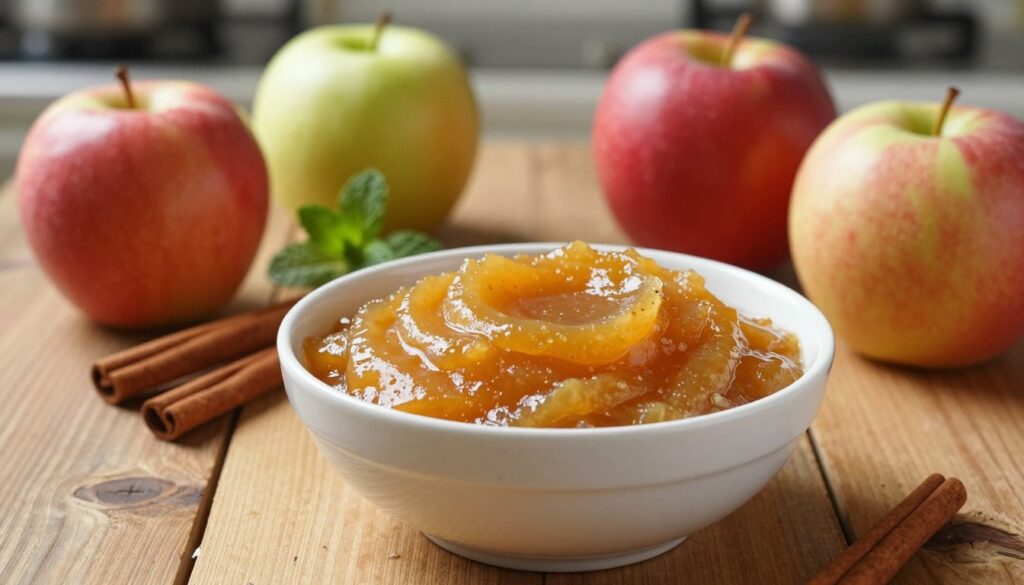
Natural sweetness varies with season and variety, so start by tasting the cooked fruit before you finish the sauce. If the apples seem sharp, dissolve a little caster sugar and add it sparingly.
A squeeze of lemon juice brightens the mix and cuts through the richness from butter. Add just a touch, taste, then adjust; lemon keeps the final flavour lively without masking fruit.
- Add a pinch of cinnamon to give warm depth without overpowering the natural sweetness.
- Use a splash of water or juice to thin the purée if it becomes too thick; this helps control consistency.
- Always taste before serving — it is easier to add more sugar than to remove it.
Final tip: aim for balance — a hint of tartness lifts the sweetness and keeps the mary berry apple purée fresh and versatile for roast dinners or puddings.
Serving Suggestions for Roast Dinners
Think of this purée as the bright counterpoint to rich, savoury roast meat. It adds sweetness and a clean fruit note that works especially well with hearty mains.
Classic Pork Pairings
Roast pork and this apple sauce classic are a natural match. The sweet-tart flavour contrasts the meat and cuts through fat.
- Serve warm beside slices of roast pork for a traditional finish.
- Try a room temperature serving on the platter to make plating easier and keep flavours steady.
- It also pairs well with roast chicken for a lighter, fruity note.
Breakfast and Dessert Ideas
For breakfast, swirl a spoonful into porridge or spread on pancakes for a cosy start.
For dessert, warm the purée with a little sugar and juice, then spoon over puddings or sharp cheeses.
- Use as a topping on warm crêpes or with creamy cheesecake.
- A room temperature serving makes the condiment simple to prepare ahead for Sunday lunch.
- Try the berry apple twist on a cheese board to balance mature cheddar or brie.
Storing and Freezing Your Batch
Keep your batch at its best by storing it correctly from the start.
Short-term: Transfer cooled apple sauce into an airtight container and refrigerate. It will stay fresh for up to 5 days.
Long-term: For longer storage, freeze portions. Once fully cooled, spoon the purée into small tubs or ice-cube trays. This makes defrosting just what you need quick and simple.
Tip: Label containers with the date so you can track storage time. Use within 2 months for best flavour and quality.
“A labelled, well-sealed pot keeps the fresh fruit taste and avoids freezer flavours.”
- Portion before freezing to save energy and reduce waste.
- Stir gently after thawing — the smooth texture will return easily.
- Use good-quality containers to prevent odour transfer.
| Storage | Condition | Recommended time |
|---|---|---|
| Fridge | Airtight, cooled | Up to 5 days |
| Freezer | Portioned, sealed | Up to 2 months |
| Defrosting | Thaw in fridge or gently at room temp | Stir to restore texture |
Creative Variations to Try
A few thoughtful swaps will let you tailor the purée to festive menus or everyday meals.
Spices: Add a pinch of nutmeg or cloves with a touch of cinnamon for a warming, festive character. These spices work well with light sugar and a squeeze of lemon to keep things bright.
Fruit blends: Mix in chopped pears with your cooking apples for extra sweetness and a silkier texture. Stir through a handful of fresh berries near the end to add colour and gentle tartness.
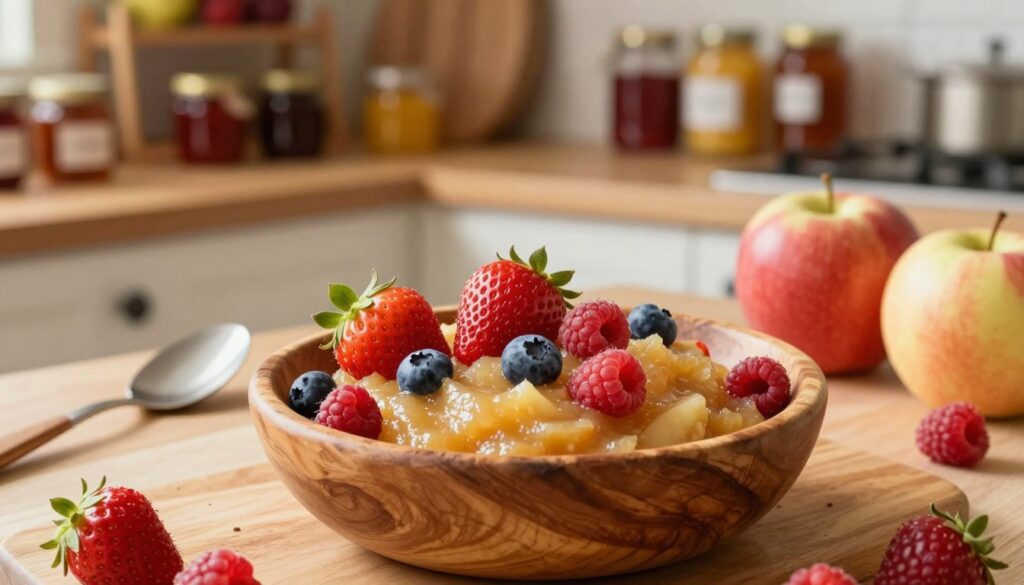
Sweeteners and extracts: Swap caster sugar for brown sugar to give a deeper, caramel-like note. Or add a splash of vanilla extract and a little juice to make a dessert-style topping that pairs with ice cream or cake.
mary berry encourages home cooks to experiment. Try one change at a time so you can fine-tune texture and sweetness to suit your plate.
- Nutmeg, cloves or cinnamon for warmth.
- Pears or berries to vary sweetness and colour.
- Brown sugar or vanilla to create dessert-style options.
Common Kitchen Tips for Success
A few practical tips will turn a good batch into an excellent one every time.
Cook low and steady: keep the pan on low heat and stirring occasionally so the cooking apples break down evenly. Ten to twelve minutes at a gentle simmer is usually enough time for the fruit to soften.
Choose the right tool: a potato masher gives great control and helps you achieve a rustic or smooth texture without a blender. Use a stick blender only if you want a very glossy, sauce smooth finish.
Always taste before adding the final amount of caster sugar. Natural sweetness varies, so adjust sugar and a squeeze of lemon juice to balance the flavour.
If the purée is too thick, add a little water or apple juice to reach your preference. Let the batch cool to room temperature before serving so tastes meld and the texture settles.
- Use Bramley cooking apples for a reliably silky texture.
- Keep portions labelled if freezing — they keep well for months.
- With about 95 calories per serving, this is a light, versatile condiment that can rival a professional version when made carefully.
Conclusion
Finished in minutes, this fruity condiment lifts everything from breakfast to roast dinners. It is straightforward to follow and yields a smooth, fresh-tasting apple sauce that families enjoy.
Follow the cook low heat method for the best texture, simmer for the low heat minutes suggested and keep stirring occasionally. Taste as you go and adjust sweetness to suit your preference.
Serve warm or at room temperature with roast meat or as a simple topping. This berry apple sauce is versatile, quick to make and a lovely addition to your recipe collection.
FAQ
What makes this classic apple purée so popular?
Which cooking apples work best?
How much sugar should I add?
Is butter necessary in the recipe?
What liquid should I use when cooking the apples?
How long should I cook the apples and at what heat?
How do I achieve a smooth texture?
Can I add cinnamon or other spices?
When is lemon juice used and how much?
How should I serve the purée with roast dinners?
Can I use the purée for breakfast or dessert?
How long does the purée keep in the fridge?
Can I freeze it and for how long?
Any tips for preventing discolouration?
How do I adjust sweetness for different tastes?
What equipment makes the job easier?
Are there creative variations worth trying?
Mary Berry Apple Sauce
A timeless, British-style purée that lifts roasted meat and simple puddings alike. This smooth, gently sweetened condiment combines fresh apples with a touch of sugar, butter, and a dash of lemon to create a fragrant, balanced taste.
Ingredients
- 4 large Bramley apples, peeled, cored, and chopped
- 25g unsalted butter
- 2 tablespoons caster sugar
- 3 tablespoons water or apple juice
- Squeeze of lemon juice
- Pinch of cinnamon
Method
- Peel, core, and chop the apples into uniformly sized pieces.
- Toss the chopped apples with a little lemon juice to prevent browning.
- Add the apples to a pan with the water or apple juice and heat gently.
- Cook on low heat for 10-12 minutes, stirring occasionally until the apples soften.
- Add the caster sugar and stir until dissolved.
- Remove the lid and use a potato masher or stick blender to achieve the desired texture.
- Stir in the butter, cinnamon, and additional lemon juice to taste.
- Serve warm, chilled, or at room temperature as desired.