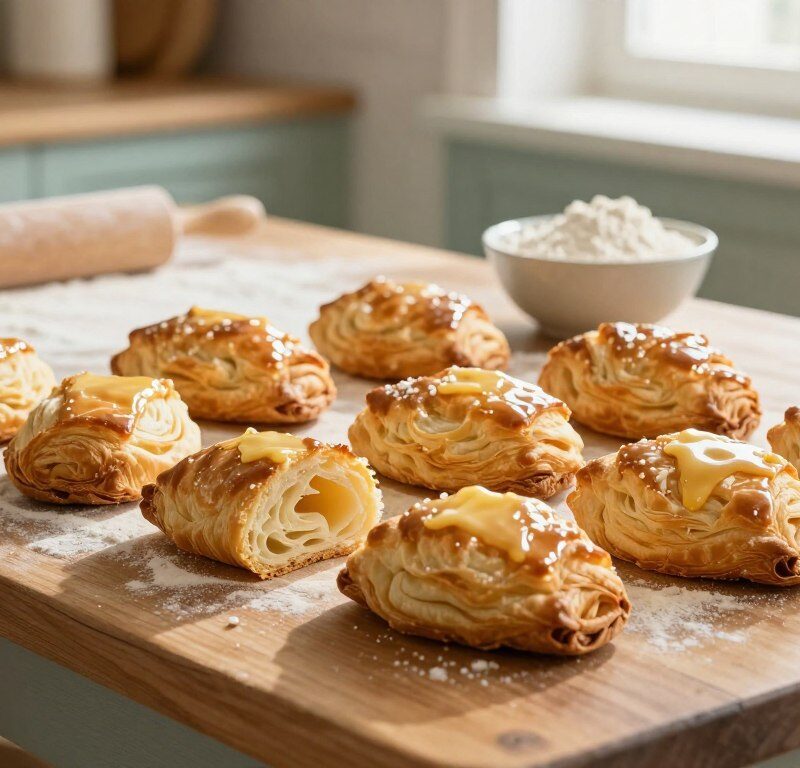
This simplified laminated pastry gives home cooks a fast route to flaky, layered results. It splits the difference between a full-blown puff and a basic shortcrust, using a hands-on method that keeps things simple and reliable.
The mix calls for 225g plain flour, 150g very cold unsalted butter and about 150ml cold water. The technique involves rubbing or cutting chunks of butter into the flour, folding to form a workable dough and creating visible layers without long resting times.
This approach suits busy cooks who want authentic flavour in less time. It makes a versatile base for savoury pies or sweet tarts, and it helps you avoid store-bought substitutes while keeping control of ingredients. Mastering the method raises your confidence in home baking and ensures consistently delicious results.
Key Takeaways
- Simple method yields flaky, layered puff pastry at home.
- Uses plain flour, cold butter and cold water for best results.
- Fast to make and ideal for busy cooks seeking quality.
- The dough creates distinct layers without complex lamination.
- Versatile for both savoury and sweet dishes.
Understanding the Appeal of Mary Berry Rough Puff Pastry
Home cooks prize this shortcut because it produces layers like a traditional puff with far less faff. This method is notably faster than classic puff pastry, saving time without cutting corners on texture.
It is beginner-friendly and needs no specialist skills. With a few simple moves you turn a basic dough and cold butter into visible, rising layers.
By using a measured folding routine you create thin, buttery sheets that expand in the oven to give light, crisp results and distinct flaky layers. The process explains how flour and fat interact, so you learn the science behind the rise.
- The technique delivers the characteristic puff of classic methods with much less effort.
- The dough is versatile for both savoury pies and fruit tarts, so it suits many recipes.
- It’s perfect for improving your skills while enjoying quick, reliable results in home baking.
Essential Ingredients for Your Pastry
Good pastry begins with measured, cold ingredients and a clear plan. This section lists the core items that shape texture and flavour in your rough puff pastry.
Dry Ingredients
Place 225g of plain flour and a pinch of salt into a large bowl and stir briefly so the salt spreads evenly. The flour forms the structure of the dough and the salt lifts the final taste.
The Importance of Cold Butter
The secret is 150g very cold butter, cut into small, uniform chunks. Keep those chunks visible when you mix—visible butter pieces create steam pockets that give a true puff.
“Keep everything chilled; warm butter ruins the layers.”
- Use ~150ml cold water to bring the dough together without melting the butter.
- Keep ingredients chilled throughout baking prep for best rise.
- Every component has a role: flour for strength, butter for lift, salt for flavour.
Preparing Your Workspace and Tools
Set up a tidy station before you touch the dough to keep the process calm and efficient.
Start with a clean, floured work surface. A lightly floured work area stops sticking and makes rolling easier.
Keep tools close: a sturdy rolling pin to shape a neat rectangle, a bench scraper to move dough onto lightly floured patches, a sharp knife and a pastry brush to finish edges.
Use cling film to wrap tightly and chill the dough for 20 minutes. This rest firms the butter and helps layers form when you roll.
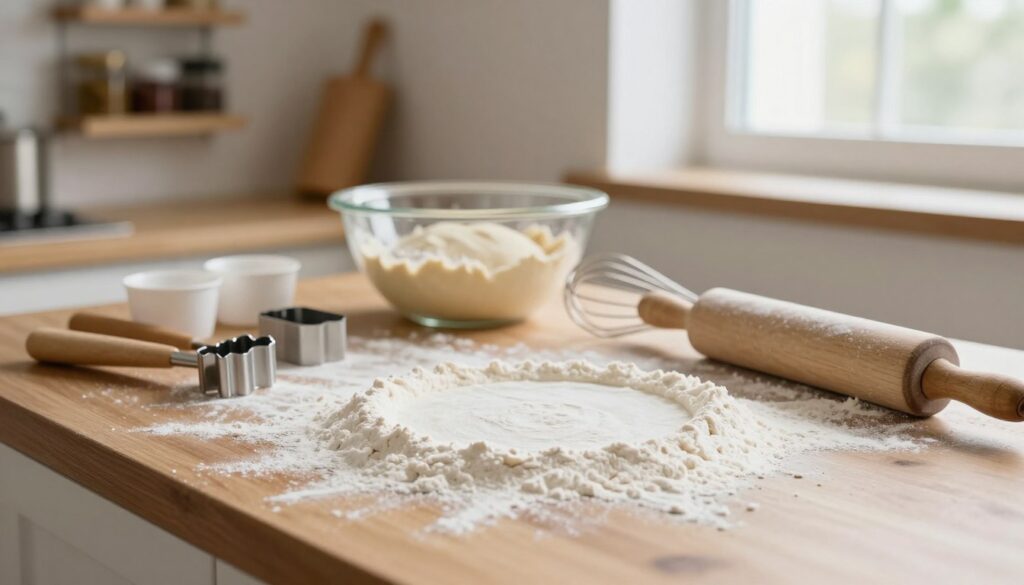
| Tool | Purpose | Tip |
|---|---|---|
| Rolling pin | Flatten dough into a rectangle | Work from centre to edges |
| Bench scraper | Lift and move dough | Use onto lightly floured areas |
| Cling film | Wrap and chill | Wrap tightly to avoid drying |
| Sharp knife | Trim edges | Keep strokes quick and even |
- Ensure the work surface stays cool to protect the butter.
- Have everything ready before rolling to save minutes and avoid overworking the pastry.
Mixing the Dough Components
Begin in a large bowl by combining the dry ingredients before the wet, so the texture stays light.
Combining Water and Flour
Tip 225g plain flour and a pinch of salt into the large bowl. Add the cold butter in small chunks, working quickly so the pieces remain visible.
Pour the cold water gradually and mix gently. Aim to stop as soon as the dough comes together into a rough ball.
Do not overwork the mix. Overmixing develops gluten and makes the puff tough. Keep the butter pieces intact so they form steam pockets in the oven.
- Mix flour and salt first, then rub in butter so chunks cold butter stay evenly spread.
- Add water slowly until the dough together forms; avoid kneading.
- Handle the dough with care to keep the marbled butter–flour effect for flaky layers.
| Step | Action | Purpose |
|---|---|---|
| Dry mix | Stir flour and salt in large bowl | Even seasoning and structure |
| Add butter | Scatter cold butter chunks into flour | Create visible fat pockets for puff |
| Hydrate | Pour cold water gradually and combine | Bring dough together without gluten build-up |
| Rest | Wrap and chill briefly | Firm the butter before rolling |
Mastering the Rolling and Folding Technique
Learning the correct rolling and folding will change how your dough behaves in the oven. Keep the work area cool and use a lightly floured work surface to stop sticking and protect the cold butter.
Creating the Rectangle
Roll the dough with a rolling pin into a long, even rectangle. Aim for straight edges so folds sit neatly and layers build uniformly.
The Letter Fold Method
Bring the bottom third up to the centre, then fold top third down over it to form a neat letter fold. This sandwich of butter and flour is the start of your flaky layers.
When the dough comes together after each fold, brush away excess flour so each layer remains clean and distinct.
Rotating the Dough
Give the block a quarter turn before you roll again. Repeat rolling to three times the length and perform the same folding routine.
Repeat rolling folding in this order: roll, fold, rotate, chill briefly if the cold butter softens. This builds even layers and improves puff in the oven.
- Work on an onto lightly floured surface to prevent tearing.
- Keep movements quick to protect the butter–flour pattern.
- Finish when the dough is smooth and the butter flour layers are visible.
| Action | Why | Tip |
|---|---|---|
| Roll to rectangle | Creates even layers | Keep edges straight |
| Letter fold | Builds lamination | Fold gently, don’t press hard |
| Quarter turn | Ensures even layering | Repeat rolling three times |
Chilling for Perfect Flaky Layers
Chill after two folds for at least 15 minutes to keep the fat firm and the dough relaxed. This pause is vital in any good rough puff approach and improves final puff in the oven.
After you fold top third over and complete the second letter fold, wrap tightly in cling film and place the block in the fridge. A chill least minutes of 15 is the recommended rest before you repeat the rolling and folding steps.
When you return to the work surface, the dough should feel firm. That firmness makes it easier to repeat rolling folding without the cold butter melting into the flour.
- You must chill least minutes between folds to ensure the butter stays firm and creates flaky layers.
- After every two folds, wrap tightly and chill for 15 chill minutes to protect the structure.
- Keep the work surface lightly floured, roll to a neat rectangle and continue the sequence of roll, fold, chill.
“Resting the block is non-negotiable — it prevents a tough dough and helps your pastry puff.”
Follow this simple routine and the dough will yield clear, crisp layers suitable for both sweet and savoury bakes in this recipe.
Troubleshooting Common Pastry Problems
Troubleshooting begins with temperature and handling — the two main culprits. Read these quick fixes to keep your rough puff pastry light and reliable.
Preventing Butter Melt
Keep ingredients cold and pause when needed. Use very cold butter and chill the dough between folds to stop layers blending.
If the block softens, wrap and chill at least 15 minutes. Proper chilling keeps the butter solid until it meets oven heat and helps the puff rise.
Avoiding Tough Texture
Tough pastry comes from overworking the dough. Handle it gently on a lightly floured work surface and stop as soon as the dough comes together.
If the dough feels tight or uneven, chill minutes in the fridge to relax the gluten before more folding.
- Use cold water and cold butter, and avoid excess kneading.
- Work quickly on an onto lightly floured board to prevent sticking and re-rolling.
- Chill least minutes between turns to secure flaky layers.
“Proper chilling is the best way to ensure your puff rises and yields crisp, airy layers.”
| Problem | Likely Cause | Quick Fix |
|---|---|---|
| Butter melts | Warm kitchen or long handling | Chill 15–30 minutes; use cold butter |
| Tough pastry | Overworking dough | Stop when dough comes together; rest in fridge |
| Uneven layers | Uneven rolling or sticky surface | Use a floured work surface; roll evenly |
Creative Variations for Sweet and Savoury Bakes
Try simple additions to turn the basic block into party-worthy bites or elegant tarts. For a savoury twist, tuck grated cheese between folds to make golden, flaky cheese twists that are perfect for sharing.
Mix chopped herbs such as thyme or rosemary into the flour before the butter goes in to add fragrant notes throughout the dough. This keeps the method quick while lifting the flavour of sausage rolls and vegetable bakes.
For sweet recipes, use the same base for fruit tarts filled with apples or pears. Sprinkle a little sugar over the dough before the final roll for a caramelised, crisp finish that makes desserts glow.
- Layer grated cheese for savoury twists.
- Add fresh herbs to the dry ingredients for aromatic bakes.
- Use for fruit tarts, sausage rolls or vegetable bakes — versatile and reliable.
- Try a light sugar dusting before baking for sweet, caramel notes.
“Small ingredient swaps let this recipe shine across sweet and savoury menus.”
Storing and Reheating Your Homemade Pastry
Wrap and chill correctly and your block will stay ready for quick baking on busy days. Proper storage protects the layers you worked to build and keeps the butter firm until the oven does its work.
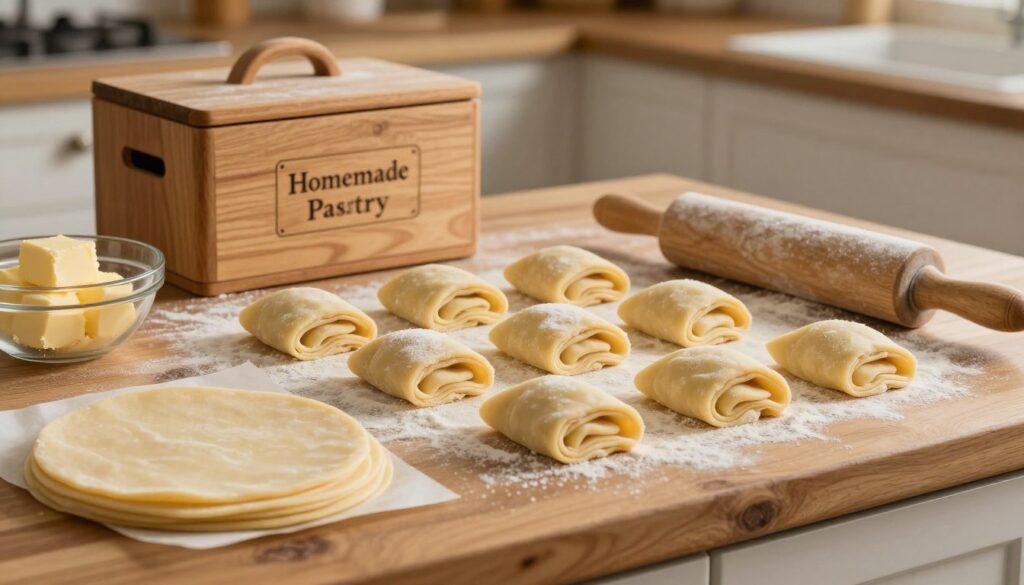
Short-term: To store your dough, wrap tightly in cling film and keep it in the fridge for up to 3 days. This keeps the dough chilled and easy to roll when you are ready.
Long-term: For longer storage, freeze the block for up to 2 months. Defrost slowly in the fridge before you roll it out so the butter does not soften too fast.
- Wrap tightly in cling film before refrigeration or freezing to prevent drying and odours.
- When thawed, let the dough reach a workable temperature on your work surface and use a rolling pin to ease it into shape.
- Reheat baked items in a hot oven at 180°C for 5–8 minutes to revive crisp, flaky layers.
- Avoid the microwave; it will soften the structure and ruin the lift you achieved during baking.
“Proper storage and reheating techniques ensure your homemade puff pastry remains as delicious as the day you first prepared it.”
| Store | How long | Tip |
|---|---|---|
| Fridge | Up to 3 days | Wrap tightly; chill before rolling |
| Freezer | Up to 2 months | Defrost in fridge before use |
| Reheat | 5–8 minutes | 180°C oven to crisp layers; avoid microwave |
Conclusion
Simple technique and good timing help you make flaky dough that performs in the oven.
This guide shows how rough puff pastry gives you the benefits of classic puff pastry with far less effort. By mastering folding, resting and cold handling you can make a reliable dough for many recipes.
Cold butter and careful movement yield consistent flaky layers and a satisfying puff every bake. The method suits beginners and experienced cooks alike, and it creates a versatile pastry base for sweet and savoury ideas.
Keep ingredients chilled, rest between folds and enjoy experimenting. With these simple steps you’ll gain confidence and tasty results time after time.
FAQ
What is the difference between rough puff and traditional puff pastry?
What ingredients do I need for a reliable homemade pastry?
How cold should the butter and water be?
How do I combine water and flour without overworking the dough?
What’s the best surface for rolling and folding?
How do I create a neat rectangle for my first roll?
What is the letter fold method and why use it?
How often should I rotate the dough while rolling?
How long should I chill the dough between turns?
Why does my butter melt while I work and how can I prevent it?
What causes a tough texture and how do I avoid it?
Can I add cheese or other flavours to the dough?
How should I store leftover dough or finished baked goods?
What’s the best way to freeze pastry for future use?
Mary Berry Rough Puff Pastry
This simplified laminated pastry gives home cooks a fast route to flaky, layered results, making it a versatile base for both savoury pies and sweet tarts.
Ingredients
- 225g plain flour
- 150g very cold unsalted butter, cut into small chunks
- 150ml cold water
- pinch of salt
Method
- In a large bowl, combine the plain flour and a pinch of salt.
- Add the cold butter chunks into the flour, keeping them visible.
- Gradually pour in the cold water and mix gently until the dough comes together into a rough ball.
- Wrap the dough in cling film and chill for 20 minutes.
- Roll the dough into a long, even rectangle on a lightly floured surface.
- Fold the bottom third of the dough up to the center, then fold the top third down over it to create a letter fold.
- Rotate the dough a quarter turn and roll it out again into a rectangle.
- Repeat the folding and rolling process three times, chilling the dough for at least 15 minutes between folds.
- After the final fold, chill the dough again before using it in your recipes.