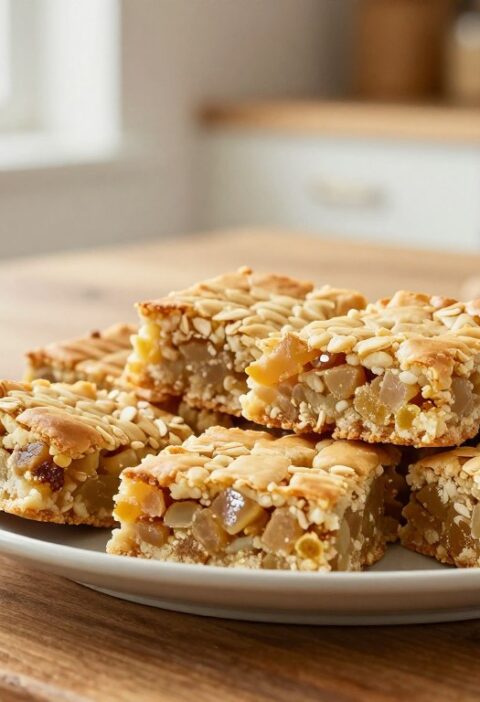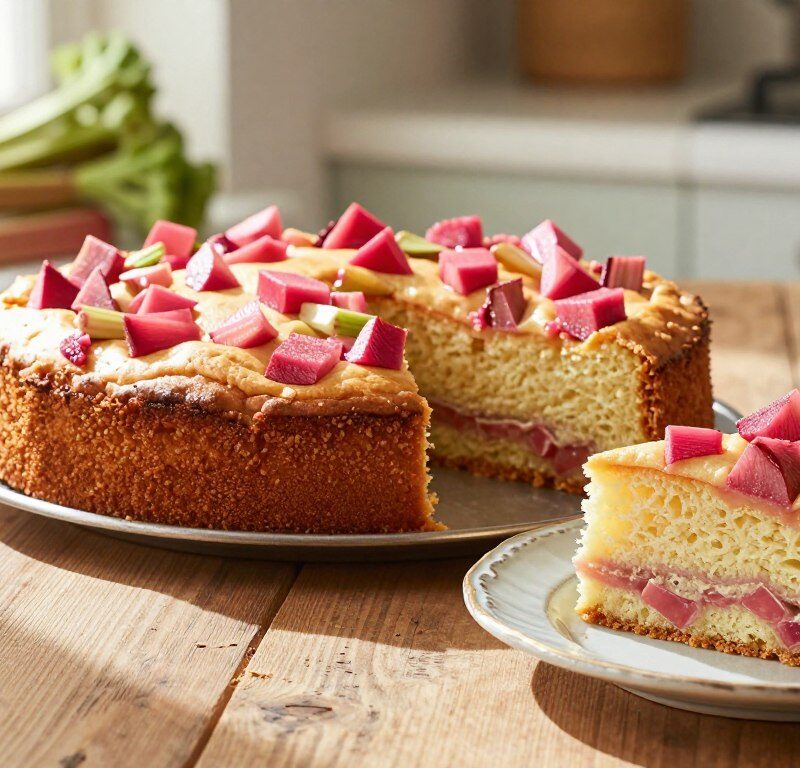
This classic British bake celebrates the tart brightness of seasonal rhubarb against a soft, buttery sponge.
Simple to make and reassuringly homely, the recipe suits afternoon tea or a quiet dessert with custard. The method is straightforward: fold chopped fruit pieces into a light batter, then bake until the sponge is tender and the filling has softened.
When fresh stalks are scarce, frozen rhubarb offers a handy alternative without losing flavour. Baking time is reasonable, and the result feels both elegant and unpretentious.
Serve plain or dusted with icing sugar to keep the spotlight on the fruit. This keeps the treat reliable for home cooks and ideal for those seeking a trusted recipe that performs every time.
Key Takeaways
- Classic blend of tart fruit and a light sponge makes an easy, comforting bake.
- Frozen rhubarb works well when fresh is out of season.
- Simple method and reasonable baking time suit busy home cooks.
- Best served plain or lightly dusted for afternoon tea or as a dessert.
- A timeless recipe that balances homely flavour with elegant presentation.
Why You Will Love This Mary Berry Rhubarb Cake
A gentle balance of sharp fruit and tender sponge makes this bake hard to resist.
Balanced sweet‑tart flavour: The sharpness of the rhubarb cuts through the buttery sponge to create a classic British dessert that feels both bright and comforting.
Soft, moist texture: The sponge stays tender and keeps well, so slices remain moist even the next day — perfect for sharing with friends and family.
Seasonal favourite and easy to make: This recipe shines in spring and summer when fresh rhubarb is at its best. Preparation is straightforward with no tricky techniques, staying true to mary berry’s approachable style.
Versatile serving: Enjoy a slice plain, dusted with icing, or with a small spoonful of fresh cream for added indulgence. The result is a dependable treat that works as a tea‑time cake or an informal dessert.
- Bright fruit flavour balanced by a soft sponge
- Moist texture that lasts into the next day
- Quick, fuss‑free method suitable for home bakers
- Flexible to serve with icing or cream
Essential Ingredients for Your Sponge
Choose fresh or fully thawed fruit so the tart pieces sit evenly through the batter and give consistent pockets of flavour.
Fresh Fruit Selection
Use 250 g of trimmed and chopped rhubarb for a bright, tart contrast in every slice. If using frozen rhubarb, thaw and drain it thoroughly to avoid excess moisture. Cut into even pieces so the fruit distributes evenly in the sponge.
Pantry Staples
Reliable staples give the sponge structure and lift. You will need 175 g softened unsalted butter and 175 g caster sugar for the base. Add 3 large eggs and 175 g self-raising flour to form a light, airy batter.
Stir in 1 tsp vanilla extract to enhance the aroma. These simple ingredients reflect the classic mary berry rhubarb approach: dependable and easy to source.
- 175 g unsalted butter (softened)
- 175 g caster sugar
- 3 large eggs
- 175 g self-raising flour
- 250 g chopped rhubarb (fresh or thawed)
- 1 tsp vanilla extract
| Ingredient | Quantity | Purpose |
|---|---|---|
| Unsalted butter | 175 g | Richness and moisture |
| Caster sugar | 175 g | Sweetness and crumb structure |
| Large eggs | 3 | Bind and leaven |
| Self-raising flour | 175 g | Light sponge texture |
| Chopped rhubarb | 250 g | Tart pockets of fruit |
| Vanilla extract | 1 tsp | Enhances aroma |
Preparing Your Kitchen and Equipment
A tidy bench and ready equipment speed up each step and help avoid last-minute rushes.
Gather the essentials: a large mixing bowl, an electric hand mixer or a wooden spoon, and a sharp knife with a chopping board. These items make prep safer and quicker when you cut the fruit and mix the batter.
Grease a 20 cm round cake tin and line it with baking parchment so the sponge lifts out cleanly after baking. Place the tin on a flat tray to keep it steady when you fill it.
Preheat the oven to 180°C. This is the standard temperature to help the sponge rise evenly during the 40 to 45 minutes of baking. Keep a timer to check at regular intervals.
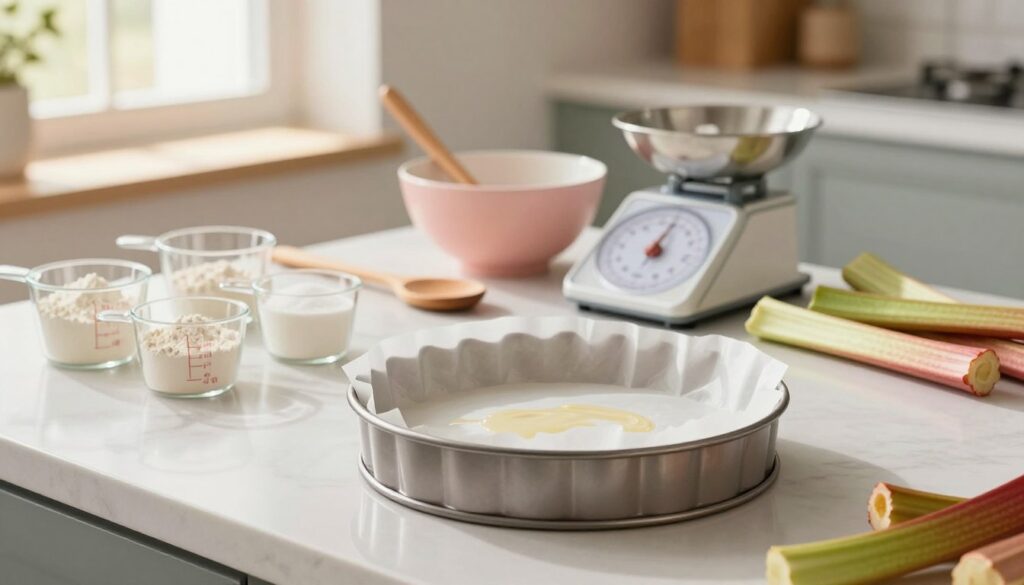
- Set out a mixing bowl and mixer or spoon for whipping a light batter.
- Prepare a lined tin and a flat surface for easy transfer.
- Have a sharp knife and board ready for efficient chopping.
- Preheat the oven and allow adequate baking time; use a timer for accuracy.
| Item | Purpose | Tip |
|---|---|---|
| Mixing bowl | Combine ingredients | Use a large one to avoid splashes |
| Electric hand mixer or wooden spoon | Achieve light, fluffy batter | Electric mixer speeds the process |
| 20 cm round cake tin | Shape the sponge | Grease and line with parchment |
Mastering the Mixing Process
Getting the mixing right makes all the difference to texture and rise. Start by creaming 175 g of butter with 175 g of caster sugar until the mixture is pale and light. This creates the air pockets that help the sponge rise.
Achieving the Perfect Batter Consistency
Add the 3 eggs one at a time, beating well after each addition. Mixing gradually prevents curdling and keeps the batter smooth.
Fold in 175 g of self-raising flour and 1 tsp vanilla extract gently. Use a spatula and use broad folding strokes to keep the mixture airy.
Finally, fold in the chopped rhubarb pieces so they disperse evenly before you spoon the mixture into the tin. Avoid overmixing; a light hand gives a tender cake and even fruit pockets.
Key steps to follow:
- Cream butter and sugar until pale and fluffy.
- Add eggs gradually and mix between additions.
- Gently fold in flour, vanilla and fruit to retain air.
| Step | Action | Tip |
|---|---|---|
| Cream | Beat butter and caster sugar | Beat until pale and light |
| Combine | Add eggs one at a time | Mix well after each egg |
| Fold | Fold in flour and vanilla | Use gentle folding strokes |
| Finish | Fold in chopped rhubarb pieces | Spoon into lined tin and bake |
If you want a different bake, follow the same mixing steps to make mary berry variations with confidence.
Assembling and Baking the Cake
Spoon half the pale batter into the lined cake tin, then scatter the chopped rhubarb pieces across the surface before adding the remaining mixture.
This layering step helps the fruit stay suspended through the sponge rather than sinking to the base. It also lets the fruit release juices into the batter, giving a moist, flavourful result as mary berry advises.
Place the tin in the preheated oven and bake for 40 to 45 minutes. The cake is ready when the top is golden and a skewer inserted in the centre comes clean.
Allow the cake to cool in the tin for 10 minutes so it sets slightly. Then turn it out onto a rack to cake cool completely before slicing.
- Spoon half the batter into the lined tin.
- Scatter chopped fruit pieces evenly, then top with the rest of the batter.
- Bake 40–45 minutes until the top is golden and a skewer comes clean.
- Let the sponge rest in the tin for 10 minutes, then transfer to a rack to cool.
| Step | Action | Tip |
|---|---|---|
| Assemble | Layer batter and fruit in a lined cake tin | Evenly distribute pieces to prevent sinking |
| Bake | 40–45 minutes at 180°C in the oven | Check with a skewer; it should come clean |
| Cool | Rest in tin for 10 minutes, then cool on a rack | This helps the sponge set and keeps the top intact |
Troubleshooting Common Baking Issues
Notice how the batter looks and how the fruit is cut — these clues point to likely problems.
Preventing a Soggy Base
Large pieces can release extra moisture as the cake bakes. Cut the rhubarb into smaller pieces so juices disperse more evenly through the batter.
Tip: If using frozen rhubarb, fully thaw and drain it before folding it into the mixture to reduce pooling in the tin.
Avoiding Dense Sponge
Overmixing knocks out the air you built when creaming butter and sugar. Fold the flour in gently with broad strokes.
Take care when you add eggs and vanilla extract. Mix just until combined to keep the sponge light and tender.
Ensuring Even Baking
If the centre remains undercooked while the top browns, lower the oven shelf one position. This helps the centre cook through without rushing the top.
Always check with a skewer. It should come out clean before you remove the tin from the oven.
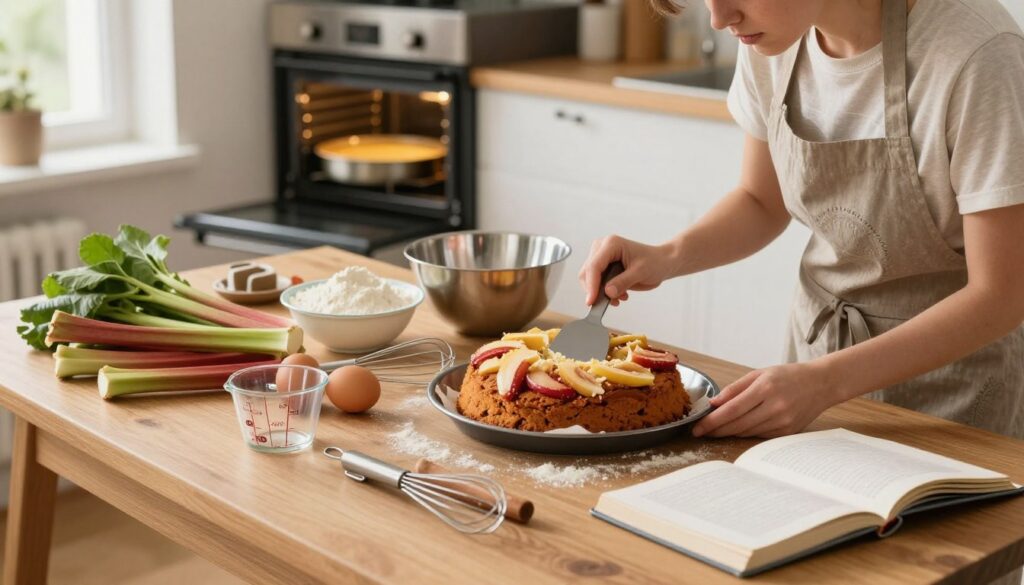
- Cut fruit into even, small pieces to prevent excess moisture.
- Fold gently to avoid a heavy sponge.
- Let the cake cool in the tin for at least 10 minutes before turning out.
| Issue | Quick Fix | Why it Works |
|---|---|---|
| Soggy base | Smaller pieces; drain frozen fruit | Reduces pooled juice in the tin |
| Dense sponge | Fold flour gently; avoid overmixing | Preserves air in the batter |
| Uneven bake | Lower oven shelf; check with skewer | Cooks centre without overbrowning top |
Creative Variations to Try
For a citrus twist, fold the zest of one orange into the batter. The bright oils lift the sponge and cut through the fruit’s tart edge.
Almond topping option: scatter flaked almonds over the surface before baking. They toast in the oven and give a pleasing crunch to each slice.
Add a pinch of ground ginger to the mix for warmth, or stir in small apple pieces to soften the tartness and add natural sweetness.
Crumb topping finish: combine flour, butter and a little sugar to make a crumb and sprinkle it on top for extra texture.
- Orange zest in the batter brightens flavour.
- Flaked almonds make a nutty topping.
- Ginger or apple changes the overall profile.
- Crumb topping adds crisp texture to the sponge.
These simple steps let you customise the cake while keeping the reliable batter, oven time and basic technique that make a mary berry recipe so dependable.
Perfect Serving Suggestions
A warm slice paired with a creamy element turns a simple bake into a comforting dessert.
Classic Accompaniments
Warm custard is a traditional choice. Pour a little on the side so each forkful combines soft sponge with silky sauce. This is a timeless British comfort.
Lightly whipped cream softens the tart edge of the fruit and keeps the portion feeling airy. Use softly whipped rather than stiff peaks for the best match.
For a more indulgent dessert, add a scoop of vanilla ice cream. The cold, creamy contrast works beautifully with a warm slice.
“A dusting of icing sugar lifts presentation in seconds and suits an afternoon treat.”
- Serve warm with custard for classic comfort.
- Add a dollop of whipped cream to mellow sharp flavours.
- Scoop vanilla ice cream for a simple, indulgent finish.
- Light dusting of icing sugar for afternoon tea or a neat topping.
Storage and Reheating Advice
Storing slices correctly makes it easy to enjoy this traybake over several days. Once the cake cools, place it in an airtight container at room temperature. This keeps the crumb soft and preserves the fruit pockets.
Keep covered for up to two days to maintain moisture and flavour. If your kitchen is warm, refrigerate the tin to prevent spoilage of the eggs and cream accompaniments.
You can freeze individual slices. Wrap each piece well in cling film, pop them in a freezer bag and store for up to one month. Use frozen rhubarb slices straight from the freezer or thaw in the fridge before warming.
- Room temperature in an airtight container — keeps texture for 48 hours.
- Refrigerate in hot weather to protect ingredients and prevent spoilage.
- Freeze wrapped slices for up to one month; thaw before reheating.
To refresh, warm a slice for a few seconds in the microwave until the top is just warmed through. Serve with a spoonful of whipped cream or a scoop of vanilla ice cream for best results. Proper storage is a simple step to keep each slice tasting as good as when first baked.
| Storage | Duration | Tip |
|---|---|---|
| Room temp, airtight | Up to 2 days | Keeps batter moisture and top soft |
| Fridge | 2–5 days | Use if very warm to protect eggs and cream |
| Freezer (wrapped) | Up to 1 month | Defrost in fridge; reheat briefly |
Conclusion
Trust this straightforward recipe to balance sharp fruit with a soft crumb every time.
Follow the simple steps and bake until a skewer comes clean, and you will get a reliable sponge that holds bright pockets of berry rhubarb throughout. Check the centre with a skewer to ensure it comes clean before cooling.
Serve warm with a scoop of ice cream or enjoy plain; good ingredients and proper cooling give the best slices and texture. This mary berry rhubarb version remains a fuss‑free, traditional dessert that home bakers return to again and again.
FAQ
What size tin should I use for this Mary Berry rhubarb cake?
Can I use frozen rhubarb instead of fresh?
What’s the best way to prepare the rhubarb pieces?
Which flour works best for the sponge?
How do I prevent a soggy base under the fruit?
Why did my sponge turn out dense, and how can I avoid it?
How can I tell when the cake is fully baked?
Is vanilla extract necessary in the recipe?
Can I add a topping, such as glace icing or flaked almonds?
How should I store the cake and how long will it keep?
What are some easy variations to try with this basic recipe?
Can I make this as a traybake or in a loaf tin?
Mary Berry Rhubarb Cake
This classic British bake celebrates the tart brightness of seasonal rhubarb against a soft, buttery sponge. Simple to make and reassuringly homely, the recipe suits afternoon tea or a quiet dessert with custard.
Ingredients
- 175 g unsalted butter (softened)
- 175 g caster sugar
- 3 large eggs
- 175 g self-raising flour
- 250 g chopped rhubarb (fresh or thawed)
- 1 tsp vanilla extract
Method
- Preheat the oven to 180°C and grease a 20 cm round cake tin, lining it with baking parchment.
- Cream the softened butter and caster sugar together until pale and fluffy.
- Add the eggs one at a time, beating well after each addition.
- Gently fold in the self-raising flour and vanilla extract until just combined.
- Fold in the chopped rhubarb pieces carefully to avoid overmixing.
- Spoon half of the batter into the lined cake tin, scatter the chopped rhubarb evenly over the surface, and then top with the remaining batter.
- Bake in the preheated oven for 40 to 45 minutes, or until the top is golden and a skewer inserted into the center comes out clean.
- Allow the cake to cool in the tin for 10 minutes before transferring it to a wire rack to cool completely.