Enjoy festive flavour in a smaller, family-friendly portion. This recipe keeps the classic fruit and spice profile while swapping brandy for citrus juice to retain a moist crumb. The result is a light cake that suits children and adults alike.
These individual treats cut down on baking time and make preparation simpler at busy times. Use marzipan and icing for a polished finish that feels indulgent without being heavy.
The method balances dried fruit, spice and careful baking to deliver a traditional taste in a modern, alcohol-free format.
Key Takeaways
- Small portions offer a lighter, more accessible take on a classic christmas cake.
- Citrus juice replaces alcohol to keep the crumb moist and family-friendly.
- Marzipan and icing give a professional finish with minimal effort.
- Baking time is shorter than for a full-size fruit cake, saving time in the kitchen.
- The recipe preserves traditional flavour through a balanced blend of fruit and spice.
Why Choose Mary Berry Non Alcoholic Mini Christmas Cakes
Choosing single-serve, spirit-free spiced cakes keeps the traditional flavour while making them simple to gift and serve. These portions honour the classic fruit profile but remove brandy and other spirits, so everyone can enjoy a slice.
Family-Friendly Benefits
Safe for all ages: Removing alcohol turns a once adult-only dessert into a family staple. You keep the rich fruit and spice while ensuring no one misses out.
Make ahead with ease: These little cakes store well for several weeks. Prepare them in advance to save time during busy baking days.
The Joy of Mini Portions
Perfect for gifting: Each cake tin makes a neat, individual treat that’s easy to wrap and share. The small size also makes serving simpler at gatherings.
- Versatile decoration: Top with marzipan and icing for a polished finish.
- Great when a full fruit cake feels too large for your party.
- Mary Berry’s approach keeps the flavour complex even without spirits.
Essential Ingredients for Your Festive Bakes
Gathering the right staples makes all the difference when you want a moist, well-balanced cake. Start with 225g mixed dried fruit, 50g glacé cherries and 100ml orange juice to soak the fruit for best flavour.
Ensure your butter is at room temperature before you begin. This helps the batter emulsify and gives a finer crumb. Use good-quality flour, sugar and fresh eggs to build a sturdy base for the bake.
Citrus zest lifts the whole mix. Mary Berry’s approach also allows tea as an alternative soaking liquid if you want a deeper note rather than orange.
Marzipan and icing are optional but add the classic finish people expect from a christmas cake. Even small items, like cherries and butter, play a vital role in the final texture and taste.
- 225g mixed dried fruit
- 50g glacé cherries
- 100ml orange juice or strong tea
- room temperature butter, flour, sugar and eggs
Tip: Keep ingredients at room temperature and follow the recipe for consistent baking results every time.
Preparing Your Fruit for Maximum Flavour
Begin by hydrating your dried fruit in juice to unlock richer, more rounded flavour. Place the mixed fruit and glacé cherries in a large bowl and cover with orange juice or apple juice. This acts as a non‑alcoholic substitute for brandy and brings natural sweetness.
Soak the fruit for at least one hour before baking; leaving it overnight for several hours gives the best depth of taste. Use a skewer to test the mixture — it should pass through cherries and dried fruit easily, showing they are fully hydrated.
Folding and Filling the Tin
Once the fruit is ready, fold it gently into the batter. Ensure the mixture spreads evenly in the cake tin so baking time in the oven is consistent and the cake rises evenly.
Tip: Manage the fruit-to-juice ratio so the batter isn’t too wet. Proper prep prevents the fruit drying out during long baking and helps every slice deliver steady, fruity goodness — the hallmark of a classic mary berry christmas approach.
- Soak fruit in a bowl with juice for several hours.
- Test hydration with a skewer before baking.
- Fold fruit into batter and fill the tin evenly.
Mastering the Creaming Method for a Light Batter
To build lift in your cake, beat butter and sugar together in a large bowl until the mix is pale and airy. This step traps air and forms the skeleton of a light, even batter.
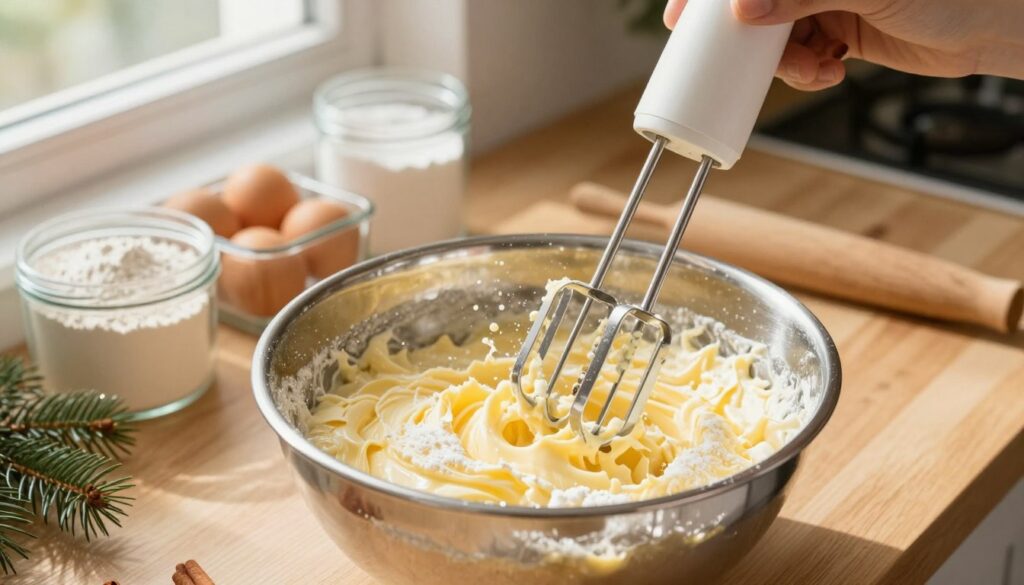
When the mixture looks fluffy, add eggs one at a time. Ensure each egg is fully incorporated before you add the next to keep the batter stable and prevent splitting.
If the mix begins to curdle, stir in a spoonful of flour or some lemon zest while you beat. This simple trick steadies the emulsion and keeps your cake from going dense.
Gently fold in the remaining dry ingredients and the soaked fruit, then pour into tins. A well-made base will support marzipan and any later icing without collapsing.
This creaming method is the heart of the mary berry recipe — it makes a light christmas cake that’s easier to decorate and reliably even when baking with lots of fruit.
Preparing Your Tins for Perfect Results
Start by preparing the cake tin so heat distributes evenly and the batter rises without burning.
Grease the tin with butter or a neutral fat. Use the tin as a guide to cut parchment paper. The paper sides should be taller than the tin to form a collar.
The paper collar acts as an insulator. It shields the fruit-laden batter from direct oven heat. This helps prevent overbrowning and keeps the centre moist during long baking.
Tip: Smooth the batter level in the tin before baking. A flat top bakes more evenly and makes icing easier later.
A well-lined tin also makes releasing the cake simple. Grease first, then press in paper. Check the oven temperature and adjust if edges colour too quickly.
| Method | Pros | Cons |
|---|---|---|
| Grease + Parchment collar | Best heat control; easy release | Requires careful cutting |
| Grease only | Quick setup | Edges may brown too fast |
| Silicone liner | Reusable; non-stick | Less insulation for long baking |
Combining Dry and Wet Ingredients
Finish the batter by folding in sifted flour and the soaked fruit so the texture stays airy and even.
Sift the flour to remove lumps. Then fold it in with a wide spatula using slow, turning motions. This keeps the air from the creamed butter and sugar intact and helps the cake rise evenly.
Add eggs carefully, one at a time, making sure each is fully mixed in before you add the next. Gentle incorporation preserves the batter structure and prevents it from curdling.
Spread the soaked fruit through the batter so every slice gets consistent flavour. Use a light hand to avoid breaking fruit pieces; aim for even pockets rather than clumps.
Balance is key: too much liquid will make the mix slack, too little and the cake will be dry. When everything is fully integrated, transfer the batter into the prepared tin and smooth the top for an even bake.
Tip: a final gentle fold or two is enough — overworking the mix will give a heavy result and spoil the light crumb that good icing and decoration rely on.
Baking Your Mini Cakes to Perfection
Bake the small cakes gently at a low temperature so the fruit and batter mature evenly. The usual guide is 45–55 minutes at a modest setting to keep the centre moist and the edges from burning.
The importance of low and slow baking
Low heat allows the juice in the soaked fruit to meld with the batter. This creates a richer flavour and a light, even rise in the cake tin.
If the top browns too quickly, cover loosely with paper for the final 15–20 minutes. Patience here preserves colour and prevents a hard crust forming before the middle cooks.
Testing for doneness
Use a skewer inserted into the centre to check. The skewer comes clean when the cake is ready.
Start checking a little earlier than the maximum time. Small portions can dry out fast, so remove when the skewer comes out nearly clean for a slightly softer crumb.
“Slow heat lets fruit and batter marry, giving the best texture and flavour.”
Once the skewer comes out clean, remove cakes from the oven and cool in their tins briefly. Cool fully before adding icing or wrapping — these little cakes are perfect to enjoy within weeks rather than needing months to mature.
| Aspect | Recommended | Why it matters |
|---|---|---|
| Temperature | Low (modest setting) | Prevents overbrowning and allows even cooking |
| Time | 45–55 minutes | Keeps centre moist; suits small cake tins |
| Doneness test | Skewer inserted — comes clean | Reliable indicator of baked-through batter |
| Moisture boost | Small splash apple juice or tea | Enhances moisture and flavour without alcohol |
Cooling and Resting Your Festive Treats
Begin the cooling stage by leaving the cakes in the tin for ten minutes; this helps the crumb set so the bakes keep their shape when you turn them out.
After ten minutes, transfer each cake to a wire rack to cool completely. Air circulation under and around the bakes stops the base from going soggy and prevents trapped steam from softening the bottom.
While the tops are still warm, brush them lightly with a little extra juice. This locks in moisture and gives the interior a nicer sheen as the fruit continues to mellow during the rest.
Patience here pays off. Resting lets flavours develop and the structure strengthen, which makes decorating simpler. A properly cooled christmas cake takes icing and marzipan without sliding or melting.
“Never rush cooling — wait until the bakes are fully cool before you ice or wrap them.”
Use the resting time to ready decorations and packaging. Once fully cool, the cakes are ready to store or dress, and you can be confident of a neat, stable finish.
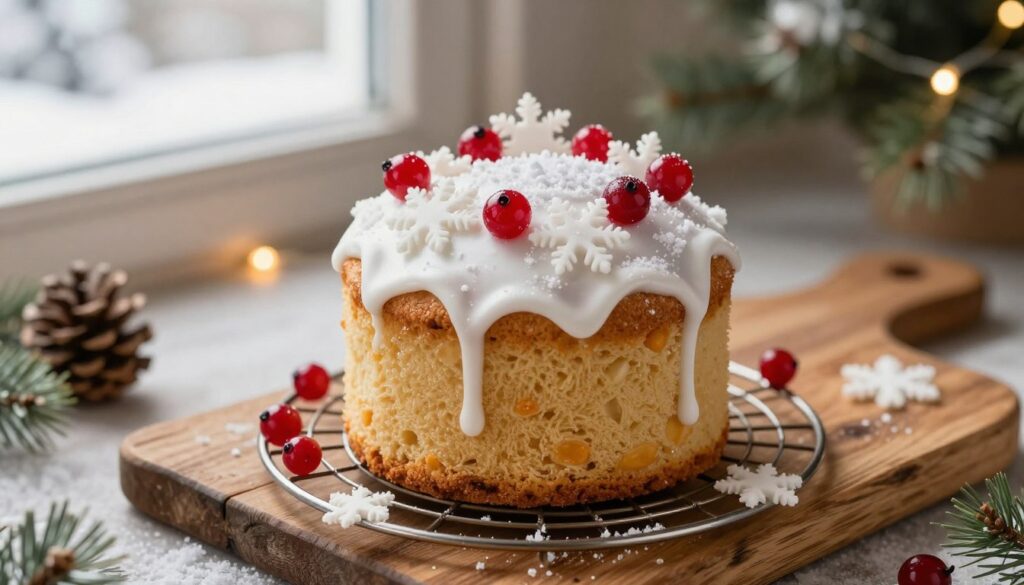
Creative Decorating Ideas for Mini Christmas Cakes
A few thoughtful finishing touches turn plain bakes into festive keepsakes. Use simple techniques to add charm and make each cake feel special.
Classic Marzipan and Fondant
Marzipan gives a neat, traditional finish. Roll a thin layer over each cake and cover with fondant or a light icing for a polished look.
- Brush cakes with a little juice before covering to help the marzipan stick.
- Keep edges neat by trimming excess with a small knife.
Simple Citrus Glaze
For a lighter option, make a glossy glaze with lemon juice and sugar. It brightens the flavour and avoids heavy icing.
Tip: Thin the glaze with tea or a splash more juice for a smoother finish.
Festive Toppers
Add character with glacé cherries, sugared fruit or small fondant decorations. Place cherries once the icing has set slightly so they stay put.
- Use contrasting colours to make each cake pop.
- Personalise with initials or tiny sugar shapes for gifts.
Finish: These ideas, inspired by mary berry techniques, help your cake stand out on the table and make every slice a small celebration of fruit, spice and care.
Storing Your Cakes to Maintain Moisture
Store finished bakes in an airtight container at room temperature to keep them moist and fresh for several weeks. Place the container in a cool, dark room away from heat sources and direct light.
Every few days, brush the tops with a little extra juice. This replaces the role that alcohol would normally play and helps the crumb stay soft. A light touch is enough — you want moisture, not a soggy surface.
For extra protection, wrap each cake in parchment paper and then foil before placing in the container. This double barrier slows air movement and guards against humidity and temperature swings.
If you need to keep them longer, undecorated bakes freeze well for up to 3 months. Defrost slowly at room temperature and avoid the fridge, which can dry the crumb and dull the flavour.
“Proper storage lets flavours mature and keeps your christmas cake just as good after days or weeks.”
Troubleshooting Common Baking Issues
If your bake looks dry or heavy, a few quick checks will usually reveal the cause. Dry cake often means overbaking; use a skewer inserted into the centre and remove the cake when it comes clean or with a few moist crumbs.
A dense result usually comes from overmixing or using ingredients that were not at room temperature. Let butter and eggs sit out first and fold the batter gently in a bowl.
If the fruit sinks to the bottom of the cake tin, toss pieces in a little flour before folding them into the mix. This helps the fruit suspend evenly.
Uneven browning in the oven responds well to rotating the tin mid bake or adding a paper collar to shield edges. If the cake tastes too sweet, cut back on sugar or use a tart lemon glaze instead of heavy marzipan or icing.
For flavour tweaks, swap orange for apple juice or strong tea when soaking fruit for a few hours. Always follow the recipe guide, and remember to add eggs one at a time.
“Troubleshooting is part of learning — with small changes you can save a mary berry christmas fruit cake and improve the next bake.”
Conclusion
A short, careful bake produces moist, richly flavoured slices that work well for sharing and gifting.
Follow the simple recipe steps: soak fruit in a bowl for a few hours, line tins with paper, and use a skewer inserted into the centre — remove when it comes clean.
Prepare these in advance to save time. A light bake and gentle resting for several days keeps each fruit cake soft for weeks. Swap orange juice for tea or a splash that replaces brandy if preferred.
Whether you use a mary berry approach or your own twist, these small cakes delight with bright flavour and neat presentation using marzipan, icing and bright cherries. Enjoy the baking and the sharing — it’s a merry, simple treat inspired by mary berry christmas.
FAQ
What makes these mini festive cakes a good choice for family gatherings?
How far in advance can I prepare the batter and soaked fruit?
Which fruit juice is best for soaking dried fruit?
How do I avoid a heavy, dense texture when using the creaming method?
Do I need special tins for mini versions, and how should I prepare them?
What oven temperature and time produce the best results for mini fruit cakes?
How can I test if the cakes are fully baked without drying them out?
What’s the best way to cool and rest mini fruit cakes after baking?
How should I decorate mini fruit cakes for a classic finish?
Can I skip marzipan and icing and still have a moist cake?
How should I store mini fruit cakes to keep them fresh for weeks?
What common problems occur and how do I fix them—too dry, too dark, or sinking centres?
Can I add glacé cherries or nuts to the mix, and how does that affect baking?
Are there tips for adding citrus flavour without affecting texture?
Mary Berry Non Alcoholic Mini Christmas Cakes
Enjoy festive flavour in a smaller, family-friendly portion. This recipe keeps the classic fruit and spice profile while swapping brandy for citrus juice to retain a moist crumb.
Ingredients
- 225g mixed dried fruit
- 50g glacé cherries
- 100ml orange juice or strong tea
- room temperature butter
- flour
- sugar
- eggs
- citrus zest
Method
- Soak the mixed dried fruit and glacé cherries in orange juice or apple juice for at least one hour, preferably overnight.
- Preheat the oven to a low temperature (140–150°C).
- Grease the cake tins and line them with parchment paper.
- In a large bowl, cream together the room temperature butter and sugar until pale and airy.
- Add the eggs one at a time, ensuring each is fully incorporated before adding the next.
- Fold in the sifted flour and the soaked fruit gently to maintain the air in the batter.
- Pour the batter into the prepared tins and smooth the top.
- Bake in the preheated oven for 45–55 minutes, checking for doneness with a skewer.
- Once baked, cool the cakes in the tins for 10 minutes before transferring them to a wire rack to cool completely.
- Decorate with marzipan and icing if desired, or brush with a citrus glaze.