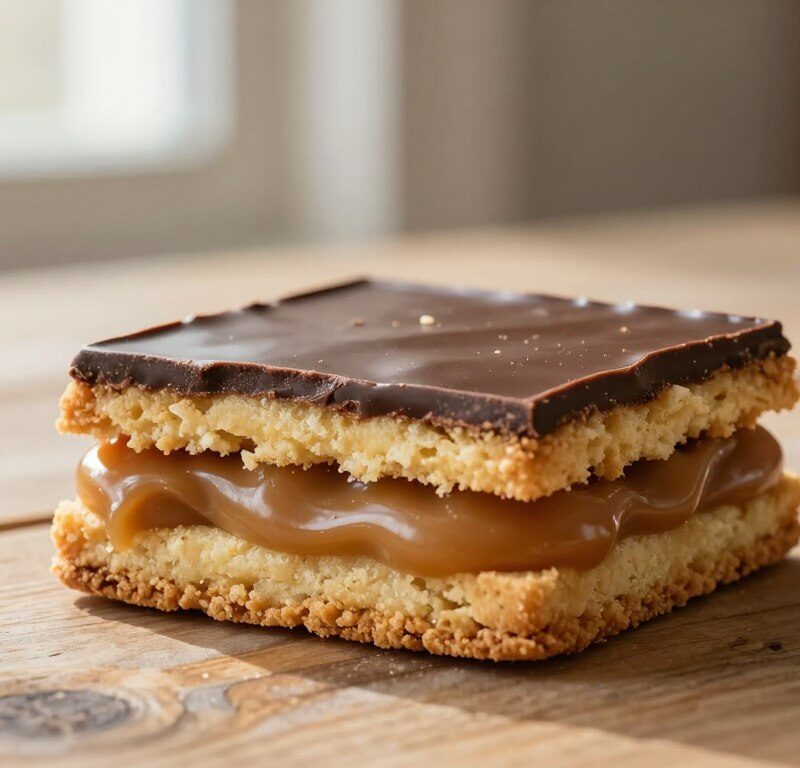
This classic three-layer traybake blends a crisp biscuit base, a thick golden caramel centre and a glossy chocolate top.
Simple to follow, the recipe uses everyday ingredients and clear steps so both new and seasoned bakers can succeed. The layers work in harmony: a crunchy foundation gives way to a creamy middle and a silky chocolate finish.
This version is make-ahead friendly and stores well, making it ideal for gifting, parties or a relaxed afternoon tea. It takes about 50 minutes of active prep and cooking, plus chilling time, so you can plan ahead with ease.
Mastering this bake teaches you how to balance texture and sweetness for a professional-quality treat that isn’t overpowering. With confidence and a few simple tips you can make mary berry’s take on millionaire shortbread at home.
Key Takeaways
- Three distinct layers: biscuit base, caramel filling, chocolate topping.
- Uses simple, everyday ingredients and clear steps for reliable results.
- Suitable for beginners and experienced bakers alike.
- Make-ahead friendly; stores well for several days.
- Active time ≈ 50 minutes; add chilling time for best set.
The Allure of Mary Berry Millionaire Shortbread
Each square delivers a harmony of textures: a firm base, a gooey caramel centre and a smooth chocolate topping.
This dessert charms because the buttery shortbread gives a crisp bite while the caramel adds deep, sweet-salty notes. The glossy chocolate finish brings a decadent snap that balances the chew of the middle.
Home bakers often recall the scent of caramel bubbling on the stove and how the three layer build-up felt like a celebration. It is a simple yet special treat for birthdays, tea or a quiet evening in.
“The first rich mouthful feels like a little piece of culinary history you can share.”
- Texture: crunch, chew, gloss.
- Balance: sweet and salty in each bite.
- Occasions: family gatherings and simple indulgence.
| Layer | Texture | Role in flavour |
|---|---|---|
| Shortbread base | Crunchy | Provides structure and buttery depth |
| Caramel centre | Chewy | Adds sweetness and a touch of salt |
| Chocolate topping | Glossy snap | Finishes with rich cocoa and smoothness |
Essential Ingredients for Your Bake
Start by measuring everything out so the recipe flows without surprises. Clear mise en place makes the bake calmer and faster. Gather weights, bowls and tools before you begin.
Shortbread Essentials
For the shortbread base you will need 225g plain flour, 150g cold diced butter and 75g caster sugar. Use a good-quality butter — it gives the buttery flavour that defines the shortbread.
Prepare a mixing bowl and a wooden spoon or spatula. Rub or pulse the flour, butter and sugar until the mix looks like fine breadcrumbs.
Caramel and Chocolate Components
The caramel layer calls for 150g butter, 150g light brown sugar, 397g condensed milk and 4 tbsp golden syrup. A heavy-bottomed saucepan is essential to keep the caramel smooth and prevent burning.
For the glossy chocolate topping, combine 200g chopped milk chocolate with 100g dark chocolate. Measure every ingredient so the layers set evenly.
| Component | Weight | Purpose |
|---|---|---|
| Plain flour | 225g | Structure for the shortbread base |
| Butter | 150g (base) +150g (caramel) | Rich flavour and smooth caramel |
| Condensed milk | 397g | Creates thick, creamy caramel |
| Sugar | 75g caster; 150g light brown | Sweetness and chewy texture |
| Chocolate topping | 200g milk +100g dark | Glossy finish with balanced sweetness |
Preparing the Perfect Shortbread Base
Start by creating a compact, even foundation so the caramel and chocolate sit level. Preheat your oven to 180°C (160°C fan) or 350°F. Line a 9-inch square tin with parchment, leaving an overhang to lift the bake out later.
Achieving the Ideal Texture
In a large bowl, combine 225g plain flour, 150g cold diced butter and 75g caster sugar. Work the ingredients until the mixture looks like fine breadcrumbs. Cold butter and quick handling give the best crumb.
Press the shortbread mixture firmly and evenly into the lined tin. A solid, compact base prevents the layers from separating when you slice the finished bars.
Bake for 20–25 minutes until lightly golden. Do not overbake; the centre should stay tender while the edges crisp. Remove from the oven and allow the cooled shortbread base to rest completely before adding the caramel layer.
Mastering the Golden Caramel Layer
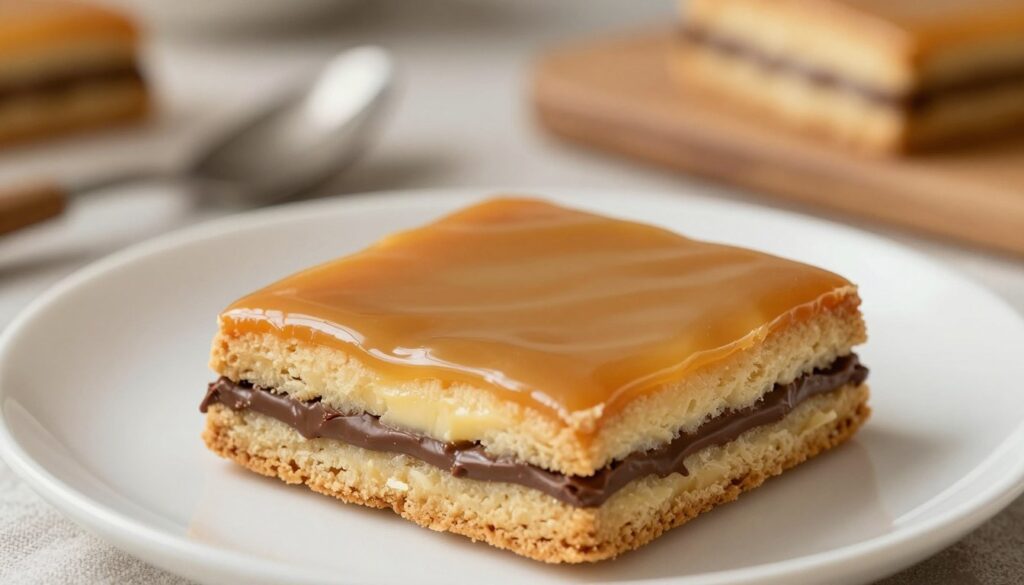
The caramel is the heart of this traybake; cook it slowly until it coats the spoon and thickens to a settable gloss.
In a heavy-bottomed saucepan, melt 150g butter with 150g light brown sugar, 397g condensed milk and 4 tbsp golden syrup over low heat. Stir the mixture constantly until the sugar dissolves.
Increase the heat slightly and cook for 6–8 minutes. The caramel should become thick, smooth and golden. To check, drag a spoon through the pan: if it leaves a clear trail, it is ready.
Pour the hot caramel over the cooled shortbread base in the 9-inch tin. Spread with a spatula so the layer reaches every corner and is even.
Allow the caramel layer to set at room temperature for at least 1 hour, or place in the fridge for 30 minutes to speed the process. Let the caramel cooled shortbread rest until firm before adding the chocolate topping.
Tip: If the caramel is runny it has not cooked for the full 6–8 minutes. Reheat gently and cook a little longer, stirring, until the correct consistency forms.
| Step | Indicator | Action |
|---|---|---|
| After sugar dissolves | Smooth, glossy | Increase heat; cook 6–8 minutes |
| Spoon test | Clear trail on pan | Remove from heat and pour |
| Setting | Firm to touch | Set at room temperature 1 hour or fridge 30 minutes |
Adding the Glossy Chocolate Topping
For the final layer, melt 200g milk chocolate with 100g dark chocolate in a heatproof bowl over simmering water or in 20-second bursts in the microwave. Stir continuously until the mixture is completely smooth and glossy.
Tip: add 1 teaspoon of vegetable oil to improve shine. When the caramel is thoroughly cool and the caramel cooled shortbread is firm, pour the chocolate over the set caramel layer.
Tilt the tin so the chocolate reaches every corner, then use an offset spatula to smooth the topping for a neat, professional finish. Allow the chocolate to set at room temperature for a glossy result.
If you need the dessert sooner, place the tin in the fridge for 20–30 minutes; this speeds the process but can dull the shine slightly. Once the chocolate has set, leave the whole tray to cool at room temperature before any final chilling or slicing.
“The glossy topping ties the layers together and makes cutting clean, elegant pieces much easier.”
Techniques for Achieving Clean Slices
A few simple cutting tricks deliver perfect squares with distinct shortbread, caramel and chocolate layers.
Once the chocolate is firm, lift the millionaire shortbread from the tin using the parchment overhang. This gives full access for neat slicing.
Allow the tray to sit at room temperature for 15–20 minutes before you cut. The slight rise in temperature prevents the chocolate from cracking under the knife.
Use a very sharp knife and warm it in hot water between cuts. Wiping the blade clean after each slice keeps the edges tidy and professional.
- Score the chocolate lightly before it is fully set to guide even squares.
- If the layers are still too cold and hard, pause — brittle chocolate will shatter.
- Chill time in the fridge is crucial; it gives the caramel and base time to become firm.
| Action | Indicator | Time |
|---|---|---|
| Rest at room | Chocolate not brittle | 15–20 minutes |
| Warm knife | Clean cuts | Quick warm each cut |
| Wipe blade | Neat edges | Every cut |
“Patience at this stage rewards you with clean, uniform squares that show every layer.”
Troubleshooting Common Baking Issues
Small baking mistakes can turn a great traybake into a sticky or crumbly mess, but most are easy to fix. Below are quick, practical steps to rescue the caramel, chocolate and shortbread layers so your bake looks and tastes its best.
Preventing Runny Caramel
If the caramel is too runny it usually means it needed the full 6–8 minutes on the stove. Cook the condensed milk, brown sugar and butter over low heat in a heavy-bottomed saucepan, stirring constantly.
If the caramel splits or stays loose, add one tablespoon of hot water and stir gently until smooth and glossy. Patience is key—don’t pour the next layer until the caramel is properly firm.
Avoiding Cracked Chocolate
To prevent the chocolate topping from cracking, avoid over-chilling. Let the tray sit at room temperature for 15 minutes before slicing.
When melting milk chocolate in the microwave, use 20-second bursts and stir between each burst to stop burning and grainy texture.
Fixing Crumbly Bases
A crumbly shortbread base often means the butter was too warm or the flour ratio was off. Use cold diced butter and press the plain flour and sugar mixture firmly into the tin before baking.
If the base falls apart, trim edges and chill briefly to help the layers bind. Always let each layer cool fully before adding the next to avoid separation.
“A steady hand and a little patience often fix what feels like a disaster in the kitchen.”
Creative Variations to Try
A handful of easy tweaks lets you tailor flavour and texture without losing the core structure.
Salted caramel version: sprinkle a pinch of sea salt over the warm caramel before pouring on the melted chocolate. The sweet-salty contrast lifts each bite.
For a nutty twist, stir chopped hazelnuts or almonds into the chocolate layer. This adds delightful crunch and a toasted note that pairs well with the butter base.
Want a marbled finish? Drizzle melted white chocolate over dark chocolate and swirl with a skewer for a professional look. For mocha lovers, add a teaspoon of instant coffee to the caramel to deepen the flavour.
Try swapping half the plain flour for oat flour or wholemeal flour for extra fibre and texture. For a dairy-free version, use plant-based butter and coconut condensed milk — a tropical take on the classic.
Extra idea: spread a thin layer of peanut butter between caramel and chocolate for a rich, indulgent treat.

“Small changes let you make this bake your own while keeping the layers that make it special.”
Storing Your Millionaire Shortbread
A few simple storage steps ensure every piece stays glossy and delicious. Keep the tray in a cool, dry place and avoid strong odours — chocolate absorbs smells easily.
For everyday snacking, place the squares in an airtight container at room temperature for up to 5 days. This keeps the base crisp and the caramel soft.
Freezing for Later
Wrap individual pieces in parchment and store them in a sealed box for up to 2 months. To serve, leave the frozen pieces at room temperature for 30 minutes so the layers relax to the right temperature.
If you prefer longer refrigeration, keep the bars in the fridge for up to 10 days, but expect the base to lose some crunch. Always plan ahead and return chilled bars to room temperature before serving for the best flavour.
| Storage method | Duration | Notes |
|---|---|---|
| Room | Up to 5 days | Airtight container; keeps base crisp |
| Refrigerator | Up to 10 days | May soften the crunch; cover to avoid odours |
| Freezer | Up to 2 months | Wrap squares individually; thaw 30 minutes at room |
Serving Suggestions for Every Occasion
Serve the bars with a hot cup of tea or strong coffee so the drink cuts through the sweetness.
For a classic finish: offer a dollop of whipped cream or a scoop of vanilla ice cream. This lightens the richness and turns each piece into a simple, elegant dessert.
Arrange the squares on a decorative platter for parties. Garnish with fresh berries to add a bright, tangy contrast to the caramel and chocolate.
For family-friendly options: a warm glass of milk pairs beautifully, especially for children. Hot chocolate is another indulgent match for a cosy afternoon.
- Cut into smaller squares to make the treat easier to share and moderate in portion size.
- Always serve at room temperature so the chocolate and caramel soften and flavours open up.
- Label any platter with nut or dairy notes when hosting to help guests with allergies.
“Small changes in presentation can turn a homemade bake into a memorable centrepiece.”
Nutritional Information
Knowing the nutrition helps you plan portions without losing the pleasure of a treat. This section gives clear figures so you can enjoy one square mindfully.
Each serving contains approximately 350–370 kcal. The recipe is rich, so portion size matters for balance.
Typical macronutrients per serving:
- Fat: roughly 20–22g.
- Carbohydrates: about 35–45g.
- Protein: around 3–4g.
Sugar is about 28–30g and fibre is near 1g. Sodium sits at roughly 120mg, which helps round the flavours.
Tip: enjoy smaller squares to reduce calories and fat while still savouring the caramel and chocolate layers.
| Nutrient | Per serving | Approximate range |
|---|---|---|
| Calories | 350–370 kcal | Depends on cut size |
| Fat | 20–22 g | Contributes to rich mouthfeel |
| Carbohydrates | 35–45 g | Mainly sugars and starch |
| Sugar | 28–30 g | From condensed milk, sugar, chocolate |
Pro Tips for Success
Use targeted techniques to control heat, timing and texture so each layer behaves as it should.
Stir the caramel constantly in a heavy-bottomed pan to prevent burning. A steady stir keeps the caramel smooth and helps the caramel layer set properly on the shortbread base.
Always let each layer cool completely before the next. Cold or room temperature resting prevents the chocolate topping from sinking into the caramel and keeps neat, defined layers.
Choose high-quality chocolate for the topping; it melts cleanly in a bowl over simmering water or short bursts in the microwave and gives a glossy finish.
Score the chocolate lightly before it is fully set. This makes cutting cleaner and reduces cracking when you slice your squares.
Line your tin well with parchment so the tray lifts out without damage. Avoid overbaking the shortbread base — it should be pale golden, not brown.
If the caramel splits, add a tablespoon of hot water and stir gently to bring it back together. Small fixes like this save time and keep the dessert looking professional.
“These simple steps help you make a version of the classic recipe that looks and tastes like it came from a patisserie.”
| Issue | Quick fix | Time |
|---|---|---|
| Runny caramel | Cook a few more minutes; stir | 2–4 minutes |
| Split caramel | Add 1 tbsp hot water; stir | 1 minute |
| Brittle chocolate | Rest at room temperature before cutting | 15–20 minutes |
Conclusion
This recipe proves that a few pantry staples can produce a bakery-quality finish at home.
Mary Berry presents a straightforward, dependable version that turns simple ingredients into an indulgent treat.
The crisp shortbread base, smooth caramel and glossy chocolate combine for a dessert where every bite balances texture and flavour.
Perfect for sharing, gifting or a cosy tea, these sweet squares will soon be your go-to when you want something impressive with little fuss.
Enjoy the process and savour each piece — the millionaire shortbread is set to steal the show at your next gathering.
FAQ
What size tin should I use for this recipe?
Can I make the shortbread base ahead of time?
Which flour is best for the shortbread base?
How do I achieve a smooth, golden caramel layer?
My caramel is runny — how can I prevent this?
Can I use the microwave to make the caramel?
What chocolate should I use for the topping?
How do I avoid cracked chocolate on top?
Any tips for clean, neat slices?
My shortbread base is crumbly — how can I fix it?
How long should I chill the layers between steps?
Can I freeze these squares for later?
Are there creative variations I can try?
What should I watch for when reheating or serving?
Does condensed milk always produce a firm caramel?
Mary Berry Millionaire Shortbread
This classic three-layer traybake blends a crisp biscuit base, a thick golden caramel centre and a glossy chocolate top. Simple to follow, the recipe uses everyday ingredients and clear steps so both new and seasoned bakers can succeed.
Ingredients
- 225g plain flour
- 150g cold diced butter (for shortbread base)
- 75g caster sugar
- 150g butter (for caramel)
- 150g light brown sugar
- 397g condensed milk
- 4 tbsp golden syrup
- 200g chopped milk chocolate
- 100g dark chocolate
Method
- Preheat your oven to 180°C (160°C fan) or 350°F. Line a 9-inch square tin with parchment, leaving an overhang.
- In a large bowl, combine 225g plain flour, 150g cold diced butter, and 75g caster sugar. Work the ingredients until the mixture looks like fine breadcrumbs.
- Press the shortbread mixture firmly and evenly into the lined tin. Bake for 20–25 minutes until lightly golden. Allow to cool completely.
- In a heavy-bottomed saucepan, melt 150g butter with 150g light brown sugar, 397g condensed milk, and 4 tbsp golden syrup over low heat, stirring constantly until the sugar dissolves.
- Increase the heat slightly and cook for 6–8 minutes until the caramel thickens and becomes golden. Pour the hot caramel over the cooled shortbread base and spread evenly.
- Allow the caramel layer to set at room temperature for at least 1 hour or refrigerate for 30 minutes.
- Melt 200g milk chocolate and 100g dark chocolate in a heatproof bowl over simmering water or in the microwave until smooth.
- Pour the melted chocolate over the set caramel layer, tilting the tin to ensure it reaches every corner. Smooth the topping with an offset spatula.
- Allow the chocolate to set at room temperature or refrigerate for 20–30 minutes before slicing.
- Lift the millionaire shortbread from the tin using the parchment overhang and slice into squares.