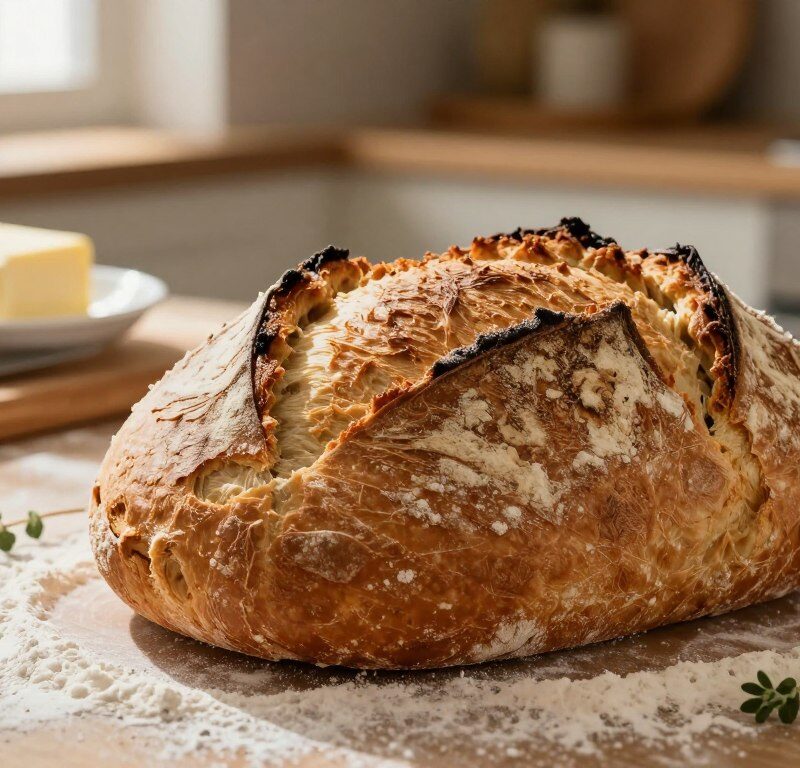
This simple, rustic loaf is ideal when you need fresh home-baked goodness without the wait. The classic soda bread recipe uses a chemical reaction rather than yeast, so you can have a golden crust and soft interior in under 45 minutes.
It’s a reliable choice for busy cooks who want to save time but still enjoy something warm from the oven. Serve slices with a steaming bowl of soup or spread with salted butter for a true British treat.
Keep a printed copy of the recipe in your kitchen and you’ll always have a quick solution when shop-bought options run low. Whether you’re a beginner or an experienced baker, this loaf delivers comforting flavour with minimal fuss.
Key Takeaways
- The recipe needs no yeast and bakes quickly, saving valuable time.
- A chemical rise makes results reliable for home bakers.
- Pairs perfectly with soup or simply with salted butter.
- Printable instructions make it easy to keep on hand.
- Suitable for beginners and for busy weekday lunches.
Why Mary Berry Soda Bread is a Kitchen Essential
A quick loaf that needs no proving is a game changer on busy evenings.
This soda bread recipe uses the chemical reaction between bicarbonate of soda and buttermilk to rise, so there’s no dough proving or yeast to wait for. The method saves valuable time and gives consistent results for home cooks.
The loaf tastes best on the same day it is baked. Expect a rustic texture with a golden crust and a tender interior that pairs well with soups and spreads.
Because the recipe is simple, it is one of the most efficient bread recipes to keep in your repertoire. It’s reliable for last‑minute meals and delivers a satisfying crunch from the crust while remaining soft inside.
- Ready in under an hour — ideal for busy days.
- No yeast or proving required — straightforward and fast.
- Rustic, golden crust with a tender crumb — great served warm.
Essential Ingredients for Your Loaf
Accurate measures and a tidy bowl are the unsung heroes of a reliable quick loaf.
The Role of Buttermilk
Buttermilk is the acid that wakes the bicarbonate of soda. Its acidity reacts immediately to create bubbles that lift the loaf. Use 300ml of buttermilk for the best results.
If you do not have buttermilk, make a substitute by stirring 1 tablespoon of lemon juice into 300ml of milk and leaving it for a few minutes.
Choosing Your Flour
This soda bread recipe calls for 450g of plain or strong white flour. The choice of flour shapes the crumb and crust.
Stir the flour, 1 level teaspoon of bicarbonate of soda and 1 level teaspoon of salt in a large bowl so the leavening spreads evenly.
- Measure ingredients carefully to get the right dough texture.
- Check that bicarbonate is fresh — it’s the primary leavening agent.
| Ingredient | Amount | Role |
|---|---|---|
| Flour (plain or strong white) | 450g | Structure for the bread |
| Buttermilk | 300ml | Acid for bicarbonate reaction |
| Bicarbonate of soda | 1 level tsp | Leavening agent |
| Salt | 1 level tsp | Flavour enhancer |
Preparing the Dough for Success
Preheating your oven first makes sure the chemical lift works at its best from the moment the dough goes in.
Set the oven to 200°C (180°C fan/Gas Mark 6) before you start. A hot oven means the bicarbonate and buttermilk begin their reaction and the loaf firms up quickly.
In a large bowl, sift the flour, bicarbonate and salt so the ingredients are evenly spread.
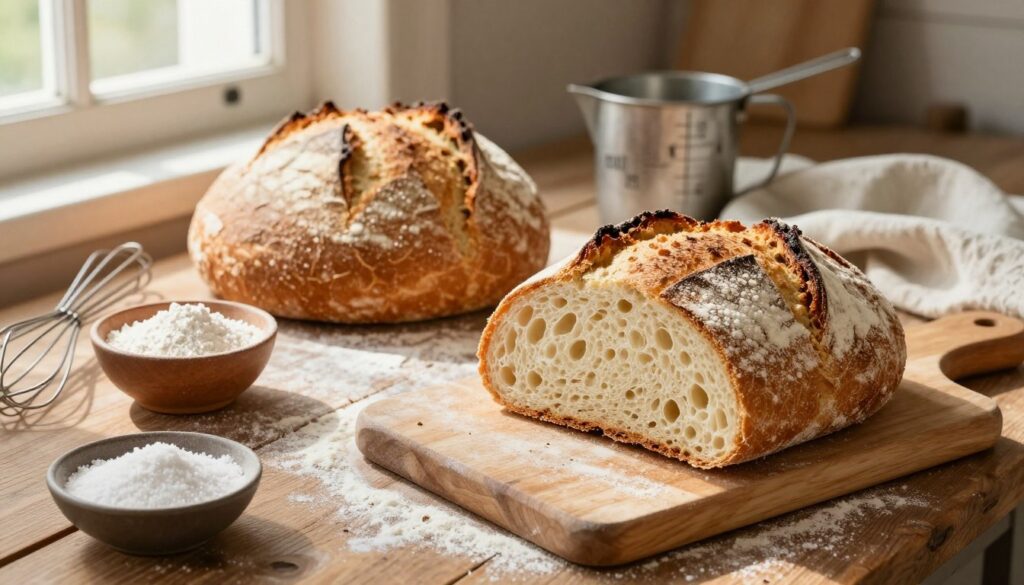
Make a well in the centre and pour buttermilk in. Work swiftly — the soda and acid react straight away.
Use your hands to bring the mixture together gently. Avoid heavy kneading; this is not a yeast loaf. The dough should feel soft and slightly sticky.
- Lightly grease a baking tray so the loaf does not stick during the 30–45 minutes in the oven.
- Handle the dough with care to keep the crumb tender.
- Move the formed dough onto the tray and into the oven within a few minutes for the best rise.
Shaping and Scoring the Loaf
Forming the dough into a compact round lets heat travel through the loaf without leaving a raw middle.
Shape the dough on a lightly floured surface into a smooth round about 18cm (7in) across. Use gentle pressure and quick, confident movements so the dough keeps a tender crumb.
The Importance of the Cross
Place the shaped loaf on your prepared tray and take a sharp knife to the top. Cut a deep cross into the dough; this helps heat reach the centre during baking and guides an even rise.
The cross is traditional and practical. It allows the loaf to expand uniformly so the crust forms evenly and the centre cooks through without becoming doughy.
- Keep the surface well floured to prevent sticking while shaping.
- Score a firm, deep cross with a sharp knife across the top before baking.
- Handle the dough lightly to keep the crumb soft and tender.
- Transfer the loaf to the tray immediately so the chemical lift works in the hot oven.
Baking to Perfection
A hot oven is the unsung hero of a perfect quick loaf — it kickstarts the soda’s lift immediately.
Bake the loaf at 200°C for 30 minutes on the middle rack. This initial time sets the crust and lets the chemical reaction do its work without yeast or proving.
After 30 minutes, carefully flip the loaf upside down on the tray and return it to the oven for a further 10–15 minutes. This step evens the browning and helps the bottom cook through.
Test for doneness by tapping the bottom of the loaf — it should sound hollow. That hollow note means the loaf is cooked and not doughy inside.
“The hollow sound when you tap the bottom tells you the loaf is ready to cool.”
Remove the loaf and cool it on a wire rack. Cooling on a rack prevents steam from softening the crust and preserves the crisp exterior you expect from baking.
- Preheat the oven to 200°C for reliable results.
- Bake 30 minutes, flip, then 10–15 minutes more for even colour.
- Tap the bottom; a hollow sound confirms the loaf is done.
- Always cool on a wire rack to keep the crust crisp.
| Step | Time | Purpose |
|---|---|---|
| Initial bake | 30 minutes | Set crust and allow soda reaction to lift loaf |
| Flip and finish | 10–15 minutes | Even browning and thorough cooking of bottom |
| Cooling | 10–20 minutes | Prevent steam softening by using a wire rack |
Expert Tips for a Tender Crumb
Treating this mix like a quick scone batter keeps the crumb light and tender.
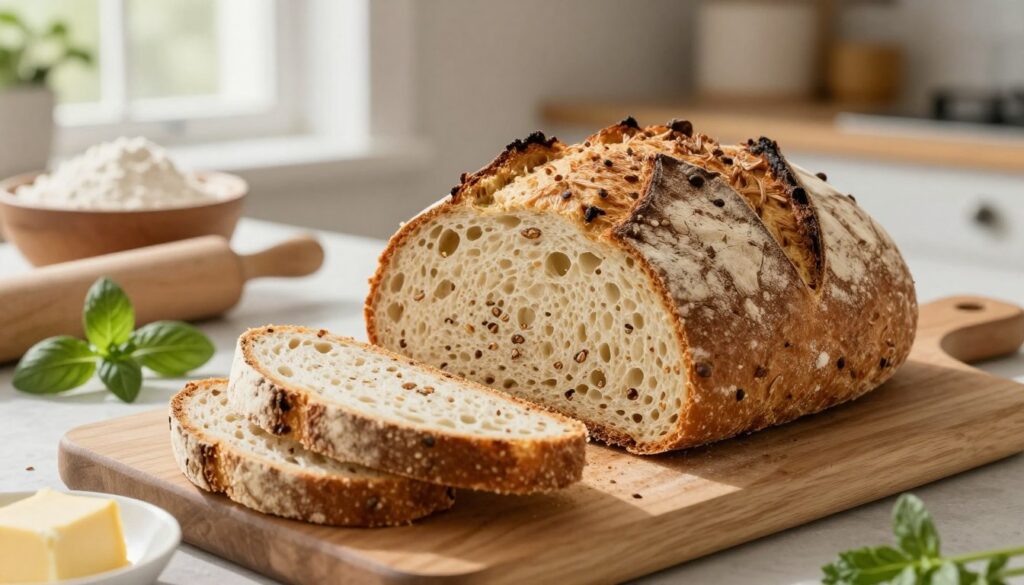
Avoid overmixing. Work the flour and buttermilk together with your hands until just combined. Stop when the dough holds together; excess kneading develops gluten and makes the loaf chewy.
Avoiding Overmixing
Use a light touch and fold rather than knead. If the dough looks shaggy and slightly sticky, that is correct.
The Secret to a Hollow Sound
Bake and test. The definitive sign of doneness is the hollow sound when you tap the bottom of the loaf. That sound tells you the bottom and centre have cooked through.
Handling Like a Scone
Shape the dough quickly on a floured surface and score a deep cross on the top with a sharp knife. This allows heat to reach the centre so the crust forms evenly.
- Measure flour, salt and bicarbonate in a bowl before mixing to keep consistency steady.
- If you lack buttermilk, pour milk with 1 tablespoon lemon juice and leave for 10 minutes.
- Move the dough to the baking tray and into the hot oven within minutes; the bicarbonate reaction is time‑sensitive.
“A hollow tap and a light, tender crumb are your best tests for a successful loaf.”
Creative Variations to Try
Small additions such as seeds or sundried tomatoes can transform a simple recipe into something special.
Make savoury or sweet versions by folding in grated cheese, chopped olives and chives, or sundried tomatoes. These ingredients add flavour without changing the quick method.
For texture, swap 50g of plain flour for porridge oats or scatter pumpkin and sunflower seeds on the top before baking. Raisins or sultanas make a gently sweet loaf that toasts beautifully.
- Use lemon juice in milk as a buttermilk substitute to keep the bicarbonate active.
- Mix wholemeal with white flour for a heartier result.
- When adding extras, keep your hands light to avoid over‑kneading the dough.
“Treat the mix gently and the crumb will stay tender, even with extra ingredients.”
Tip: Ensure additions are evenly distributed so every slice is balanced. These small changes let you make soda bread that suits any meal or mood.
Serving Suggestions for Every Occasion
A warm slice straight from the oven makes an ordinary meal feel thoughtful and homely.
Serve the soda bread warm with salted butter for a simple breakfast or a tea-time treat. The crust is at its best on the day it is baked.
Pairing with Hearty Soups
This loaf is ideal alongside a steaming bowl of soup. Try tomato, leek or vegetable soup; the dense crumb soaks up broth without falling apart.
For a casual lunch, tear the loaf into chunks and dunk. The quick preparation time makes it perfect for last-minute guests.
- Spread with salted butter for a classic finish.
- Serve with sharp cheddar or soft brie on a cheese board for something more refined.
- Enjoy the loaf the same day for the best texture and flavour.
| Occasion | Serving idea | Why it works |
|---|---|---|
| Breakfast | Warm slice with butter or jam | Simple, quick and comforting |
| Lunch | Chunked with hearty soup | Absorbs broth; filling in minutes |
| Entertaining | Cheese board with cheddar or brie | Balances rustic flavour with fine cheese |
Conclusion
With a few reliable pantry staples you can turn basic flour and milk into a dependable loaf for any meal.
This simple recipe needs no yeast and saves you precious time in the kitchen.
Mix flour, buttermilk and bicarbonate soda gently, shape the dough, then bake in a hot oven. The result is rustic bread with a crisp crust and soft centre.
Cool on a wire rack and enjoy the loaf on the same day with butter or alongside soup. You can print this guide to keep a quick reference ready whenever you want fresh baking.
FAQ
What makes this soda bread recipe a kitchen essential?
Do I have to use buttermilk, and can I substitute it?
Which flour should I choose for the best crumb?
How much bicarbonate of soda should I use and why does it matter?
Is kneading necessary for this dough?
Why do you score a cross on top before baking?
What temperature and baking time work best?
How can I tell when the bread is fully baked?
Any tips to achieve a tender crumb and good crust?
Can I add extra flavours like cheese or herbs?
How should I store leftover loaf to keep it fresh?
Is this loaf suitable to serve with soups and stews?
Can I make the recipe dairy-free?
Mary Berry Soda Bread
This simple, rustic loaf is ideal when you need fresh home-baked goodness without the wait. The classic soda bread recipe uses a chemical reaction rather than yeast, so you can have a golden crust and soft interior in under 45 minutes.
Ingredients
- 450g plain or strong white flour
- 300ml buttermilk
- 1 level tsp bicarbonate of soda
- 1 level tsp salt
Method
- Preheat your oven to 200°C (180°C fan/Gas Mark 6).
- In a large bowl, sift the flour, bicarbonate of soda, and salt together.
- Make a well in the center and pour in the buttermilk.
- Gently bring the mixture together with your hands until it forms a soft, slightly sticky dough.
- Lightly grease a baking tray.
- Shape the dough into a smooth round about 18cm (7in) across on a floured surface.
- Score a deep cross into the top of the dough with a sharp knife.
- Transfer the loaf to the prepared tray and bake for 30 minutes.
- After 30 minutes, carefully flip the loaf upside down on the tray and return it to the oven for an additional 10-15 minutes.
- Tap the bottom of the loaf; it should sound hollow when done.
- Remove the loaf and cool it on a wire rack.