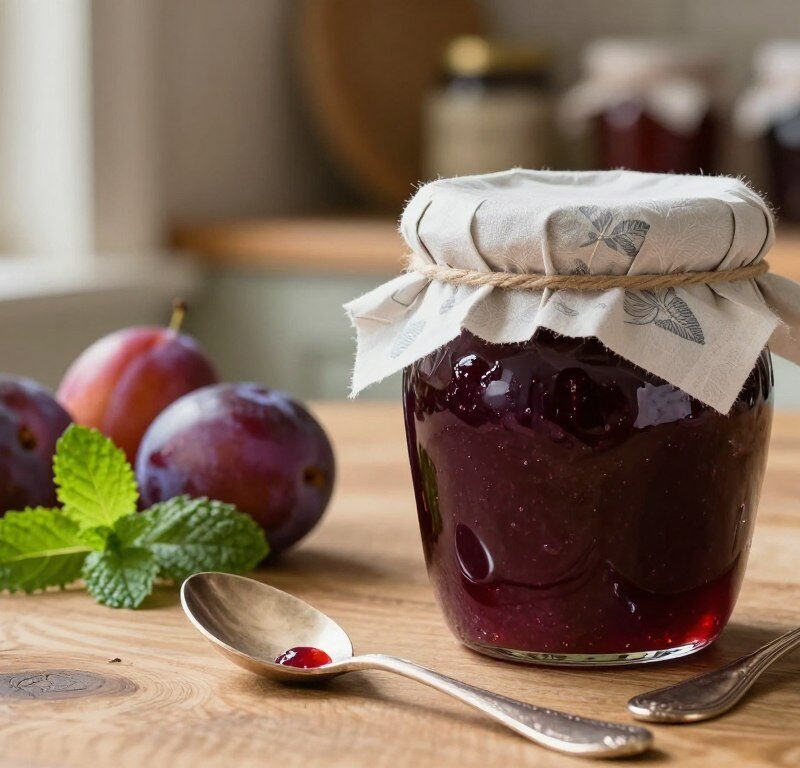
This classic British preserve is loved for its deep purple colour and bold, fruity flavour. It is a simple homemade jam that captures the essence of ripe seasonal fruit in just one pot.
The recipe uses 1 kg of fresh damsons, 750 g of granulated sugar and the juice of one lemon. In about 30–40 minutes you can make damson that spreads beautifully on warm toast or scones.
These small plums give a rich, slightly tangy texture that suits many recipes. Keep a jar in the pantry for breakfasts, baking or afternoon tea; it rewards the short time and few ingredients.
Key Takeaways
- Traditional preserve: renowned for deep colour and fruity flavour.
- Quick to make: roughly 30–40 minutes from start to finish.
- Simple ingredients: 1 kg damsons, 750 g sugar and lemon juice.
- Versatile use: ideal for toast, scones and classic British recipes.
- Seasonal treat: a reliable way to capture fresh fruit flavour at harvest time.
Understanding the Appeal of Mary Berry Damson Jam
A high natural pectin level in the fruit turns cooking into a quick route to a firm, glossy set.
Damsons are small plums with a naturally high pectin content. This means the jam will set well without added pectin and gives a reliable finish for home cooks.
The cooked preserve has a deep fruity flavour with a gentle tang. That balanced taste makes it ideal for spreading or folding into desserts. The fruit’s natural acidity also helps the setting process and improves shelf stability.
- Natural set: high pectin in the fruit aids a firm finish.
- No extra pectin: many recipes rely only on the fruit’s own content.
- Versatile flavour: rich, vibrant and slightly tangy for many dishes.
| Feature | Benefit | Result |
|---|---|---|
| High pectin | Natural thickening | Secure set without additives |
| Acidity | Helps setting | Balanced, stable texture |
| Rich fruit content | Deep flavour | Great for toast and desserts |
Essential Ingredients and Kitchen Equipment
Prepare the ingredients and tools first; tidy mise en place saves time and prevents mistakes. Having everything ready reduces stress during the busy boiling stage and helps you watch the setting point closely.
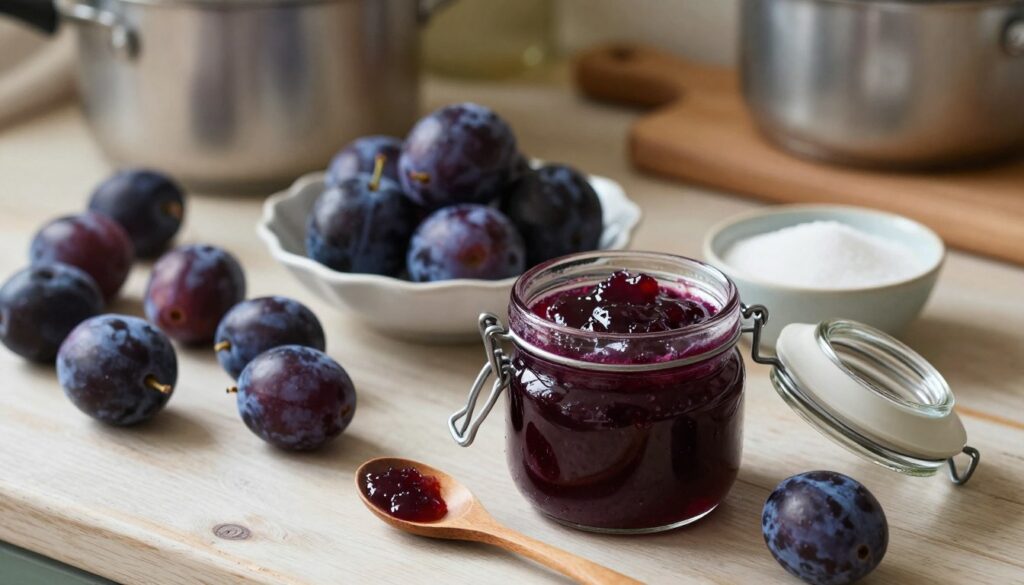
Ingredients for Success
To make this recipe you will need 1 kg of damsons, 750 g of granulated sugar, the juice of one lemon and 150 ml of water. These ingredients balance sweetness, acidity and liquid so the fruit cooks evenly in about 30–40 minutes.
The high pectin in the plums does most of the work, while sugar and lemon juice help with setting and preservation.
Necessary Tools
Good tools make jam making safer and neater. Use a large heavy-bottomed pan and a wooden spoon to prevent sticking. A potato masher helps break the fruit, and a jam thermometer makes it easier to hit the setting temperature.
- Sterilised glass jars for long storage.
- A clean spoon for testing consistency.
“A calm, well-prepared kitchen is the best tool for perfect preserves.”
| Tool | Purpose | Tip |
|---|---|---|
| Heavy-bottomed pan | Even heat | Prevents burning |
| Jam thermometer | Measure setting | More reliable than time alone |
| Sterilised jars | Storage | Seal while hot |
Preparing Your Fresh Damsons
Begin by giving your damsons a thorough rinse and sorting out any bruised or shrivelled fruit. Remove stems and discard any soft pieces to keep flavour clean and bright.
Removing Stones and Preparing Fruit
Place 1 kg of the fruit and 150 ml of water in a large saucepan. Cook fruit over medium heat until the skins soften and the flesh gives way.
As the fruit softens, use a spoon to remove stones. Take care to clear all damson stones before you add sugar so the final preserve is smooth.
Use a potato masher to break down the plums and release natural juice. The mash also makes it easier to lift out any remaining stones with a spoon.
- Tip: Wash and sort first to avoid unpleasant surprises later.
- Tip: Remove stones while the fruit is soft, not after you add sugar.
“Clear stones early to protect texture and mouthfeel.”
| Step | Why | Quick Tip |
|---|---|---|
| Wash & sort | Removes damaged fruit | Use cold water |
| Cook with water | Softens skins | 150 ml for 1 kg |
| Remove stones | Ensure smooth jam | Use a spoon as fruit softens |
The Cooking Process for Perfect Jam
Start the cooking stage by gently dissolving the sugar into the softened fruit before turning up the heat.
After you cook fruit and remove stones, stir in 750 g of sugar and the juice of one lemon until the sugar dissolves completely. This step blends sweetness and acidity so the set will be reliable.
Use a large pan to allow fast evaporation. Increase the heat and bring the mixture to a rolling boil.
Boil rapidly for 10–15 minutes. Stir often with a wooden spoon to prevent sticking and burning while the sugar jam reaches setting point.
Skim any foam from the top of the hot jam for a clear finish. Work quickly when transferring hot jam into sterilised jars to seal the jars while hot.
- Dissolve sugar and lemon before increasing heat.
- Boil hard for 10–15 minutes to reach set.
- Skim foam and stir frequently to avoid burning.
| Step | Why | Tip |
|---|---|---|
| Stir in sugar & juice | Even dissolve | Do this off high heat |
| Rapid boil | Achieve set | 10–15 minutes |
| Skim foam | Cleaner jars | Use a spoon |
“Careful boiling and frequent stirring transform simple ingredients into a smooth, well-set preserve.”
Mastering the Setting Point
A reliable test will tell you when to stop boiling and start jarring. Knowing the exact setting point prevents overcooking and gives a glossy finish in your jars.
The Chilled Plate Test
Chill a small plate in the fridge. Drop a spoonful of jam onto the plate and leave it for 2 minutes.
If the surface wrinkles when you push it with your finger, the set is reached and you can take the pan off the heat.
Troubleshooting Consistency
If the mixture is still too runny after 10–15 minutes of boiling, return it to a rolling boil for another 2–3 minutes.
Re-test on the chilled plate until the jam reaches the desired setting point. This quick check avoids wasted batches and keeps the flavour bright.
Managing Foam
Skim any scum that rises during cooking to ensure a clear, attractive preserve. Use a spoon to remove foam regularly.
“Careful skimming and timely testing make good recipes into great preserves.”
- Tip: Test on a chilled plate for 2 minutes.
- Tip: Return to a rolling boil if too runny for another 2–3 minutes.
- Tip: Skim foam with a spoon for clean jars and smooth texture.
| Issue | Action | Result |
|---|---|---|
| Still runny | Boil hard 2–3 more minutes | Better set |
| Excess foam | Skim with spoon | Clear finish in jars |
| No wrinkles on test | Repeat chilled plate test | Confirm set |
Creative Variations and Flavour Twists
If fresh fruit is scarce, 1 kg of frozen damsons (thawed) makes a reliable substitute and still sets well.
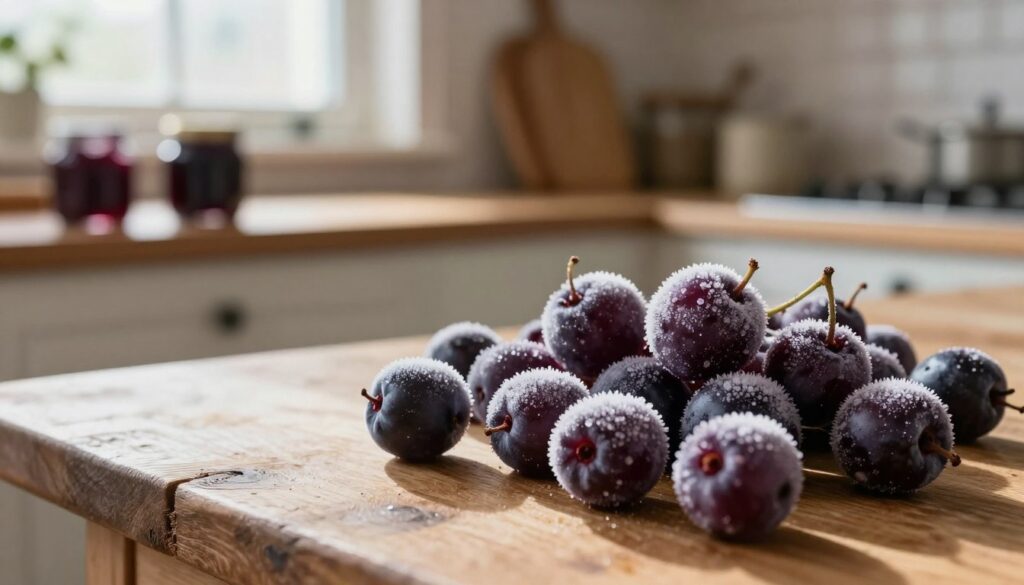
Spice and citrus lift the basic preserve. Try a pinch of cinnamon or grated ginger during cooking for warmth. Add orange zest on the top of the pan for a bright lift as the sugar dissolves.
Mixing damsons with chopped apples boosts natural pectin and deepens flavour. This avoids the need to add pectin in many recipes and helps the sugar jam reach set with confidence.
- Use thawed frozen damsons if out of season; drain excess juice before you add sugar.
- Add a small spoon of ground spice or citrus zest to personalise taste.
- Combine with apples to increase pectin and improve texture without added pectin.
| Variation | Benefit | Tip |
|---|---|---|
| Frozen damsons | Available year-round | Thaw, then drain |
| Spiced | Warmer flavour | Add during boil |
| With apples | Higher pectin | Chop small |
“A few small tweaks can make each jar uniquely yours.”
Storing and Serving Your Homemade Preserve
A cool, dark store cupboard and neat labelling keep homemade preserves at their best for months. Good storage protects flavour, colour and texture so your jars remain a treat through the year.
Long Term Storage Tips
Screw lids on tightly while the hot jam is still warm to create an airtight seal. This helps vacuum-seal the jars and reduce the risk of spoilage.
Unopened jars stored in a cool, dark place keep well for up to 1 year. Rotate stock by date so older jars are used first.
- Opened jars: refrigerate and use within 4 weeks; always serve with a clean spoon.
- If the preserve has thickened too much, warm gently for a few minutes to restore spreadable consistency.
- Label each jar with the preparation date so you can track your stock through the year.
| Stage | Advice | Result |
|---|---|---|
| After filling | Seal lids while hot | Airtight jars |
| Storage | Cool, dark place | Up to 1 year quality |
| Once opened | Refrigerate, clean spoon | Use within 4 weeks |
“Treat your jars kindly: keep them cool, sealed and labelled.”
For a festive use or a different preserve idea, try a complementary recipe such as this Christmas chutney recipe to make the most of seasonal fruit.
Conclusion
Strong, simple rewards.
This simple preserve rewards a little time and care with intense, fruity results. Follow the recipe steps and you will make damson preserves that show off deep flavour and a glossy finish.
High pectin in the fruit helps the set, so test the setting point carefully and only add sugar after the fruit has softened. Use the chilled plate test to confirm the setting before you jar.
The finished damson jam is versatile: spread it on toast, fold into baking or serve with scones. With basic ingredients and minimal time, home-made jars become a year-round treat and a handy addition to other recipes.
FAQ
How do I remove stones from damsons quickly?
What ratio of sugar to fruit should I use?
Can I use frozen damsons to make jam?
How do I know when the jam has reached setting point?
My jam is too runny — how can I fix it?
How do I manage foam while cooking jam?
Do I need to add pectin to damson preserves?
What jars and lids should I use for long-term storage?
How long should I boil the jam for best flavour?
Can I reduce sugar to make a low-sugar preserve?
Is it necessary to sterilise jars before filling with hot jam?
How can I add flavour twists to the traditional recipe?
What are signs that a jar did not seal correctly?
How long will opened jam keep in the fridge?
Mary Berry Damson Jam
This classic British preserve is loved for its deep purple colour and bold, fruity flavour. It is a simple homemade jam that captures the essence of ripe seasonal fruit in just one pot.
Ingredients
- 1 kg fresh damsons
- 750 g granulated sugar
- Juice of one lemon
- 150 ml water
Method
- Wash and sort the damsons, removing any bruised or shrivelled fruit.
- Place the damsons and water in a large saucepan and cook over medium heat until the skins soften.
- Remove the stones from the softened fruit using a spoon.
- Use a potato masher to break down the plums and release natural juice.
- Stir in the sugar and lemon juice until the sugar dissolves completely.
- Increase the heat and bring the mixture to a rolling boil.
- Boil rapidly for 10-15 minutes, stirring often to prevent sticking.
- Skim any foam from the top of the jam.
- Perform the chilled plate test to check if the jam has reached setting point.
- Transfer the hot jam into sterilised jars and seal while hot.