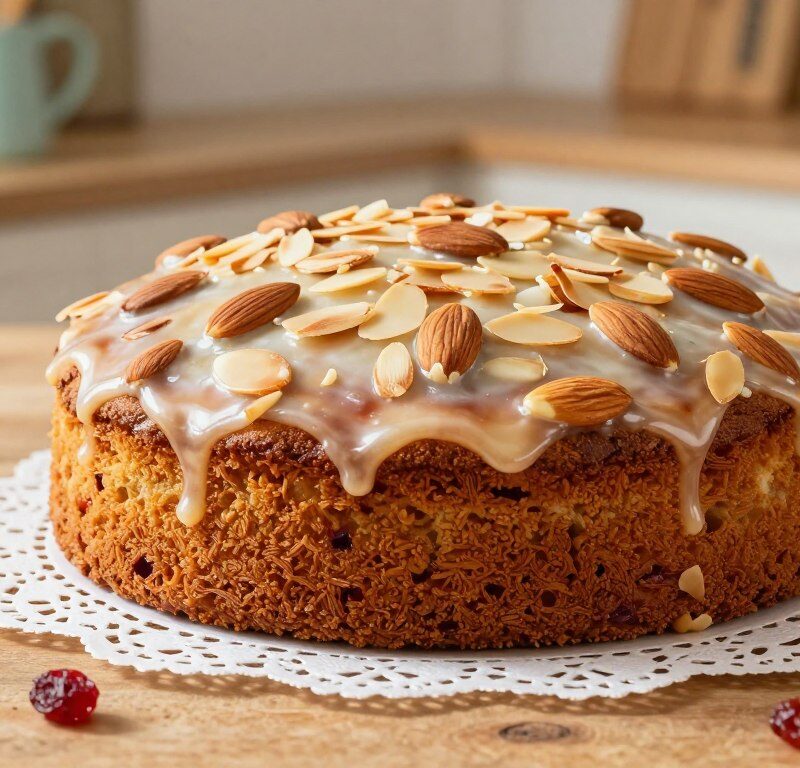
This classic British treat is a traditional Scottish fruit cake known for a light texture and a lovely almond topping.
The Mary Berry name is linked to a simple, elegant recipe that keeps the sponge moist and tender. It uses an exact balance of 175g butter and 175g caster sugar to create an airy crumb.
Perfect for afternoon tea, this version is lighter than a heavy Christmas loaf and is ideal when you want a refined sweet without the weight.
Follow the clear steps and you will achieve a professional-quality bake that impresses at any gathering. The dundee cake style highlights candied fruit, soft sponge and a neat almond pattern on top.
Key Takeaways
- Light, traditional fruit loaf that suits afternoon tea across the UK.
- The balance of 175g butter and 175g caster sugar gives a tender crumb.
- It is lighter than a typical festive fruit loaf but still richly flavoured.
- The recipe is straightforward and suitable for home bakers of all levels.
- Almond topping adds a classic, professional finish.
The History and Charm of the Mary Berry Dundee Cake
The origin of this well-loved loaf traces back to the Keiller family, who began selling it in the 18th century.
Keiller’s version turned a regional fruit loaf into a national favourite. Over time the recipe kept its rich flavour while becoming less heavy than a typical christmas cake.
Mary Berry refined the traditional method to keep the texture light and tender. Currants and other dried fruit add depth and a pleasing chew, making this fruit cake both classic and versatile for tea.
- 18th-century origins with Keiller family production
- Refined for a lighter, everyday slice rather than a dense festive loaf
- Perfect for relaxed afternoon time or a more formal tea
Essential Ingredients for Your Fruit Cake
Good ingredients make all the difference when you want a light, flavourful fruit loaf. Keep measurements accurate and choose fresh components for the best crumb and taste.
Selecting Quality Dried Fruit
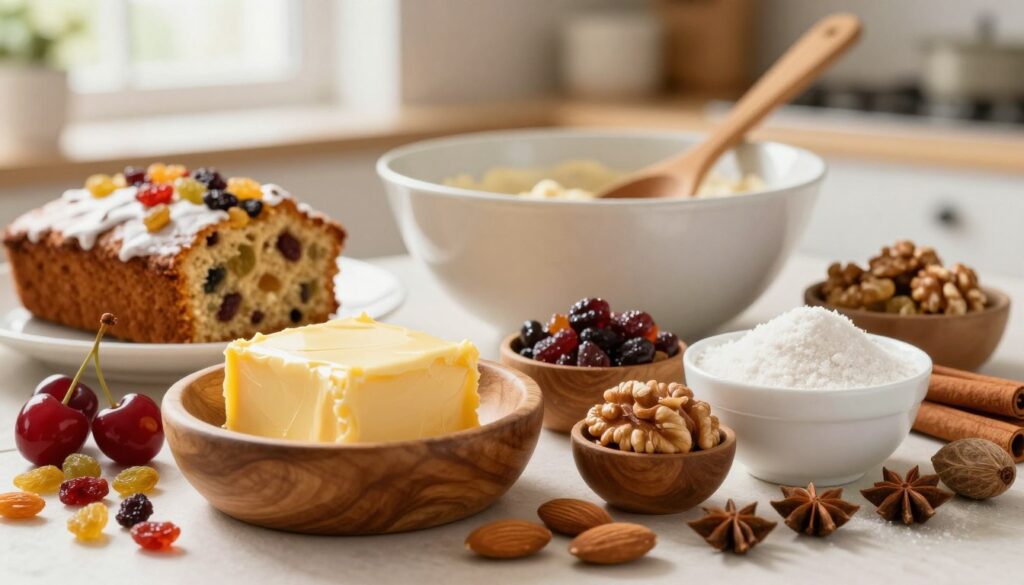
Use 250g of mixed dried fruit, combining sultanas, raisins and currants for a balanced sweetness and texture.
Add 50g of glacé cherries and 2 tbsp of mixed peel to give pops of colour and a bright flavour that pairs well with lemon zest.
The Importance of Ground Almonds
Blend 50g of ground almonds into 200g of self-raising flour. The almonds add subtle nuttiness and a tender crumb that defines a true dundee cake style loaf.
For the batter, cream 175g softened butter with 175g caster sugar, stir in 3 large eggs, 2 tbsp milk and 1 tsp baking powder. These ingredients ensure the fruit cake rises evenly and stays moist.
- Quantity checklist: 250g mixed dried fruit, 50g glacé cherries, 50g ground almonds, 200g self-raising flour.
- Wet ingredients: 175g butter, 175g caster sugar, 3 eggs, 2 tbsp milk.
- Flavour lifts: 2 tbsp mixed peel and lemon zest to brighten the loaf.
Preparing Your Tin and Batter
Start by setting up your tin and getting the batter ready so the loaf bakes evenly from edge to centre.
Preheat the oven to 160°C (140°C fan). This steady temperature helps a dense fruit cake cook through without burning the top.
Grease and line a 20cm deep round cake tin with baking paper. Proper lining prevents sticking and keeps the sides neat.
- Cream butter and sugar until pale and fluffy; this traps air and gives lift.
- Gradually add eggs, one at a time, to maintain the emulsion and avoid curdling.
- Fold in 200g flour gently, then stir in dried fruit, glacé cherries, mixed peel and citrus zest.
- Level the top of the mixture carefully to prepare a smooth surface for the almond top.
| Item | Tip | Why it matters |
|---|---|---|
| Oven | 160°C (140°C fan) | Even baking over long time |
| Tin | 20cm deep, greased & paper-lined | Prevents sticking and supports fruit batter |
| Batter | Cream butter & sugar; add eggs slowly | Maintains structure and keeps crumb light |
| Fruit mix | Fold in gently with zest | Even distribution without overworking batter |
Mastering the Iconic Almond Topping
A neat ring of almonds gives the top a professional, classic look that guests notice first.
Achieving the Perfect Circular Pattern
Use 50g of blanched whole almonds and arrange them in neat concentric circles on the batter before baking.
Take your time and place each almond by hand. Press them gently so they sink slightly into the surface. This keeps the nuts from shifting during baking and creates a neat finish.
Tip: Add 1 tbsp of milk to the batter to keep the surface level and help the almonds sit evenly.
- The almonds toast in the oven and add a crunchy contrast to the soft fruit loaf.
- Precise placement honours the traditional look associated with mary berry recipes.
- Work from the outer edge inward to maintain perfect circles.
Presentation matters: the almond pattern is the trademark flourish that signals careful baking and classic taste.
Baking and Cooling Techniques
A steady oven and the right cooling method ensure the fruit loaf sets with a fine texture.
Baking time: Bake for 1 hour 40 minutes to 1 hour 50 minutes at 160°C (140°C fan). Insert a skewer into the centre and check it comes out clean.
If the top begins to brown too quickly, tent a sheet of foil over the blanched almonds. This protects the almonds on the top while the inside finishes baking.
When the loaf is done, leave it to rest in the 20cm cake tin for 15 minutes. This short pause stops the crumb from collapsing and makes removal easier.
Turn the loaf out and transfer it to a wire rack to cool completely. Proper cooling on a wire rack allows air to circulate under the cake and keeps the sponge texture even.
| Step | Action | Why it matters |
|---|---|---|
| Baking | 160°C for 1h40–1h50 (140°C fan) | Slow, even heat cooks fruit evenly and avoids a soggy centre |
| Top protection | Cover with foil if browning | Prevents over-coloured top and protects blanched almonds |
| Resting | Leave 15 minutes in cake tin | Helps loaf set so it releases cleanly from paper |
| Cooling | Move to a wire rack | Air circulation preserves texture and cools evenly |
Serving Suggestions for Afternoon Tea
Think about balance: sweet dried fruit needs a savoury partner to sing. A simple slice works beautifully with plain tea, but small additions lift the experience.
Classic Tea Pairings
Serve thin slices with a pot of strong black tea or Earl Grey. The subtle citrus notes in the tea accent the lemon zest and mixed peel in the loaf.
Serving with Mature Cheddar
A slice of fruit cake with mature cheddar is a traditional match that many enjoy after visiting Cheddar Gorge. The sharp cheese offsets the sweetness and adds depth to each bite.
Adding Creamy Accompaniments
For a richer treat, offer a spoonful of clotted cream or crème fraîche. A small splash of whisky on the cream gives a Scottish twist that pairs well with the almonds on the top.
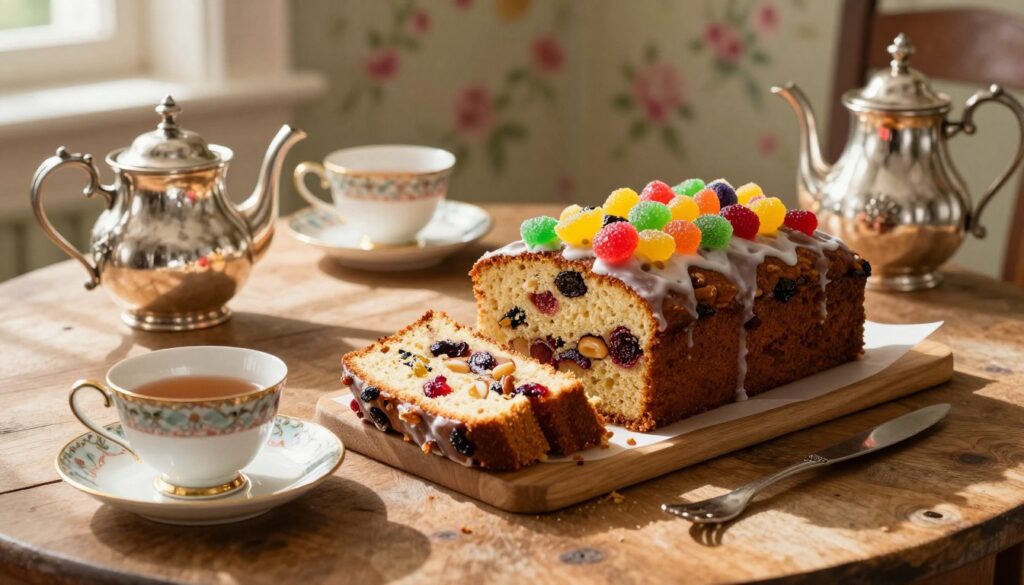
- Ensure the loaf is fully baked — test with a skewer; it should come clean before you slice.
- A 20cm cake tin yields generous portions for sharing at a long afternoon tea.
- Many bakers find the loaf tastes better after a few days, as the flavours deepen in storage.
Creative Variations and Customisations
Experimenting with chopped dried apricots, figs or dark chocolate chips adds a modern twist to the classic loaf.
For extra sweetness, fold these into the 250g of mixed dried fruit. Swap some sultanas and currants for dried cranberries if you want a festive edge.
If you prefer a boozy note, stir a splash of whisky into the batter before baking for 1 hour 50 minutes in the oven. This works well for a christmas cake-style slice.
You can replace ground almonds with extra flour, or use pecans and walnuts instead of whole almonds for a different texture. For a lighter version, try a light spread in place of some butter, though the original gives the best flavour.
Always cool variations on a wire rack to keep structure, especially if you add chocolate chips or extra fruit. Test with a skewer before slicing and let the loaf rest in the cake tin briefly.
- Try glacé cherries for colour and 1 tbsp mixed peel for brightness.
- Adjust baking time by minutes if your tin is shallower.
- Keep core ingredients — flour, eggs, sugar, baking powder — as the base for success.
Conclusion
This classic loaf proves that simple technique and quality ingredients beat fuss for reliable, delicious results.
The mary berry dundee cake remains a quintessential British bake, balancing rich fruit with a delicate, buttery sponge. Follow the recipe and you will master the creaming of butter and sugar for a professional finish.
Use good flour and fresh zest to lift flavour. Small steps in baking make each slice sing. Enjoy with a cup of tea or a slice of mature cheddar for a traditional pairing.
Try this fruit cake soon — it is versatile, dependable and a lovely addition to any occasion.
FAQ
What is the origin of this classic Scottish fruit cake?
Which dried fruits work best in this recipe?
How do I prepare the tin to prevent sticking?
What’s the best method for mixing the batter?
Can I use whole almonds instead of ground almonds in the batter?
How do I arrange the almonds on top to get the classic look?
What oven temperature and baking time are recommended?
How should I cool and store the cake?
Are there good variations for a festive version?
What are the best serving suggestions for afternoon tea?
Can I freeze slices of this fruit cake?
Mary Berry Dundee Cake
This classic British treat is a traditional Scottish fruit cake known for a light texture and a lovely almond topping. It is lighter than a heavy Christmas loaf and is ideal for afternoon tea.
Ingredients
- 175g butter, softened
- 175g caster sugar
- 3 large eggs
- 2 tbsp milk
- 1 tsp baking powder
- 200g self-raising flour
- 50g ground almonds
- 250g mixed dried fruit (sultanas, raisins, currants)
- 50g glacé cherries
- 2 tbsp mixed peel
- lemon zest
- 50g blanched whole almonds
Method
- Preheat the oven to 160°C (140°C fan). Grease and line a 20cm deep round cake tin with baking paper.
- Cream the butter and sugar together until pale and fluffy.
- Gradually add the eggs, one at a time, mixing well after each addition.
- Fold in the self-raising flour and ground almonds gently.
- Stir in the mixed dried fruit, glacé cherries, mixed peel, and lemon zest.
- Level the top of the mixture in the tin.
- Arrange the blanched whole almonds in concentric circles on top of the batter.
- Bake for 1 hour 40 minutes to 1 hour 50 minutes, or until a skewer inserted into the center comes out clean.
- If the top browns too quickly, tent with foil.
- Leave to rest in the tin for 15 minutes before transferring to a wire rack to cool completely.