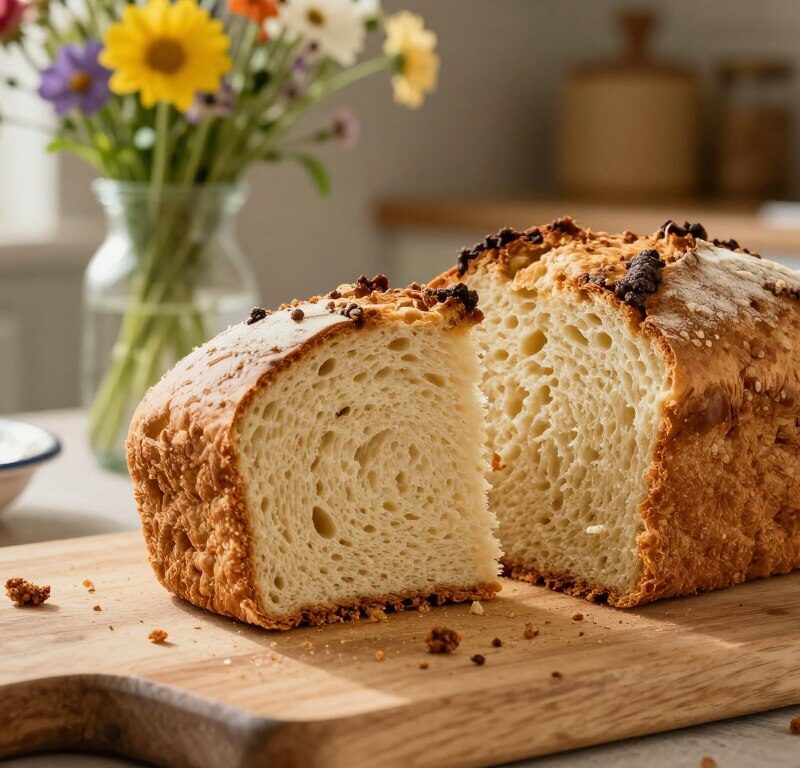
This classic wheaten loaf brings a wholesome, nutty flavour to the kitchen table with very little fuss. It is a traditional wholemeal soda-style loaf that needs no yeast and can be ready in about an hour.
The recipe uses simple ingredients such as wholemeal flour and buttermilk, so you can make nourishing made bread that pairs brilliantly with toast, soup or sandwiches. A large mixing bowl is all you need to combine the mixture gently to keep the crumb soft and the crust gently crisp.
Follow the recipe carefully and preheat the oven to ensure a golden finish. This dependable loaf rewards home bakers with dense, moist slices that spread well with butter and suit everyday meals across the UK.
Key Takeaways
- A hearty, nutty wheaten loaf can be made in around an hour.
- Simple ingredients like flour and buttermilk create great texture.
- No yeast is needed; this is a soda-style, wholemeal recipe.
- Use a large bowl and gentle mixing for the best crumb.
- Serves well with soup, toast or simple sandwiches.
The Appeal of Traditional Mary Berry Wheaten Bread
The appeal lies in an honest, grain-forward loaf that feels rooted in kitchen history. Home bakers prize this style for its rustic look and steady, nutty flavour.
It is a soda bread at heart, relying on the quick reaction between bicarbonate of soda and buttermilk to give the loaf lift. That simple chemical rise means no proving time and a reliable result for busy cooks.
Many cooks enjoy how this Irish wheaten loaf pairs with seasonal salads and soups. Influencers such as Jessica Cunningham (@peoniesandpoodles) have shown it alongside floral table settings and hearty vegetable dishes.
- Rustic and wholesome: denser than white loaves with a moist crumb.
- Quick and reliable: perfect for beginners who want fresh bread fast.
- Simple ingredients: quality whole wheat and fresh buttermilk make the difference.
Essential Ingredients for Your Loaf
Start with quality flours and you set the foundation for a hearty, well-textured loaf. The mix of wholemeal flour and plain flour creates texture and structure while keeping the crumb moist.
Core quantities are straightforward and easy to measure. Use 450 g wholemeal flour and 50 g plain flour, with 1 teaspoon each of bicarbonate of soda and salt.
Understanding the Role of Buttermilk
The buttermilk supplies acidity that reacts with the soda to lift the dough quickly. For this recipe, use 400 ml buttermilk to get the right balance of tang and moisture.
If you lack buttermilk, mix regular milk with a tablespoon of lemon juice or vinegar and let it stand for a few minutes. Adding 1 tablespoon of melted butter or vegetable oil will make the crumb tender and give the final loaf subtle richness.
- Whisk wet ingredients separately, then fold into the dry mix in a large bowl.
- Measure flour, soda and salt accurately to protect the rise and flavour.
- A small spoonful of light brown sugar balances the tang of the buttermilk.
| Ingredient | Amount |
|---|---|
| Wholemeal flour | 450 g |
| Plain flour | 50 g |
| Buttermilk | 400 ml |
| Bicarbonate of soda | 1 tsp |
Tip: For more ideas using simple baking staples, try this seed cake recipe to make the most of pantry ingredients.
Preparing the Dough for Baking
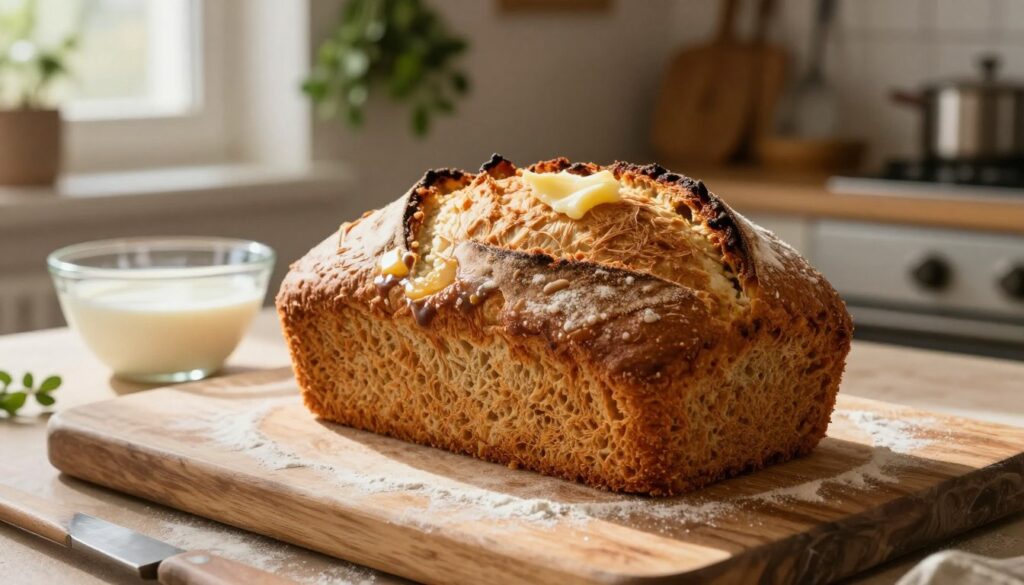
A steady oven and a properly lined tin set the scene for a reliable, well-risen loaf. Start by preheating the oven to 200°C (180°C fan). Line a loaf tin with parchment and lightly rub with melted butter so the loaf slips out easily after baking.
Mixing Dry Ingredients
In a large bowl, whisk the wholemeal flour, plain flour, salt and bicarbonate of soda together. Stir well to remove lumps so the dry ingredients are evenly blended.
Combining Wet and Dry
Mix the buttermilk with the melted butter and any oil or milk additions in a separate jug. Gradually pour the buttermilk oil mixture into the dry mix while folding gently with a wooden spoon.
Spoon the thick, soft batter into the prepared loaf tin and smooth the top lightly to help an even rise. Bake for 35–40 minutes at oven 200 until golden and risen.
Allow the loaf to cool on a wire rack so air circulates beneath the base. This prevents a soggy bottom and helps the crumb set before slicing.
| Step | Action | Timing / Temp |
|---|---|---|
| Preheat | Heat oven and prepare tin | 200°C (180°C fan) |
| Mix dry | Whisk flour, salt and soda | 2–3 minutes |
| Combine | Fold in buttermilk oil mixture | 1–2 minutes |
| Bake | Spoon into tin and bake | 35–40 minutes |
| Cool | Turn out and cool on rack | 15–20 minutes resting |
Mastering the Mary Berry Wheaten Bread Method
Technique matters more than speed. Handle the mixture gently to keep the crumb soft and avoid a tough loaf. Use a large bowl to combine wholemeal flour and the other dry ingredients first.
Mix the buttermilk oil mixture separately, then fold it into the dry mix. Work quickly: the soda reacts with the buttermilk immediately, so the batter should be in the oven without delay. Bake for 35–40 minutes until the top is golden.
Line your loaf tin well so the edges do not darken or dry out during the bake minutes. Smooth the top lightly to encourage an even rise and a pleasing rustic finish.
“A gentle fold and a hot oven are the two small secrets to a consistently moist loaf.”
- Combine dry ingredients in a bowl before adding wet.
- Work quickly to capture the soda’s lift.
- Ensure loaf tin is lined and the top is smoothed.
| Action | Why it matters | Timing |
|---|---|---|
| Fold gently | Preserves soft crumb | 1–2 minutes |
| Beat buttermilk oil | Ensures even moisture | 30–60 seconds |
| Bake | Sets structure and colour | 35–40 minutes |
Tips for Achieving the Perfect Texture
Gentle folding and accurate heat make the difference between a snugly dense loaf and a pleasantly light one. These small steps protect the crumb and help the top colour evenly during baking.
Avoiding overmixing
Work the flour and wet mix together just until combined. Vigorous stirring develops gluten and will toughen the crumb of this soda loaf.
The importance of oven temperature
Check that your oven reads correctly and preheat to oven 200°C. A steady temperature helps the soda and buttermilk react quickly and gives a good rise in the first few minutes.
Cooling before slicing
Turn the loaf out onto a wire rack as soon as it comes from the tin. Let it cool completely—cool slicing preserves structure and prevents crumb from crumbling into loose slices.
- Line the loaf tin to avoid over-browning at the edges during the 35–40 minutes bake.
- Use a wire rack so air circulates under and around the loaf, preventing a soft bottom.
- If the loaf seems crumbly, wait longer; cool slicing yields cleaner, thicker slices.
“Mix gently, bake at the right temperature and allow time to cool — those three things make the best soda breads.”
Creative Variations to Customise Your Bread
Experimenting with seeds, flours and fats lets you tailor the loaf to your taste and diet. Add a handful of sunflower or flax seeds into the dough for extra fibre and texture. They also give a pleasing crunch when toasted in the oven.
If you prefer a milder sweetness, swap brown sugar for honey. That change brings a gentle, floral note without altering the recipe’s chemistry.
For a lighter crumb, replace part of the plain flour with oat flour. Oat flour adds a nutty depth and keeps the loaf moist.
If you are out of buttermilk, mix regular milk with a little lemon juice or vinegar and let it stand for a few minutes. Olive oil works well instead of vegetable oil, offering a slightly richer flavour that complements wholemeal flour.
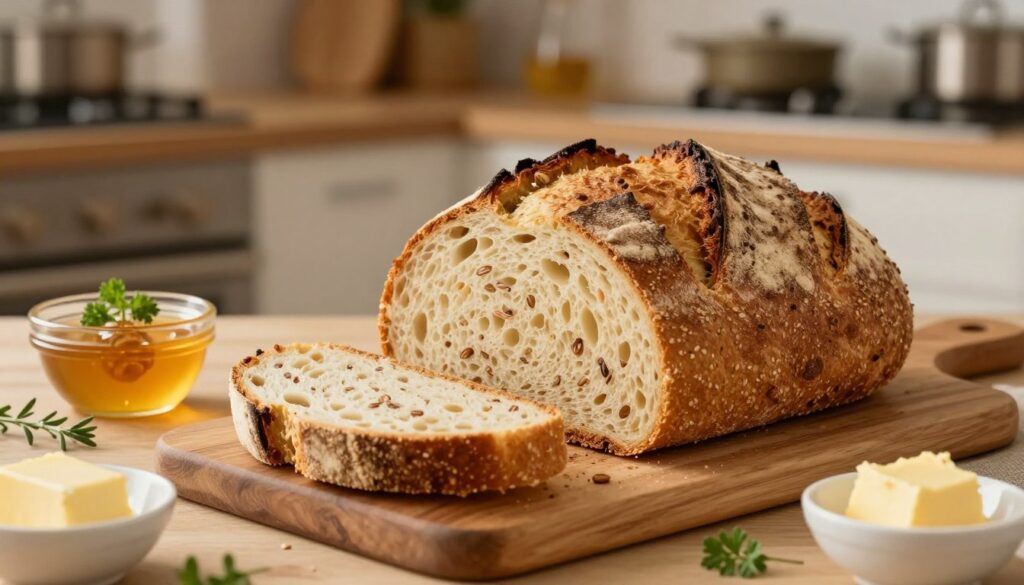
- Sprinkle seeds or oats on top before baking for a crunchy top.
- Try herbs like rosemary, or a handful of raisins for a sweeter loaf.
- Keep proportions balanced so the soda and buttermilk reaction still gives lift.
“Small swaps let you create versions that suit every meal and mood.”
Serving Suggestions for a Hearty Meal
Fresh from the oven, this rustic loaf makes even the plainest supper feel special. Its nutty crumb suits both simple and hearty menus.
Pairing with soups and savoury toppings
Pairing with Soups and Savoury Toppings
Serve your freshly baked wheaten bread with a steaming bowl of vegetable soup. The hearty texture is perfect for dipping and soaks up rich stock without falling apart.
Toast slices and smear with butter, jam or honey for a quick breakfast. Cheese slices or a poached egg make an elegant savoury top that matches the loaf’s nutty tones.
- If you use regular milk plus lemon juice to mimic buttermilk, the slight tang lifts savoury toppings.
- Add seeds to the dough before baking to increase crunch and hold with a thick winter stew.
- Store leftover slices in an airtight container and reheat briefly in the oven to refresh texture.
“Keep plenty of butter to hand — it brings out the best in a warm, rustic loaf.”
Best Practices for Storing and Refreshing Your Loaf
Good storage turns a single bake into several fresh meals across the week. Wrap the cooled loaf well in greaseproof or place it in an airtight bag and keep at room temperature for up to 2 days.
If you have leftover slices, freeze them individually. This makes it easy to grab one when you need a quick snack. Toast frozen slices straight from the freezer to restore softness and a pleasant texture.
Avoid the microwave when refreshing your loaf. Microwaving makes the crumb tough and ruins the feel of a soda bread or any buttermilk-rich recipe.
- Store in an airtight container to preserve moisture and protect against drying.
- If slightly dry, revive slices in a low oven for a few minutes — check the temperature carefully.
- Always allow the loaf to cool completely before cool slicing and storing to prevent crumbling.
- Remember that a good loaf tin and careful cooling affect the final freshness and flavour.
“Simple care after baking keeps your homemade loaf tasting at its best over several days.”
Conclusion
When time is short, a quick soda loaf gives homemade results without long proving or special kit.
This reliable recipe brings comfort and wholesome flavour to everyday meals. The mix of buttermilk and soda is the simple chemistry that gives a moist, dense crumb you can count on.
Remember to preheat the oven and handle the dough gently. With these small steps, this classic loaf is an easy way to enjoy fresh, warm bread at home.
We hope this guide helps you feel confident to try the full recipe and savour the process of baking your own mary berry loaf.
FAQ
What makes this Irish-style wheaten loaf different from regular soda bread?
Can I use regular milk instead of buttermilk?
Which flour is best: wholemeal, plain or a combination?
How do I stop the dough from becoming tough?
Do I need a loaf tin or can I shape freeform?
What oven temperature and baking time are best?
Should I brush the top with butter or milk before baking?
How long should I cool the loaf before slicing?
Can I add seeds, oats or other mix-ins?
How should I store the bread to keep it fresh?
What are good serving ideas for a hearty meal?
Any tips for adapting the recipe to a quicker bake?
Mary Berry Wheaten Bread
This classic wheaten loaf brings a wholesome, nutty flavour to the kitchen table with very little fuss. It is a traditional wholemeal soda-style loaf that needs no yeast and can be ready in about an hour.
Ingredients
- 450 g wholemeal flour
- 50 g plain flour
- 400 ml buttermilk
- 1 tsp bicarbonate of soda
- 1 tsp salt
- 1 tbsp melted butter (optional)
- 1 tsp light brown sugar (optional)
Method
- Preheat the oven to 200°C (180°C fan) and line a loaf tin with parchment paper, lightly greased with melted butter.
- In a large bowl, whisk together the wholemeal flour, plain flour, salt, and bicarbonate of soda until well blended.
- In a separate jug, mix the buttermilk with the melted butter and any additional oil or milk.
- Gradually pour the buttermilk mixture into the dry ingredients while gently folding with a wooden spoon until just combined.
- Spoon the thick batter into the prepared loaf tin and smooth the top lightly.
- Bake in the preheated oven for 35-40 minutes until the top is golden and risen.
- Allow the loaf to cool on a wire rack before slicing.