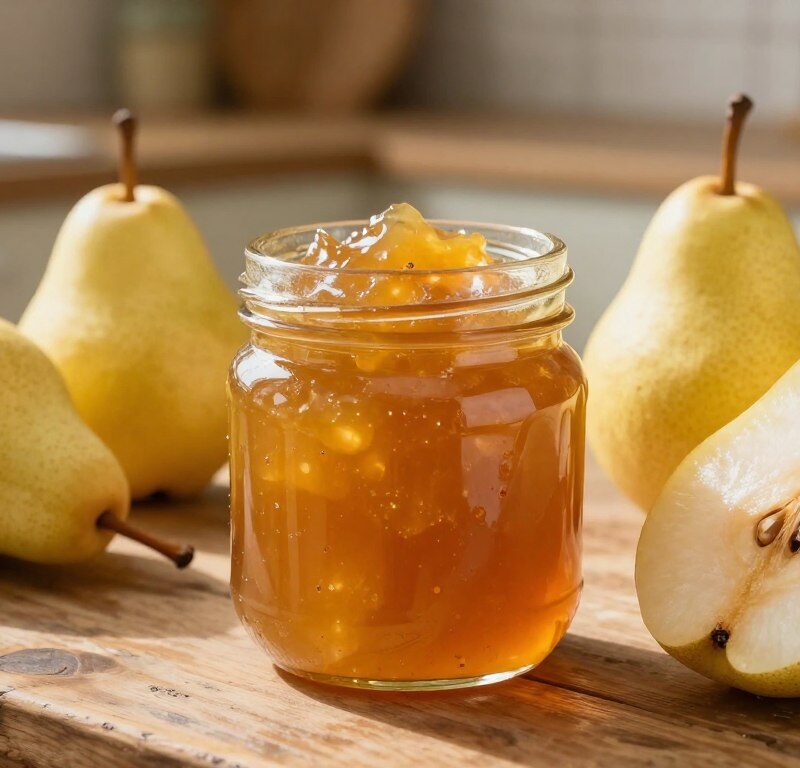
This classic preserve is a quintessential British staple that brings a bright balance of sweet and sharp flavours to any kitchen.
The simple recipe celebrates ripe pears, good vinegar and warming spices. It turns everyday ingredients into a versatile relish that lifts many savoury dishes and makes a thoughtful homemade gift.
Making this preserve asks for patience, but the results repay your time. Small steps build deep, layered taste as the mix cooks and matures.
Whether you are new to preserving or have some experience, the guide that follows will help you learn reliable techniques and simple tips for perfecting this beloved food.
Key Takeaways
- Traditional flavour: a pleasing sweet-and-sharp balance.
- Simple ingredients: ripe pears, vinegar and warm spices.
- Worth the time: slow cooking deepens the taste.
- Versatile use: pairs well with cheeses and roast meats.
- Great gift: homemade jars make thoughtful presents.
The Appeal of Mary Berry Pear Chutney
A well-made jar brings a mellow, fruity lift that suits both rustic and refined menus. It pairs beautifully with cheese, cold meats and sandwiches, adding a bright counterpoint that never overwhelms the main dish.
The texture is deliberately chunky, giving a satisfying bite that supermarket alternatives often lack. This makes it ideal for serving on boards or spooning over roasted meats.
Home cooks praise the recipe for its balance of sweet and sharp notes. The natural sweetness of the pears works with vinegar to create a rich, layered flavour that improves with time.
- Versatile: complements a wide range of savoury food without stealing the show.
- Make-ahead friendly: a reliable food to prepare before gatherings.
- Elegant touch: elevates simple lunches and festive platters.
Essential Ingredients for Your Preserve
Great preserves are born from quality ingredients and careful weighing. Choose fruit that is ripe but firm to keep a chunky texture after cooking. Measure everything precisely on kitchen scales for safety and consistent flavour.
Selecting Quality Fruit
Select 1 kg of ripe but firm pears. They will break down just enough while keeping some bite. Using the right fruit helps the final texture and mouthfeel.
Choosing the Right Vinegar
Use 300 ml malt vinegar for a clean, sharp finish that also preserves the jar. The vinegar acts as both flavour anchor and preservative.
- 300 g light brown sugar adds caramel depth and balances acidity.
- Fresh ginger and a mix of warming spices, such as ground cinnamon and mustard seeds, lift the aroma.
- Accurate measures and quality spices will shape the final character of your chutney.
“Precise weights and fresh spices make the difference between good and great preserves.”
Preparing Your Pears and Aromatics
Good prep makes the rest simple — precise dicing and neat chopping keep textures consistent as the mix cooks.
Peel and core the pears, then dice them evenly. Uniform pieces mean the fruit softens at the same rate and avoids a coarse or bitter finish.
Use a sharp knife to get the onions finely chopped and the fresh ginger in thin matchsticks. This careful work saves you time during cooking and gives a steady release of aroma.
In a large, heavy-based pan combine the pears, brown sugar, vinegar and sultanas. Add ginger, a pinch of salt and warming ground spices so flavours distribute before heat is applied.
- Ensure pears are diced evenly and onions are finely chopped so everything cooks at the same rate.
- Peel and core thoroughly to avoid coarse texture after cooking.
- Use a quality ground cinnamon so the spices blend smoothly through the mixture.
- Salt will help draw out juices and aid the initial breakdown of the fruit.
Once combined, the prepared ingredients will be ready to simmer slowly, building depth and balance as they transform into a rich preserve.
The Cooking Process for Mary Berry Pear Chutney
Start by warming the mixture gently so the sugar dissolves without scorching. Place your pan over low heat and allow the 300 g of brown sugar to melt into the liquid.
Once the sugar has dissolved, increase to a steady simmer. Cook uncovered for 45–60 minutes, stirring often to stop the base from catching. Add the salt and vinegar at the start so flavours infuse the whole mixture.
As the pears and onions soften, the ginger and ground spices release aroma and depth. The right time at gentle heat brings a rich, layered taste that improves with age.
Managing Heat Levels
- Keep the flame low at first to dissolve the sugar.
- Raise to simmer and stir regularly to prevent burning.
- Reduce immediately if the mixture sticks or smokes at the pan base.
- Test readiness by drawing a wooden spoon across the pan — a clear line should remain.
| Heat setting | Signs to watch | Action |
|---|---|---|
| Low | Sugar dissolves; no bubbling | Keep stirring until smooth |
| Medium (simmer) | Steady small bubbles; fruit softens | Stir regularly for 45–60 minutes |
| High | Fast boil; sugar may catch | Lower heat immediately and stir |
For a full recipe and jarting advice, see the detailed guide at Mary Berry Christmas chutney recipe.
Achieving the Perfect Chutney Consistency
Watch the texture closely as the mixture reduces; small changes in the pan tell you when it is nearly done.
Reduce over a gentle low heat so the liquid evaporates slowly. Stir often to stop the base from catching and to spread the heat evenly.
If the mix is still runny after 45 minutes of cooking, continue to simmer until the excess moisture has gone. The fruit should stay slightly chunky so the jars have texture.
- Stir regularly to distribute the ginger and spices as the mixture thickens.
- Balance vinegar and sugar during the final reduction for a spoonable finish.
- Test readiness by dragging a wooden spoon across the base — a clear trail shows the consistency is right.
| Stage | Visual cue | Action |
|---|---|---|
| Early | Loose, plenty of liquid | Keep heat low; stir to dissolve sugar |
| Mid | Small bubbles; fruit softening | Simmer for 30–45 minutes; stir often |
| Final | Glossy syrup; wooden spoon leaves clear line | Remove from heat and jar while hot |
| If still runny | Liquid pools after 45 minutes | Continue to simmer in pan until thickened |
Sterilising Jars for Safe Storage
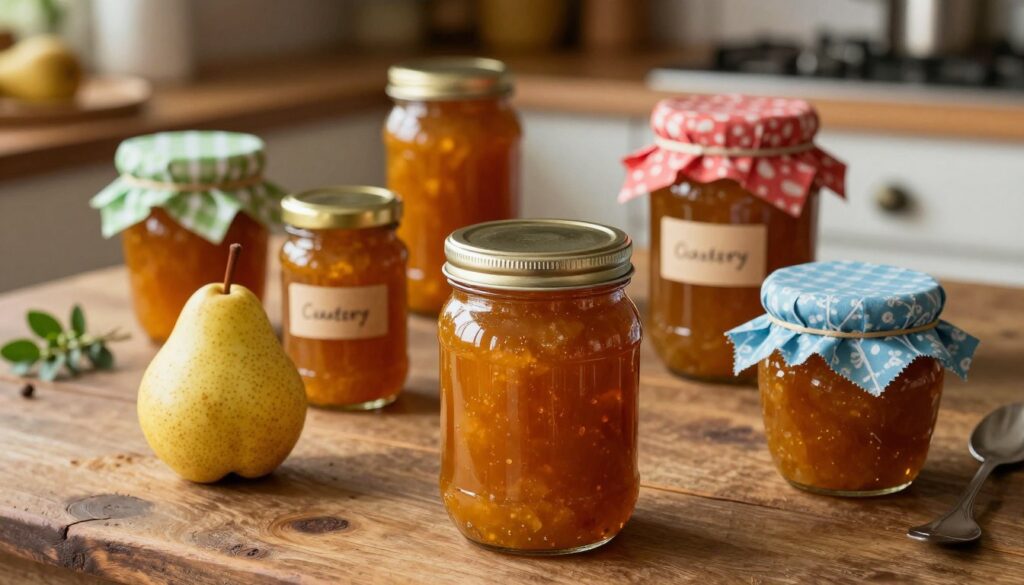
Clean, heated jars are the foundation of reliable home canning. Sterilising your glassware prevents bacteria and extends shelf life. Follow simple steps to keep your preserve safe for months.
Cleaning Your Jars
Wash jars and lids in hot, soapy water. Rinse well to remove detergent.
Place the rinsed jars in a low oven (120°C) for 10–15 minutes or boil them for 10 minutes to sterilise fully.
Ensuring an Airtight Seal
Spoon the hot chutney into warm jars and seal immediately. As the glass cools, a vacuum forms and creates an airtight seal.
“Sterilising your jars is non-negotiable; it helps your preserve stay safe to eat for up to 12 months.”
Labelling for Future Use
Label each jar with the production date. Store sealed jars in a cool, dark place to protect flavour and colour.
| Storage | Condition | Action |
|---|---|---|
| Unopened jars | Cool, dark place | Keep up to 12 months |
| Opened jars | Refrigerated | Use within 4–6 weeks |
| Tip | Label clearly | Date each jar on the lid |
For a related recipe and further jarring advice, see the green tomato chutney guide.
Maturing Your Chutney for Better Flavour
Once sealed, leave the jars undisturbed so the flavours can gently marry over several weeks.
Store the jars in a cool place for at least 2–3 weeks before opening. This time allows the ginger and spices to infuse the pears and mellow the vinegar.
Over a few months in a dark cupboard, the taste deepens noticeably. Patience pays: chemical reactions between fruit and vinegar soften sharp edges and create a rounder profile.
- Short wait: 2–3 weeks for balanced flavour.
- Longer ageing: several months gives richer depth.
- Storage tip: keep jars away from direct sunlight to protect colour and quality.
“Let the preserve rest — the full character of the recipe appears with time.”
Serving Suggestions for Savoury Pairings
Serve this preserve alongside bold cheeses to bring a lively contrast to your board. It is especially good with mature cheddar and stilton.
Pair with cold meats such as ham or roast pork to add a sweet, tangy lift. The balance of sweet fruit and warming spices brightens rich protein without overpowering it.
At roughly 90 kcal per serving, it is a light way to boost flavour on a cheese plate or sandwich.
- Classic with a ploughman’s lunch, crusty bread and strong cheese.
- Use as a spread in sandwiches to add depth to everyday lunches.
- Keep a few jars in the larder to offer an impressive snack to guests.
- Also excellent with crackers, oatcakes or alongside simple roast dinners.
| Serving | Best match | Portion kcal |
|---|---|---|
| Cheese board | Mature cheddar, stilton | ≈ 90 kcal |
| Cold platter | Ham, roast pork | ≈ 90 kcal |
| Sandwich | Crusty bread, oatcakes | ≈ 90 kcal |
“A small jar can transform simple food into a thoughtful, flavourful treat.”
Creative Variations and Ingredient Swaps
A few simple twists will let you tailor the preserve to your taste and the season.
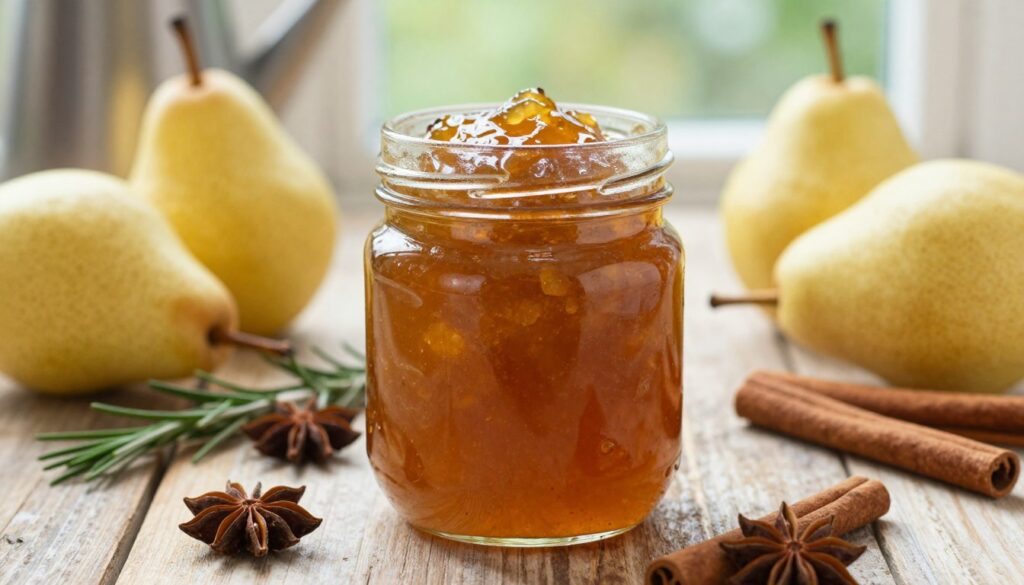
Adding spiced depth is easy. For a warmer, more complex aroma, tuck whole cloves or a star anise into the pan while the mixture simmers on low heat. Remove them before jarring so the flavour stays balanced.
If you prefer gentle heat, add a pinch of chilli flakes alongside the finely chopped onions and fresh ginger. This gives a steady warmth without masking the fruit.
- Replace some pears with apples for a firmer, tangy twist.
- Add orange zest to brighten the brown sugar and spices.
- Measure ground spices carefully so cloves or cinnamon don’t dominate.
Practical note: always use a heavy-based pan and stir frequently. This helps the salt and sugar behave and stops burning at the base while you experiment.
“Small swaps make big differences — start modestly and taste as you go.”
Conclusion
This recipe rewards careful cooking: simmer for 45–60 minutes until the liquid reduces and you reach the right consistency.
Use quality vinegar and fresh ginger to build depth, then give the jars a few weeks to mature. With a little time, the flavours round out and become more complex.
Sterilise your jars and seal while hot. Proper storage will let your preserve keep for up to 12 months in a cool, dark place.
This simple recipe makes a thoughtful gift and a versatile pantry item. Enjoy the process of cooking, share with friends, and savour the results over time.
FAQ
What are the essential ingredients for this preserve?
How should I select quality pears?
Which vinegar is best for this recipe?
How long should I cook the mixture and at what heat?
How do I know when the chutney has reached the right consistency?
What is the best way to sterilise jars for safe storage?
How do I ensure an airtight seal?
How long will the preserve keep and how should I store it?
How long should I let the mixture mature before eating for best flavour?
What are some serving suggestions for savoury pairings?
Can I create variations or swap ingredients?
How can I add spiced depth without overpowering the fruit?
Any tips to prevent the mixture sticking to the pan?
Mary Berry Pear Chutney
This classic preserve is a quintessential British staple that brings a bright balance of sweet and sharp flavours to any kitchen. The simple recipe celebrates ripe pears, good vinegar and warming spices.
Ingredients
- 1 kg ripe but firm pears
- 300 ml malt vinegar
- 300 g light brown sugar
- Fresh ginger, finely chopped
- Ground cinnamon
- Mustard seeds
- Sultanas
- Pinch of salt
Method
- Peel and core the pears, then dice them evenly.
- Finely chop the onions and cut the fresh ginger into thin matchsticks.
- In a large, heavy-based pan, combine the pears, brown sugar, vinegar, sultanas, ginger, salt, and warming spices.
- Warm the mixture gently over low heat until the sugar dissolves.
- Increase to a steady simmer and cook uncovered for 45-60 minutes, stirring often.
- Watch the texture closely as the mixture reduces; it should become syrupy and coat the back of a spoon.
- Once ready, remove from heat and jar while hot, ensuring an airtight seal.