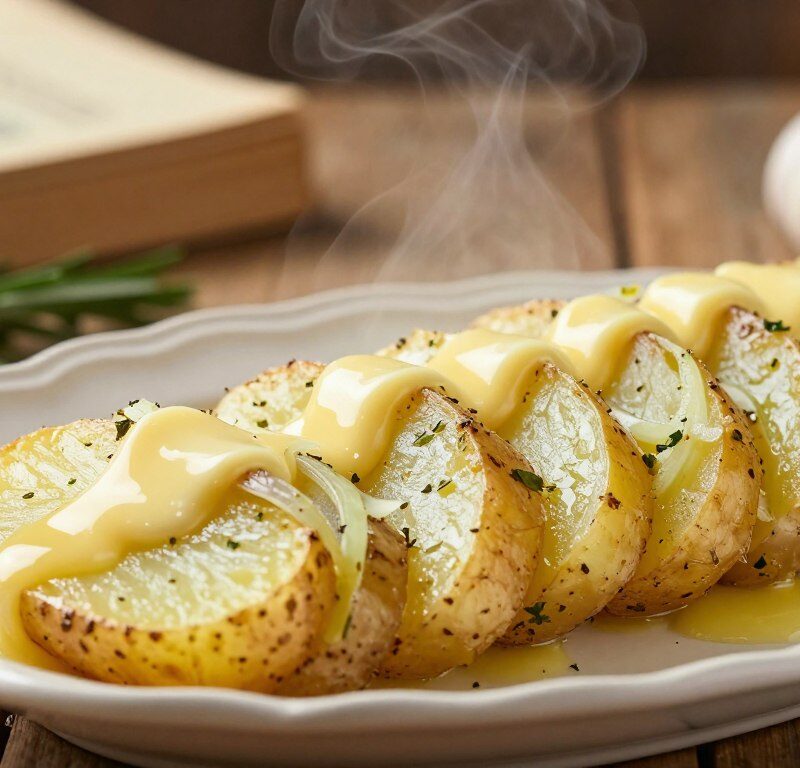
Mary Berry Boulangere Potatoes is a comforting, French-inspired side that layers thinly sliced potatoes with onions, herbs and a savoury stock. The result is a golden-topped dish that feels indulgent yet lighter than cream-based gratins.
This simple recipe uses pantry staples and clear technique. It is ideal for a Sunday roast or a midweek supper when you want something hearty but not heavy.
The stock soaks through and brings a melt-in-the-mouth texture, while the crisped top adds depth. This versatile side suits roast chicken, vegetarian mains or any table that needs a reliable, tasty accompaniment.
Key Takeaways
- This classic offers rustic elegance without heavy cream.
- Savoury stock gives deep flavour and tender texture.
- Uses simple ingredients found in most UK kitchens.
- Works well alongside a Sunday roast or midweek meals.
- Easy to make and forgiving for cooks of all levels.
Understanding the Appeal of Mary Berry Boulangere Potatoes
What sets this dish apart is how broth, not cream, builds deep flavour and tender texture.
The layers soak up savoury stock and herbs. As they cook, the centre becomes soft while the top turns golden and crisp. That contrast gives the bake its charm.
Make Mary Berry inspired meals when you want a refined side without richness from cream. The result feels lighter than a gratin yet still substantial alongside a roast or a vegetarian main.
Home cooks favour this version for its honest flavours. Simple ingredients transform into a visually impressive dish that suits family dinners and Sunday gatherings.
- Lighter alternative: no heavy cream, fewer calories.
- Deep flavour: layers absorb herb-scented stock.
- Versatile: pairs well with roast meats or veg mains.
| Feature | Benefit | Best for |
|---|---|---|
| Stock-based cooking | Tender, savoury slices | Roast dinners |
| Crisp top | Textural contrast | Sunday gatherings |
| Minimal dairy | Cleaner flavour | Light side options |
Essential Ingredients for Your Potato Bake
Gathering the right cupboard staples makes this bake straightforward and reliably tasty. Start by preparing the measured items so the bake assembles quickly. Good stock and fresh herbs lift every layer.
Pantry Staples
Main pantry items include 1kg peeled, thinly sliced potatoes and 2 medium onions finely sliced. Use 400ml of vegetable stock to keep the dish moist without cream.
- 1kg potatoes, sliced thin for even baking
- 2 medium onions for sweet, soft layers
- 400ml vegetable stock (or chicken stock) to soak and season
- 2–3 tbsp melted butter or a drizzle of olive oil for browning
- 2 crushed garlic cloves, plus salt and pepper to taste
- Optional: 50g grated Gruyère or cheddar for a richer finish
Fresh Herb Selection
Use fresh thyme sprigs or ½ tsp dried thyme to add an earthy aroma. Fresh herbs pair with garlic to make each layer sing.
When you make mary berry inspired dishes, choose good stock and herbs. Cover the dish with foil at first so the centre cooks through before the top browns.
| Ingredient | Quantity | Purpose |
|---|---|---|
| Potatoes | 1kg, peeled & thinly sliced | Base layers; tender texture |
| Onions | 2 medium, finely sliced | Sweetness and moisture |
| Vegetable stock | 400ml | Flavour and cooking liquid |
| Butter / Olive oil | 2–3 tbsp | Helps top brown and adds richness |
| Thyme & Garlic | Fresh thyme; 2 crushed cloves | Aromatic depth |
Selecting the Best Potatoes for Texture
Choosing the right tuber matters. For a neat, layered bake pick waxy varieties such as Maris Peer or Charlotte. These hold their shape during slow cooking and give clear, attractive layers.
Keep each slice uniform. Aim for 3–4mm so the thinly sliced pieces cook evenly in the stock. If slices vary, some will overcook while others stay firm.
Avoid starchy types. They tend to fall apart and make the bake overly soft. The best result uses waxy potatoes so the layers stay distinct and tender rather than mushy.
mary berry style finishes rely on this simple choice. The right sliced potatoes will absorb savoury stock while keeping a delicate structure that defines boulangère potatoes.
Quick tips:
- Use waxy varieties for firm texture.
- Slice 3–4mm uniformly for even cooking.
- Avoid starchy potatoes to prevent a mash-like result.
| Variety | Texture | Best use |
|---|---|---|
| Maris Peer | Waxy, holds shape | Boulangère style bakes |
| Charlotte | Firm, smooth | Even slices, layered dishes |
| Maris Piper | Starchy, fluffy | Not recommended for this bake |
Preparing Your Vegetables for Even Cooking
Slicing for Uniformity
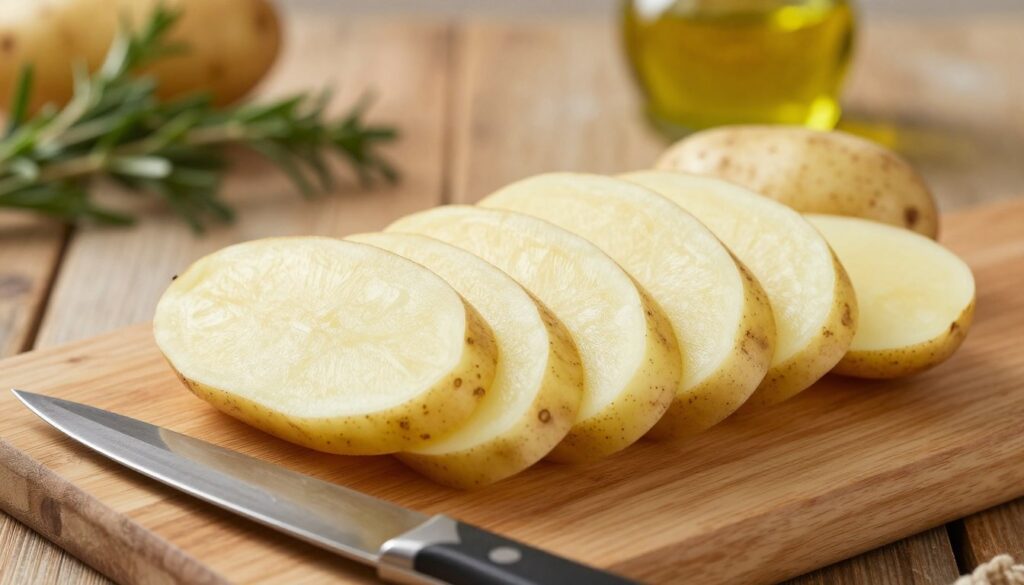
Slice 1kg potatoes thinly to 3–4mm using a mandoline or a very sharp knife. Uniform sliced potatoes cook evenly and keep distinct layers in the dish.
Cut 2 onions into thin rings to nestle between the potato layers. Thin onions soften and release sweetness during baking.
- Season each layer with salt, pepper and crushed garlic so flavour penetrates every layer.
- Drizzle olive oil and scatter fresh thyme between layers for aroma and richness.
- Spend a few minutes arranging the vegetables evenly; this step shortens total cooking time.
Preheat the oven to 180°C so baking starts immediately when the dish goes in. Careful prep is the simple step that delivers a perfect, tender bake in the required minutes.
Layering Techniques for Maximum Flavour
Begin by laying a neat base of thinly sliced tubers across the bottom of your ovenproof dish. This creates a stable start so heat and stock move upwards through the layers.
Alternate slices of potatoes with rings of onions and a scatter of thyme. Keep the pieces uniform so the layers cook evenly and the stock can circulate properly.
Season each layer as you go. A pinch of salt, a grind of black pepper and a little crushed garlic at every step ensure consistent flavour throughout the dish.
Repeat until nearly full, then finish with a final surface of potatoes. That last top browns and crisps to give the signature contrast between soft interior layers and a golden surface.
- Arrange ingredients so the stock reaches every slice.
- Alternate thinly sliced vegetables and herbs for aroma and depth.
- Finish with potatoes on top for a crisp, professional-looking bake.
| Step | Action | Purpose |
|---|---|---|
| Base | Single even layer of potatoes | Stable foundation; even cooking |
| Middle | Alternate potatoes, onions, thyme | Flavour integration; stock circulation |
| Final | Potatoes on top | Golden, crisp finish |
The Role of Savoury Stock in the Recipe
A hot, savoury stock is the invisible hero that carries flavour through every slice. Use 400ml and pour until the liquid reaches about halfway up the dish so the layers are well hydrated. Heating the stock first speeds cooking and helps heat move evenly through the bake.
The stock replaces heavy cream or cream cheese here, so the natural tastes of the potatoes onions and garlic shine. It acts as a flavour carrier, bringing thyme and other aromatics deep into each layer.
Choose chicken or vegetable stock depending on diet or preference. Both make the dish adaptable and keep the finish clean rather than rich.
Careful pouring matters. Too much stock makes the bake watery; too little leaves the centre firm. Aim for that halfway mark and check seasoning with salt and pepper before baking.
- The savoury stock provides moisture without cream or extra cheese.
- Heat the stock before adding to shorten cook time and improve heat distribution.
- Managing the amount prevents a soggy base and ensures perfectly tender slices.
| Action | Why it matters | Tip |
|---|---|---|
| Use 400ml stock | Hydrates layers evenly | Pour to halfway up the dish |
| Heat before pouring | Speeds cooking | Warm, not boiling |
| Choose stock type | Adjusts flavour and diet | Vegetable for meat-free option |
Mastering the Baking Process
Precise heat and a two-stage baking method deliver a tender interior and a crisp top. This step is where the recipe becomes reliable rather than hit-and-miss.
Temperature Control
Preheat the oven to 180°C (350°F). Place the prepared dish on the middle shelf so heat circulates evenly.
Heat consistency keeps the stock moving through the layers, softening the onions and garlic without drying the surface.
Using Foil
Cover the dish with foil first and bake for 45 minutes at 180°C. This allows the layers to steam and soften gently.
After 45 minutes remove the foil and bake for a further 25–30 minutes. The top will crisp and turn a golden brown while the centre finishes cooking.
- Use foil first to trap steam and prevent the top from drying out.
- Monitor the oven during the final 25–30 minutes to avoid burning.
- Total baking time is about 75 minutes for tender, seasoned layers.
| Stage | Temperature | Duration |
|---|---|---|
| Foil covered | 180°C (350°F) | 45 minutes — steam and soften |
| Uncovered finish | 180°C (350°F) | 25–30 minutes — crisp and brown |
| Total | 180°C (350°F) | Approx. 75 minutes — tender, flavourful |
Achieving the Perfect Golden Crust
The secret to a show-stopping top is a careful fat and heat marriage in the final minutes. Drizzle the top layer with olive oil or melted butter just before the uncovered stage to encourage browning and crunch.
Remove the foil first and return the dish to a hot oven for the final 25–30 minutes. This step lets excess moisture evaporate so the top becomes crisp while the inner layers stay tender.
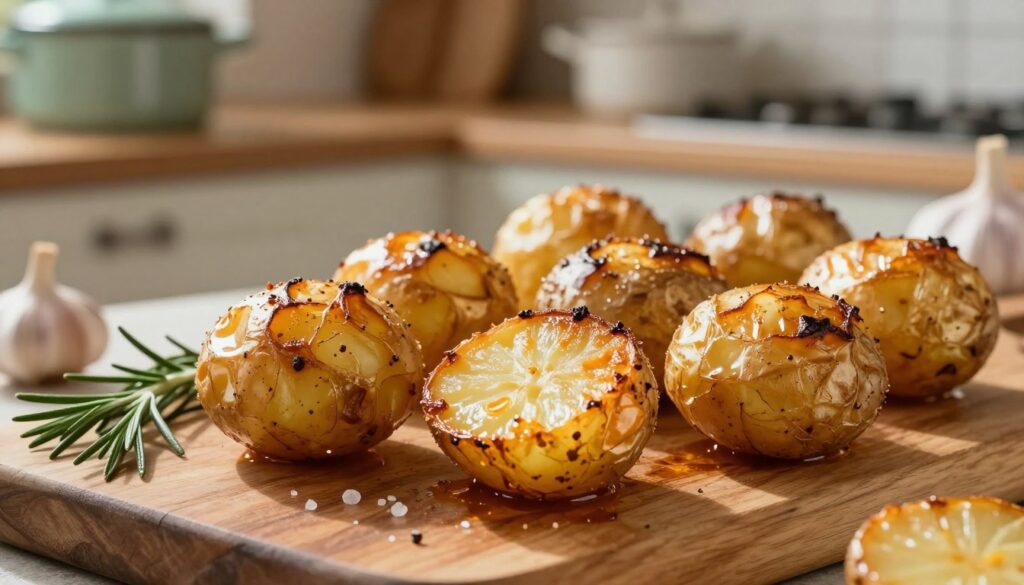
You can add a light scatter of grated cheese in the last few minutes for a richer, gratin-style finish. A brush of olive or a knob of butter with a few thyme leaves elevates aroma and colour.
Tip: The golden top is more than decoration; it adds contrast in texture and depth of flavour that makes this classic side dish stand out on the table.
Serving Suggestions for Your Sunday Roast
A well-rested bake slices cleanly and lets the flavours settle before it reaches the table. Once the oven work is done, allow the dish to sit for 5 minutes. This helps the stock redistribute and the layers to stabilise.
Pairing with Roast Meats
These boulangère potatoes make a classic side dish for a Sunday roast. They pair beautifully with roast lamb, beef or chicken and balance rich meat with a lighter, savoury accompaniment.
- Serve warm so the thyme and stock taste at their best.
- Offer steamed green vegetables for colour and nutrition.
- Try the bake with pan-seared white fish or as a vegetarian main with a crisp salad.
The golden top and tender interior make the plate look inviting. Guests will notice the care in the seasoning and the soft onions between layers.
| Serve with | Why it works | Timing |
|---|---|---|
| Roast beef | Rich meat meets a lighter, savoury potato side | Serve immediately after a 5 minutes rest |
| Roast chicken | Delicate poultry and thyme complement each slice | Keep warm; carve and serve |
| Steamed greens | Fresh texture and colour to balance the plate | Cook while the bake rests |
Creative Variations and Ingredient Swaps
A handful of simple swaps turns the same technique into many different dishes.
Add vegetables such as leeks or carrots between the thinly sliced potatoes and onions for extra colour and nutrients. Swap in sweet potatoes for a higher-fibre alternative, but reduce baking time slightly as they soften faster.
Make ahead: assemble the layers, cover and refrigerate for up to 24 hours. Bring the dish to room temperature before baking to ensure even cooking and a crisp top.
For richness, add a splash of cream or a light scatter of cheese or cream cheese between layers. Swap thyme for rosemary or parsley, or use bacon pieces or caramelised onions for smoky or sweet notes.
Change the stock to chicken or add a splash of white wine for depth. Finish with a drizzle of olive oil before the uncovered stage to encourage a golden, crisp top.
| Swap | Effect | Tip |
|---|---|---|
| Leeks / Carrots | More nutrients, colour | Slice thinly to match layers |
| Sweet potato | Higher fibre, sweeter | Shorten baking time |
| Cream / Cheese | Richer finish | Add near end for melt |
| Chicken stock / Wine | Deeper flavour | Adjust salt and pepper |
Storing and Reheating Leftovers
A little care with chilling and warming preserves that golden top and soft centre. Follow a few simple steps to keep the bake tasting its best for the next meal.
Refrigeration Guidelines
Store cooled leftovers in an airtight container in the fridge for up to 3 days. If you plan to prepare the potatoes ahead time, assemble the dish and refrigerate for up to 24 hours before baking.
Avoid freezing — freezing changes texture and can make the layers grainy. Leftovers often taste better after a day, as the flavours settle.
Oven Reheating Methods
To reheat, preheat the oven to 180°C (350°F). Place the dish in the oven for 15–20 minutes until piping hot throughout.
For best results, add a small splash of warm stock or a drizzle of olive oil before reheating. This restores moisture and helps the top remain crisp during the final minutes of baking.
| Action | Why it helps | Timing |
|---|---|---|
| Refrigerate in airtight container | Maintains flavour and prevents odours | Up to 3 days |
| Assemble ahead (chilled) | Saves time on the day; flavours meld | Up to 24 hours before baking |
| Reheat in oven (180°C) | Even warming; keeps top crisp | 15–20 minutes until piping hot |
Conclusion
A warm, golden bake like this finishes a meal with effortless charm. This recipe relies on good ingredients and clear technique to produce a comforting result.
It makes a reliable side dish for any roast and works equally well as a hearty weeknight side. The method keeps the vegetable layers tender while the top turns golden and crisp.
The flexibility of the mix means you can swap or add vegetables to suit taste and season. Simple changes to herbs or stock let the dish become your own family favourite.
Thank you for learning how to make mary berry style; we hope this helps you make mary inspired bakes that become a staple in your kitchen.
FAQ
What makes this potato bake so popular?
Which type of potato should I use for the best texture?
How thin should I slice the potatoes and onions?
Can I prepare the dish ahead of time?
What stock works best for this recipe?
How do I get a crisp, golden top without drying out the dish?
Is it okay to add garlic, thyme or other herbs?
Can I make dairy-free or lighter versions?
How long should the bake stay in the oven?
What are good serving suggestions and pairings?
How should I store and reheat leftovers?
Can I add cheese or other ingredients between the layers?
Mary Berry Boulangere Potatoes
Mary Berry Boulangere Potatoes is a comforting, French-inspired side that layers thinly sliced potatoes with onions, herbs and a savoury stock. The result is a golden-topped dish that feels indulgent yet lighter than cream-based gratins.
Ingredients
- 1kg peeled, thinly sliced potatoes
- 2 medium onions, finely sliced
- 400ml vegetable stock
- 2–3 tbsp melted butter or olive oil
- 2 crushed garlic cloves
- Salt and pepper to taste
- Fresh thyme sprigs or ½ tsp dried thyme
- Optional: 50g grated Gruyère or cheddar
Method
- Preheat the oven to 180°C (350°F).
- Slice the potatoes thinly to 3–4mm using a mandoline or sharp knife.
- Cut the onions into thin rings.
- Layer a single even layer of potatoes in an ovenproof dish.
- Alternate layers of potatoes, onions, and thyme, seasoning each layer with salt, pepper, and crushed garlic.
- Pour the heated vegetable stock until it reaches halfway up the dish.
- Cover the dish with foil and bake for 45 minutes.
- Remove the foil and bake for an additional 25–30 minutes until the top is golden and crisp.
- Let the dish rest for 5 minutes before serving.