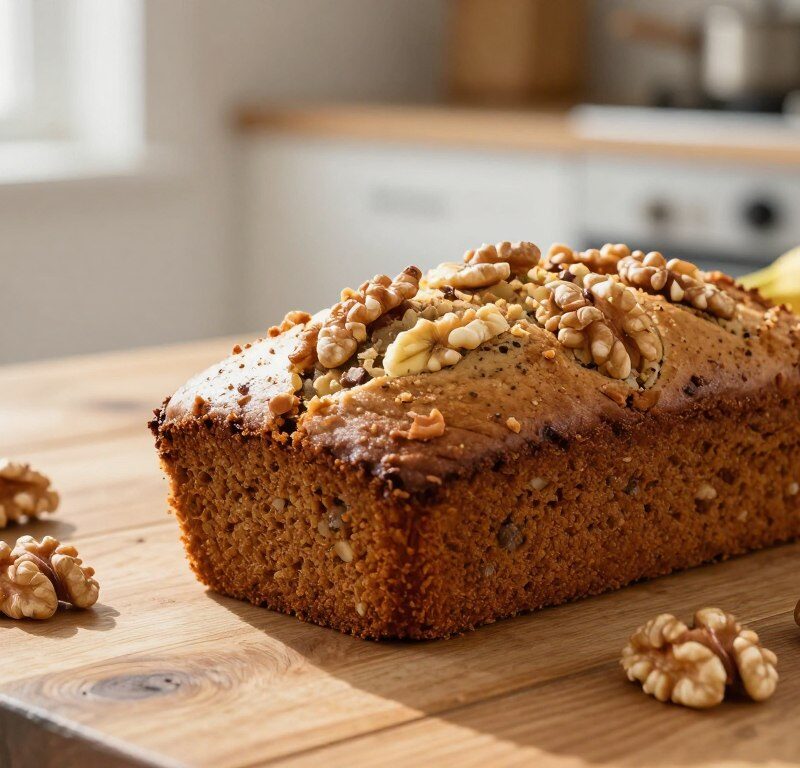
This classic British cake turns ripe fruit into a soft, moist treat with a gentle crunch from nuts. It is a dependable bake for afternoon tea or simple weekend baking.
The recipe uses straightforward ingredients and a clear method. By folding mashed bananas into a buttery batter you get a tender crumb that keeps well for days.
Whether you are new to baking or have plenty of experience, this loaf delivers balanced sweetness and comforting texture. Follow simple steps and enjoy reliable results and neat slices for lunchboxes or tea.
Key Takeaways
- This mary berry recipe yields a moist, tender cake ideal for afternoon tea.
- Simple ingredients like ripe bananas and walnuts create a comforting bake.
- The method is easy to follow, suitable for beginners and seasoned bakers.
- Flavours often improve the next day as they meld.
- Perfect for lunchbox slices or a relaxed weekend treat.
- Our guide covers ingredients, mixing and cooling for a professional finish.
The Appeal of the Mary Berry Banana And Walnut Loaf
This simple British loaf shines because everyday fruit and nuts create a deeply comforting cake.
Why Ripe Bananas Matter
Very ripe bananas provide the natural sweetness and moisture that keep the crumb tender. They reduce the need for extra sugar and give the bake a rich, caramel note.
Using fruit with brown spots ensures a softer texture and fuller flavour. The bananas do most of the heavy lifting in this recipe, so choose the ripest fruit you have.
The Classic British Flavour
The charm of this cake is its balance: soft crumb with a crisp contrast from walnuts. That contrast makes slices moreish at tea time or for a simple snack.
Mary Berry favours modest sweetness, which keeps this loaf versatile across many recipes and tastes. The result is a timeless treat that feels both homely and refined.
| Element | Role | Practical Tip |
|---|---|---|
| Ripeness | Sweetness & moisture | Use very ripe bananas with brown spots |
| Walnuts | Crunch & texture | Toast lightly for extra depth |
| Sweetness level | Balanced appeal | Keep sugar modest to let fruit shine |
Essential Ingredients for Your Loaf
Gathering the correct staples sets the stage for a reliably tender and well-risen loaf.
Key ingredients include 100g soft butter at room temperature and 175g caster sugar. Creaming these makes the batter light and even.
Add 2 large eggs and 225g self-raising flour for structure. Stir in 1 teaspoon baking powder and a pinch of salt to help the cake rise and balance sweetness from ripe bananas.
For texture, fold in 50g chopped walnuts. Accurate measures and room temperature ingredients prevent curdling and give consistent results in classic mary berry banana recipes.
- 100g soft butter — room temperature for smooth creaming
- 175g caster sugar — keeps sweetness balanced
- 2 large eggs, 225g self-raising flour, 1 tsp baking powder
- 50g chopped walnuts and mashed bananas to taste
| Ingredient | Amount | Role | Pro tip |
|---|---|---|---|
| Butter | 100g | Lightens batter | Soften to room temperature |
| Caster sugar | 175g | Sweetness & structure | Measure accurately |
| Flour & baking powder | 225g + 1 tsp | Rise & body | Sift for airiness |
| Walnuts | 50g | Crunch | Chop and toast lightly |
Preparing Your Kitchen and Equipment
Set up your workspace so the baking process runs smoothly from start to finish. A calm, organised kitchen helps the batter go into the tin quickly once mixed.
Preheat your oven to 170°C (340°F) so the temperature is stable when the loaf goes in. Use a 900g (2lb) loaf tin and line it thoroughly with baking parchment.
Lining Your Loaf Tin
Make a parchment sling by leaving extra paper over the long sides of the tin. This lets you lift the cake out cleanly after the 50–60 minutes of baking time.
Position mixing bowls, spoons and a cooling rack near the oven. Spend a few minutes preparing the tin so the batter can be poured in without delay.
- Preheat the oven to 170°C before you start mixing.
- Line a 900g (2lb) tin with high-quality parchment for easy release.
- Have bowls and the cooling rack close to the oven for efficient baking.
| Task | Why it helps | Quick tip |
|---|---|---|
| Preheat oven | Ensures even rise and bake | Set to 170°C before assembling ingredients |
| Line tin with parchment | Prevents sticking and eases removal | Create a sling on the long sides |
| Prep workstation | Speeds up the process | Place bowls and cooling rack near the oven |
Mastering the Mixing Process
Start the batter with patience: slow creaming and gentle mixing shape the final texture for a proper mary berry banana loaf.
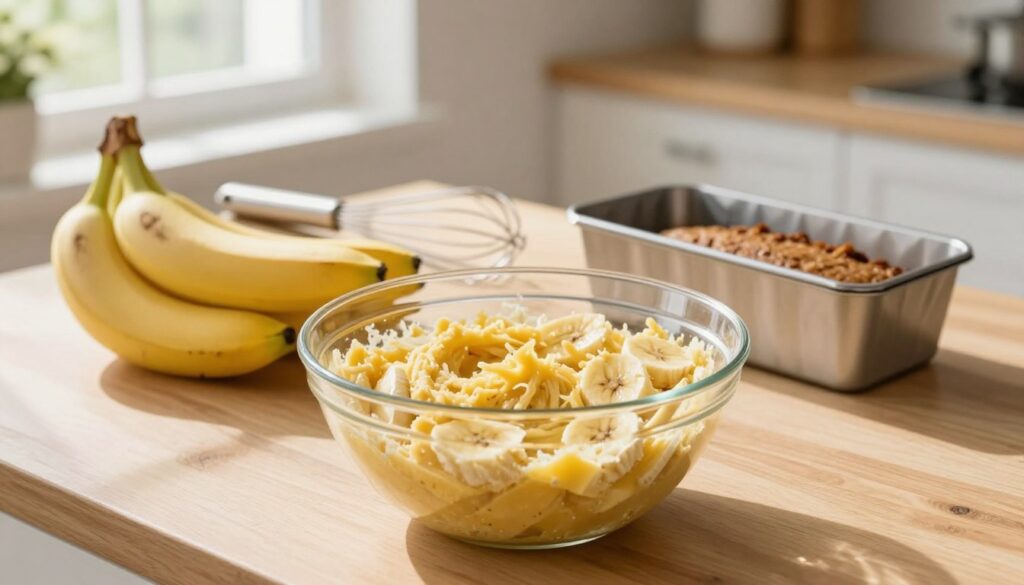
Begin in a large mixing bowl by creaming 100g soft butter with 175g caster sugar until the mixture is pale and fluffy. This step traps air and builds the cake structure.
Beat in the 2 large eggs one at a time, ensuring each egg is fully incorporated before adding the next to the bowl. Doing this keeps the batter stable and emulsified.
Stir in 225g mashed bananas and a splash of vanilla, mixing until smooth. Using ripe bananas is vital here; they bring natural sweetness and moisture that define the recipe.
Use room temperature ingredients so the butter creams evenly with the sugar. A well-mixed batter gives an even rise in the tin and a tender crumb in the cake.
Folding in the Dry Ingredients
Careful folding of the dry mix preserves the air you’ve creamed into the batter.
Sift 225g self-raising flour with 1 teaspoon baking powder and a pinch of salt into a clean bowl. Sifting removes lumps and blends the leavening powder evenly with the flour.
Using a spatula, fold the dry ingredients into the wet mixture in three additions. Work slowly from the outside in, turning the batter over rather than stirring.
Stop folding the moment the white streaks of flour disappear. Overworking the batter develops gluten and makes the loaf dense.
- Fold gently to keep the air from the creaming stage.
- Sift flour and powder together first for even distribution.
- Finish as soon as the flour is just incorporated.
| Step | Why it matters | Quick tip |
|---|---|---|
| Sift flour and powder | Removes lumps and mixes leveller | Use a fine sieve into a separate bowl |
| Fold in thirds | Protects trapped air | Use a wide spatula and gentle strokes |
| Stop when combined | Prevents a dense crumb | Leave small streaks rather than overmix |
Adding Texture with Walnuts
A final gentle fold of chopped walnuts gives the loaf its much-loved crunch.
Fold the 50g of chopped walnuts in at the very end of mixing so they are evenly distributed through the banana batter. Doing this late stops the nuts from sinking to the bottom while keeping the crumb light.
The contrast of crunchy nuts against a soft, moist interior is a classic pairing. If you prefer a more uniform jar of texture, chop the walnuts finely so every slice has an even sprinkle of nutty pieces.
Ensure each walnut piece is well coated in batter before you spoon the mixture into the tin. A light coating helps them stay suspended during baking and gives a balanced nut flavour throughout.
- Fold gently to avoid deflating the batter.
- Chop the nuts finer for less pronounced crunch.
- Coat walnuts in batter so they remain suspended and bake evenly.
Baking to Golden Perfection
Spoon the mixture into the prepared tin and level the top with a spatula so the loaf bakes into a uniform shape. Smoothness on the surface helps the cake rise evenly.
Place the lined loaf tin in the preheated oven and set the timer for 50–60 minutes. Check the bake minutes from 45 minutes to avoid an overly browned top.
If the top starts to colour too fast, loosely tent the tin with foil halfway through baking. This protects the surface while the centre continues to cook.
The loaf is done when it feels firm to the touch and a skewer pushed into the centre comes out clean. Proper baking ensures the butter and flour have cooked through, leaving a moist but stable crumb.
- Level the batter before baking for an even rise.
- Bake 50–60 minutes; monitor the top to prevent excess browning.
- Add chopped walnuts to the top for extra texture and appearance.
| Check | What to do | Why it works |
|---|---|---|
| Top browning | Tent with foil | Prevents over-colouring while centre cooks |
| Skewer test | Insert into centre | Shows no wet batter = ready |
| Final feel | Firm to touch | Indicates butter and flour are set |
Cooling and Slicing Techniques
A ten-minute rest in the loaf tin is a small step that makes a big difference to the cake’s structure.
Let the tin sit for 10 minutes so the crumb firms up. These tin minutes stop the cake from crumbling when you turn it out.
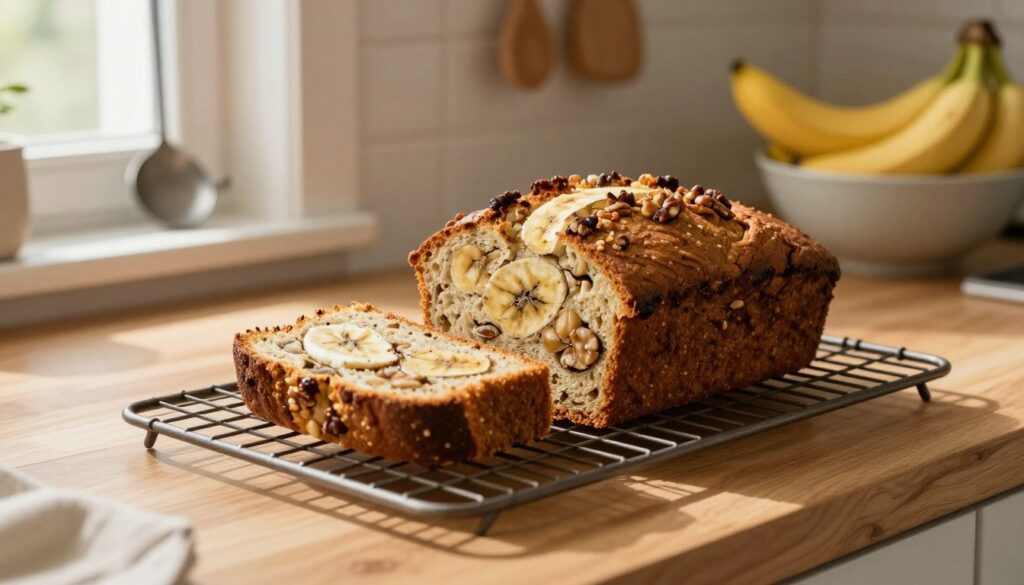
After those minutes, gently release the cake and place it on a wire rack. A wire rack lets air circulate under and around the loaf so the base stays crisp and not soggy.
Allow the cake to cool completely on the rack. You must let loaf cool completely before slicing. Cutting while warm risks tearing and uneven slices.
- Leaving the bake in the tin for 10 minutes helps it settle.
- Turn the cake out onto a wire rack to cool completely for best texture.
- The wire prevents condensation and keeps the crust crisp.
- Wait until the loaf cool completely before you slice for neat portions.
- These tin minutes are vital for the loaf’s structural integrity and presentation.
Troubleshooting Common Baking Issues
A few simple checks will stop a heavy, gummy crumb from spoiling your bake. Use this short guide to identify the likely causes and apply quick fixes before your next oven session.
Preventing a Dense Crumb
Overmixing the dry ingredients or adding too much flour often creates a tight texture. Fold the dry mix in gently and stop when streaks disappear.
Ripeness matters: very ripe mashed bananas give moisture and sweetness that keep the crumb light. If fruit is under-ripe the cake can turn dense.
- Measure flour and baking powder by weight to avoid excess.
- Fold in dry ingredients in three additions to preserve trapped air.
- If batter feels heavy, rest for a few minutes before spooning into the tin.
Managing Oven Browning
If the top browns too fast, tent the loaf loosely with foil for the final bake minutes. This shields the surface while the centre finishes cooking.
Also check oven shelves and temperatures; moving the tin lower can reduce top colour and give a more even bake.
- Start checking at 45 bake minutes to avoid over-colouring.
- Use a skewer to confirm the centre is set—keep baking and check every few minutes if needed.
| Problem | Likely cause | Quick fix |
|---|---|---|
| Dense crumb | Overmixed dry ingredients or under-ripe bananas | Fold gently; use very ripe bananas |
| Top browning | Oven too hot or rack too high | Tent with foil; move tin lower |
| Undercooked centre | Insufficient bake minutes | Continue baking and test every few minutes |
Creative Variations and Substitutions
Try swapping ingredients to tailor texture, flavour and dietary needs with ease.
For a sweeter, kid-friendly bake, stir chocolate chips into the batter. Chocolate chips melt into pockets of gooey chocolate and lift the top appearance.
To deepen flavour, replace caster sugar with brown sugar. This creates a caramel note that pairs well with ripe bananas and a richer crumb.
- Swap chopped walnuts for pecans or hazelnuts for a different nutty tone.
- Add a teaspoon of cinnamon or a pinch of nutmeg to the flour for a warm, spiced version.
- Use dairy-free butter or margarine to make the recipe suitable for people with allergies.
| Variation | Effect | Quick tip |
|---|---|---|
| Chocolate chips | More indulgent, melty pockets | Fold in at the end to prevent sinking |
| Brown sugar | Deeper, caramel flavour | Reduce liquid slightly if batter seems loose |
| Pecans / Hazelnuts | Different nut profile | Toast lightly for extra aroma |
Storing Your Loaf for Maximum Freshness
Proper storage preserves the moist crumb so each slice tastes freshly baked.
At room temperature, keep the cake in an airtight container or wrapped snugly in baking parchment and plastic wrap. This prevents the crumb from drying out and keeps the butter flavour bright.
Store the loaf at room temperature for up to 4 days. If you plan to eat slices within a few minutes to a few days, this is the simplest method.
Freezing for Later
Freeze whole or in portions to save time and avoid waste. Wrap the cake or individual slices tightly in cling film, then place in a sealed freezer bag.
Frozen slices last up to 3 months. When ready to eat, bring them to room temperature before serving for the best texture.
A gentle warm in a low oven also refreshes a frozen slice and gives a near-fresh taste. Avoid microwaving — it can make the crumb rubbery rather than soft and moist.
- Store in an airtight container at room temperature for up to 4 days.
- Freeze individual slices for quick treats; thaw to room temperature first.
- Wrap well and freeze for up to 3 months to retain quality.
- Warm frozen slices lightly in a low oven for a fresh-baked result.
- Avoid microwaving to protect texture and keep the crumb tender.
| Storage method | Duration | Tip |
|---|---|---|
| Room temperature, airtight | Up to 4 days | Keep away from direct heat |
| Wrapped & frozen (slices) | Up to 3 months | Double-wrap for best protection |
| Thawing & serving | Minutes to hours | Bring to room temperature or warm in a low oven |
Conclusion
A well-made batch proves how basic ingredients can make a memorable teatime treat.
Follow the creaming step of butter and caster sugar, add ripe mashed bananas gently, and fold the dry ingredients in thirds to keep the crumb light. Use the baking minutes advised and check with a skewer so the centre bakes through.
Cool completely on a wire rack before slicing. Let the cake reach room temperature, then store wrapped or in an airtight container to keep fresh for days.
Whether you add chocolate chips or stick with chopped walnuts, this mary berry banana recipe is versatile, reliable and ideal for sharing with friends and family.
FAQ
What makes ripe fruit best for this loaf?
Can I substitute wholemeal flour for part of the plain flour?
How should I prepare the tin for baking?
Is it better to use melted butter or creamed butter for the mixture?
When should I fold in chopped nuts and chips?
How long and at what temperature should I bake this recipe?
My loaf browns too quickly on top — how do I prevent that?
Why did my cake turn out dense and heavy?
How long should the cake cool before slicing?
Can I freeze slices, and how should I do it?
What are easy flavour variations I can try?
How can I keep the crumb moist if I plan to store the loaf for several days?
Mary Berry Banana And Walnut Loaf
This classic British cake turns ripe fruit into a soft, moist treat with a gentle crunch from nuts. It is a dependable bake for afternoon tea or simple weekend baking.
Ingredients
- 100g soft butter, room temperature
- 175g caster sugar
- 2 large eggs
- 225g self-raising flour
- 1 tsp baking powder
- 50g chopped walnuts
- 225g mashed ripe bananas
Method
- Preheat the oven to 170°C (340°F) and line a 900g (2lb) loaf tin with baking parchment.
- In a large mixing bowl, cream the soft butter and caster sugar until pale and fluffy.
- Beat in the eggs one at a time, ensuring each is fully incorporated before adding the next.
- Stir in the mashed bananas until smooth.
- Sift the self-raising flour, baking powder, and a pinch of salt into a separate bowl.
- Fold the dry ingredients into the wet mixture in three additions, being careful not to overmix.
- Gently fold in the chopped walnuts.
- Spoon the mixture into the prepared tin and level the top with a spatula.
- Bake in the preheated oven for 50–60 minutes, checking from 45 minutes to avoid over-browning.
- Once baked, let the loaf cool in the tin for 10 minutes before transferring to a wire rack to cool completely.