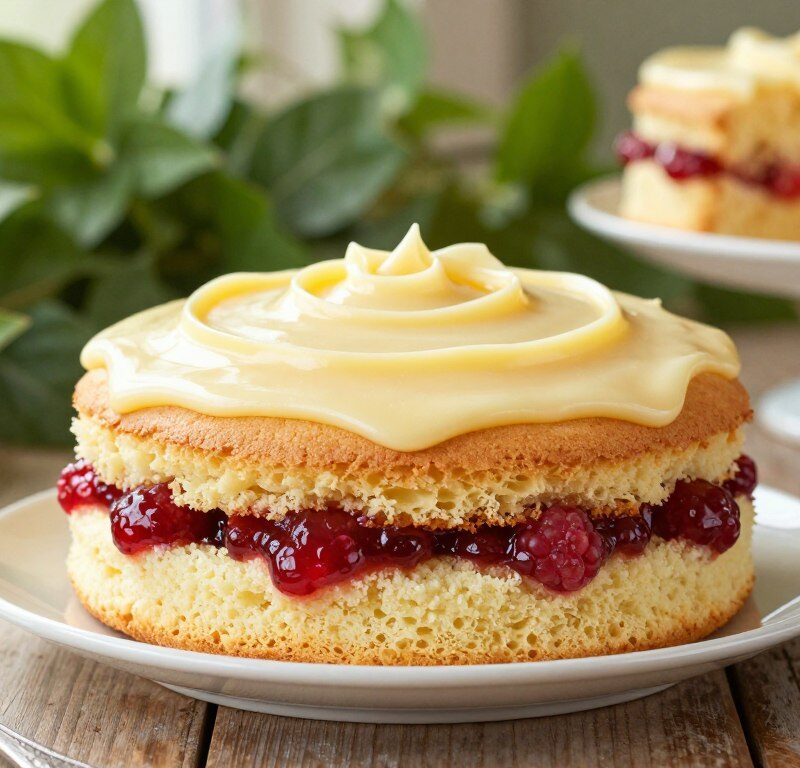
This classic tea-time cake is a quintessential British treat that many home bakers adore. The recipe feels approachable, even if you are new to baking.
By choosing high-quality butter and fine icing sugar you can achieve a neat, professional finish. The secret to a light sponge lies in accurate measurement of caster sugar and gentle handling of the batter.
Whether you bake for a special occasion or a quiet weekend tea, this reliable recipe gives you a pleasing, tender cake every time. We will guide you through clear steps to make smooth buttercream and an impressively airy sponge.
Key Takeaways
- The recipe is friendly for beginners and yields a classic British cake.
- Use good-quality butter and sifted icing sugar for a polished finish.
- Precise measurement of caster sugar helps create a light sponge.
- Gentle mixing preserves air and gives the best texture.
- The method makes a dependable base for variations and decoration.
The History and Appeal of the Mary Berry Victoria Sponge With Butter Icing
Few cakes capture British teatime like this light, jam-filled sandwich cake. Its story ties directly to Queen Victoria, who enjoyed a slice at afternoon tea, dusted with caster sugar.
The invention of baking powder in 1843 changed baking. Suddenly sponges rose higher and became more reliable. This technical leap helped the sponge cake become a household favourite.
Traditional celebrations still pick this cake over many modern alternatives. While some prefer a tangy lemon drizzle, the classic victoria sponge remains the most requested for birthdays and teas.
One notable variant is the jam buttercream sandwich, which adds richness without hiding the airy texture. Many bakers praise mary berry for popularising simple home baking recipes that set a gold standard.
- The cake links to Queen Victoria and afternoon tea traditions.
- Adding buttercream lifts the flavour for special occasions.
- Countless other cakes trace their structure to this reliable victoria sandwich.
For a trusted method, try this classic victoria sponge to start exploring variations like lemon or fruit-filled recipes.
Essential Equipment and Ingredients for Your Bake
Well-chosen tins and measured ingredients set the stage for a reliably even bake.
Choosing the Right Tins
Use two 20cm (8in) loose-bottomed or springform tins. Grease them thoroughly and line the base with parchment to prevent the top tearing when you remove each cake tin.
Quality of Ingredients
Accurate measurement is key. Weigh 225g each of self-raising flour, caster sugar and unsalted butter or a good baking spread.
Check that your 1 level tsp baking powder is in date. Add four eggs at room temperature for a smooth, even batter.
- Preheat the oven to 180C / 160C fan and keep it steady for the baking minutes listed in the recipe.
- Use a sturdy mixing bowl and a reliable electric mixer to beat the mixture lump-free.
- If you prefer jam and buttercream filling, prepare them while the cakes cool.
| Item | Amount | Notes |
|---|---|---|
| Flour | 225g | Self-raising for best rise |
| Sugar (caster) | 225g | Light and fine for even texture |
| Butter / baking spread | 225g | Unsalted or suitable spread |
| Eggs | 4 | Room temperature |
| Baking powder | 1 level tsp | Check date for lift |
Mastering the All-in-One Mixing Method
The all-in-one method speeds up baking by letting you add every ingredient straight into one mixing bowl. It is a technique championed by mary berry that keeps the process simple and tidy.
Put 225g self-raising flour, 225g sugar, 225g softened baking spread, four eggs and 1 level tsp baking powder into the bowl. Use a stand mixer or a hand mixer and beat until the batter is smooth. Take care not to overwork the mix to retain a light sponge texture.
This approach removes the need to cream butter and sugar separately, which is helpful for beginners and great when baking with children. Always check that the spread is soft before you start. That ensures even incorporation and avoids lumps.
- Measure ingredients accurately.
- Beat on medium until smooth, about 1–2 minutes.
- Stop when the batter is glossy and even.
| Step | Ingredient | Amount |
|---|---|---|
| Dry | Flour | 225g self-raising |
| Dry | Sugar | 225g caster |
| Wet | Baking spread | 225g softened |
| Binding | Eggs | 4, room temperature |
| Leavening | Baking powder | 1 level tsp |
Baking and Assembling Your Sponge Cake
Ensure the oven temperature and tin placement are right before you pour in the batter. Proper preparation helps the cake rise evenly and colour well.
Preparing the Oven
Preheat to 180C / 160C fan and set a rack in the middle. Grease and line two 20cm tins so the sponges lift free when ready.
Divide the batter evenly between the tins and smooth the top with a spatula for an even bake. Place the tins side by side, not crowded, to allow hot air to circulate.
Achieving the Perfect Rise
Bake for 20–25 minutes until the sponges are golden and the edges pull away from the tin. A skewer inserted into the centre should come out clean.
Allow the cakes to rest in their tins for a few minutes, then turn them out onto a wire rack to cool completely. Cooling on a rack keeps the base crisp and the crumb light.
Creating the Buttercream Filling
For the filling beat 100g softened butter with 200g sifted icing sugar and 2 tbsp milk until smooth and pale. Use a mixer on low to start, then increase speed to get a creamy texture.
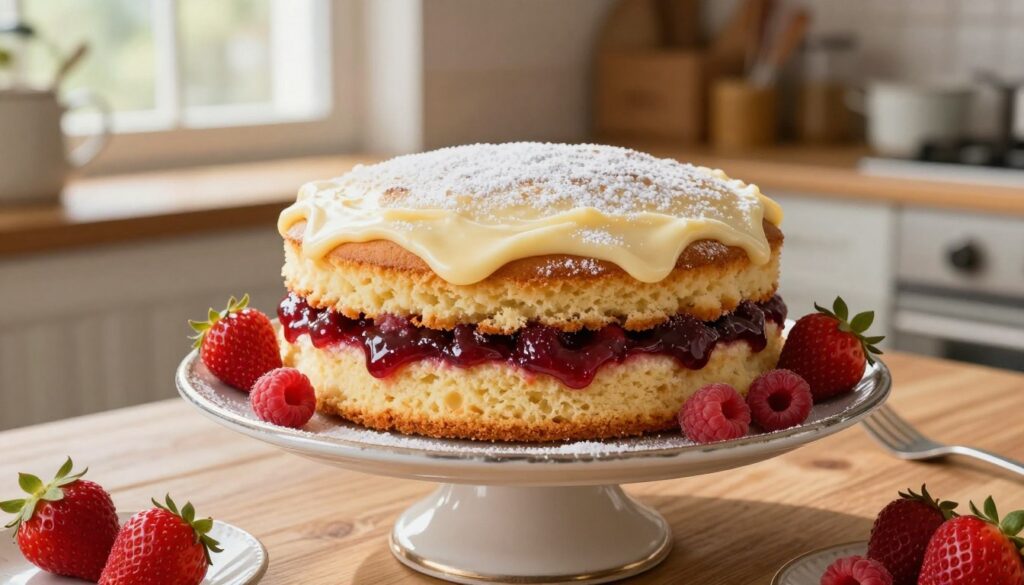
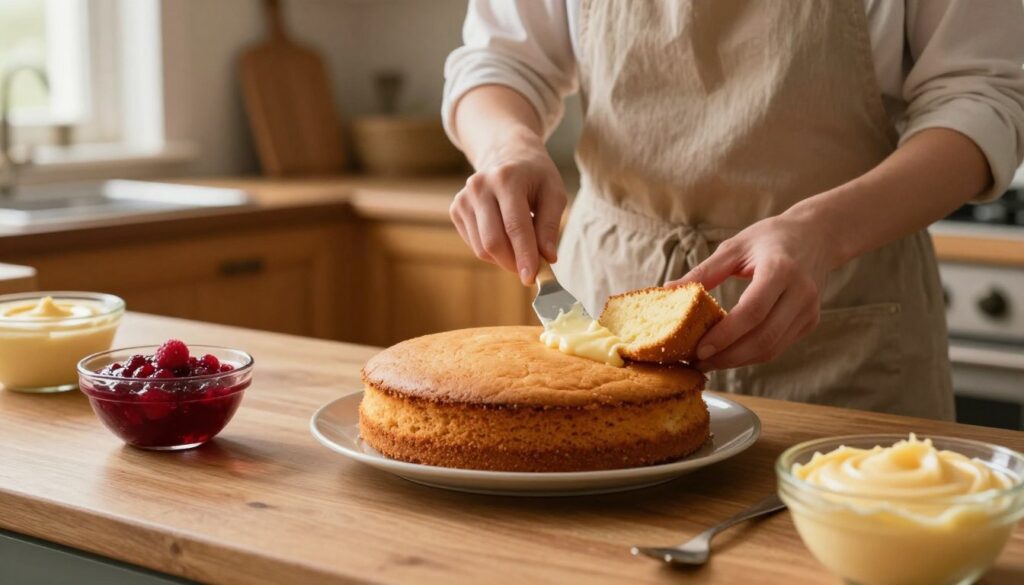
Spread a thin layer of strawberry jam on the bottom sponge, then pipe or spoon on the buttercream. Sandwich together, dust the top with caster sugar and serve.
“Simple oven care and neat assembly make all the difference for a tender, reliable victoria sponge cake.”
Expert Tips for a Light and Fluffy Texture
Small changes in technique can transform a heavy bake into a light, airy cake every time. Follow a few focused steps and you will see better results in texture and rise.
Avoid over-mixing. Once the flour and baking powder are in the bowl, mix only until combined. Overworking the batter knocks out air and makes a dense crumb.
Troubleshooting Common Baking Mistakes
Check your baking powder if cakes fail to rise. Expired powder is a frequent cause of flat sponges.
If the crumb feels heavy, try a baking spread instead of butter; some bakers get a lighter result this way.
- Beat your buttercream for several minutes to make it pale and airy; good butter improves flavour.
- Keep an eye on the oven during the last 5 minutes of baking time; temperatures vary, especially with a fan setting.
- Cool cakes completely on a wire rack before you spread jam or pipe buttercream on top.
- For a fresh twist, add a little lemon zest to the batter to lift the flavour without changing texture.
“Simple checks — fresh baking powder, gentle mixing and full cooling — fix most baking problems quickly.”
Conclusion
In short, this recipe turns simple storecupboard ingredients into a proud, crowd-pleasing cake. Follow the steps and you will make a light victoria sponge that pairs well with strawberry jam and a smooth buttercream.
Precision with flour and caster sugar keeps the batter even. Careful weighing and gentle mixing give consistent results each time you bake.
Serve for afternoon tea or a special celebration — the soft crumb and balanced sweetness of icing sugar and jam are crowd favourites. Try a lemon drizzle next for a zesty twist on classic recipes.
Use this recipe confidently; one cake like this makes many happy guests and builds lasting baking skills.
FAQ
What size and type of tins work best for this classic sandwich cake?
Can I use a single tin and split the cake instead of two tins?
What is the best oven temperature for consistent results?
How do I achieve a light, fluffy crumb in my sponge?
Is self‑raising flour necessary or can I use plain flour?
How long should the cakes bake for and how do I test for doneness?
What’s the best way to make the buttercream filling so it isn’t too sweet or runny?
Can I replace jam in the sandwich with fresh fruit or curd?
How should I store the finished cake and how long will it keep?
My sponge domes on top—how can I get flat layers for assembling?
Is the all‑in‑one mixing method reliable for this recipe?
Can I add flavour variations like lemon or vanilla to the batter?
How do I prevent the cake layers from sticking when I turn them out?
What are common causes of a dense or heavy sponge and how do I avoid them?
Mary Berry Victoria Sponge With Butter Icing
This classic tea-time cake is a quintessential British treat that many home bakers adore. The recipe feels approachable, even if you are new to baking.
Ingredients
- 225g self-raising flour
- 225g caster sugar
- 225g unsalted butter or baking spread
- 4 eggs (room temperature)
- 1 level tsp baking powder
- 100g softened butter (for buttercream)
- 200g sifted icing sugar (for buttercream)
- 2 tbsp milk (for buttercream)
- Strawberry jam (for filling)
- Caster sugar (for dusting)
Method
- Preheat the oven to 180C / 160C fan and grease and line two 20cm (8in) loose-bottomed or springform tins.
- In a mixing bowl, combine 225g self-raising flour, 225g caster sugar, 225g softened baking spread, 4 eggs, and 1 level tsp baking powder.
- Using a stand mixer or hand mixer, beat the mixture until smooth, about 1–2 minutes.
- Divide the batter evenly between the prepared tins and smooth the tops with a spatula.
- Bake for 20–25 minutes until golden and a skewer inserted into the center comes out clean.
- Allow the cakes to cool in the tins for a few minutes, then turn them out onto a wire rack to cool completely.
- For the buttercream filling, beat 100g softened butter with 200g sifted icing sugar and 2 tbsp milk until smooth and pale.
- Spread a thin layer of strawberry jam on the bottom sponge, then pipe or spoon on the buttercream.
- Sandwich the two sponges together, dust the top with caster sugar, and serve.