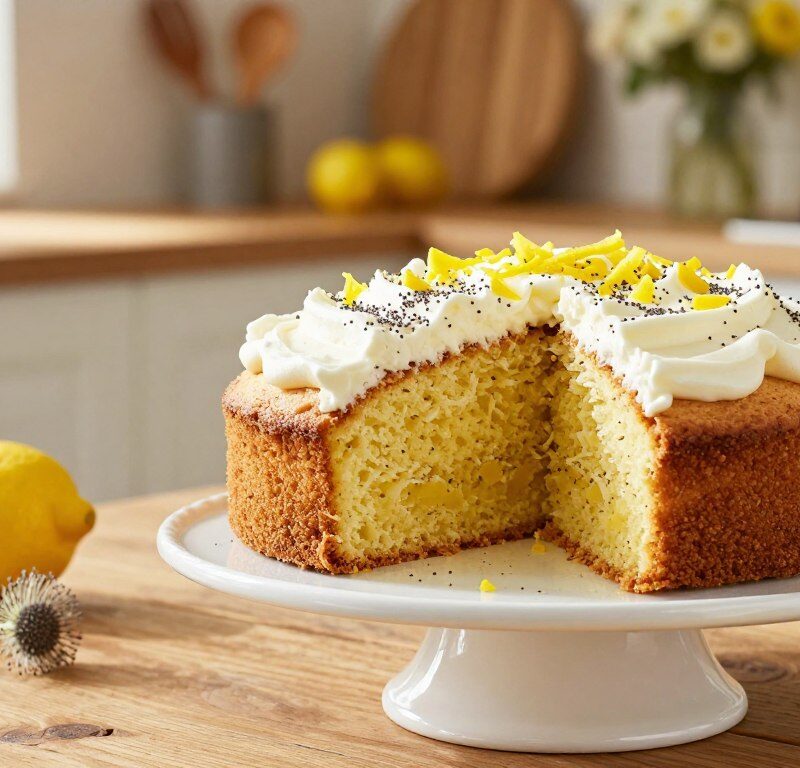
This classic traybake has been a beloved British favourite since the 1960s. The recipe delivers a bright citrus hit alongside a moist, tender sponge that feels both simple and special.
The method uses a 30cm x 23cm x 4cm traybake tin for best results and yields slices at roughly 290 kcal each. It is perfect for afternoon tea or casual gatherings, and fans often ask the baker for the recipe when they meet her in public.
Expect a gentle crunch from the tiny seeds and a buttery crumb that soaks up a zesty drizzle. Follow clear steps and a modest list of ingredients to recreate this approachable British bake at home.
Key Takeaways
- The traybake has been popular since the 1960s and is a staple of British baking.
- Use a 30cm x 23cm x 4cm tin for consistent results and even baking.
- Each serving is about 290 kcal — ideal for portion control.
- The texture balances a moist sponge with a subtle crunch from the seeds.
- Simple steps and a zesty drizzle make this recipe easy to master at home.
Why You Will Love This Mary Berry Lemon And Poppy Seed Cake
Bright citrus and a gentle crunch make this traybake a joy to eat. The lemon poppy seed flavour is fresh but never sharp, so it appeals to many tastes.
The addition of poppy seeds adds a delicate texture that lifts the sponge. Tiny seeds give each mouthful a pleasant bite without overwhelming the crumb.
The recipe keeps its moisture for days, which makes it perfect to bake ahead. A light lemon drizzle soaks into the top, boosting the lemon flavour and adding extra succulence.
- Easy technique for home bakers seeking dependable results.
- Versatile with tea, coffee or as a simple pudding.
- Consistent seed distribution means a balanced slice every time.
This classic is a go-to among cake recipes for gatherings and casual treats. Try it as a seed cake or a lemon poppy twist next time you need a reliable crowd-pleaser.
Essential Ingredients for Your Sponge
Getting the basics right makes all the difference. Measure ingredients accurately and use the best produce you can find. This helps the traybake develop a fine crumb and bright flavour.
Selecting Quality Lemons
Always choose unwaxed lemons so the lemon zest is clean and full of oils. Finely grate zest from two fruit for the recipe and reserve a little juice to balance the sweetness.
Fresh citrus lifts the batter and makes the drizzle vivid. Good fruit keeps the aroma lively for days.
Choosing the Right Flour
Use 275g of self-raising flour to ensure a light, even rise in the sponge. Sifting the flour gives a softer texture and helps distribute the 25g of poppy seeds evenly.
Combine measured 225g of soft butter with 225g of caster sugar, four large eggs and 4 tbsp milk for a smooth batter. These ingredients create the classic lemon poppy seed sponge that pairs perfectly with a thin glaze.
Preparing Your Baking Tin and Oven
Start with temperature and tools in order. Preheat the oven to 180°C/160°C fan/Gas 4 before you mix the batter. This creates a steady heat that helps the sponge rise and set evenly.
Grease and line a 30cm x 23cm x 4cm traybake tin with good-quality baking parchment. A well-prepared tin makes removing the slice simple and keeps the edges neat.
“A properly greased and lined tin is a small step that gives professional results.”
Mary Berry always stresses the need to grease the tin so the edges do not overbake. Lining with parchment lets you lift the whole cake out once it has cooled.
- Ensure the oven is fully up to temperature before the tin goes in.
- Use fresh parchment that covers the base and sides for easy release.
- Avoid opening the oven door in the first 20 minutes of baking to keep heat stable.
Taking these simple cooking and baking precautions makes the process smoother. Your lemon cake will bake more evenly and look as good as it tastes.

Mixing the Perfect Batter
Good mixing makes all the difference. Start in a large bowl so you have room to work and air can be incorporated easily.
Achieving the Ideal Consistency
Cream the softened butter with caster sugar until pale and fluffy. Beat in the eggs, then fold in the self-raising flour for a smooth, even mixture.
Add the lemon zest and lemon juice now so the citrus flavour is spread through the whole batter. Use an electric whisk for 2 minutes to trap air and produce a light sponge.
Gently fold in the poppy seeds to prevent clumping and keep distribution even. Stir in 4 tbsp milk if the batter feels too stiff; this helps it spread into every corner of the prepared tin.
Pour the mixture into your lined tin and use a spatula to level top so the bake rises uniformly. Remember the glaze mix of icing sugar and lemon juice for later; keeping that in mind prevents the batter drying out.
If you want the original recipe reference, see mary berry lemon for further inspiration.
Baking to Golden Perfection
Aim for an even, warm bake so the top colours up and the edges start to pull away from the tin.
Place your tin in the preheated oven and bake for 35–40 minutes until the cake is golden and feels firm to the touch.
The traybake will begin to shrink slightly from the sides of the tin when it is near done. Gently press the centre with a fingertip; it should spring back. This is the best sign that the sponge is cooked through.
- Ensure the mixture has a level top before it goes in to help an even rise.
- Keep an eye during the final minutes — cooking times can vary by oven.
- After baking, leave cool in the tin so the structure sets before you remove the parchment and cut slices.
When cool, remove the paper and prepare the drizzle for a classic finish. A careful bake here gives a moist, tender result rather than a dry sponge.
Adding the Signature Lemon Glaze
Prepare a pourable icing by whisking the sugar with juice until smooth. While the cake still warm, sift 150g of icing sugar into a bowl and add 1–2 tbsp of lemon juice a little at a time.
Aim for a glossy, pourable glaze: stop when it falls in a steady ribbon. Apply quickly so the drizzle soaks into the sponge and brightens every slice.

“Applying the glaze while warm helps the liquid penetrate the sponge and keeps it moist for days.”
Use a spoon or a pastry brush to spread the mixture across the top, ensuring even coverage. Work from one side to the other so each square gets a citrus hit.
- Mix lemon juice gradually into icing sugar to control thickness.
- Spread the glaze while the cake still warm for better absorption.
- Once glazed, leave cool completely so the sugar sets to a light, crisp finish.
| Step | Action | Result |
|---|---|---|
| Mix | Sift icing sugar, add juice slowly | Glossy, pourable glaze |
| Apply | Spoon or brush over top while warm | Glaze soaks into sponge |
| Set | Leave cool completely | Crisp, sweet surface and lasting moisture |
Note: For the classic mary berry lemon drizzle, follow this simple finishing touch to transform a plain traybake into an impressive teatime treat.
Expert Tips for Success
A handful of practical tips will help you nail the texture and flavour every time.
Avoiding a Dry Sponge
Do not overbake. Start checking after 35 minutes in the oven and use a skewer in the centre to test doneness.
If the top browns too fast, cover loosely with foil for the final minutes. Use a good-quality baking spread or softened butter to keep the crumb rich and moist.
Ensuring Even Poppy Seed Distribution
Mix the poppy seeds with the flour in a separate bowl before folding into the wet mix. This stops clumps and gives balanced pockets of seed through the sponge.
Checking for Doneness
Press the centre gently — it should spring back — but a skewer is most accurate. If it comes out clean, the bake is ready. If not, return for a few more minutes and recheck.
- Measure lemon juice and lemon zest accurately for bright flavour.
- If the batter looks stiff, add 1 tbsp milk to aid an even rise.
- Apply the glaze while the cake still warm so the icing sugar soak-in keeps the sponge moist.
“Apply the glaze while the cake still warm for best absorption.”
Creative Variations to Try
Small changes to the mix can turn the classic traybake into a seasonal showstopper.
Swap the lemon zest for orange zest to soften the sharp citrus note and give the bake a sweeter aroma. For a nuttier crumb, fold a handful of ground almonds into the flour; this creates a rounded texture that pairs well with tea.
For extra indulgence: sandwich a thin layer of lemon curd between two slim slices of sponge before you apply the lemon drizzle. This adds a tart, glossy centre that cuts through the richness of the butter.
To lighten the recipe, reduce the sugar slightly and replace some butter with plain Greek yoghurt. You can also try different poppy varieties — blue or white — to alter the loaf’s look without changing the flavour.
Make mini versions for single portions or freeze small squares for later. For a summer twist, add a splash of elderflower cordial to the drizzle for a floral lift.
“These variations keep the reliable moist sponge while letting you personalise each bake.”
- Swap citrus zest for orange for a milder profile.
- Add ground almonds for a nutty finish.
- Try lemon curd between slices for added tang.
- Reduce sugar and swap some butter for yoghurt to cut calories.
Conclusion
A simple method and few quality ingredients are all you need to recreate this zesty traybake at home.
, The mary berry lemon drizzle traybake remains a timeless favourite that brings classic British baking to any table. By following the clear steps you can master a moist, zesty sponge that highlights lemon flavour without fuss.
Whether you are new to baking or an experienced home cook, this recipe gives reliable results. Use fresh juice, good butter and the right measure of sugar for the best finish. A light glaze and even distribution of poppy seeds complete the treat.
We hope this guide inspires you to try this lemon drizzle and enjoy every slice with friends and family.
FAQ
What temperature and tin size are best for this traybake?
Can I use bottled lemon juice instead of fresh citrus?
How do I stop the sponge from drying out?
How many poppy seeds should I add for even distribution?
What’s the best way to make the glaze glossy and not too runny?
Can I bake this as individual buns or in a loaf tin?
Is it possible to make the recipe dairy‑free?
How should I store the cake and how long will it keep?
Any tips for checking the cake is fully baked?
Can I add slices or candied peel on top for decoration?
Mary Berry Lemon And Poppy Seed Cake
This classic traybake has been a beloved British favourite since the 1960s, delivering a bright citrus hit alongside a moist, tender sponge that feels both simple and special.
Ingredients
- 275g self-raising flour
- 225g soft butter
- 225g caster sugar
- 4 large eggs
- 4 tbsp milk
- 2 unwaxed lemons (zest and juice)
- 25g poppy seeds
- 150g icing sugar
Method
- Preheat the oven to 180°C/160°C fan/Gas 4 and grease and line a 30cm x 23cm x 4cm traybake tin.
- In a large bowl, cream the softened butter with caster sugar until pale and fluffy.
- Beat in the eggs one at a time, then fold in the self-raising flour until smooth.
- Add the lemon zest and lemon juice to the batter, mixing well.
- Gently fold in the poppy seeds and add milk if the batter feels too stiff.
- Pour the mixture into the prepared tin and level the top with a spatula.
- Bake in the preheated oven for 35-40 minutes until golden and firm to the touch.
- Once baked, allow to cool in the tin before removing.
- For the glaze, whisk the icing sugar with lemon juice until smooth and pourable.
- While the cake is still warm, spread the glaze over the top to soak into the sponge.