
These iconic teatime treats capture classic British baking in a simple, reliable recipe. Home bakers will find the method easy to follow. The mix of flour, sugar and ground nuts yields a delicate crumb.
The subtle nutty note is lifted by a touch of lemon zest, giving each bite a fresh finish. Preparation takes just 10 minutes, making this ideal for busy afternoons or unexpected guests.
Baking fills the kitchen with a warm, nutty aroma familiar in British homes. Whether you are a novice or experienced, the steps here will help you achieve a golden finish and the perfect texture every time.
Key Takeaways
- Simple ingredients and clear steps make this recipe approachable for all skill levels.
- Ten-minute prep time suits quick teatime baking and last-minute guests.
- Lemon zest lifts the nutty flavour for a refined taste.
- Results produce a crisp edge and tender centre when baked correctly.
- Follow timing and temperature to ensure a golden, even finish.
The Timeless Appeal of Mary Berry Almond Biscuits
Few recipes capture the comfort of home baking like these crisp, nutty treats. They suit an afternoon tea or a quick celebration at any time. The texture—crisp edges with a tender centre—makes them instantly appealing.
The reputation of mary berry almond creations rests on simple technique and quality storecupboard staples. A little ground nut and caster sugar transform into something elegant. These recipes show how modest ingredients can feel special.
What sets these almond biscuits apart is their subtle flavour. It is delicate rather than overpowering, so they sit well alongside jam, cream or a sharp cheese. Over the years, the berry almond style has become a staple in many homes for good reason.
Sharing these treats with friends and family remains one of the loveliest ways to celebrate baking. Classic technique and reliable results keep them firmly in the modern kitchen.
Essential Ingredients for Your Baking Cupboard
A small list of reliable items makes the recipe straightforward. Measure each ingredient for steady results.
Dry Ingredients
150g plain flour forms the base and gives structure to the dough. Combine this with 40g ground almonds and 50g caster sugar for texture and a light crumb.
Flavour Enhancers
Use 100g softened butter for richness and a short texture. Add ½ teaspoon of almond extract for a clear nutty note. If the paste feels dry, stir in 1 tablespoon of milk until it binds.
- Use a sturdy bowl and a wooden spoon to combine ingredients evenly.
- Weigh ingredients precisely for a consistent bake.
- Have a cooling rack ready to firm the biscuits after baking.
| Ingredient | Amount | Role | Tip |
|---|---|---|---|
| Plain flour | 150g | Structure | Sift to avoid lumps |
| Butter | 100g, softened | Richness | Room temperature for easy creaming |
| Caster sugar | 50g | Sweetness and bite | Fine texture blends well |
| Ground almonds / extract | 40g / ½ tsp | Texture / flavour | Use fresh ground nuts and pure extract |
Preparing the Perfect Soft Dough
Start in a large bowl by beating the softened butter with caster sugar until the mix becomes pale and creamy. This initial step creates the light texture that gives the biscuits a fine crumb.
Achieving the Right Consistency
Fold in the flour, ground almonds and a pinch of salt gently. Do not overwork the dough; a few folds are enough to keep the texture tender.
Add a teaspoon of almond extract to spread the flavour evenly through the mix soft dough. If the mixture looks too crumbly, stir in one tablespoon of milk to help the dough bind.
When the mix forms a soft dough, roll it into small, uniform balls so each biscuit bakes at the same rate in the oven. Taking ten minutes to prepare the dough properly improves the final result.
- Cream well: butter and caster sugar should be light.
- Fold gently: add flour and ground almonds without overmixing.
- Shape evenly: make uniform balls for consistent baking.
| Issue | Indicator | Quick Fix |
|---|---|---|
| Too crumbly | Dough won’t hold | Add 1 tbsp milk and press gently |
| Too soft | Sticky to touch | Chill 5–10 minutes before shaping |
| Uneven bake | Balls vary in size | Re-roll to uniform balls for the oven |
Shaping and Chilling for Best Results
Shaping the dough correctly sets the scene for a neat, even bake every time. Once the mix soft dough comes together, roll it into small, walnut-sized balls and place them on a lined baking tray.
Press one of the 12 whole almonds firmly into the centre of each biscuit so it stays put while baking. Be gentle when you press; avoid flattening the balls too much.
Chill the shaped dough for 10–15 minutes. This short rest lets the butter firm up and stops the biscuits from spreading too far in the oven.
Handling tips: keep movements light and quick. Over-working the dough toughens the crumb and spoils the melt-in-the-mouth texture that makes mary berry almond recipes so pleasing.
- Roll uniform balls so each item bakes evenly.
- If the mix is crumbly, add a splash of milk to bind.
- After chilling, the tray is ready to bake to a pale golden finish.
Baking to a Pale Golden Perfection
A quick ten-minute bake is all it takes to turn soft dough into a crisp, pale golden treat.
Preheat the oven to the correct temperature before you begin. Slide the tray in and set a timer for about 10 minutes.
Watch closely. These delicate biscuits move from pale golden to over-browned in seconds. Keep a keen eye on the tops and edges.
When the colour looks right, remove the tray and lift each item immediately to a wire rack. Air circulating under and around them helps them firm while they cool.
“This brief rest on a wire rack locks in a crisp exterior while the centre stays tender.”
Give each piece enough space on the tray so heat spreads evenly and every round keeps its neat shape. Proper spacing helps the ground nuts, flour and butter cook through without losing their nutty note.
| Time | Oven | Finish |
|---|---|---|
| About 10 minutes | Preheated, steady heat | Pale golden-brown, crisp outside |
| Watch final minute | Avoid hot spots | Tender inside, even colour |
Troubleshooting Common Biscuit Issues
A few simple checks will stop your rounds from spreading and keep toppings where they belong. Read these quick fixes before you bake so you can enjoy consistent results.
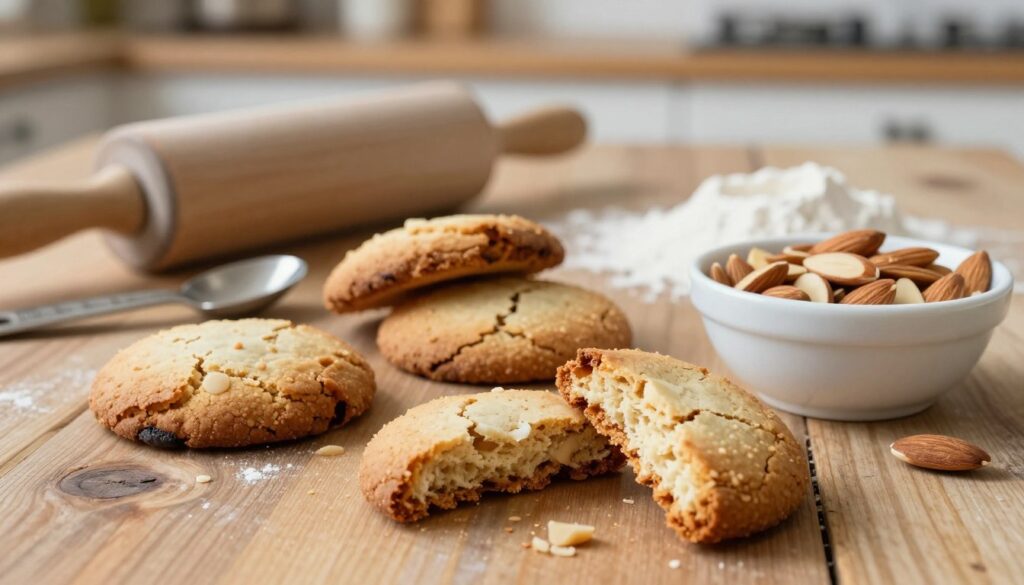
Preventing Excessive Spreading
Chill the shaped dough for at least 10 minutes before it meets the hot oven. Cold dough holds its shape and avoids thin, flat rounds.
If biscuits still spread, gently reduce the oven temperature by 10–15°C and bake a little longer to keep a pale golden finish.
Fixing Crumbly Texture
A dry mix often causes a crumbly biscuit. Add one tablespoon of milk to bind the dough if it won’t come together.
Also weigh your ingredients precisely; too much flour or too little butter will make the crumb dry and fragile.
Securing Toppings
Press whole almonds firmly into the centre of each dough ball before baking. This helps the nut adhere as the biscuit rises.
If an extract flavour is overpowering, reduce the almond extract or substitute with vanilla to suit your taste.
“Simple checks — chill, weigh and press — save most batches and keep your baking predictable.”
- Chill dough: prevents excess spread.
- Add 1 tbsp milk: binds dry mix.
- Press nuts into balls: secures toppings.
Creative Variations to Try at Home
Small changes to the dough can make a familiar bake feel entirely new. Try these simple ideas to add colour, texture and extra flavour.
Dip in chocolate — once cooled, dip half of each round into melted chocolate. This pairs well with the natural nuttiness and creates an elegant finish.
Lemon zest or spice — stir a little lemon zest into the dough for brightness. Alternatively, add a pinch of cinnamon to the sugar coating for a warm, festive twist.
Toppings and swaps — replace whole nuts with flaked almonds on top for a delicate look. For a bolder nut note, use ground hazelnuts or pistachios in place of ground almonds.
Try different extracts — a drop of vanilla or orange extract changes the flavour subtly and suits seasonal recipes.
| Variation | What to add | Best result |
|---|---|---|
| Chocolate dip | Melted dark or milk chocolate | Decadent, glossy finish |
| Lemon zest | Finely grated zest (½ tsp) | Bright, citrus lift |
| Flaked topping | Flaked almonds or seeds | Light, elegant appearance |
| Nut swap or spice | Ground hazelnuts/pistachios or cinnamon | Richer or warming flavour |
Serving Suggestions for Afternoon Tea
Present these pale golden rounds with care to lift a simple tea into a small celebration. A steaming cup of tea is the classic pairing and highlights the delicate almond flavour.
Classic British Pairings
Offer a small bowl of fresh berries or a dish of warm chocolate sauce for dipping. Both add contrast and make the treats feel more indulgent.
Warm milk suits children or a cosy evening. For grown-up guests, serve espresso or strong coffee to balance the sweet crumb and butter note.
“Arrange the rounds on a tiered stand to show off their pale golden finish and invite conversation.”
- Serve with a pot of hot tea for a true British moment.
- Provide dipping chocolate or seasonal fruit for variety.
- Use a tiered stand for formal afternoon tea presentation.
| Drink | Why it works | Best result |
|---|---|---|
| Hot tea | Complements delicate nutty flavour | Classic, balanced |
| Espresso / coffee | Offsets sweetness | Sophisticated contrast |
| Warm milk | Softer, comforting pairing | Child-friendly, cosy |
Storing Your Biscuits to Maintain Freshness
A few simple storage steps will keep your biscuits crisp and full of almond aroma.

Once cooled, place the rounds in an airtight container and keep them at room temperature for up to one week. Make sure each biscuit is completely cold on a wire rack first; any retained heat will soften the crumb.
Layer biscuits with a sheet of parchment to stop them sticking and to protect their original shape. If the dough was very soft when formed, this step helps maintain neat rounds.
- If crispness fades, refresh the batch in a low oven for 3–4 minutes.
- Avoid storing near strong-smelling foods — the delicate almond flavour will absorb other aromas.
- Keep chocolate-dipped versions in a separate airtight tin to prevent transfer of moisture or flavour.
“Cool completely, store airtight and give a short warm-up if needed to restore crispness.”
Follow these tips and your almond biscuits will stay close to their fresh-from-the-oven best, whether plain or dipped in chocolate.
Nutritional Information per Serving
A single serving delivers a tidy balance of energy and flavour for a light treat.
Each biscuit contains roughly 110 calories, making it a modest snack for afternoon tea or a small pick-me-up. Carbohydrates sit at about 9g, protein at 2g, fat at 7g and fibre about 0.5g.
The recipe uses 50g caster sugar and 150g flour, balanced by healthy fats from the ground nuts and butter. The use of almond extract and a dash of lemon zest adds big flavour with no extra calories.
If you add flaked almonds or a chocolate drizzle, expect slight increases in calories and fat. Always measure ingredients with a tablespoon or scale to keep values consistent.
“Measure accurately and enjoy: small changes to toppings change the nutrition but not the pleasure.”
| Nutrient | Per serving | Notes |
|---|---|---|
| Calories | ~110 kcal | Light treat for one |
| Carbohydrates | 9 g | Includes sugar from caster and other ingredients |
| Protein | 2 g | From ground nuts and flour |
| Fat | 7 g | Mostly from butter and ground almonds |
- Tip: swap toppings to control calories — flaked almonds add texture, chocolate adds richness.
- Measure: use a tablespoon or scale for reliable results when baking.
Conclusion
With a little care, this recipe rewards you with crisp edges and a tender centre. ,
These mary berry almond rounds are a timeless British favourite. Use good ingredients — including caster sugar and fresh ground almonds — and allow the short time for chilling and baking that gives the best texture.
Serve the biscuits with tea, add a drizzle of chocolate or try the many small variations in our collection of recipes. Enjoy baking, share with friends and savour the simple pleasure of a well-made treat.
FAQ
What ingredients do I need to make these almond biscuits?
How do I achieve a soft dough without it becoming too sticky?
What’s the best way to shape the biscuits for even baking?
How long should I bake the biscuits and at what temperature?
Why did my biscuits spread too much during baking?
How can I stop the biscuits from becoming crumbly?
What’s the best way to secure toppings like flaked almonds so they don’t fall off?
Can I add chocolate or citrus zest for a flavour twist?
How should I store baked biscuits to keep them crisp and fresh?
Are there lower-sugar or dairy-free variations I can try?
What pairs well with these biscuits for afternoon tea?
How many biscuits does one recipe typically yield and what’s the nutrition per serving?
Mary Berry Almond Biscuits
These iconic teatime treats capture classic British baking in a simple, reliable recipe. The mix of flour, sugar and ground nuts yields a delicate crumb with a subtle nutty note lifted by a touch of lemon zest.
Ingredients
- 150g plain flour
- 100g softened butter
- 50g caster sugar
- 40g ground almonds
- ½ teaspoon almond extract
- 1 tablespoon milk (if needed)
- Pinch of salt
- 12 whole almonds (for topping)
Method
- Preheat the oven to 170°C (fan 150°C).
- In a large bowl, beat the softened butter with caster sugar until pale and creamy.
- Fold in the plain flour, ground almonds, and a pinch of salt gently until just combined.
- Add the almond extract and mix until evenly distributed. If the dough is too crumbly, stir in 1 tablespoon of milk.
- Roll the dough into small, walnut-sized balls and place them on a lined baking tray.
- Press one whole almond into the center of each ball gently.
- Chill the shaped dough for 10–15 minutes to firm up.
- Bake in the preheated oven for about 10 minutes, watching closely to prevent over-browning.
- Remove from the oven and transfer the biscuits to a wire rack to cool completely.