
This classic dish is a creamy, blended delight that celebrates seasonal produce. It mixes fresh pumpkin with onions, garlic, carrots and a simple stock to create a velvety bowl that warms the soul.
Easy to make and wonderfully nourishing, the recipe works as a cosy lunch or an elegant starter for dinner. The flavours balance natural sweetness with savoury depth from herbs and good-quality stock.
Follow this mary berry guide to learn how straightforward technique lifts everyday ingredients. The result is a versatile base that home cooks across the United Kingdom return to time and again.
Key Takeaways
- This mary berry recipe is creamy, comforting and flavour-packed.
- Simple ingredients: pumpkin, onions, garlic, carrots and stock.
- Works for both casual lunches and more formal dinners.
- Easy technique makes it accessible for most home cooks.
- Balances sweetness with savoury notes for a classic autumn dish.
Why You Will Love This Mary Berry Pumpkin Soup
This recipe captures cosy autumn flavours with minimal fuss and maximum comfort.
Seasonal and warming, it’s ideal for cold autumn and winter evenings. The method is straightforward, so you can make restaurant-quality pumpkin soup at home without long prep.
The dish balances health and indulgence. It’s packed with vitamins and fibre yet feels luxuriously creamy. That makes it great for family meals and for anyone watching their nutrition.
Versatility is a key benefit. Treat this as you would a butternut squash soup or a classic squash soup base — add seeds, crème fraîche or crusty bread to change the mood.
Make-ahead friendly: it stores and freezes well, so batch-cook for busy weeks and reheat with ease.
- Seasonal comfort for colder months
- Simple steps, big flavour
- Nutritious yet indulgent
- Works like a butternut squash soup or squash soup base
- Perfect for make-ahead meals
Essential Ingredients for Your Kitchen
Start with well-chosen vegetables and pantry items to build a rich and balanced base.
Fresh Produce Selection
1kg of pumpkin, peeled, deseeded and cubed is the core. You can substitute butternut squash for a sweeter note.
Also have ready: 1 large onion, 1 medium carrot and 2 cloves of garlic. Add a small potato or extra potatoes if you want a naturally thicker texture without relying on a high-speed blender.
Pantry Staples
Gather 2 tbsp olive oil and 1 tbsp butter to control the fat while sautéing. Keep 1 litre of vegetable or chicken stock on hand to give the dish a deep savoury body.
Season with salt, freshly ground black pepper and a pinch of ground nutmeg. Finish with 100ml double cream, fresh thyme and pumpkin seeds for texture and extra flavour.
- Must-haves: pumpkin or butternut squash, onion, garlic, carrot
- Pantry: stock, olive oil, butter, salt and ground black pepper
- Optional: potato, seeds, cream, fresh herbs
Finally, a quality hand blender or food blender is essential to achieve the silky consistency this kitchen favourite deserves.
Preparing the Fresh Vegetables
Start by prepping your squash so roasting brings out a deep, caramelised flavour.
Preheat the oven to 200°C / 180°C fan / Gas 6. Cut the butternut squash in half lengthways and scoop out the seeds with a metal spoon. Discard the seeds or save them for roasting.
Arrange the halves cut-side up in a roasting tin just large enough to hold them in a single layer. Pour 150ml water around the squash to keep the flesh moist while roasting.
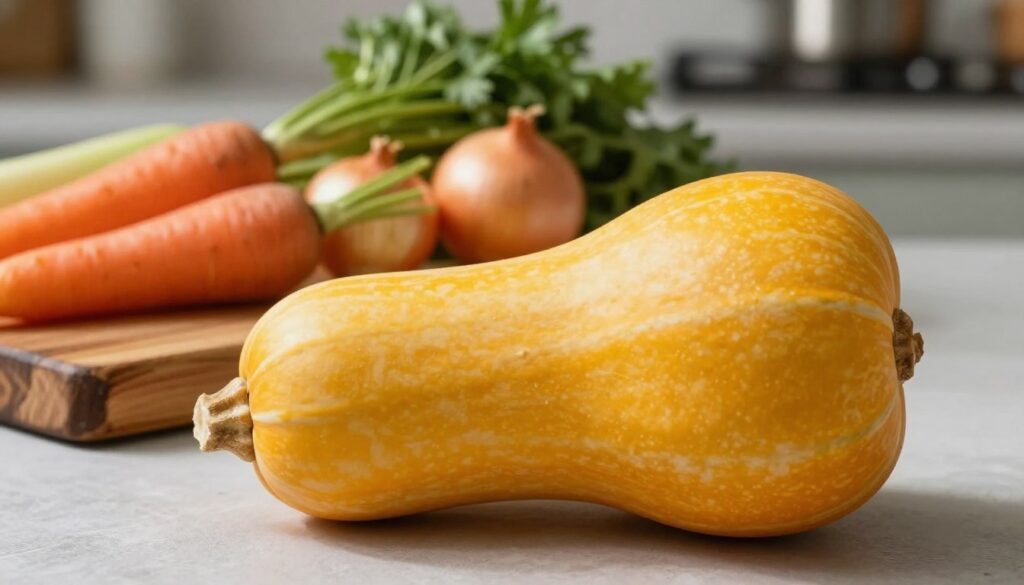
- Peel, deseed and cube the pumpkin or butternut as the first step if you prefer to boil rather than roast.
- If roasting, wait until the squash is tender, then scoop the flesh clean from the skin for a lump-free base.
- Use a food processor or blender to combine the roasted vegetables with your aromatics for a silky texture.
Mary Berry recommends roasting for a richer finish; it adds a caramelised depth that simple boiling can’t match. These small steps make the cooking easier and lift the final soup.
Sautéing Aromatics for Depth of Flavour
Begin by warming a large, deep-sided saucepan over a medium heat. This step lets the oil soften the vegetables without browning them. It builds the base flavour for the soup.
Add the onion, carrot, celery and a little grated ginger to the pan. Stir gently and cook for 5-10 minutes until the vegetables begin to soften. Maintain medium heat so nothing colours too quickly.
The Importance of Medium Heat
Season now with a pinch of salt, freshly ground black pepper and a little ground nutmeg to lift the natural sweetness of the pumpkin.
“Slow sweating of the aromatics gives a deeper, sweeter flavour than high heat browning.”
- Include a potato if you want a thicker texture; add it at this step so it cooks through.
- You can stir in a dash of red pepper or curry powder for a spiced variation.
- Add chicken stock or vegetable stock only after the vegetables have softened to keep the consistency correct.
- Mary Berry recommends finishing with a hand blender for a silky result.
| Step | Action | Time |
|---|---|---|
| 1 | Warm pan with oil, add onion and vegetables | 1–2 minutes |
| 2 | Sweat aromatics; season with salt & pepper | 5–10 minutes |
| 3 | Add stock and simmer | 15–20 minutes |
Simmering the Soup to Perfection
Begin by pouring rich stock into the pan and raising the heat until the mixture comes to a gentle boil. Pour 1 litre of chicken stock or vegetable stock and bring to the boil to start the cooking process.
Once you bring to the boil, reduce the heat and partially cover the pan. Let the pumpkin and other vegetables simmer for about 20 minutes until they are tender enough to be pierced with a fork.
If you want a thicker texture, add a small potato or extra potatoes at this stage. They break down while simmering and give a naturally creamy body without extra cream.
Season the pot with salt and pepper now so the flavours infuse the stock as the vegetables soften. If you prefer a spiced twist, stir in a little red pepper or warming spices while it simmers.
“A gentle simmer protects the texture and lets flavours deepen without breaking down delicate ingredients.”
- Ensure you add onion and other aromatics early so they have time to flavour the stock.
- Keep the heat low once simmering begins; avoid a vigorous boil to preserve texture.
- After 20 minutes, check that the squash is soft and ready for blending as the next step.
Achieving a Silky Texture with Blending
The final purée step is where texture and flavour truly come together. Once the vegetables are tender, let the pot cool for a minute to avoid hot splashes before using a hand blender.

Using a hand blender
Use a hand blender or a standard food blender to purée until totally smooth. Work in short bursts and keep the head submerged to prevent splashing.
If the mix feels too thick, loosen with a little stock or milk to reach your preferred consistency.
Straining for smoothness
For an ultra-silky finish, pass the puréed mixture through a fine sieve. This removes any fibrous bits and lifts the texture to a professional level.
Avoiding curdling
Return the blended mix to the pan, then stir in the double cream. Warm gently for a few minutes without letting it boil. Boiling can split the fat and cause curdling.
To add a last layer of flavour, stir in a dash of olive oil or a pinch of red pepper before serving with toasted seeds.
“Warm gently after adding cream to preserve a smooth, velvety finish.”
| Step | Action | Tip |
|---|---|---|
| 1 | Cool slightly, then blend | Prevent hot splashes; use short bursts |
| 2 | Strain if desired | Use a fine sieve for extra silkiness |
| 3 | Add cream and warm | Do not boil; keep heat low for a few minutes |
Serving Suggestions and Crusty Bread Pairings
Finish by ladling the velvety purée into deep bowls and adding the final garnishes. Serve hot to keep the texture silky, as the dish will thicken slightly on cooling.
Garnish ideas: a small swirl of double cream, a grind of black pepper and a scattering of toasted seeds for crunch.
- Serve your hot mary berry pumpkin soup in deep bowls with a swirl of cream or toasted seeds.
- Crusty bread makes the ideal accompaniment, offering contrast to the smooth purée.
- Try garlic butter toast or cheese scones if you want a richer, more British pairing.
Taste before serving: give the soup one last check for seasoning. A pinch of salt or a splash of stock can lift the flavours.
“Serve immediately while hot; the soup is at its best before it cools and thickens.”
| Serving element | Why it works | Quick tip |
|---|---|---|
| Crusty bread | Provides crunchy texture and soaks up the purée | Warm in oven for 5 minutes |
| Garlic butter toast | Adds savoury, aromatic depth | Spread lightly to avoid overpowering |
| Toasted seeds | Gives nutty crunch and visual contrast | Toast for 3–4 mins until golden |
Storage and Reheating Tips for Busy Days
Store leftovers correctly and reheating becomes a quick kitchen win for weeknight meals. Allow the pot to cool for about 30 minutes, then transfer into a suitable airtight container.
Refrigerate for up to 3 days. This keeps flavours fresh and lets you enjoy the dish as a fast lunch or evening meal on busy days.
Freezing for Future Meals
For longer storage, freeze portions for up to 3 months. Freeze before adding double cream to preserve texture.
When ready to eat, thaw overnight in the fridge or at room temperature for about 8 hours. Reheat gently on low heat, stirring now and then.
- If you used chicken stock or vegetable stock, the flavour holds well after freezing; add a splash of stock or water if it feels too thick.
- Stir in cream only after the soup is hot to avoid curdling and to keep the finish silky.
- If separation occurs, use a hand blender to refresh the texture for a smooth result.
| Action | Guideline | Why |
|---|---|---|
| Cool | 30 minutes before storing | Prevents condensation and bacterial growth |
| Fridge | Up to 3 days | Quick access for weekday meals |
| Freeze | Up to 3 months (without cream) | Extends shelf life while keeping texture |
Final tip: When reheating, keep the heat low and taste for seasoning — a twist of black pepper or a splash more stock can restore the original balance after time away from the pot.
Conclusion
In short, mastering a few basic steps produces a rich, restaurant-style bowl every time. This recipe celebrates seasonal produce and simple technique.
The Mary Berry approach—roast, sauté and blend—gives a silky finish that highlights natural sweetness and savoury depth. It works equally well as a butternut squash soup or a classic pumpkin version.
This squash soup is versatile enough for a quick lunch or a festive starter. Store leftovers, reheat gently and finish with toasted seeds or a swirl of cream to lift the flavours.
Enjoy the creamy texture and warming comfort — a true home-cooking favourite.
FAQ
What type of squash works best for this recipe?
Can I use chicken stock or should I stick to vegetable stock?
How do I prevent the soup from becoming grainy when blending?
What are the key aromatics to sauté and why is medium heat important?
How long should I simmer the soup before blending?
Can I roast the squash seeds for a crunchy garnish?
Is it possible to make the soup ahead and reheat later?
What bread pairs best with this creamy squash soup?
How can I boost the protein content for a more filling meal?
Are there easy ways to vary the flavour each time I make this dish?
Mary Berry Pumpkin Soup
This classic dish is a creamy, blended delight that celebrates seasonal produce. It mixes fresh pumpkin with onions, garlic, carrots and a simple stock to create a velvety bowl that warms the soul.
Ingredients
- 1 kg pumpkin, peeled, deseeded and cubed
- 1 large onion, chopped
- 1 medium carrot, chopped
- 2 cloves garlic, minced
- 1 small potato, peeled and cubed (optional)
- 2 tbsp olive oil
- 1 tbsp butter
- 1 litre vegetable or chicken stock
- Salt, to taste
- Freshly ground black pepper, to taste
- A pinch of ground nutmeg
- 100 ml double cream
- Fresh thyme, for garnish
- Pumpkin seeds, for garnish
Method
- Preheat the oven to 200°C / 180°C fan / Gas 6.
- If roasting, cut the pumpkin in half, scoop out the seeds, and place cut-side up in a roasting tin with 150ml water.
- Roast the pumpkin until tender, about 30-40 minutes, then scoop out the flesh.
- In a large saucepan, warm the olive oil and butter over medium heat.
- Add the onion, carrot, and garlic, and sauté for 5-10 minutes until softened.
- Season with salt, pepper, and nutmeg.
- Add the stock and bring to a gentle boil, then reduce heat and simmer for 20 minutes until vegetables are tender.
- Blend the soup using a hand blender until smooth, adding cream and warming gently without boiling.
- Serve hot, garnished with a swirl of cream, toasted seeds, and fresh thyme.