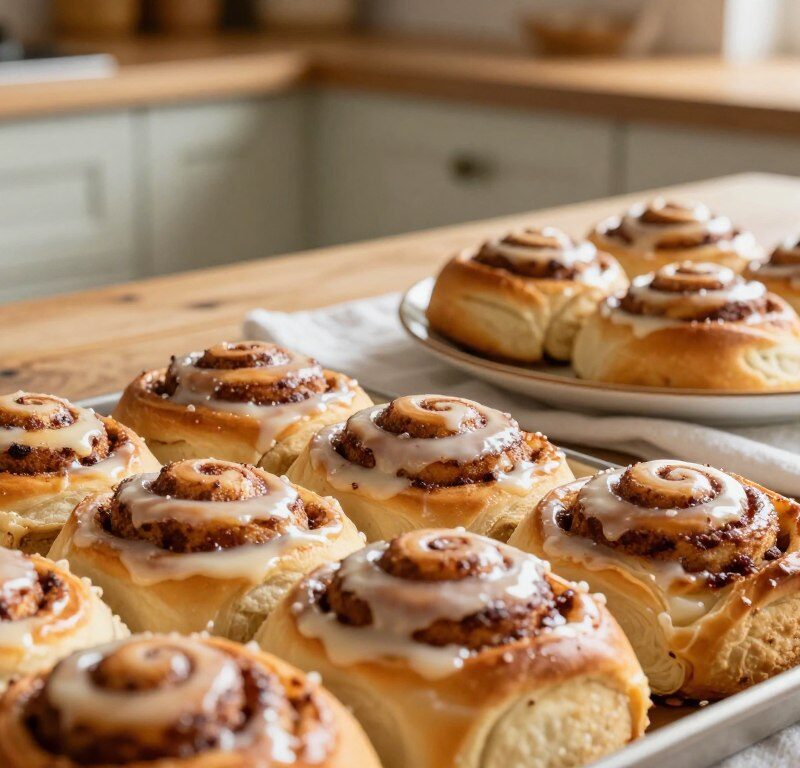
These classic cinnamon rolls bring a gentle warmth to the kitchen and make a lovely centrepiece for a relaxed weekend brunch.
The reliable recipe uses traditional British baking methods to produce light, fluffy dough with a soft, enriched crumb.
They are not overly sweet, so they pair perfectly with tea or coffee and suit family mornings at home.
From mixing to the final bake, the total time is about 2½ hours, which includes essential proving stages to ensure airy texture.
Key Takeaways
- Classic, bakery-style rolls ideal for a relaxed weekend brunch.
- Light and fluffy texture achieved with traditional proving.
- Balanced sweetness makes them perfect with tea or coffee.
- Total preparation and proving time is roughly 2½ hours.
- One reliable recipe delivers consistent, comforting results.
The Appeal of Mary Berry Cinnamon Rolls
Home bakers favour this recipe for its balanced filling and reliably light texture.
The secret lies in a simple mix: yeast for softness, plenty of butter for richness and a sweet cinnamon sugar that gives a warm aroma without overwhelming the dough.
Unlike dense buns, these rolls stay airy and tender. They are best served straight from the oven, when the butter is still melting and the scent fills the kitchen.
Many people make them for a relaxed weekend brunch. A hot cup of tea or strong coffee cuts through the sweetness and brightens the spices.
| Feature | Why it Matters | Result |
|---|---|---|
| Yeast-based dough | Creates lift and softness | Bakery-style texture |
| Butter-rich mix | Adds flavour and richness | Buttery, tender crumb |
| Cinnamon filling | Balanced sweetness and spice | Warm, aromatic centre |
Essential Ingredients for Your Bake
Start with pantry essentials that influence texture and flavour from the first knead. A small set of reliable items gives predictably good results when you follow the recipe.
Pantry Staples
- 500 g strong white bread flour and 7 g fast-action yeast — the base for a sturdy, airy dough.
- 75 g melted unsalted butter and one large egg to enrich the mix and aid browning.
- 50 g caster sugar and 1 teaspoon salt to balance sweetness and boost flavour.
- 250 ml warmed whole milk — essential for activating the yeast and creating a soft crumb.
Quality Matters
Use a fresh, fragrant spice for the filling; good cinnamon makes a noticeable difference to aroma and taste.
Choose full-fat milk and European-style butter where possible. They help achieve a tender crumb and richer flavour in your rolls.
Preparing the Enriched Dough
Begin by measuring and sifting the flour so the dough mixes evenly and avoids lumps. In a large bowl combine the flour, yeast, caster sugar and a teaspoon of salt.
Warm the milk until it feels comfortably warm to the wrist, then stir in melted butter and one beaten egg. Add these liquids to the dry mix and bring together to form a soft dough.
Knead the dough on a lightly floured surface for 8–10 minutes until it becomes smooth, elastic and slightly springy to the touch. A short, consistent surface knead gives the best crumb.
Place the dough in a lightly greased bowl, cover with a clean tea towel and set it in a warm place. Allow the dough to prove for about an hour, or until doubled and at room temperature.
Tip: Proper preparation depends on milk temperature. Too hot and the yeast will be damaged; too cool and the proving time will lengthen. Careful timing and warmth give reliable rolls every time.
Creating the Perfect Cinnamon Filling
Good filling should be soft enough to spread but firm enough to stay put while you roll. Achieving that balance keeps the roll dough tidy and prevents leaks during baking.
Achieving the Right Consistency
Measure precisely: mix 75 g softened butter with 100 g soft brown sugar and 2 teaspoons ground cinnamon in a small bowl. Stir until the mixture is smooth and even.
Roll the proved dough into a rectangle about 30 × 40 cm. Spread the cinnamon sugar mixture evenly to the edges so every roll has flavour.
Add a drop of vanilla to the filling for subtle depth. This enhances the ground cinnamon without making the filling runny.
- Work quickly if the butter softens too much; chill the bowl briefly.
- The right texture prevents leaking and keeps layers defined.
Tip: If the filling feels too loose, pop it in the fridge for five minutes. If it is too stiff, let it soften at room temperature a little before spreading.
Shaping and Proving the Buns
Shaping is where the dough becomes familiar buns ready for their final rise. On a lightly floured surface, give the dough a short surface knead to make it smooth before you roll it into a rectangle.
Spread the filling evenly across the rectangle, then roll the dough up tightly from the long edge to form a log. Use dental floss or a sharp knife to slice neat, even rounds so the layers stay defined during baking.
Arrange rolls cut-side up in a lined baking tin, leaving enough space between each one to allow for the second proving stage. Cover the tin with a clean tea towel and place it in a warm place.
Leave the buns to rise for 30–40 minutes until puffed and doubled in size. This short proving time ensures an airy crumb and even browning when you start baking.
| Step | Action | Why it Matters |
|---|---|---|
| Surface knead | Knead on a floured surface until smooth | Creates elastic dough for even rise |
| Roll & slice | Roll from long edge; cut with floss or knife | Neat edges and uniform size for baking |
| Second prove | Arrange in tin, cover with towel, warm place | Gives buns volume and tender crumb |
Baking to Golden Perfection
A steady oven temperature transforms the proved dough into tender, fragrant buns.
Preheat your oven to 180°C (160°C fan) so heat is even from the start. Gently arrange rolls in a lined tin and pop them in for 25–30 minutes. They are done when tops are lightly golden and smell sweet.
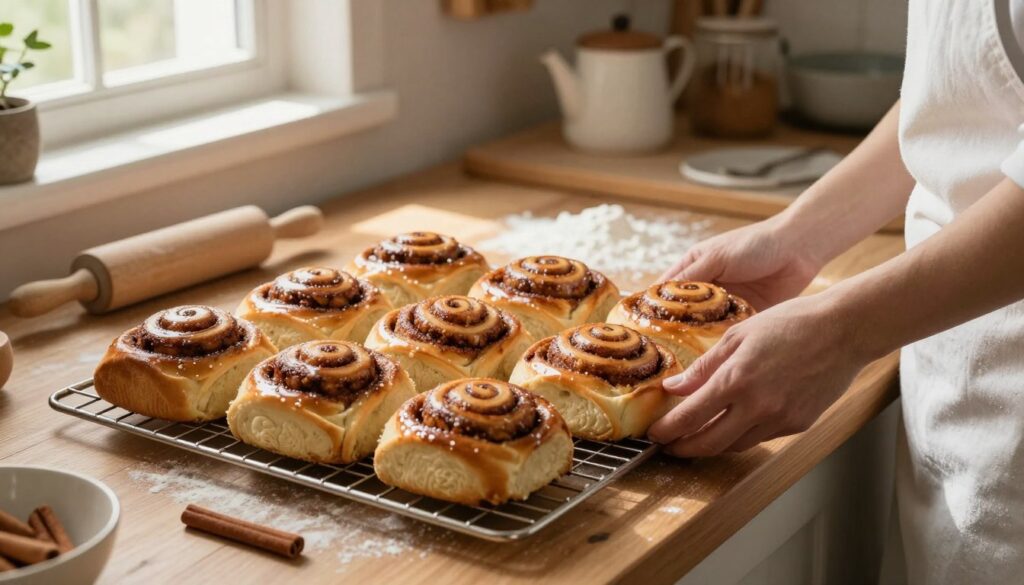
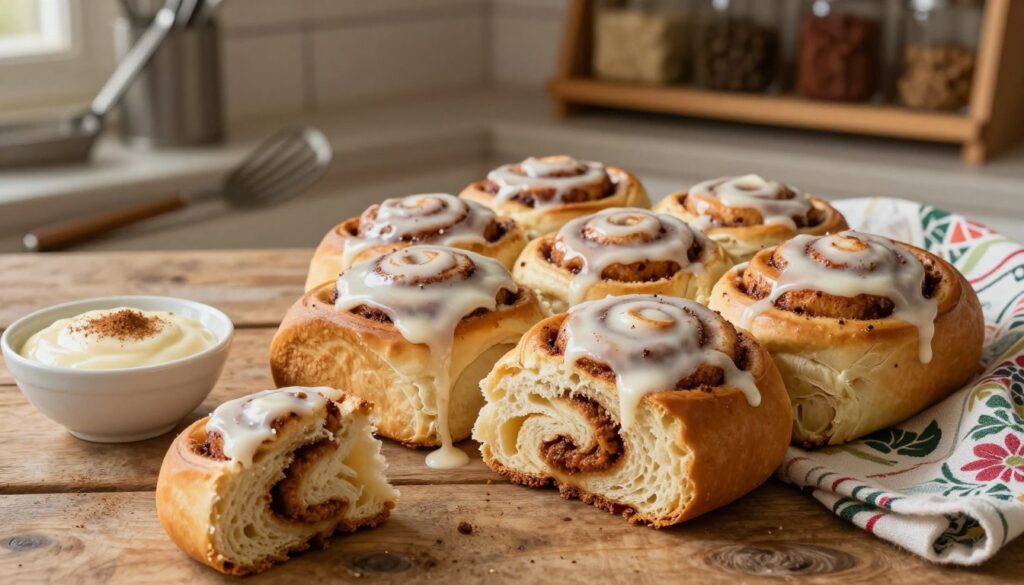
During baking the butter and sugar in the filling melt into the spirals, creating gooey pockets. Mix icing sugar with enough milk in a small bowl to make a smooth glaze for drizzling over warm buns.
Use a sharp knife to test that the centre of the dough is cooked through before removing the tin. Allow a short resting time so the glaze sets slightly and the swirls hold their shape.
| Action | Temperature | Time |
|---|---|---|
| Preheat oven | 180°C (160°C fan) | — |
| Bake rolls | 180°C (160°C fan) | 25–30 minutes |
| Glaze | Room temperature | Drizzle when warm |
Customising Your Cinnamon Rolls
A few simple swaps and additions let you customise these buns for any taste or dietary need. Small changes to the filling or the roll dough deliver fresh flavour without extra fuss.
Fruit Additions
Add dried cranberries or chopped dates in place of raisins for texture and tang. Fresh orange zest folded into the cinnamon sugar gives a bright citrus note that cuts through the sweetness.
Dairy-Free Alternatives
For a dairy-free version, replace butter with coconut oil and use plant-based milk instead of cow’s milk. The dough still proves well, though you may need a touch more liquid when using whole wheat flour.
Spice Variations
Try adding a pinch of cardamom or nutmeg alongside ground cinnamon for complexity. For crunch, sprinkle chopped pecans or walnuts over the sugar mixture before you roll the dough.
| Customisation | Swap | Tip |
|---|---|---|
| Fruit | Raisins → Dried cranberries or chopped dates | Fold into filling, scatter evenly for balance |
| Dairy-free | Butter → Coconut oil; Milk → Plant milk | Check dough consistency; add milk if stiff |
| Spices & nuts | Extra: cardamom, nutmeg; add pecans/walnuts | Combine small amounts with cinnamon sugar |
Serving Suggestions for Brunch
A steaming plate of freshly baked swirls invites conversation and a slow, relaxed morning.
Serve warm with a cup of English breakfast tea or a strong espresso. The hot drink cuts through the sweet glaze and refreshes the palate.
Offer a jug of cold milk for anyone who prefers a softer contrast. A small bowl of Greek yoghurt makes a creamy, lighter option that balances the richness.
Brighten the table with fresh fruit such as berries or sliced oranges. Their acidity and colour lift the presentation and flavour.
- Impress guests: place warm buns on a board with cutlery and napkins for a homely feel.
- Savoury contrast: add scrambled eggs or bacon to balance the sweetness.
- Beverage pairings: offer both tea and coffee so guests can choose.
“A warm bake and good company make the best weekend brunch.”
| Item | Why it works | Serving idea |
|---|---|---|
| Tea | Clears sweetness | English breakfast, served hot |
| Milk / Yoghurt | Creamy balance | Small jug of milk or bowl of Greek yoghurt |
| Fruit & savoury | Freshness and contrast | Berries, orange slices, scrambled eggs |
Storing and Reheating Your Buns
After the bake, how you store the buns makes all the difference to their texture. Let them cool fully on a wire rack so steam does not make the glaze soggy.
Maintaining Softness
Store at room temperature in an airtight container for up to 2 days. This keeps the dough plush and the sugar-glaze intact.
If you need longer storage, freeze baked rolls in a resealable bag for up to 2 months. Thaw at room temperature before reheating.
- Reheat individual rolls in the microwave for 15–20 seconds to warm the centre.
- For more even results, cover loosely and heat in a low oven until soft — about 8–10 minutes at a gentle temperature.
- A light brush of milk before reheating restores moisture to the dough and softens the filling.
Always cool completely before storing to avoid condensation in the container. Keep a clean tea towel handy to cover rolls during short resting time.
| Storage Method | Duration | Best Use |
|---|---|---|
| Airtight container (room) | Up to 2 days | Daily serving; retains soft crumb |
| Freezer (sealed bag) | Up to 2 months | Long-term storage; thaw before reheating |
| Microwave | 15–20 seconds | Quick single-serve warm-up |
| Low oven | 8–10 minutes | Even reheating for several buns |
Conclusion
With patience and the right technique, your kitchen will smell like a bakery. This recipe proves that simple ingredients can make a memorable, comforting treat.
Follow the proving time—about an hour in a warm place—to ensure light, airy buns. Use a clean towel while they rise to keep them cozy and draft-free.
The reward is bakery-quality cinnamon rolls at home. Whether you are new to baking or more experienced, these rolls are a friendly, shareable bake that fills the house with warm, ground spice aroma.
FAQ
What temperature should I set the oven to for these enriched bakes?
How long should I prove the dough until it has doubled in size?
Can I use instant yeast instead of active dry yeast?
What milk and butter options work best in the enriched dough?
How do I stop the filling from leaking during baking?
What is the best way to achieve a glossy finish on the buns?
How can I add fruit to the filling without making it soggy?
What spice variations complement ground cinnamon in the filling?
How should I arrange rolls in the tin for even baking?
Can I prepare the dough the night before?
How do I keep the buns soft when storing and reheating?
What size should I roll the dough to before cutting into individual pieces?
Do I need to beat eggs into the dough and filling?
Can I freeze unbaked or baked buns, and how should I defrost them?
What tools help when shaping and cutting the roll dough?
Mary Berry Cinnamon Rolls
These classic cinnamon rolls bring a gentle warmth to the kitchen and make a lovely centrepiece for a relaxed weekend brunch. The reliable recipe uses traditional British baking methods to produce light, fluffy dough with a soft, enriched crumb.
Ingredients
- 500 g strong white bread flour
- 7 g fast-action yeast
- 75 g melted unsalted butter
- 1 large egg
- 50 g caster sugar
- 1 teaspoon salt
- 250 ml warmed whole milk
- 100 g soft brown sugar
- 2 teaspoons ground cinnamon
- icing sugar (for glaze)
Method
- Measure and sift the flour into a large bowl, then combine with yeast, caster sugar, and salt.
- Warm the milk until it feels comfortably warm to the wrist, then stir in melted butter and the beaten egg.
- Add the liquid mixture to the dry ingredients and bring together to form a soft dough.
- Knead the dough on a lightly floured surface for 8–10 minutes until smooth and elastic.
- Place the dough in a lightly greased bowl, cover with a clean tea towel, and let it prove in a warm place for about an hour or until doubled in size.
- In a small bowl, mix softened butter, soft brown sugar, and ground cinnamon until smooth to create the filling.
- Roll the proved dough into a rectangle about 30 × 40 cm and spread the cinnamon sugar mixture evenly across it.
- Roll the dough tightly from the long edge to form a log and slice into even rounds.
- Arrange the rolls cut-side up in a lined baking tin, cover with a tea towel, and let them rise for 30–40 minutes.
- Preheat the oven to 180°C (160°C fan) and bake the rolls for 25–30 minutes until lightly golden.
- Mix icing sugar with enough milk to make a smooth glaze and drizzle over the warm buns.