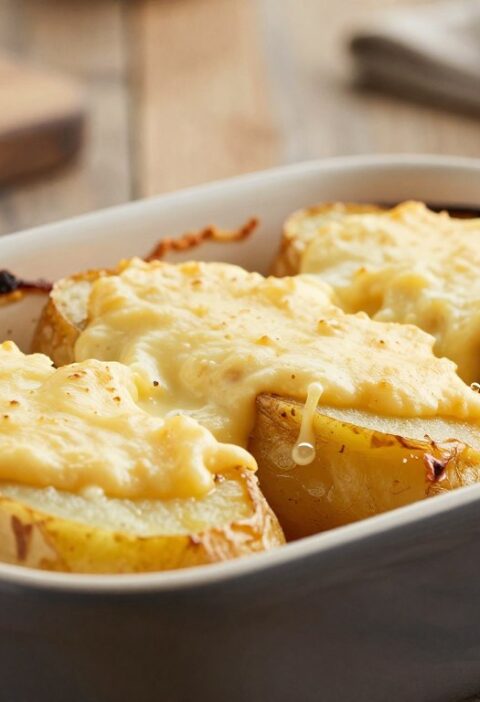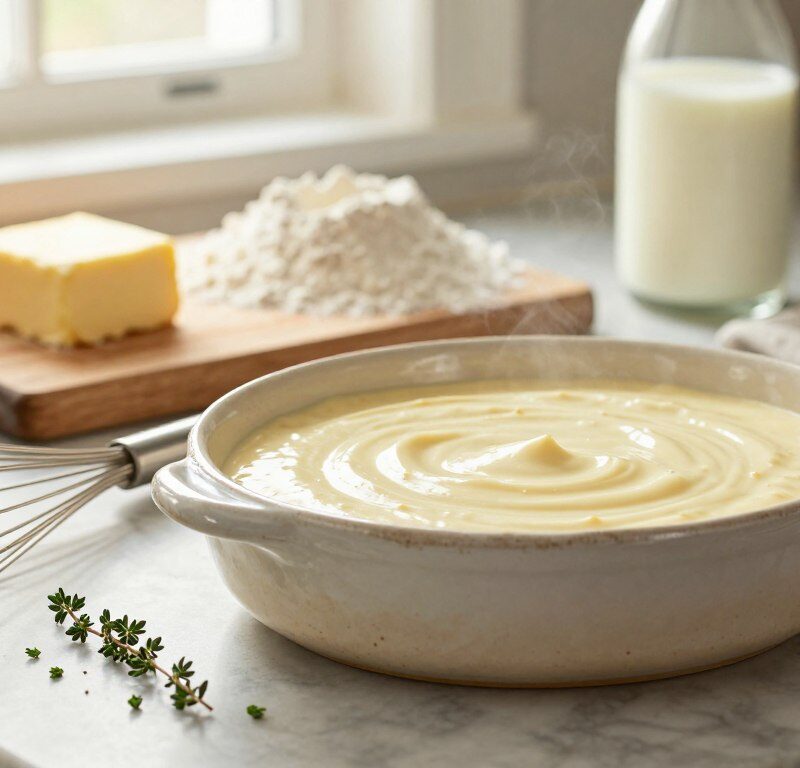
This classic white sauce is the humble base that lifts many family favourites. It uses simple pantry staples: milk, butter and flour to create a smooth, velvety finish.
The recipe ties directly to lasagne. In the 1970s, mary berry first showed a hearty meat mince and pasta layer on television, teaching viewers how to balance a rich meat sauce with a creamy topping.
Good layering matters. The ratio of sauce to sheets affects how the dish cooks through, whether you use dried or fresh pasta. You can assemble a lasagne up to two days ahead and keep it chilled until it goes in the oven.
Quick to make, this white sauce takes only a few minutes of hands-on time. Let a cooked lasagne stand for half an hour before slicing so the layers settle and serve neatly.
Key Takeaways
- The Mary Berry Bechamel Sauce is a versatile white sauce base for many oven dishes.
- Simple ingredients—milk, butter and flour—create a rich, creamy texture.
- Proper sauce-to-sheet ratio ensures the lasagne cooks evenly.
- Assemble up to 48 hours in advance for convenience.
- Rest the dish before slicing to preserve neat layers and flavour.
The Timeless Appeal of Mary Berry Bechamel Sauce
Few pantry preparations offer as much versatility as a well-made white sauce. Mary Berry’s take uses a butter-and-flour roux enriched with 600ml of milk, giving a smooth, neutral base that still feels indulgent.
The charm lies in its balance. The sauce is mild enough to complement vegetables and pasta, yet robust enough to hold its own in creamy bakes and hearty lasagne.
Follow a classic stovetop method and you will get a lump-free finish every time. This simple recipe is forgiving, quick and ideal for busy midweek meals or special weekend cooking.
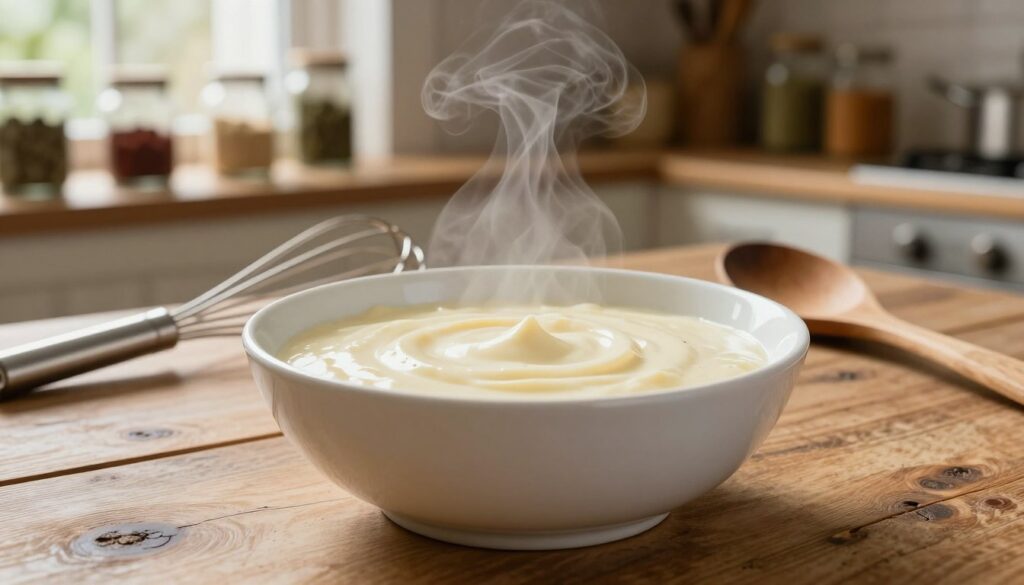
- Versatile: works with veg, meat and pasta.
- Reliable: forms the backbone of many family favourites.
- Easy: a straightforward method for a professional texture.
Essential Ingredients and Method for Mary Berry Bechamel Sauce
Start by assembling a smooth roux that will form the backbone of any sturdy lasagne. Use equal parts: 50g of flour stirred into 50g of melted butter in a warm saucepan.
The Roux Technique
Cook the flour and butter for 1–2 minutes to remove the raw taste. Keep the heat moderate and stir so the base stays glossy and lump-free.
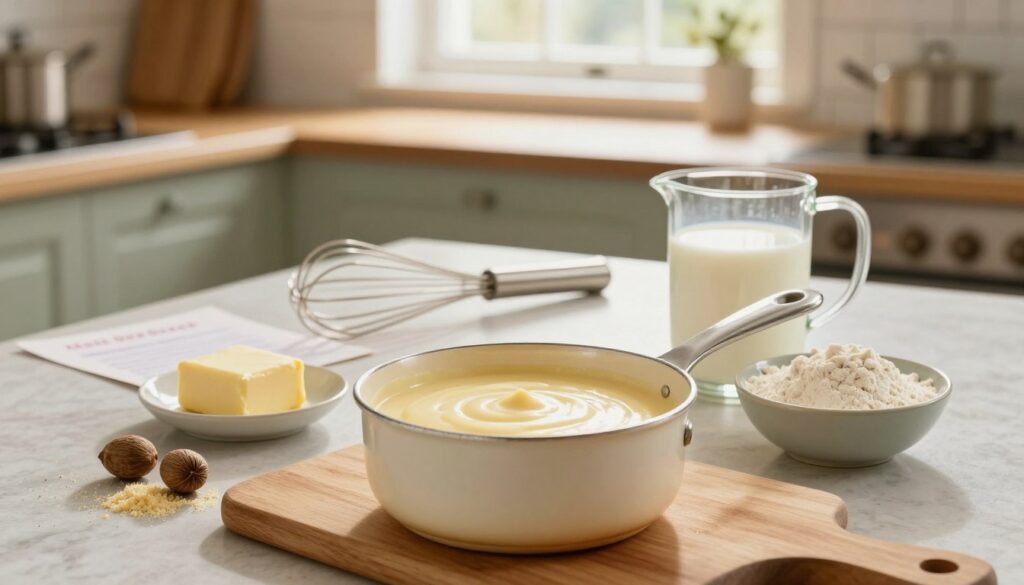
Achieving a Silky Finish
Gradually pour 600ml of milk into the roux while whisking with a balloon whisk. Slow addition prevents lumps and gives a silky white sauce.
- Season with salt, pepper and a pinch of nutmeg to lift flavour.
- Add a touch of parmesan or mustard for sharpness.
- Pre-soak lasagne sheets for 10 minutes if using dry pasta.
- Use a gentle heat in the frying pan when combining with meat sauce or chopped tomatoes.
Troubleshooting Common Sauce Consistency Issues
A quick fix can rescue a sauce that has tightened too much on the stove. If your white mix becomes too thick, warm milk added slowly while whisking will bring it back to a silky texture.
Always add the milk a little at a time. Pouring it in quickly can cause lumps. Keep the pan on gentle heat and stir with a balloon whisk to avoid sticking in the saucepan.
Fixing a Thickened Sauce
If lumps appear, push the sauce through a fine sieve before adding cheese. For extra flavour, stir in a touch of mustard or grated parmesan and then season with salt and pepper at the end.
- Cook flour long enough to avoid a raw taste.
- Use gentle heat and constant movement in the pan.
- Ensure the sauce is thick enough to hold lasagne layers, especially with tomato or chopped tomatoes in the meat base.
| Problem | Immediate Fix | Prevention |
|---|---|---|
| Too thick | Whisk in warm milk, a little at a time | Add milk slowly; keep heat low |
| Lumpy | Strain through a sieve | Whisk continuously when adding milk |
| Raw flour taste | Cook roux another minute or two | Cook flour and butter for 1–2 minutes before milk |
Elevating Your Lasagne and Pasta Dishes
Smart prep — from pre-soaking sheets to seasoning mince — saves time and improves flavour. Little choices at assembly change the final dish. Use confident layering to balance moisture and texture.
Layering Techniques
Start with a thin meat sauce base, then add a layer of lasagne sheets and a smooth white sauce. Repeat so each sheet gets a coating.
Tip: Finish with a generous top layer of cheese to get a golden brown crust in the oven.
Pre-soaking Pasta Sheets
Pre-soak dry lasagne sheets in hot water for about 10 minutes if you need the dish quickly. This helps them soften and cook evenly in a shorter time.
If you plan to assemble 12 hours ahead, no-cook sheets will hydrate from the sauces while the lasagne rests.
Storage and Freezing Tips
You can freeze an uncooked lasagne for up to 3 months. Pack it well and freeze flat to save space.
When reheating from frozen, allow roughly double the baking time and cover with foil so the top does not dry out. If refrigerated, keep the assembled dish for up to 48 hours before baking.
“Layer thoughtfully and your lasagne will slice cleanly and serve beautifully.”
- Season mince with salt and pepper before layering.
- For extra depth, stir a little mustard and parmesan into the white sauce.
- Ensure there is enough sauce on top if you prefer a saucier bake.
Conclusion
Perfecting the white base is the quickest route to a neat, flavoursome lasagne that slices well. Mastering this mary berry sauce makes pasta bakes rich and reliably creamy.
Follow the roux method and add milk slowly to avoid lumps. This simple step gives a smooth white sauce that suits many a recipe.
Allow the assembled dish to rest for several hours before baking so layers firm up and cut cleanly. Aim for the right ratio of sauce to sheets for an even finish in the oven.
Store or freeze an uncooked lasagne for quick meals later. With correct layering, seasoning and timing you’ll achieve a top-quality, family-friendly dish every time.
FAQ
What is the quickest way to make the roux for the sauce?
How do I stop lumps when adding milk?
Can I add extra flavour without making the sauce too heavy?
What consistency should the sauce be for lasagne?
How do I fix a sauce that’s become too thick?
What causes a sauce to split or curdle and how can I prevent it?
Are dried lasagne sheets OK to use, or should I pre-soak fresh sheets?
How should I layer lasagne for the best texture?
Can I prepare the sauce in advance and freeze it?
How long should a lasagne bake to get a golden top without drying out?
Mary Berry Bechamel Sauce
This classic white sauce is the humble base that lifts many family favourites, using simple pantry staples to create a smooth, velvety finish.
Ingredients
- 50g flour
- 50g butter
- 600ml milk
- salt
- pepper
- pinch of nutmeg
- parmesan or mustard (optional)
Method
- Melt butter in a saucepan over medium heat.
- Stir in flour and cook for 1–2 minutes to remove the raw taste.
- Gradually pour in the milk while whisking continuously to avoid lumps.
- Season with salt, pepper, and a pinch of nutmeg.
- For added flavor, stir in a touch of parmesan or mustard if desired.